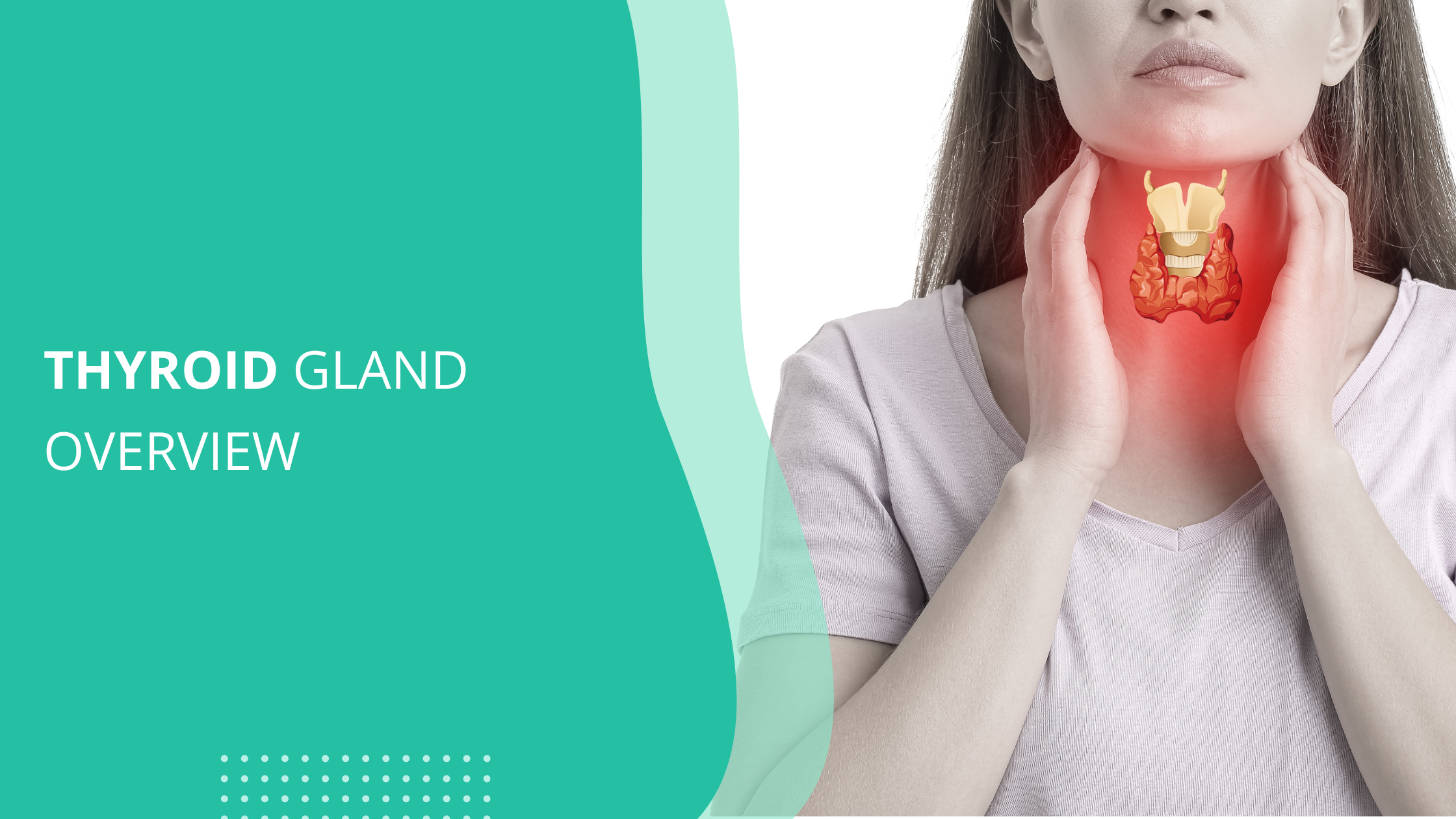
Thyroid Gland Overview

The process which the body manufactures, and processes thyroid hormones is very complex. The following is an overview of the thyroid glands anatomy, function, hormones, and nutrients needed for proper function of the thyroid gland. Given this is a very complex gland, take your time reading and going through the video links.

Next post we will delve into thyroid tests and thyroid dysfunction- specifically low and high thyroid.

Thyroid gland and its function

  • Anatomy of the thyroid gland
  • Function of the thyroid gland
  • Hormones produced by the thyroid gland
  • Nutrients needed for proper functioning of the thyroid gland

Anatomy of the thyroid gland:

Every cell in the body has thyroid hormone receptors. These receptors control transcription and effect gene expression.

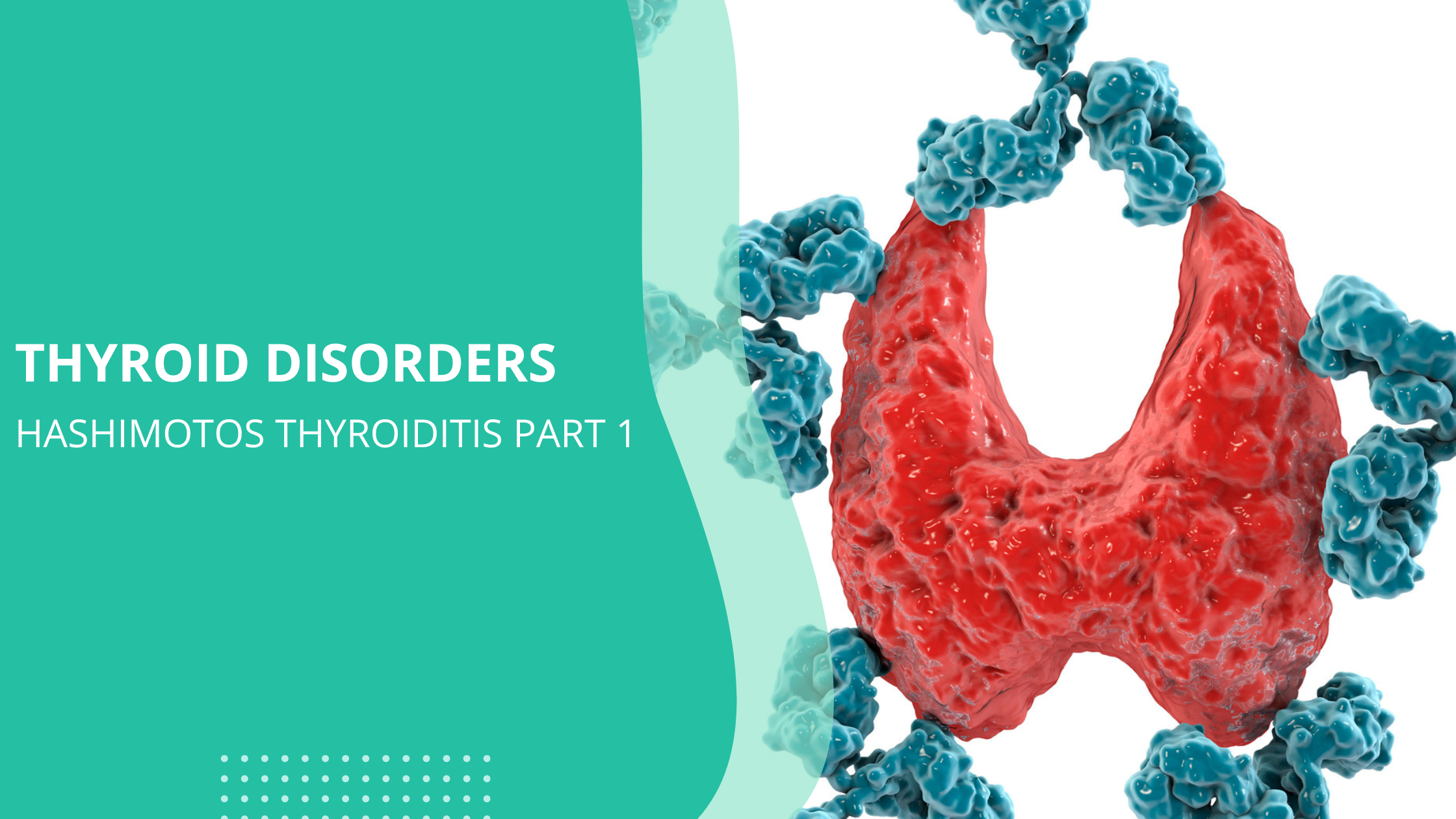
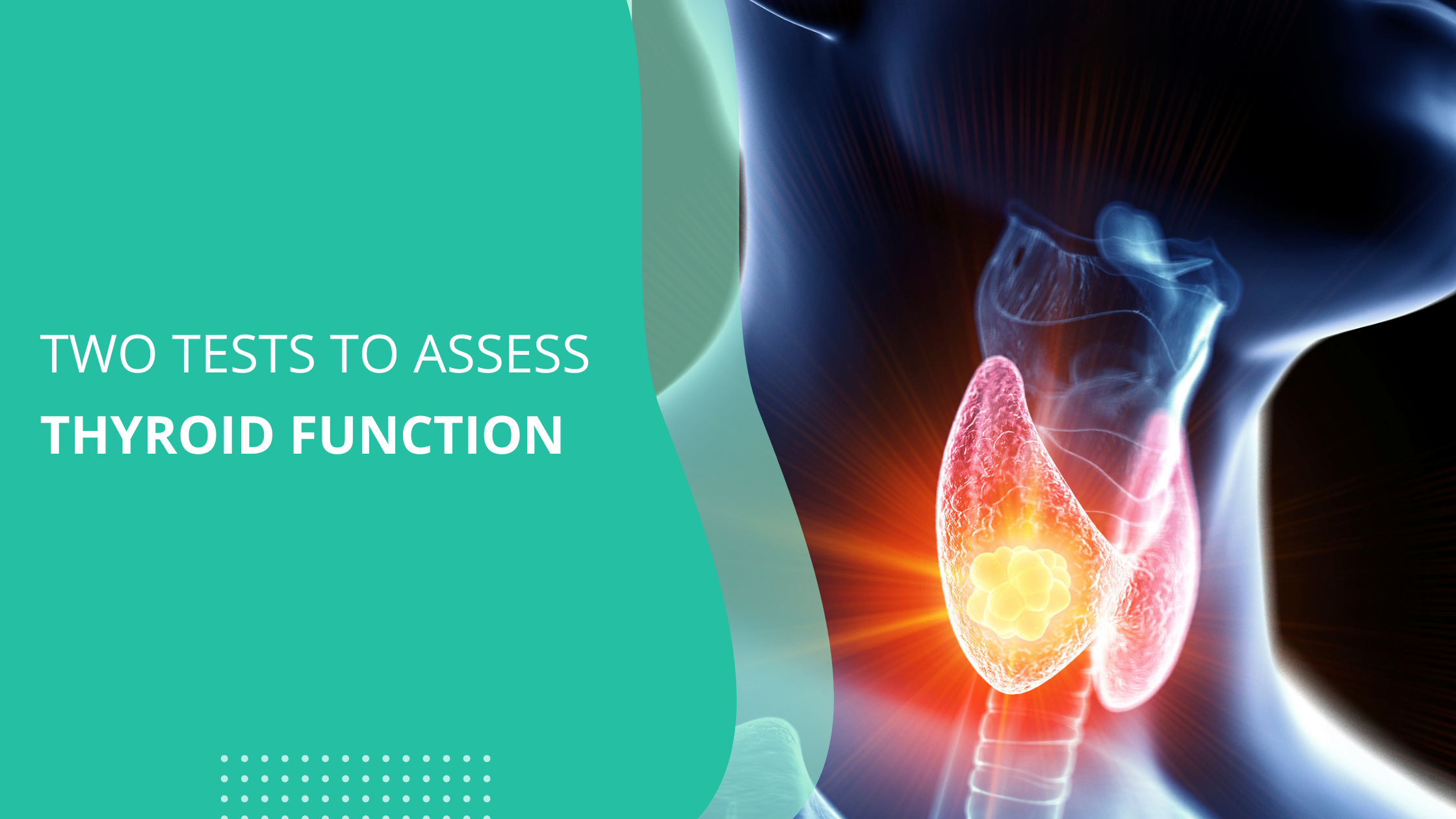
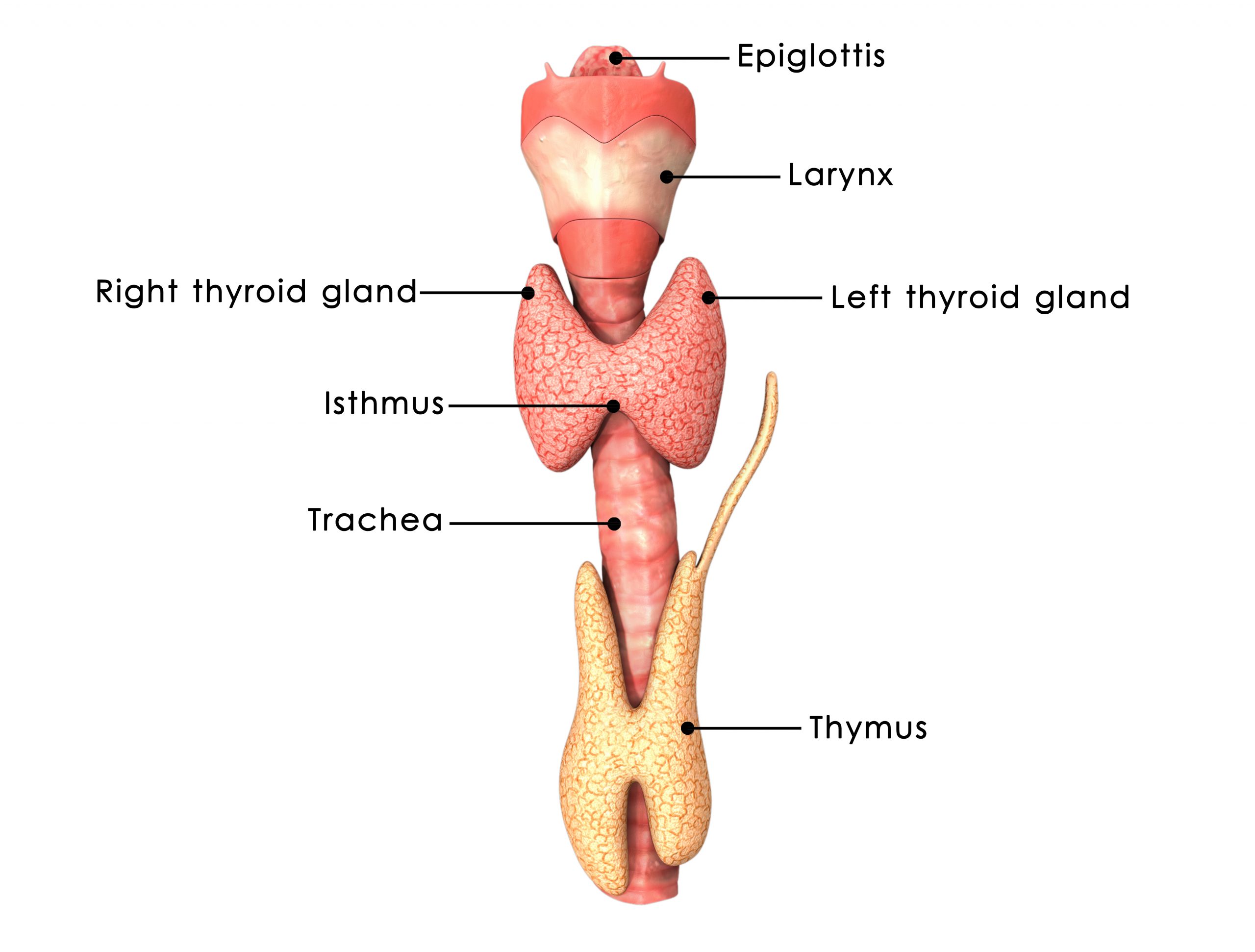
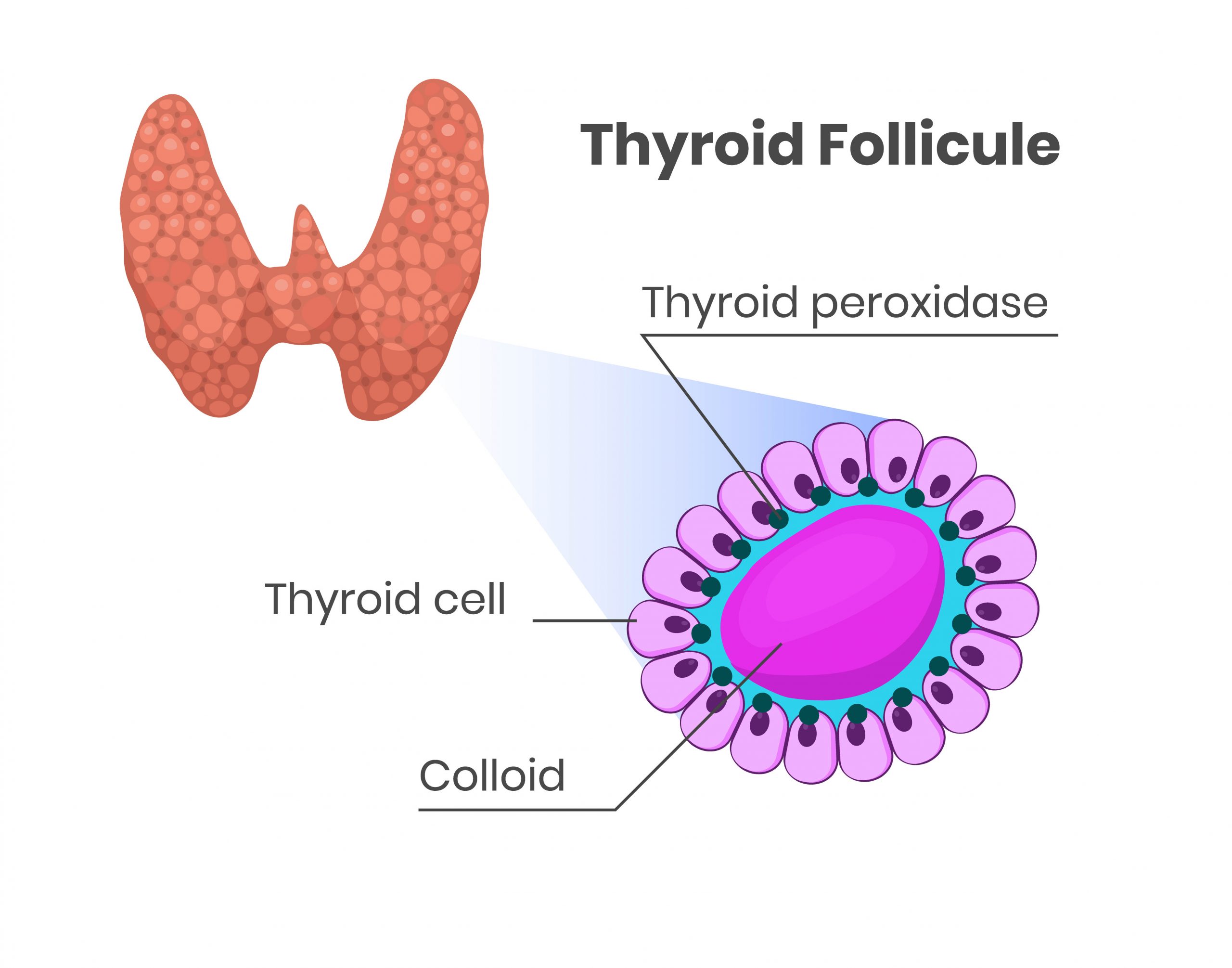
The thyroid gland is one of the largest endocrine glands and consists of two connected lobes. It is found in the neck, below the thyroid cartilage which forms the laryngeal prominence, or “Adam’s apple”. It is a butterfly-shaped organ and is composed of two cone-like lobes or wings, lobus dexter (right lobe) and lobus sinister (left lobe), connected via the isthmus. The thyroid is one of the larger endocrine glands, weighing 2-3 grams in neonates and 18-60 grams in adults, and is increased in pregnancy. The thyroid gland is covered by a thin fibrous sheath, composed of an internal and external layer. The thyroid tissue itself consists of a lot of small individual lobules joined together by thin sheaths of connective tissue. These lobules contain a great number of small vesicles, called follicles, which store thyroid hormones in the form of little droplets. These spherical follicles selectively absorb iodine from the blood for production of thyroid hormones and for storage of iodine in thyroglobulin (a protein present in the thyroid gland, from which thyroid hormones are synthesized). Thyroglobulin is also called colloid. Twenty-five percent of the body’s iodide ions are in the thyroid gland. Inside the follicles, in a region called the follicular lumen, colloid serves as a reservoir of materials for thyroid hormone production and, to a lesser extent, acts as a reservoir for the hormones themselves. The follicles are surrounded by a single layer of thyroid epithelial cells, which secrete T3 and T4. T3, also called triiodothyronine and T4, also called thyroxin are thyroid hormones.

Function of the thyroid gland

The thyroid plays an important role in regulating the body’s metabolism and calcium balance.  T4 and T3 hormones stimulate every tissue in the body to produce proteins and increase the amount of oxygen used by cells. The harder the cells work, the harder the organs work. The calcitonin hormone calcitonin works together with the parathyroid hormone to regulate calcium levels in the body. Some of the organ systems thyroid hormones regulate are:

  • Respiratory system– regulation of respiratory rate and ventilatory response to hypercapnia and hypoxia
  • Renal (kidney)– glomerular filtration rate and blood flow to the kidneys
  • Cardiovascular– regulates heart rate, force of cardiac contractions, stroke volume, cardiac output, catecholamine receptors
  • Metabolism- regulates glucose absorption in the gastrointestinal track, regulates insulin receptors
  • Growth and tissue development– regulates growth and maturation of bones and teeth, also regulates growth and maturation of epidermis, hair follicles and nails. Regulates force and rate of skeletal muscle contractions.
  • Nervous system-thyroid hormones are critical for neuronal development, Enhances memory and alertness.


Hormones produced by the thyroid gland

Check out this video on thyroid gland synthesis

What are the thyroid hormones and what substances do they contain? The thyroid hormones T3 (triiodothyronine) and T4 (thyroxine) are made of an amino acid, tyrosine, and an iodine molecule. For the hormone to be synthesized it must complete the following steps:

  1. Tyrosine, an amino acid that is provided by thyroid epithelial cells and secreted into the lumen of the follicle by a large glycoprotein scaffold called thyroglobulin. Thyroglobulin, as noted above is also called colloid.
  2. Iodine (or more accurately iodide) is taken up from blood by

thyroid epithelial cells which has an outer plasma membrane called a sodium-iodide symporter, or more commonly known as an “iodine trap”. Once inside the cell, iodide is transported into the lumen of the follicle along with thyroglobulin.


3. The thyroid hormone requires an enzyme called thyroid peroxidase to join the tyrosine with the iodine. The tyrosine will receive either one or two iodine. The term T1 represents one tyrosine and one iodine molecule. T2 represents one tyrosine and two iodine molecules.                                   

4. These, meaning T1 and T2, further combine through the enzyme thyroid peroxidase (TPO) to make the final thyroid hormones: T1+T2=T3 and T2+T2=T4. The byproduct from both reactions is hydrogen peroxide.

5. The thyroid hormone is bound to thyroglobulin and is liberated by hydrolytic enzymes that digest thyroglobulin.

6. The thyroid hormone diffuses out of the lysosomes and into the blood where they bind to carrier proteins and are transported to target cells in the body.

In other words,

T1+T2=T3+ hydrogen peroxide, and

T2+T2=T4+ hydrogen peroxide

Note:

T3 is up to four times more biologically active than T4. Only twenty percent of the body’s T3 is made by the combination of the T1 and T2 molecules. The additional eighty percent is made by T4 losing an iodine molecule in a process carried out in the organs such as the liver.

How is thyroid hormone regulated?

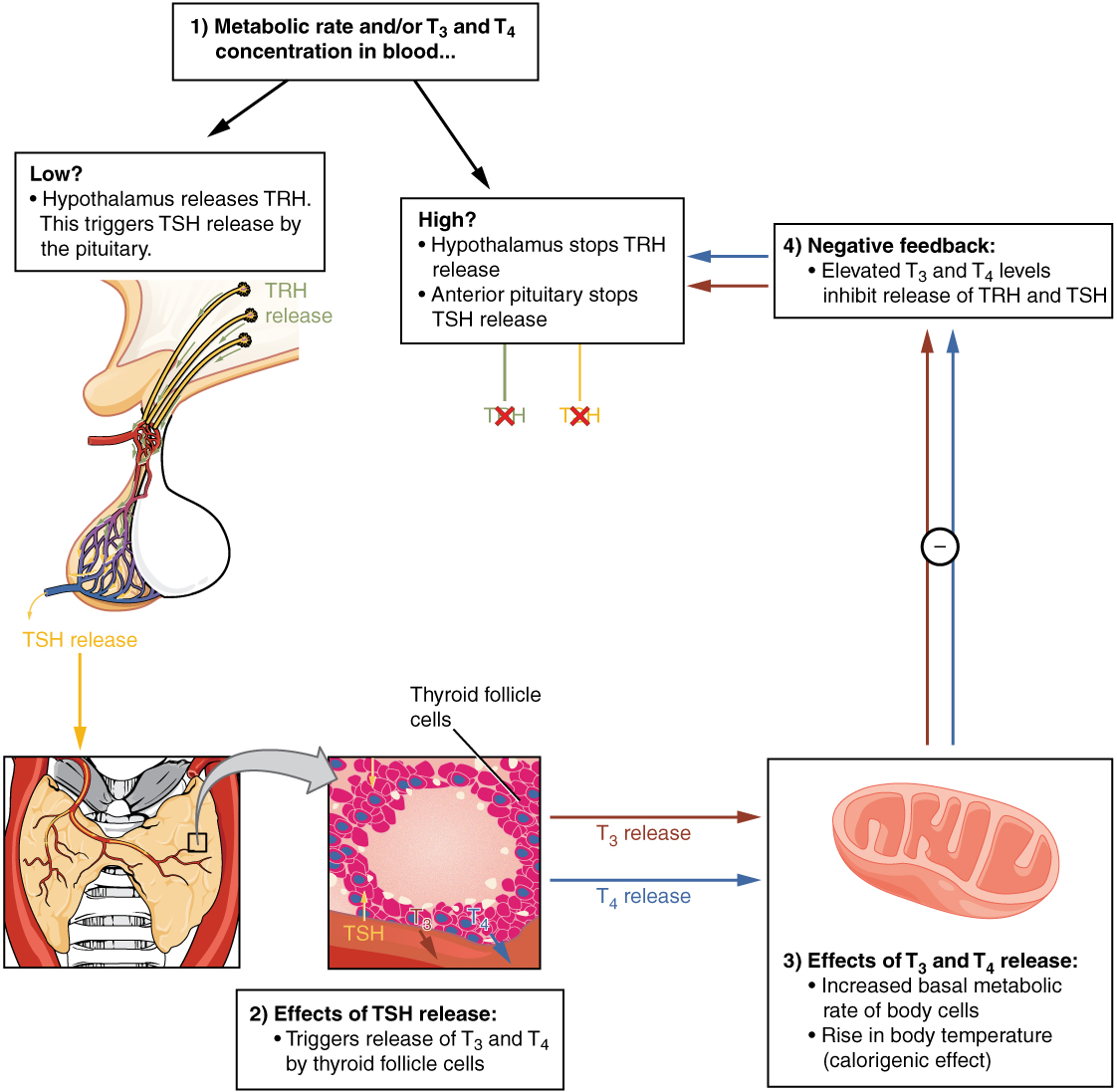
Hormonal output from the thyroid is regulated by thyroid-stimulating hormone (TSH) produced by the anterior pituitary, which itself is regulated by thyrotropin-releasing hormone (TRH) produced by the hypothalamus in a negative feedback loop.

This is described as follows:

HYPOTHALMUS-Signaled by low thyroid hormones the hypothalamus releases TRH (thyrotropin releasing hormone) which stimulates the pituitary gland, *Illustration depicts both high and low thyroid hormone events.

 ANTERIOR PITUITARY GLAND– Releases TSH (thyroid stimulating hormone) into the bloodstream, which reaches the thyroid gland

 THYROID GLAND –TSH (Thyroid stimulating hormone) causes thyroid gland to release thyroid hormones (T4 and T3 )

When enough T4 and T3 are in the bloodstream it signals the hypothalamus to stop releasing TRH (thyrotropin releasing hormone)

Nutrients needed by the thyroid gland

For the thyroid gland to function properly it requires a supply of nutrients

Selenium– Selenium content in the thyroid is higher than any part of the body. It is  a naturally occurring  trace mineral found in our foods and soil. One of the challenges with obtaining selenium from our food sources is that the levels can vary dramatically. Brazil nuts are known to be a rich source of selenium, but their selenium content varies according to the region they are grown in. 

Selenium is converted into three types of selenoproteins or seleno-enzymes, both terms are interchangeable.  The three types of selenoproteins are:

  1. GPx (glutathione peroxidase) are antioxidants and best known of the selenoproteins
  2. TRx- (thioredoxin reductases) are involved in cell growth and structure
  3. Dis (iodothyronine deiodinases) are involved in the conversion of T4 to T3 and other metabolic functions.

A selenium deficiency along with an iodine deficiency is implicated in goiters.

Iodine- Iodine is an essential element that is also needed from our environment. It is one of the building blocks of the thyroid molecule. For the body to be able to utilize iodine, it must be converted to iodide. This is accomplished through the thyroid peroxidase (TPO) reaction. Once this occurs, the free iodine joins with tyrosine to make the thyroid molecule, with hydrogen peroxide as the byproduct.

The group of molecules called the halogens; fluorine, bromine and chlorine mimic iodine and attach to tyrosine thereby rendering the tyrosine molecule useless. This means that your body is not getting the T4 or T3 it needs.  Sources of iodine include kelp, sea vegetables, cow’s milk, eggs, tuna, and navy beans. There are several over the counter iodine supplements. Caution should be exercised when using supplemental iodine. When there is an excess of iodine along with a deficiency of selenium, an autoimmune condition called Hashimotos thyroiditis may occur.

Tyrosine– Tyrosine is a nonessential amino acid the body makes from another amino acid called phenylalanine. It combines with iodine to form thyroid hormones. Tyrosine is also the precursor to neurotransmitters dopamine, epinephrine and norepinephrine. It is rare to have a deficiency in tyrosine and supplements are usually not recommended. Dietary sources of tyrosine are chicken, turkey, fish, peanuts, almonds, avocados, bananas, milk, cheese, yogurt, cottage cheese, lima beans, pumpkin seeds, and sesame seeds.

Zinc– Zinc is required to transform the inactive thyroid hormone T4 into the active form T3.  It plays an important role in immune function, wound healing, blood clotting, reproduction, growth and smell. Zinc supplementation should be approached carefully. If too much zinc is taken, a copper and iron deficiency can result. Also, taking too much zinc intake can contribute to hyperthyroidism and copper deficiency. Foods rich in zinc are raw pumpkin seeds, oysters, wheat germ, and lamb.

Iron (Ferritin) – Iron requires a high stomach acid for transport into the cells. Many people take iron tablets, and their iron levels stay the same due to low stomach acid.   Having low iron levels decreases deiodinase activity. It slows down the conversion of T4 to T3.  Insufficient iron levels may affect thyroid hormone synthesis by reducing the activity of the enzyme thyroid peroxidase (TPO) which is dependent on iron.  Thyroid peroxidase (TPO) brings about the chemical reactions of adding iodine to tyrosine (amino acid), which then produces T4 and T3. Insufficient iron levels alter and reduce the conversion of T4 to T3. Low iron levels can also increase circulating concentrations of TSH (thyroid stimulating hormone).

Apple cider vinegar or Betaine, a supplement which enhances stomach acidity, promotes protein breakdown and iron absorption.  The most bioavailable form of iron is called heme and is found in liver and meats

- Brooke Lounsbury

Medical Content Writer

Lifesaving Medications

Everyone should be empowered to care for themselves and their loved ones during the unexpected.

Recent Posts

Keeping you informed and safe.
Planning a Cruise?

Planning a Cruise?

Be sure to pack these Jase add-ons An outbreak of vomiting and diarrhea has been reported on the luxury cruise ship, the Queen Victoria. As of last count, at least 154 people have taken ill since the ship set sail in early January. The number of passengers on board...

A Rare Case of the Plague Was Found in Oregon

A Rare Case of the Plague Was Found in Oregon

Could you be next?Early this week an Oregon resident was diagnosed with bubonic plague. This is the first diagnosed case in nearly a decade. It is believed the person contracted the disease from their cat. Cats that hunt rodents can become infected and spread the...

Join Our Newsletter

Our mission is to help you be more medically prepared. Join our newsletter and follow us on social media for health and safety tips each week!

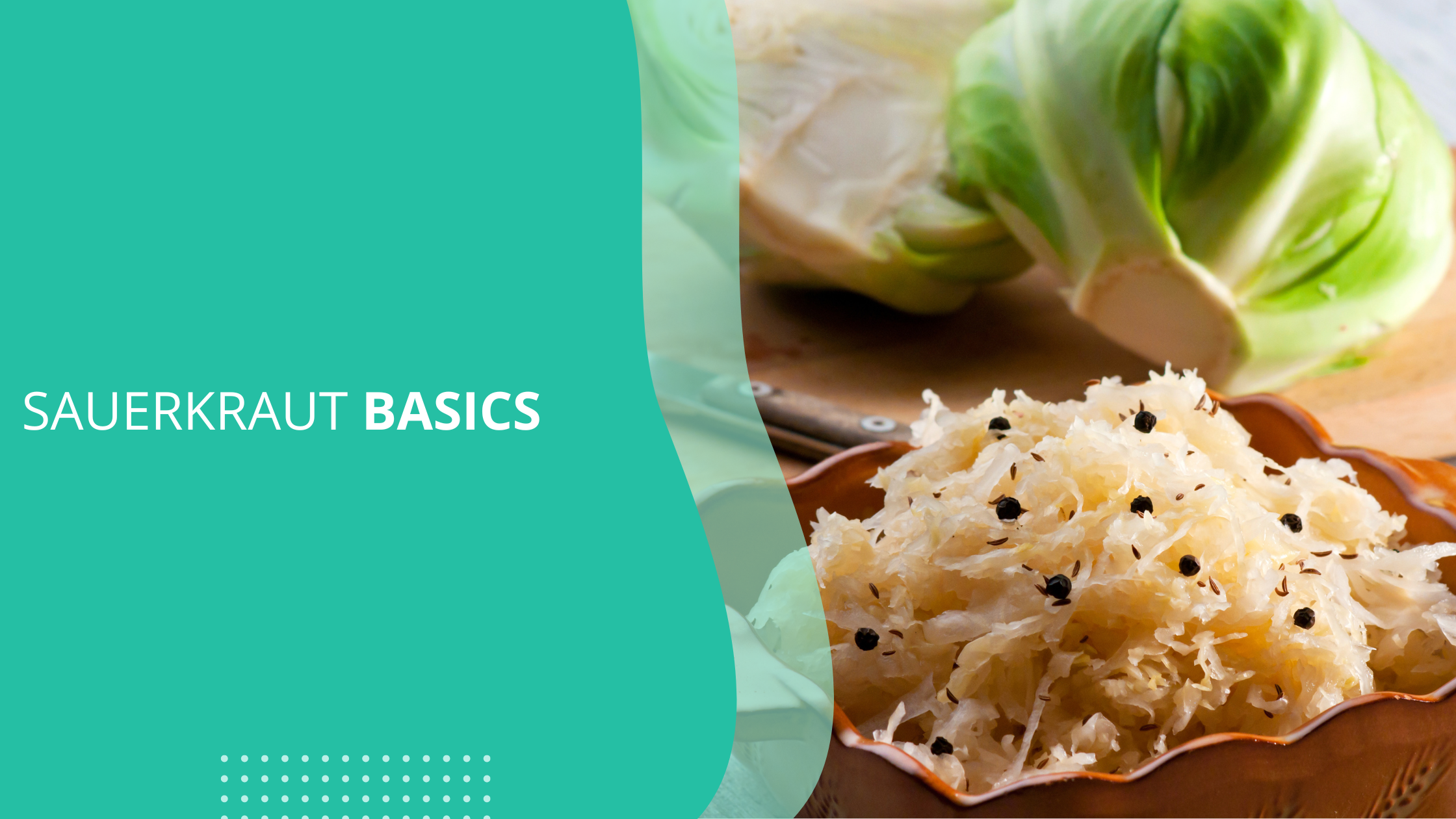
Sauerkraut Basics

Making sauerkraut or any fermented vegetable can be fun, nutritious, and rewarding.

A few pointers will help you achieve success

  • Use filtered or bottled water- Tap water contains antibacterial agents to inhibit harmful growth of bacteria. The same antibacterial agents kill only harmful but also beneficial bacteria.

Well water needs to be filtered also. It can contain naturally occurring minerals or even bacteria that can spoil the ferment.

  • Salt- make sure your salt doesn’t contain anti caking agents(read label- here is a list of anti caking agents on this website). Most of the time you are able to just read the salt ingredients and figure it out. There should be nothing but salt listed as an ingredient. Non iodized salt is best- Himalayan, kosher or table salt are the best options for your salt. Salt helps curb the bacterial overgrowth and regulates fermentation process. For sauerkraut a 2% salt brine is needed. Other vegetables call for varying percentages. Handy brine calculator can be found here: The probiotic jar. Or, you can add 3 tablespoons salt to every 5 lbs cabbage. Personally, I have never weighed salt, just added salt to the cabbage
  • The higher the vegetable quality the more success you will have– When shopping for vegetables to ferment, try to pick organic, or spray free vegetables. If able, locally sourced cabbage is best. If you are not able to find organic or spray free cabbage the next best thing is to remove and discard first few outer leaves. This will remove a good portion of chemical contamination that can prevent successful fermentation.
  • Clean all items that come in contact with cabbage- this includes your fermentation vessel along with knives, cutting boards and hands. Thoroughly wash knives and all items that will come in contact with the cabbage. This practice helps prevent introducing bacterial contamination into your sauerkraut which can ruin all your hard work.
  • Adequate storage area while it ferments and heat- Sauerkraut ferments best in room temperature (62-75 degrees) and no direct sunlight area of the home. A kitchen cupboard or on a counter out of direct sunlight is some areas that work well.
  • Patience- Sauerkraut goes through 3 stages of the fermentation process to achieve the probiotic and enzyme rich delicious tasting product. This process takes at least 3 weeks, If the room temperature is cooler this can take longer. The longer the cabbage is allowed to ferment the more healthy probiotic bacteria are in the product.

The stages of fermentation (these days are approximate)

Sauerkraut can be store for years if stored in a cool, dark environment

Stage 1 Days 1-5, the start of lactic acid fermentation.

Salt tolerant bacteria produce carbon dioxide. This transforms the fermentation vessel into an anaerobic environment. They break down available sugars to produce lactic acid, acetic acid (vinegar), ethyl alcohol, and mannitol, along with carbon dioxide, which are the bubbles you see floating to the surface along with brine being pushed out of the jar. The carbon dioxide to helps create an anaerobic fermentation environment by displacing any trapped oxygen.

Stage 2 Days 5-16 This phase starts once the bubbles have subsided

Lactic acid production takes place. Lactic acid acts as a preservative, supports digestion, inhibits the growth of harmful bacteria, increases the bio-availability of Vitamin C, produces enzymes, and much more

Stage 3 Days 16- 21 Ph drops and health promoting bacteria continue to flourish

The sauerkraut continues to age, and the ph drops to between 3.1 and 3.7. This acidic environment helps preserve the sauerkraut and allows the growth of the health promoting lactic acid bacteria.

Lets get started

Assemble supplies

You will need:

  • Cabbage
  • Water
  • Cutting board
  • Sharp knife
  • Salt
  • Scale to weigh salt (if you prefer to go that route)
  • Kraut pounder (or clean fist to pound cabbage into the vessel)
  • Fermentation vessel- this can be as simple as a clean mason jar or as elaborate as a fermentation crock- I tend to use my canning jars-they are inexpensive so I can make several ferments without breaking the bank.
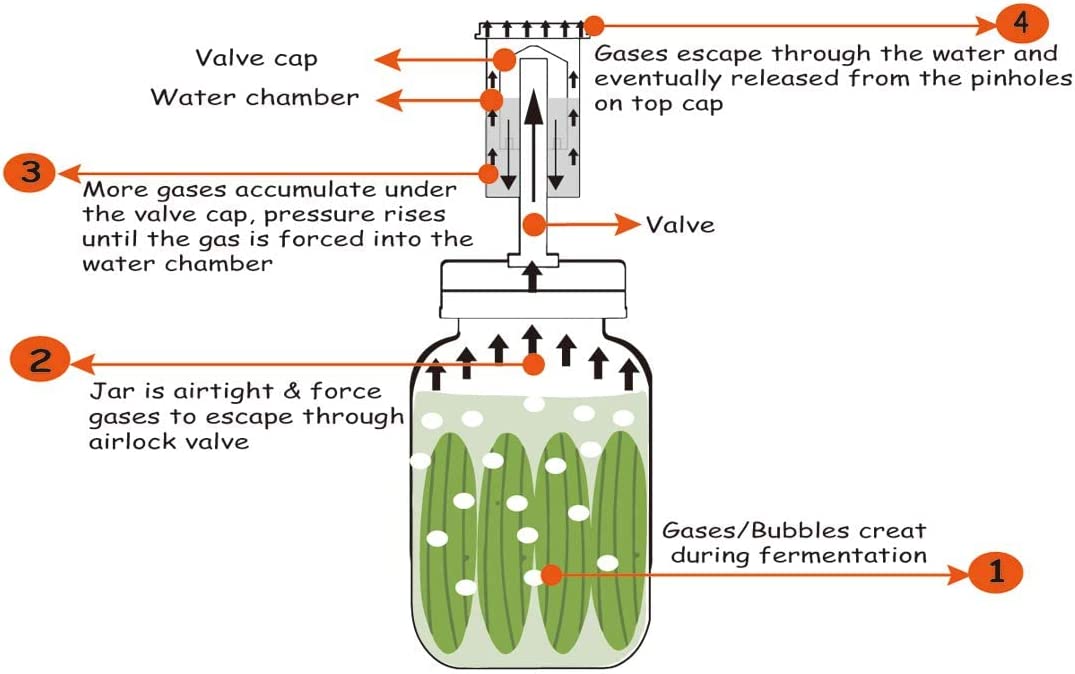
  • Fermentation is an anaerobic (without air) process. In order to avoid spoilage, the cabbage must be completely submerged under liquid. Some people use glass fermentation stones. Others use bubble airlock sets, which is my personal preference. The glass stones tend to shift and allow air to the cabbage. The airlocks create an anaerobic environment if they are used properly. Another method is to used cabbage leaves on top of the packed cabbage, press firmly. Make sure cabbage is submerged, add stones or other weights.(a plastic bag tied off with water can be used as weight also- I have used the is method on occasion)

To make sauerkraut

The very best way to get started is to watch this video on “The complete beginners guide to fermenting foods at home”

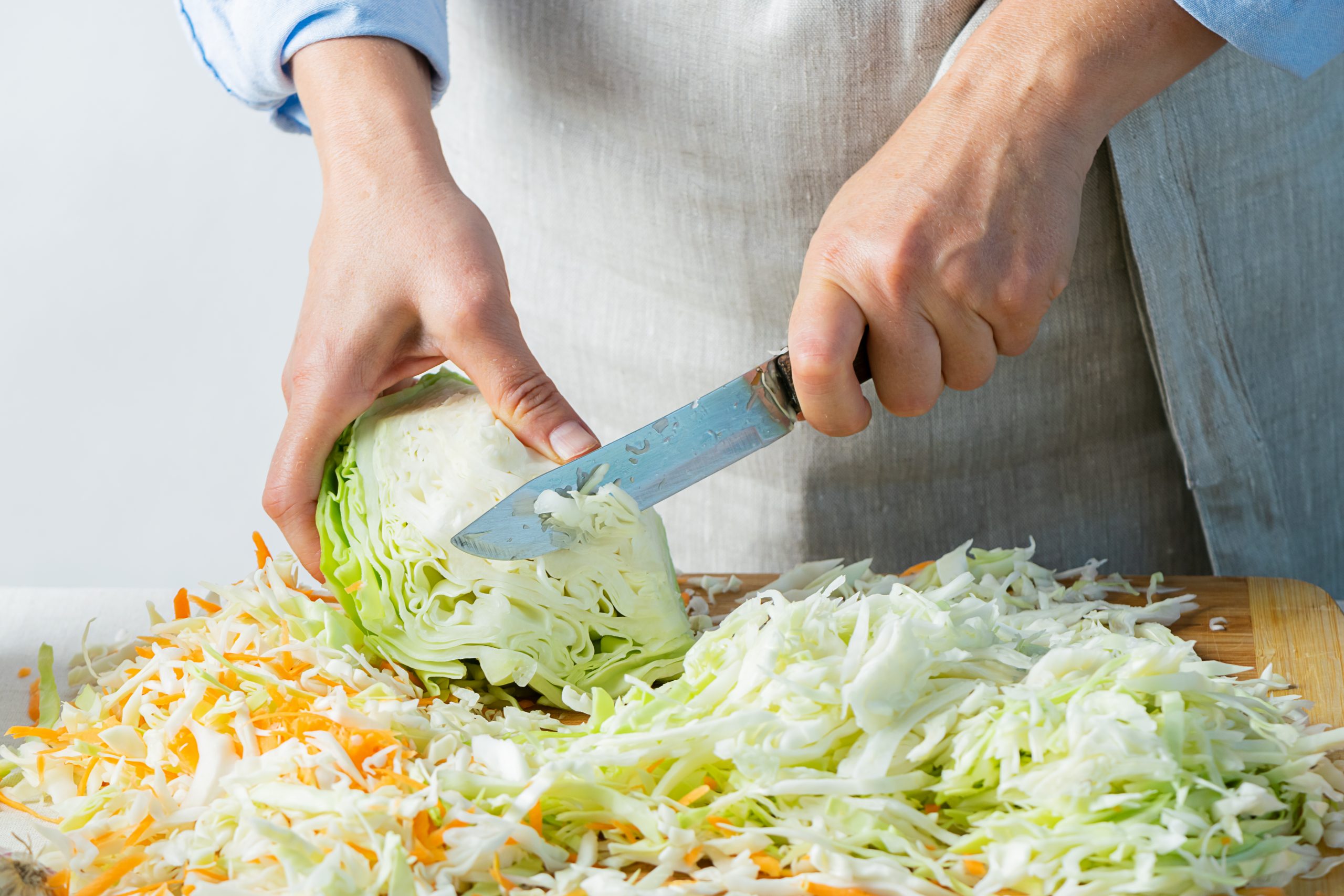
  1. Thinly slice cabbage. You can add some carrot or a bit of garlic or hot pepper for flavor and color. I personally use the 3 tablespoons to 5 lbs cabbage method. A more precise way to ferment is to make the 2% brine solution. Link above to calculate.

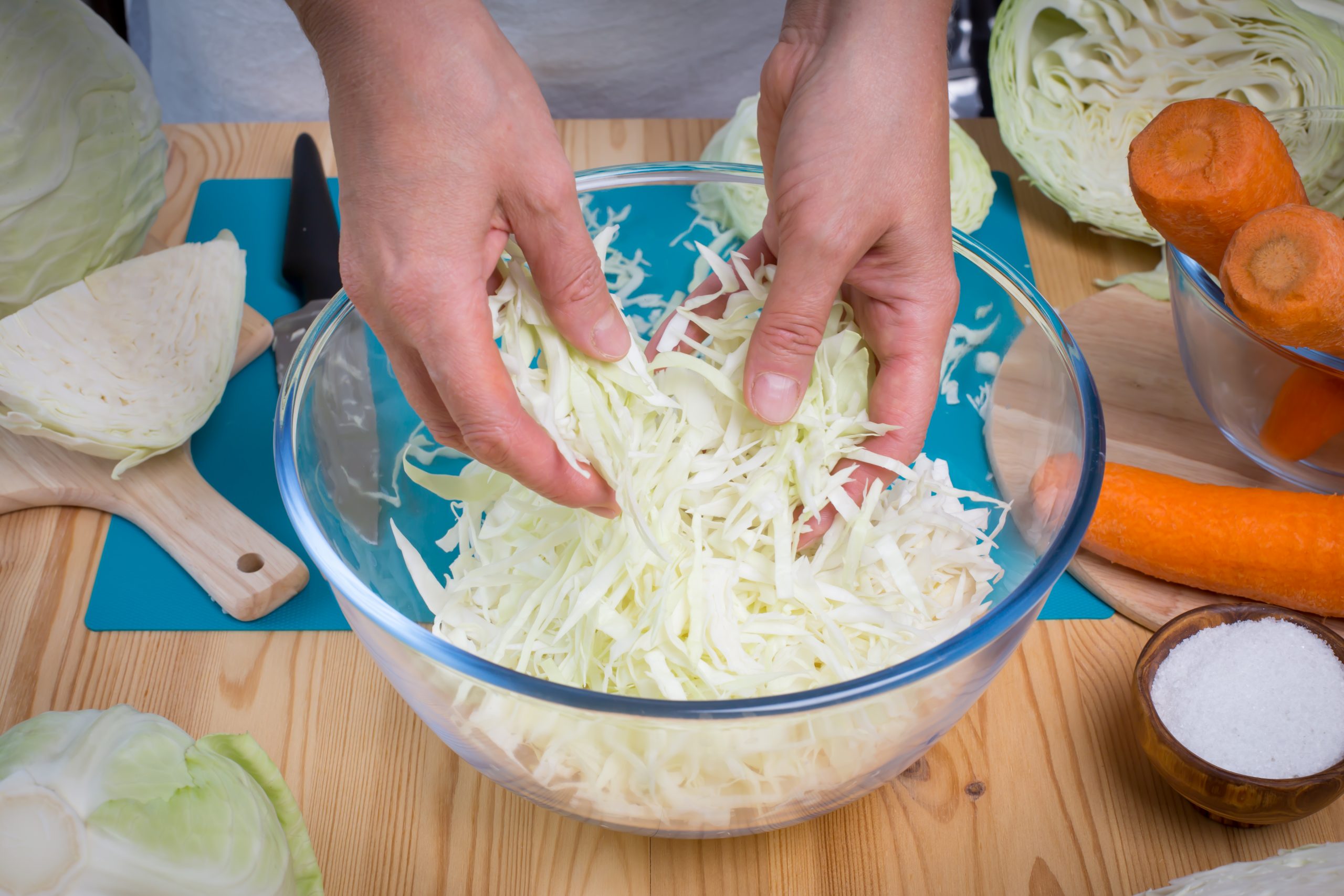
2. Add salt, massage cabbage, let set in bowl for 20 minutes to 1 hour. Liquid will form in bottom of vessel.

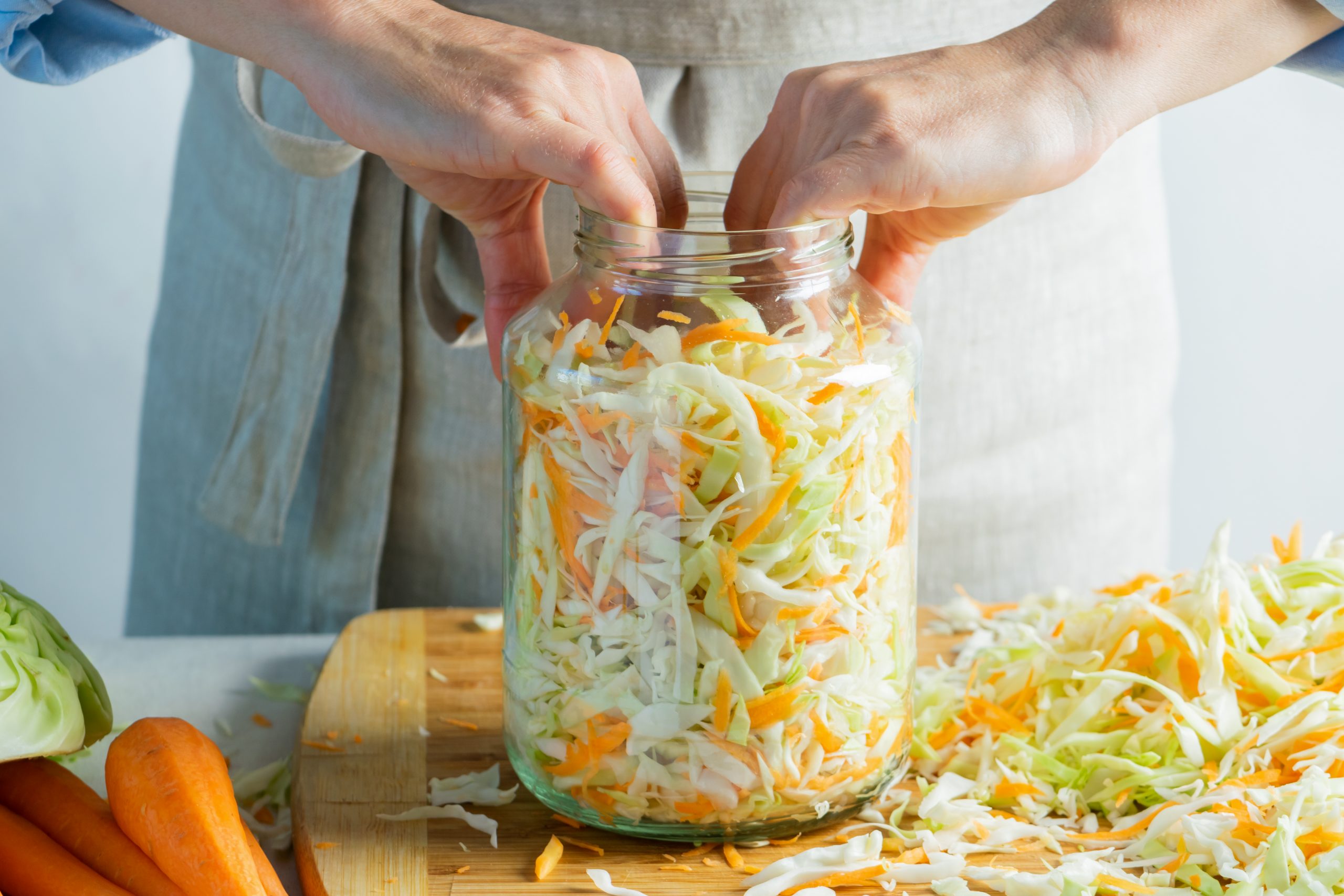
3. Tightly pack cabbage into fermentation vessel, add the liquid that formed from massaging the cabbage. If needed add 2 percent salt brine to thoroughly cover the cabbage. Press down the cabbage, making sure there ae no air pockets trapped in the jar.

4. Add airlock or stones. Make sure that the cabbage is thoroughly submerged Place vessel in a shallow bowl or on a plate to catch any overflow from fermentation bubbles for the first week or so.

5. Set in a room temperature environment, away from direct sunlight.

6. Check daily to make sure the cabbage is submerged under the liquid. If needed, add brine to keep submerged.

7. The sauerkraut should be ready after 3 weeks. Store in refrigerator. This will slow down the fermentation process.

Once you have mastered sauerkraut, there is a whole world of fermented foods out there to try and enjoy. From kefir to fermented condiments (catsup, mustard, pickles) to kombucha and more.

Warning: Fermentation can be addicting!


- Brooke Lounsbury

Medical Content Writer

Lifesaving Medications

Everyone should be empowered to care for themselves and their loved ones during the unexpected.

Recent Posts

Keeping you informed and safe.

Planning a Cruise?

Planning a Cruise?

Be sure to pack these Jase add-ons An outbreak of vomiting and diarrhea has been reported on the luxury cruise ship, the Queen Victoria. As of last count, at least 154 people have taken ill since the ship set sail in early January. The number of passengers on board...

A Rare Case of the Plague Was Found in Oregon

A Rare Case of the Plague Was Found in Oregon

Could you be next?Early this week an Oregon resident was diagnosed with bubonic plague. This is the first diagnosed case in nearly a decade. It is believed the person contracted the disease from their cat. Cats that hunt rodents can become infected and spread the...

Join Our Newsletter

Our mission is to help you be more medically prepared. Join our newsletter and follow us on social media for health and safety tips each week!

Proverbs on Health

Many proverbs are based in some degree of truth. Let’s explore some of the more popular ones and examine the validity of their health claims.

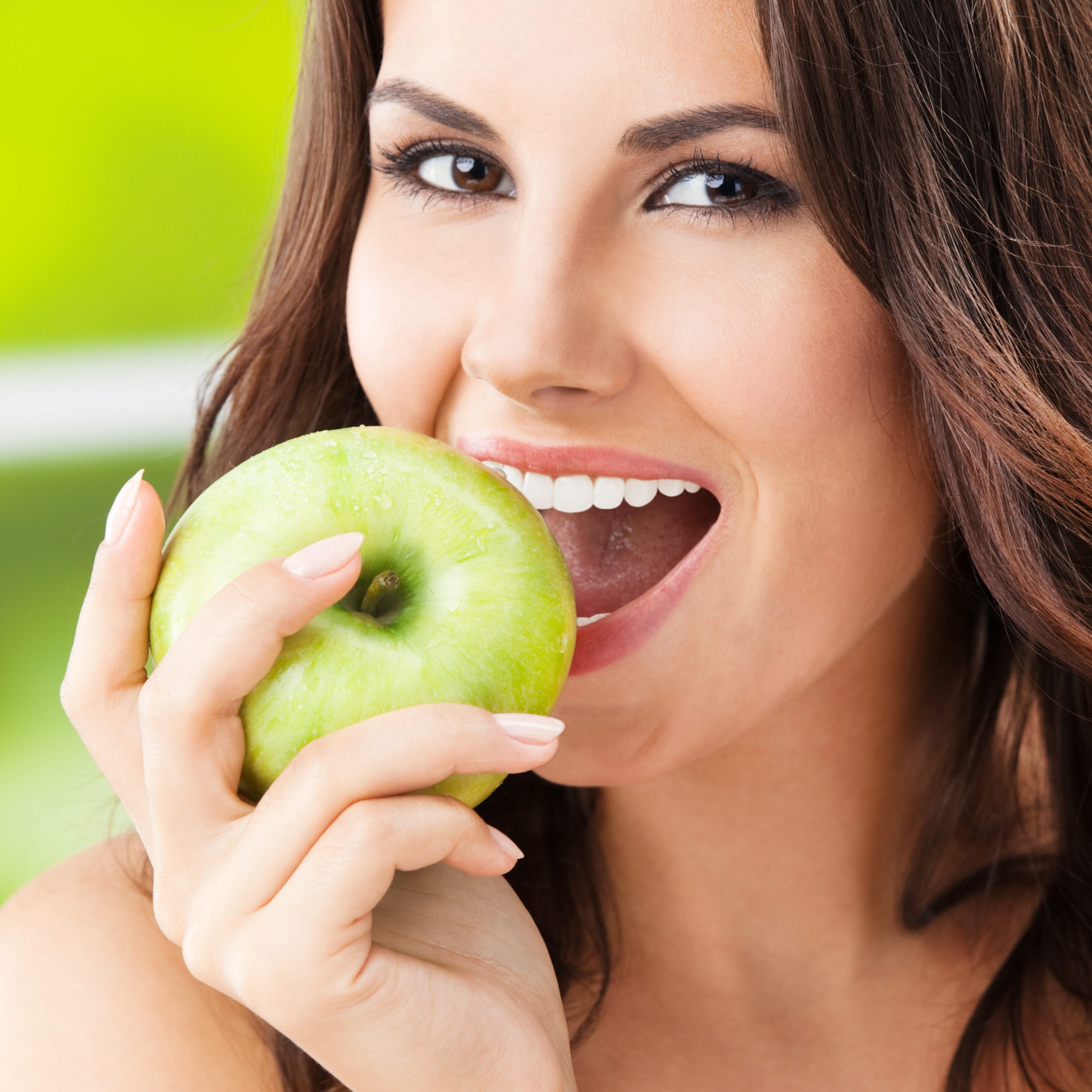
An apple a day keeps the doctor away

Apples are a rich source of natural pectin and soluble fiber. Pectin is found in highest concentration in green, underripe apples and Granny Smith varieties. Pectin is used to thicken jams and jellies, but it has many health promoting benefits, such as:

  • Reduces inflammation in the colon. There is research pointing to the powerful anti-inflammatory properties of pectin in the colon. The water-soluble fiber found in apple pectin can help repair damage to the colon in people with inflammatory bowel disease.
  • Reduces cholesterol– Pectin reduces the absorption of dietary cholesterol in the gut which in turn reduces cholesterol. High cholesterol levels elevate the risk for stroke, heart disease and diabetes.
  • Normalizes blood sugars-Soluble fiber, such as apple pectin stabilizes and helps reduce high blood sugars.
  • Aids in blood pressure control
  • Regulate bowel movements- Soluble fiber, found in apple pectin along with psyllium, citrus and other vegetables promotes bowel regularity

The less you eat the longer you live

  • Calorie restriction has long been suspected of improving health and longer life span. Research is proving this theory correct. During calorie restriction the body frees up energy to regenerate and repair cells instead of having to expend energy on poor food choices, or overeating. A recent study conducted by a group of scientists from US and China have concluded that calorie restriction can provide protection against aging in cellular pathways. Calorie restriction also decreases inflammation and dramatically increases number of immune cells in almost every tissue.

Early to bed, early to rise keeps a man healthy, wealthy, and wise

  • According to a study titled “Early to bed, early to rise! Sleep habits and academic performance in college students” Compared to those with the lowest academic performance, students with the highest performance had significantly earlier bedtimes and wake times. About two thirds of the world’s billionaires wake at 4 am. Many cite less distractions because the rest of the world is still sleeping. Studies indicate early risers have a dramatically decreased instance of a major depression episode.

Seven days without exercise makes one weak

  • This proverb is self-explanatory and needs no explanation. Be sure to dust off your walking shoes and exercise, or at least go for long walks as weather permits. If the weather isn’t cooperating, find a you tube exercise video and set a goal of several times a week to stay or get in shape. There are many different types of videos, from easy yoga to exercises tailored to disabled to high intensity training. Something for everyone. An exercise buddy can be a powerful motivator to keep and stay on a schedule.

Never let the sun go down on your anger

  • Unresolved anger can result in an increase in cortisol levels. Cortisol is the body’s way of dealing with stress, diverting energy to parts of the body that may need to fight a perceived or imaginary enemy. Cortisol suppresses immune function and increases blood sugar. It is better to deal with anger before going to bed. Journaling, talking to someone, resolving conflict before bed will help lead to a healthier body and relationships.

Prevention is better than cure

  • Prevention is always better than taking time out for sickness. Evaluate and make changes that promote health. Plan and make healthy meals ahead of time for those days you don’t have time to cook. Put exercise in your appointment calendar. Take time for yourself. Maintain mental health by reaching out to friends and family. Make sure your car is ready for travel in extreme weather conditions, so you don’t get caught in the severe cold or heat dealing with a preventable car related breakdown. Reduce stress (keeps cortisol levels down) by setting up a budget and sticking to it. Plan your days, weeks and months. Be flexible. Take time out for self care and preventative maintenance. Keep your dental and doctors appointments. Don’t put off needed procedures and exams.

He was born with a silver spoon in his mouth

  • Throughout the centuries silver has been used for its antibacterial properties. Silver containers were used during Roman Greco times to keep liquids from spoiling. During the 1300s Bubonic Plague outbreak, parents would give their children silver spoons to suck on to prevent the plague.
  • Pioneers brought their knowledge of silvers antibacterial properties with them when they immigrated to America. They would drop silver coins in their water supplies to inhibit growth of bacteria and algae.
  • As recent as the 1950s, homemakers would drop a silver coin in milk to prevent spoiling.

- Brooke Lounsbury

Medical Content Writer

Lifesaving Medications

Everyone should be empowered to care for themselves and their loved ones during the unexpected.

Recent Posts

Keeping you informed and safe.

Planning a Cruise?

Planning a Cruise?

Be sure to pack these Jase add-ons An outbreak of vomiting and diarrhea has been reported on the luxury cruise ship, the Queen Victoria. As of last count, at least 154 people have taken ill since the ship set sail in early January. The number of passengers on board...

A Rare Case of the Plague Was Found in Oregon

A Rare Case of the Plague Was Found in Oregon

Could you be next?Early this week an Oregon resident was diagnosed with bubonic plague. This is the first diagnosed case in nearly a decade. It is believed the person contracted the disease from their cat. Cats that hunt rodents can become infected and spread the...

Join Our Newsletter

Our mission is to help you be more medically prepared. Join our newsletter and follow us on social media for health and safety tips each week!

Melatonin – It Isn’t Just for Sleep Part 2

In part 1 we reviewed the two types of melatonin and how they function in regard to circadian rhythm sleep/wake patterns and antioxidant properties.

In part 2 we will discuss:

  • Difference between seasonal affective disorder and winter blues, along with statistics
  • How melatonin and cortisol work to maintain sleep/wake cycles
  • Tips to overcome and deal with winter blues and help those affected by seasonal affective disorder

The difference between SAD and winter blues:

According to the NIMH:
SAD is not considered a separate disorder but is a type of depression characterized by its recurrent seasonal pattern, with symptoms lasting about 4 to 5 months per year. Therefore, the signs and symptoms of SAD include those associated with major depression, and some specific symptoms that differ for winter-pattern and summer-pattern SAD. Not every person with SAD will experience all of the symptoms listed below.

SAD statistics

  • 10 million people in the US are affected
  • 90 percent diagnosed in winter
  • 10 percent diagnosed in summer
  • Incidence increases as you go further north in latitude
  • Symptoms are present for about 40 percent of the year
  • Does not necessarily occur every year, about 50 percent skip years

Symptoms of major depression may include: (SAD)

  • Feeling depressed most of the day, nearly every day
  • Losing interest in activities you once enjoyed
  • Experiencing changes in appetite or weight
  • Having problems with sleep
  • Feeling sluggish or agitated
  • Having low energy
  • Feeling hopeless or worthless
  • Having difficulty concentrating
  • Having frequent thoughts of death or suicide

 NOTE THERE IS A NATIONAL SUICIDE CRISIS HOTLINE 24/7- JUST DIAL 988

For winter-pattern SAD, additional specific symptoms may include:

  • Oversleeping (hypersomnia)
  • Overeating, particularly with a craving for carbohydrates
  • Weight gain
  • Social withdrawal (feeling like “hibernating”)

Specific symptoms for summer-pattern SAD may include:

  • Trouble sleeping (insomnia)
  • Poor appetite, leading to weight loss
  • Restlessness and agitation
  • Anxiety
  • Episodes of violent behavior

Winter blues statistics

  • Up to 14 percent of the general population experience some form of winter blues
  • As latitudes go up incidence also goes up-

Winter blues symptoms (not a clinical diagnosis)

  • Lack the motivation to complete some tasks but be able to handle major tasks
  • Still able to go to work and take care of home
  • Have trouble sleeping
  • Spend more time in bed than usual
  • Limited to winter months
  • Managed with lifestyle changes

Risk factors for both winter blues and SAD

  • Age-Younger people are more susceptible to winter blues than older population
  • Sex-Females are four times more likely be affected
  • Geography- Higher latitudes increase incidence
  • Family or personal history of depression

The role of melatonin cortisol in both SAD and winter blues

Melatonin- the sleep hormone

As stated in part 1, melatonin is produced in 2 places in the body- the pineal gland and mitochondria of cells. The pineal gland synthesizes melatonin during periods of darkness. This is tied to  the circadian rhythm, a roughly 24-hour biological wake/sleep cycle and accompanying physiological activities that occur during the cycle. Blue light, such as daylight and indoor bright LED lights, computer monitors, TVs phones and other devices that transmit blue light signal the pineal gland to shut down production of melatonin.

Cortisol- the awake hormone

Cortisol is a steroid hormone  synthesized by the adrenal glands, Adrenal glands are small triangular glands that sit on top of both kidneys. Cortisol has many functions in the body, from regulating  blood pressure, suppressing inflammation, a role in sugar metabolism and sleep/wake cycle.

Cortisol levels start to increase in the morning as melatonin levels decrease. This increase in cortisol and decrease in melatonin initiates awakening under normal circumstances.  Cortisol is also known as the “stress” hormone. It activates the fight or flight mechanism and triggers the release of glucose during times of stress, danger, or perceived danger.

Blue light, such as daylight and indoor bright LED lights, computer monitors, TVs phones and other devices that transmit blue light are one of the ways cortisol levels are triggered to increase. This is  results in more alert and wakefulness during daytime hours.

In conclusion:

Tips to combat winter blues and help SAD patients

Light boxes should be at least 10,000 lux at 15-18 inches for 20-30 minutes first thing in the morning. That will shut down melatonin and start cortisol production. Don’t stare directly into the box. Instead, read or do other activities as long as you are within the recommended distance from the light. Light boxes have really come down in price. As of this writing one highly rated 10,000 lux light box is under 20 dollars after coupon.

  • If able, get out for a one hour walk during the day. This will also help set your circadian rhythm.
  • Avoid computer, LED and phone screens after dark if possible. Limit your exposure by using a blue light blocking filter on the screens. This will help keep cortisol levels down and stabilize melatonin levels. Read by incandescent light if possible.
  • Avoid alcohol. Alcohol is a depressant. It also affects circadian rhythm if consumed late in the day.
  • Avoid sugar. Sugar consumption creates a sugar high followed by a sugar crash- leading to depression and moodiness
  • Eat a healthy, well-balanced diet. Make sure you are getting a good balance of fats, protein, and carbs.
  • Maintain a healthy vitamin D level. Consult your care provider for information. Vitamin D
  • Focus on or start a new hobby.
  • Keep warm. Staying warm and being properly dressed for the elements can lessen the burden on your body. Make a drink such as golden milk, made with turmeric, coconut milk, and a sprinkle of pepper for healthy, warm immune boosting drink. Recipe can be found here: Golden milk
  • Talk therapy- either reach out to friends, family or trusted neighbors and connect with others. If you are experiencing debilitating depression, suicidal ideation or unable to shake the slump, reach out to your primary care provider for evaluation. Don’t do this alone.
  • Remember, spring is only a few weeks away!

- Brooke Lounsbury

Medical Content Writer

Lifesaving Medications

Everyone should be empowered to care for themselves and their loved ones during the unexpected.

Recent Posts

Keeping you informed and safe.

Planning a Cruise?

Planning a Cruise?

Be sure to pack these Jase add-ons An outbreak of vomiting and diarrhea has been reported on the luxury cruise ship, the Queen Victoria. As of last count, at least 154 people have taken ill since the ship set sail in early January. The number of passengers on board...

A Rare Case of the Plague Was Found in Oregon

A Rare Case of the Plague Was Found in Oregon

Could you be next?Early this week an Oregon resident was diagnosed with bubonic plague. This is the first diagnosed case in nearly a decade. It is believed the person contracted the disease from their cat. Cats that hunt rodents can become infected and spread the...

Join Our Newsletter

Our mission is to help you be more medically prepared. Join our newsletter and follow us on social media for health and safety tips each week!

Melatonin – It Isn’t Just for Sleep

Part one focuses on what melatonin is, part two will discuss how melatonin plays a role in winter blues or seasonal affective disorder, along with tips to navigate this time of year.

What is melatonin?

You may have heard that melatonin is a hormone that regulates sleep. You may have even heard that melatonin is a powerful antioxidant. Melatonin is both and a lot more.

There are two places melatonin is synthesized and both work in vastly different capacities.

One is subcellular melatonin and the other is circulating melatonin.

Subcellular melatonin is known as the “hormone of daylight” It is synthesized in the mitochondria of  cells throughout the body– skin, epithelial, liver, thyroid, kidney, gastrointestinal tract, bone marrow, leukocytes, immune cells and many others. Once manufactured the melatonin stays near the cells and does its work. Stimulated by the UV spectrum of sunlight, or viruses, free radicals are neutralized by the antioxidant response of melatonin. Melatonin also stimulates other antioxidant enzymes to help fight free radicals.

There is some evidence that subcellular melatonin is synthesized by exposure of near infrared light (NIR).

Circulating Melatonin

Circulating melatonin is known as the “hormone of darkness”. It is produced in the pineal gland and regulated by the suprachiasmatic nucleus (SCN) Melatonin secretion is stimulated by darkness and inhibited by light, and in coordination with the (SCN), it is involved in maintaining circadian rhythmicity and regulating sleep. The SCN regulates the timing of melatonin release in a feedback loop, whereby melatonin levels determine the SCN regulation.

 Circadian rhythm disruption is proven to be one of the contributing factors in cancer progression and development.  Blue light, such as LED and computer monitors suppress melatonin production, leading to altered circadian rhythm.

 Circadian rhythm disruption is proven to be one of the contributing factors in cancer progression and development.  Blue light, such as LED and computer monitors suppress melatonin production, leading to altered circadian rhythm.

How to benefit from subcellular and circulating melatonin

Before bedtime:

  1. Avoid stimulating lights- blue light from computer and phone screens, LED lights- these will shut down circulating melatonin and disrupt circadian rhythm. Incandescent light to read by are a good choice. Reading on a pad even with blue blocker can disrupt melatonin levels. The blue blockers installed on many devices are not adequate to block the light.
  2. Campfires, candles, and red lights help keep melatonin levels intact and may even stimulate the subcellular melatonin to go after free radicals.
  3. Practice sleep hygiene- Go to bed at set time, have a routine. This helps signal your body that its time to go to bed. In addition, avoid stimulating conversations, snacking before bed and exercise a few hours before bedtime.
  4. Have your vitamin D level checked. Vitamin D plays an important part of melatonin regulation.
  5. Even though there isn’t clear cut evidence that blue light blocking glasses work, a small study revealed sleep duration and nighttime melatonin levels increased after use of blue light blocking glasses.

Our lives have become increasingly distant from natural light. Our sleep wake cycles are constantly disrupted by our modern way of living.

Chronobiology, the study of circadian rhythms and our health is becoming an increasingly important field of study.  How light affects melatonin levels is one area that chronobiology focuses on.

- Brooke Lounsbury

Medical Content Writer

Lifesaving Medications

Everyone should be empowered to care for themselves and their loved ones during the unexpected.

Recent Posts

Keeping you informed and safe.

Planning a Cruise?

Planning a Cruise?

Be sure to pack these Jase add-ons An outbreak of vomiting and diarrhea has been reported on the luxury cruise ship, the Queen Victoria. As of last count, at least 154 people have taken ill since the ship set sail in early January. The number of passengers on board...

A Rare Case of the Plague Was Found in Oregon

A Rare Case of the Plague Was Found in Oregon

Could you be next?Early this week an Oregon resident was diagnosed with bubonic plague. This is the first diagnosed case in nearly a decade. It is believed the person contracted the disease from their cat. Cats that hunt rodents can become infected and spread the...

Join Our Newsletter

Our mission is to help you be more medically prepared. Join our newsletter and follow us on social media for health and safety tips each week!

Fentanyl Crisis: Do You Have Narcan?

The heartbreaking headlines of innocent lives touched by the accidental overdose of one of the most insidious drugs in our time continues to explode to never heard numbers.

A toddler almost died while playing at a Tacoma Park. He had accidentally been exposed to fentanyl while playing at the park, He was rushed to the ER where Narcan an opioid overdose reversal drug was administered.

A toddler playing in a San Francisco public park almost died after somehow being exposed to the opioid fentanyl. He was also given Narcan.

Infant son of tech boss overdoses on fentanyl found at San Francisco playground. EMT administered Narcan, bringing him back from the brink of death.

Teen dies from  fentanyl overdose. The video reveals that other teens had been given prescription meds laced with fentanyl. They weren’t aware of the fentanyl contamination.

Parents warn of fentanyl danger from fake pills after Rocklin teen’s heartbreaking death. He thought he was buying Percocet on the street. It was fentanyl. His family reveals SnapChat is being used by drug dealers to sell illegal drugs. Their son had used this to purchase the fentanyl.

There are so many stories I can’t possibly link all of them.

Other drugs, including prescription drugs are now being laced with fentanyl. It is impossible to tell if the drug has been tainted. It takes a small amount of fentanyl to contaminate a pill.

Note: Fentanyl is used legally in patches for extreme pain. It is 100 times more potent than morphine. These patches are highly regulated and are not the topic of this paper.

What is Narcan, AKA naloxone?

According to the CDC:

“Naloxone is a life-saving medication that can reverse an overdose from opioids—including heroin, fentanyl, and prescription opioid medications—when given in time.1 Naloxone is easy to use and small to carry. There are two forms of naloxone that anyone can use without medical training or authorization: prefilled nasal spray and injectable.”

Naloxone quickly reverses an overdose by blocking the effects of opioids. It can restore normal breathing within 2 to 3 minutes2 in a person whose breath has slowed, or even stopped, as a result of opioid overdose. More than one dose of naloxone may be required when stronger opioids like fentanyl are involved.

Naloxone won’t harm someone if they’re overdosing on drugs other than opioids, so it’s always best to use it if you think someone is overdosing.

Signs of overdose

Recognizing the signs of opioid overdose can save a life. Here are some things to look for:

  • Small, constricted “pinpoint pupils”
  • Falling asleep or losing consciousness
  • Slow, weak, or no breathing
  • Choking or gurgling sounds
  • Limp body
  • Cold and/or clammy skin
  • Discolored skin (especially in lips and nails)

What to do if you think someone is overdosing (from CDC website)

It may be hard to tell whether a person is high or experiencing an overdose. If you aren’t sure, treat it like an overdose—you could save a life.

  1. Call 911 Immediately.
  2. Administer naloxone, if available.
  3. Try to keep the person awake and breathing.
  4. Stay with the person until help arrives

Narcan, AKA Naloxone is legal in all 50 states Each state has its guidelines to obtain this lifesaving drug. I recently went online and ordered Narcan through the state of Washington portal. It was quick, easy and free. They even have a video on how to use and administer the Narcan.  I plan on keeping it in my car. My husband is doing the same.

Vending machines carrying Narcan

Vending machines are popping up across the country. However, they are few and widespread.

Across the U.S., cities including San Diego, Las Vegas and New York are installing vending machines and locker kiosks stocked with nasal sprays that contain naloxone, a medication that can be used in emergencies for someone who has overdosed on opioids, including fentanyl.

Good Samaritan laws are in place in most states to protect those who are overdosing and anyone assisting them in an emergency from arrest, charges, or a combination of these. Learn about the laws in your state.

Please google your states requirements for how to obtain Narcan. Some states keep the Narcan behind the counter at pharmacies, you just have to ask for it. Other states have mail order such as Washington state.

The stigma of having this lifesaving drug needs to go away. Too many people are being affected by this. Innocent little ones, unsuspecting teens and others are all becoming victims of this horrible drug.

- Brooke Lounsbury

Medical Content Writer

Lifesaving Medications

Everyone should be empowered to care for themselves and their loved ones during the unexpected.

Recent Posts

Keeping you informed and safe.

Planning a Cruise?

Planning a Cruise?

Be sure to pack these Jase add-ons An outbreak of vomiting and diarrhea has been reported on the luxury cruise ship, the Queen Victoria. As of last count, at least 154 people have taken ill since the ship set sail in early January. The number of passengers on board...

A Rare Case of the Plague Was Found in Oregon

A Rare Case of the Plague Was Found in Oregon

Could you be next?Early this week an Oregon resident was diagnosed with bubonic plague. This is the first diagnosed case in nearly a decade. It is believed the person contracted the disease from their cat. Cats that hunt rodents can become infected and spread the...

Join Our Newsletter

Our mission is to help you be more medically prepared. Join our newsletter and follow us on social media for health and safety tips each week!