
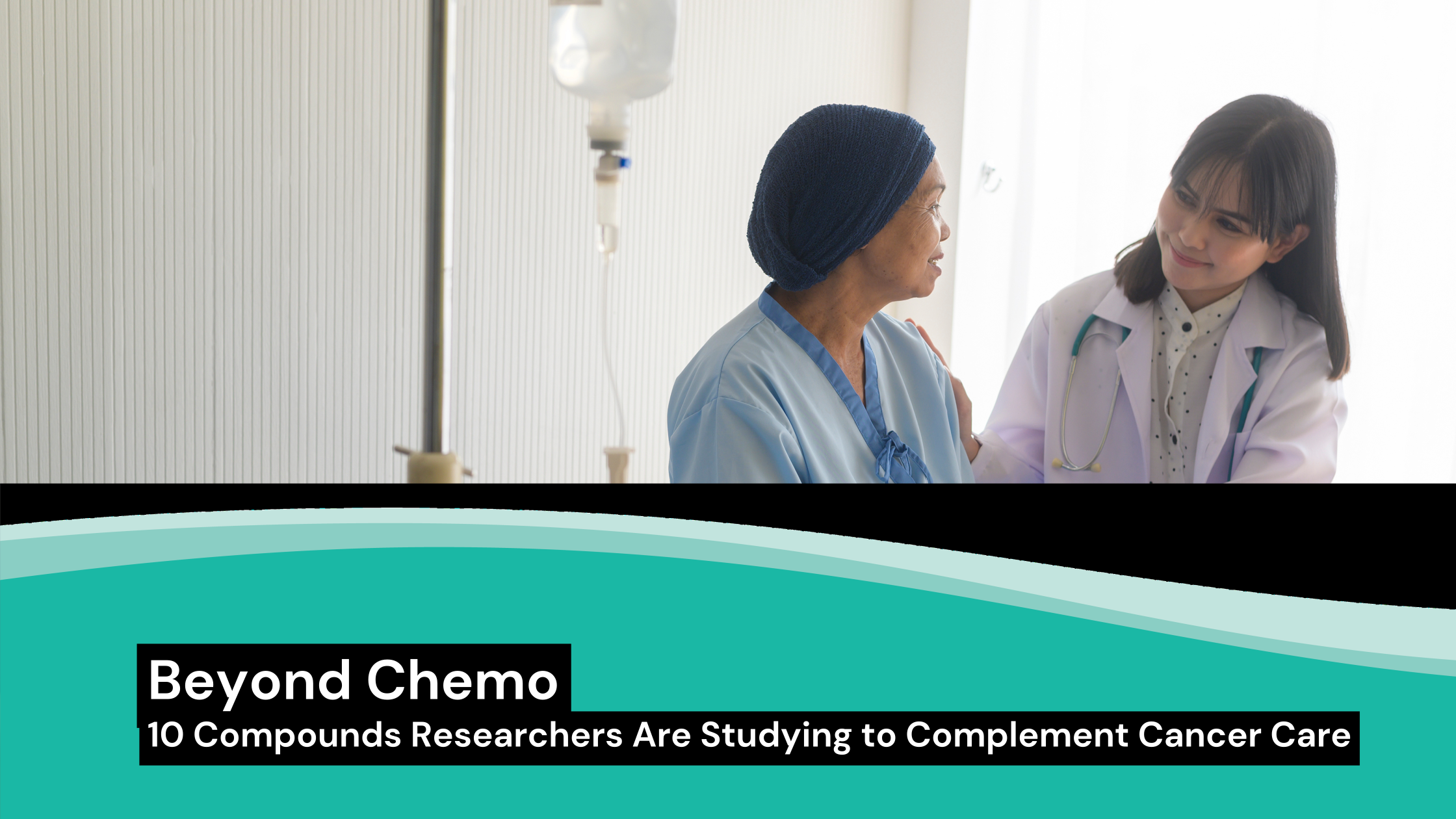
Cancer treatment has always been a moving target. Chemotherapy, radiation, and surgery remain the pillars of oncology — but for decades, researchers have been quietly building a parallel body of literature around compounds that may support, enhance, or complement those conventional approaches. Some are repurposed drugs that have been in clinical use for years. Others are natural compounds with centuries of traditional use now being examined under rigorous scientific methodology.
This is not a list of cancer cures. It is a survey of what the current research shows about compounds generating legitimate scientific interest — and why physicians, researchers, and informed patients are paying closer attention to them.
1. Ivermectin
Best known as an antiparasitic, ivermectin has accumulated a substantial body of preclinical research suggesting anticancer properties. Studies indicate it may disrupt tumor blood supply by inhibiting angiogenesis — effectively starving cancer cells of the oxygen and nutrients they need to grow. It has also shown activity in reversing multidrug resistance, potentially restoring the effectiveness of chemotherapy agents, and promoting cancer cell death via autophagy (programmed cellular self-destruction).1
Note: For cancer treatment, Ivermectin is not FDA-approved, not standard of care, and ASCO and the American Cancer Society advise against its use outside a clinical trial.
2. Mebendazole
Another antiparasitic with a growing oncology research profile. Mebendazole disrupts microtubule formation — the cellular scaffolding cancer cells depend on to divide. It inhibits new blood vessel formation to tumors, down-regulates proteins that shield cancer cells from apoptosis, and has shown synergistic effects with conventional chemotherapy and radiation in multiple cancer models. A 2019 review in Cancers characterized it as a serious candidate for drug repurposing in oncology.2
Note: For cancer treatment, Mebendazole is not FDA-approved, not standard of care, and ASCO and the American Cancer Society advise against its use outside a clinical trial.
3. Medicinal Mushrooms: Reishi and Turkey Tail
Both Reishi (Ganoderma lucidum) and Turkey Tail (Trametes versicolor) have been used in traditional East Asian medicine for centuries. The underlying mechanisms are now better understood. Bioactive compounds in these mushrooms bind to receptors on immune cells — activating natural killer cells, T cells, and macrophages — and enhance cytokine production, improving the immune system’s ability to identify and clear abnormal cells. Reishi compounds have additionally shown anti-angiogenic and anti-metastatic activity in research models.3
4. Olive Leaf Extract
Rich in polyphenols — particularly oleuropein — olive leaf extract has demonstrated potent anti-inflammatory activity and antioxidant properties relevant to cancer biology. Free radical damage contributes to both the initiation and progression of many cancers; the extract’s ability to neutralize oxidative stress makes it an area of ongoing interest, particularly in hormone-related malignancies.4
5. Green Tea Extract (EGCG)
Epigallocatechin gallate (EGCG), the primary active catechin in green tea, has been one of the most extensively studied natural compounds in cancer research. It selectively induces apoptosis in cancer cells while leaving healthy cells relatively unaffected, blocks pro-cancer signaling pathways that drive cell replication, and inhibits angiogenesis in tumors. The selectivity profile — affecting malignant cells preferentially — is what makes EGCG particularly interesting to researchers.5
6. Methylene Blue
Originally developed as an antimalarial, methylene blue is now being studied in the context of photodynamic therapy — a treatment modality that uses light activation to destroy cancer cells. Its mechanism involves flooding cells with oxygen (cancer cells frequently exploit low-oxygen microenvironments), reducing oxidative stress, protecting mitochondrial function, and supporting healthy cell survival signaling. Current research is focused on optimizing its use as a photosensitizing agent in oncology.6
7. Berberine
Found in goldenseal, barberry, and Oregon grape, berberine is often discussed for its metabolic effects — it’s sometimes called “nature’s metformin” for its insulin-sensitizing properties. That metabolic activity is directly relevant to cancer: berberine modulates proliferation signaling pathways, induces cancer cell death, inhibits tumor blood supply, and regulates gut microbiota in ways that may support immune function. It has also shown enhancement of other anti-tumor agents in combination studies.7
8. Curcumin (Turmeric)
Curcumin, the active compound in turmeric, requires co-administration with piperine (black pepper) to achieve meaningful bioavailability — a critical practical point. With adequate absorption, curcumin has demonstrated the ability to downregulate cancer-promoting signaling cascades, reduce chronic inflammation (a recognized driver of malignancy), modulate immune and oxidative stress markers, and mitigate DNA damage caused by radiation — making it relevant to patients undergoing radiotherapy.8
9. Metformin
The most widely prescribed antidiabetic drug in the world has a compelling parallel research profile in oncology. Metformin lowers circulating insulin levels (elevated insulin is a tumor growth promoter), inhibits mTOR and AMPK pathways central to cancer cell proliferation, suppresses cancer stem cells — a population associated with treatment resistance and metastasis — and reduces tumor blood supply. Multiple large observational studies have shown reduced cancer incidence and improved outcomes in diabetic patients on metformin.9
10. Dandelion Root
An unlikely entry, but one with emerging data. Dandelion root extract has demonstrated the ability to activate multiple apoptotic signaling pathways in colorectal cancer cells and suppress gastric cancer cell proliferation and migration in laboratory studies. Its profile as a non-toxic agent with low side effect burden makes it a candidate for integration into broader cancer support protocols, particularly where drug-resistant disease is a concern.10
A Physician’s Note on Context
Most of the compounds above have robust preclinical data; human clinical trial evidence ranges from preliminary to moderate. None should be used as a substitute for oncology care. The appropriate framework is integration — working with a physician who understands both conventional treatment and this emerging research landscape to identify what, if anything, might be appropriate for a given patient’s situation.
For patients who want that kind of informed, physician-guided conversation — without waiting months for an appointment — Jase Medical’s telemedicine platform connects you with licensed physicians who take the full picture seriously.
Learn more about Jase Medical’s emergency preparedness kits and other medication solutions at jase.com
References
- Tang M, et al. Ivermectin, a potential anticancer drug derived from an antiparasitic drug. Pharmacol Res. 2021;163:105207.
- Guerini AE, et al. Mebendazole as a candidate for drug repurposing in oncology. Cancers. 2019;11(9):1284.
- Guggenheim AG, Wright KM, Zwickey HL. Immune modulation from five major mushrooms: application to integrative oncology. Integr Med. 2014;13(1):32–44.
- Boss A, et al. Evidence to support the anti-cancer effect of olive leaf extract. Nutrients. 2016;8(8):513.
- Farhan M. Green tea catechins: nature’s way of preventing and treating cancer. Int J Mol Sci. 2022;23(18):10713.
- Garcia-Padilla C, et al. Methylene blue increases active mitochondria and cellular survival through modulation of miR16–UPR signaling axis. J Mol Pathol. 2025;6(3):16.
- Almatroodi SA, Alsahli MA, Rahmani AH. Berberine: anticancer effects through modulation of cell signaling pathways. Molecules. 2022;27(18):5889.
- Cozmin M, et al. Turmeric: from spice to cure. Front Nutr. 2024;11:1399888.
- Munzenmayer C. Metformin’s anticancer odyssey: multifaceted mechanisms. Biochimie. 2025;233:1–15.
- Ovadje P, et al. Dandelion root extract affects colorectal cancer proliferation and survival through the activation of multiple death signalling pathways. Oncotarget. 2016;7(45):73080–73100.
Recent Posts
Keeping you informed and safe.

Medication Management During a Hurricane or Flood Evacuation
Medication Management During a Hurricane or Flood Evacuation By the Jase Medical Team The storm track shifts west, and suddenly you have an hour to load the car. Clothes are easy. Chargers, important documents, water...you know where those go. Then you get to the...
Pink Eye: When You Actually Need Antibiotic Eye Drops
Pink Eye: When You Actually Need Antibiotic Eye Drops By the Jase Medical Team It’s Monday morning, and your child wakes up with one eye crusted shut. You clean it up, get everyone out the door, and hope for the best. By 9:15, the school calls. Your child has pink...
Controlled Substances in a Disaster
Controlled Substances in a Disaster: Why the Schedule on Your Prescription Changes Everything By the Jase Medical Team ou evacuated with four days of medication in your bag. Now you're two states from home, the pharmacy holding your prescription is closed, and you're...
For Clinicians | Controlled Substance Emergency Refill Rules
For Clinicians | Controlled Substance Emergency Refill Rules: A Pharmacist's Q&A By Dr. Jamie Wilkey, PharmD — Director of Clinical Strategy, JaseMedically reviewed and edited by Kristen Carpenter, PA-C Hi again, it's Jamie, your pharmacist. Here at Jase, we...