
*By the Jase Medical Clinical team*
I want to tell you something that caught my attention as a physician before it caught my attention as a CEO.
A few weeks ago I was reading through case reports from colleagues in the Northeast. Family docs, internists, infectious disease specialists. The pattern was impossible to ignore. They’re seeing tick-borne illness earlier in the year, in places they’ve never seen it, in patients who had no idea they were at risk. One physician in Vermont told me he treated his first Lyme case of the year in February.
February.
That’s not a talking point. That’s a clinical data point. And it tells you everything you need to know about where we are headed this spring and summer.
What’s Actually Happening
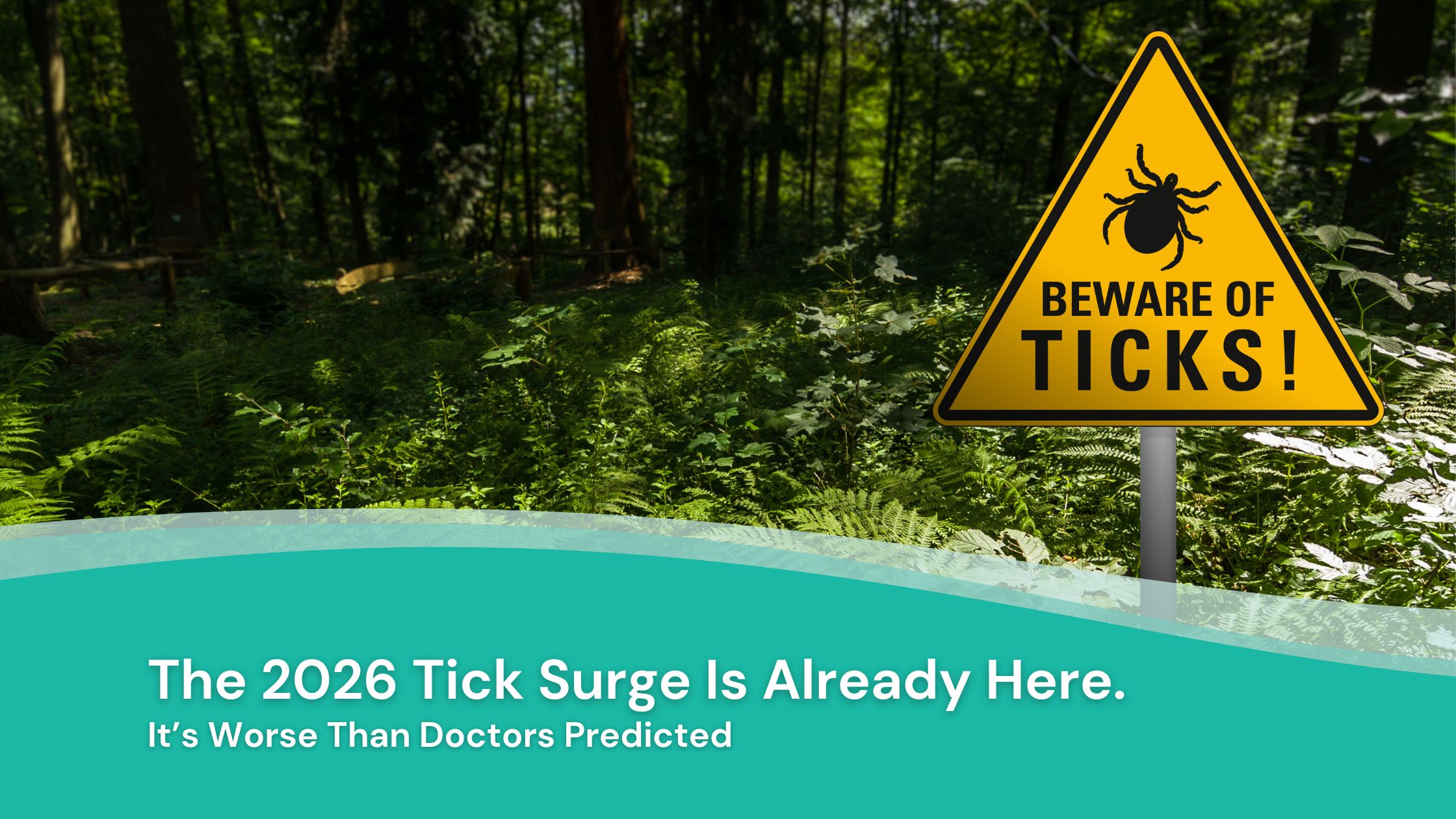
Tick populations have been expanding geographically for over a decade. Milder winters. Shifting wildlife corridors. More human activity in tick-dense areas. None of that is new. What is new — what makes 2026 different — is that the species carrying the most dangerous pathogens have now established permanent populations in regions that were considered safe as recently as five years ago.
The black-legged tick, Ixodes scapularis — the one responsible for Lyme disease — is not a visitor anymore in places like the upper Midwest and northern New England. It lives there now. And it’s active earlier in the spring and later into the fall, which means the old “May through August” tick season guidance is increasingly meaningless.
Physicians in northern states are treating tick-borne illness before the snow is off the ground.
Four Diseases, One Vulnerability
Most people hear “tick bite” and think Lyme disease. That’s understandable. Lyme is the most common tick-borne illness in the US, with over 476,000 cases diagnosed annually. The classic bullseye rash, the flu-like onset, the joint pain and neurological complications that follow when treatment is delayed — it’s serious. But it’s not the whole picture.
A single tick bite can transmit any of four major bacterial infections. Each one carries real consequences.
Lyme Disease (Borrelia burgdorferi). First-stage symptoms can look like a bad flu. Left untreated, it becomes something far worse — joint destruction, neurological damage, cardiac involvement. Early treatment changes the trajectory completely.
Anaplasmosis (Anaplasma phagocytophilum). Spread by the same tick as Lyme. Sudden fever, crushing headache, muscle pain. Gets misdiagnosed as flu constantly. In immunocompromised patients, it can progress to respiratory failure and organ damage.
Ehrlichiosis (Ehrlichia chaffeensis). Spread primarily by the lone star tick, whose range has pushed significantly into the Northeast. Fever, fatigue, dangerously low platelet and white blood cell counts. The mortality rate for untreated ehrlichiosis is meaningfully higher than Lyme.
Rocky Mountain Spotted Fever (Rickettsia rickettsii). The name is misleading — RMSF now occurs across much of the continental US. It is the deadliest tick-borne disease in North America. It can kill within days of symptom onset, and the classic spotted rash often shows up late, after the treatment window has already narrowed.
Here’s the Part That Matters
All four of those infections respond to the same antibiotic: doxycycline.
Doxycycline is a broad-spectrum tetracycline with exceptional activity against the intracellular bacteria behind all four diseases. For Lyme, it’s first-line treatment in adults and children over eight. For anaplasmosis, ehrlichiosis, and RMSF, it’s not just first-line — it’s the only reliably effective option. We supply it in the base JaseCase for a reason. Everyone should have this on hand, just in case.
The CDC and the Infectious Diseases Society of America both recommend initiating doxycycline empirically — based on clinical suspicion alone, before lab results come back — when tick-borne illness is suspected. That recommendation exists because the organisms causing these diseases don’t wait for a confirmation number from the lab. And in the case of RMSF, delaying treatment while waiting on results is directly associated with higher mortality.
As a physician, that’s the piece I need you to understand. The science here is not ambiguous. Early doxycycline changes outcomes.
The Gap That Keeps Me Up at Night
Think about where most people encounter ticks. Hiking trails. Campgrounds. The backyard of a cabin two hours from the nearest urgent care. Even in suburban settings, the timeline from tick bite to symptom onset to physician visit to filled prescription can stretch across days. In serious tick-borne illness — particularly RMSF — those days are the difference between an outpatient course of antibiotics and a hospital bed.
This is the problem I built Jase Medical to solve. Not the theoretical version. The real one. The version where a family on a camping trip pulls a tick off their kid and has no way to act on what they know until Monday morning.
A supply of physician-prescribed doxycycline in your emergency medical kit means you’re not waiting on the system to catch up with the biology. You’re prepared to act when it matters.
What to Do Right Now
Start with prevention. Use EPA-registered repellents — DEET at 20% or higher, picaridin, or permethrin-treated clothing. Do full-body tick checks after any time spent outdoors. Shower within two hours of coming inside. Check your pets; they carry ticks into the home more often than people realize.
Know the warning signs. Unexplained fever with headache and muscle aches after outdoor activity. Any rash, especially one that’s spreading or has a bullseye pattern. If you see those, mention tick exposure to your physician immediately — don’t wait for someone to ask.
Close the gap. Talk to a Jase Medical physician about whether doxycycline and other emergency antibiotics belong in your family’s kit. Don’t wait for a tick-borne illness to find out you weren’t ready.
The 2026 tick surge is not hypothetical. It’s already underway. The physicians sounding the alarm are watching their patient panels and seeing the numbers climb in real time.
The good news is that the single most important medication for treating all four major tick-borne diseases is well understood, widely available, and something you can have on hand before you ever need it.
Be ready before you need to be.
Build Your Emergency Medical Kit with Jase Medical →
This article is for educational purposes and does not constitute medical advice. Consult a physician for diagnosis and treatment of any illness.
Learn more about Jase Medical’s emergency preparedness kits and other medication solutions at jase.com
Lifesaving Solutions
Everyone should be empowered to care for themselves and their loved ones during the unexpected. Check out our recent lifesaving products today.
Recent Posts
Keeping you informed and safe.

For Clinicians | Pediatric Dosing 101: What Parents Need From You Before They’re Dosing Alone
For Clinicians | Pediatric Dosing 101: What Parents Need From You Before They're Dosing Alone By Dr. Jamie Wilkey, PharmD, Director of Clinical EducationMedically reviewed and edited by Aaron Asay, PA-C, DMSc, FIBODM, FAWM Pharmacy school drills one line into you over...
What is Plague?
What Is Plague? By the Jase Medical Team Plague is back in the headlines, and people are suddenly Googling a disease they may not have thought about since history class. A 28-year-old laboratory worker at an anti-plague research institute in Siberia recently died...
For Clinicians | What Is Plague? One Bacterium, Three Diseases
For Clinicians | What Is Plague? One Bacterium, Three Diseases By Dr. Jamie Wilkey, PharmD, Director of Clinical EducationMedically reviewed and edited by Aaron Asay, PA-C, DMSc, FIBODM, FAWM Well, the plague is back in the news. Reports out of Russia in early October...

Nobody Has Your Medication List, Including Your Doctor and Your Pharmacy
Nobody Has Your Medication List, Including Your Doctor and Your Pharmacy By the Jase Medical Team Most of us assume that somewhere in the healthcare system, there is one correct list of every medication we take. Your primary care doctor has a list. Your pharmacy has a...