
Five Halloween Hazards That Look Harmless By the Jase Medical Team The scariest things this Halloween might not look scary at all. A bag of black licorice. A pair of costume contacts. A medication you take every night. A mushroom growing in the yard. A bat that...
Hand, Foot, Mouth Disease
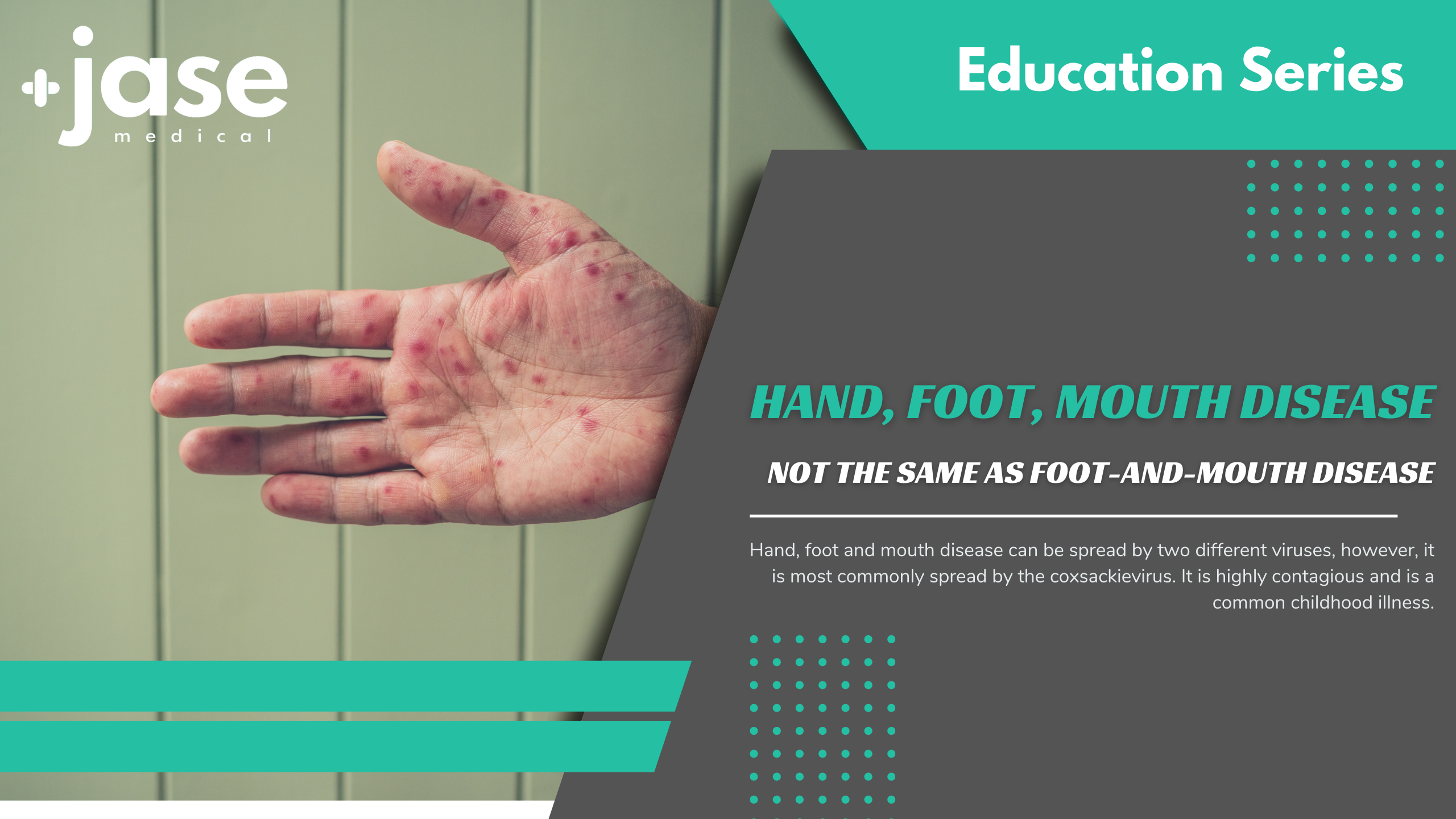
Hand, foot, and mouth disease is often confused with foot-and-mouth disease (also called hoof-and-mouth disease), which affects cows, sheep, and pigs.
Humans do not get the animal disease, and animals do not get the human disease.
What is it:
Hand, foot and mouth disease can be spread by two different viruses, however it is most commonly spread by the coxsackievirus. It is highly contagious and is a common childhood illness. HFMD is common in children under the age of 10, but any age can contract it. You can contract the disease more than once, however the symptoms will be less severe.
The virus can sometimes spread to others for days or weeks after symptoms go away or if they have no symptoms at all (carriers of the virus).
How is it spread:
HFMD is most contagious during the first week when a person is sick.
This highly contagious virus is spread through contact with:
- Nasal and throat secretions (saliva, drool or nasal mucus)
- Fluid from scabs or blisters
- Poop (not using hygienic bathroom practices)
Common signs and symptoms:
- Sore throat.
- Feeling sick.
- Painful, blister-like lesions on the tongue, gums and inside of the cheeks. These lesions can lead to poor appetite or risk of dehydration due to pain when attempting to eat or drink.
- A blister like rash on the palms, soles of the feet and sometimes the buttocks. The rash is not itchy. The blisters are usually small, oval, and white, and are usually not found on the trunk.
- Fussiness in infants and toddlers.
- Loss of appetite.
- Symptoms usually last from 7-10 days after becoming infected.
How to treat:
Antibiotics do not work on viruses and are not given to children with HFMD. HFMD will get better on its own.
- Tylenol or ibuprofen. Ask your care provider what they recommend for pain relief.
- Be sure to offer liquids to prevent dehydration.
- Do not squeeze or otherwise pierce blisters. The fluid contained in the blisters is highly contagious.
When to seek medical care:
If your child is unwell with a fever and a skin rash (small bright red spots or purple spots or unexplained bruises) that does not turn to skin-color (blanch) when you press on it, this may be a sign of meningococcal infection (see Meningococcal infection).(This is a very rare occurrence)
Lifesaving Medications
Everyone should be empowered to care for themselves and their loved ones during the unexpected.
Recent Posts
Keeping you informed and safe.

Five Halloween Hazards That Look Harmless

For Clinicians | Trick or Treatment? 5 Halloween Health Facts From a Pharmacist
For Clinicians | Trick or Treatment? 5 Halloween Health Facts From a Pharmacist By Dr. Jamie Wilkey, PharmD, Director of Clinical EducationMedically reviewed and edited by Kristen Carpenter, PA-C Halloween is this week, so we’re taking a break from our in-depth...

After a Tick Bite: Why the Lyme Disease Rash Doesn’t Always Look Like a Bull’s-Eye
After a Tick Bite: Why the Lyme Disease Rash Doesn't Always Look Like a Bull's-Eye By the Jase Medical Team You found a tick attached to your skin. You removed it. Now what? Most people know to watch for signs of Lyme disease after a tick bite. But there's a problem...