
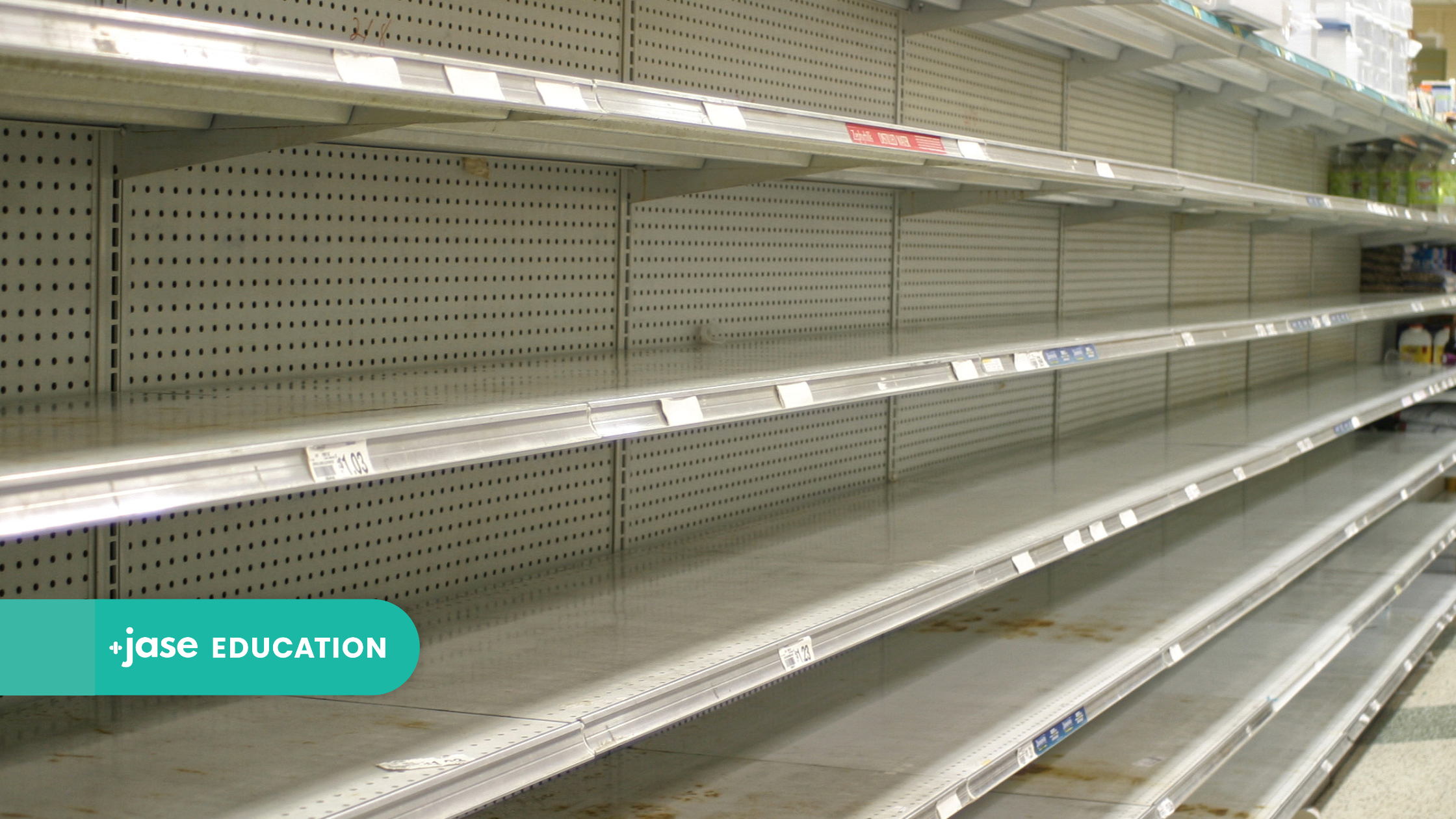
Why You Can’t Count on the Pharmacy in a Crisis
By Aaron Asay, PA-C, DMSc — Executive Director, JaseResponse
Most of the time, the pharmacy works exactly the way we expect it to.
Your child develops strep throat, the pediatrician sends in amoxicillin, and you pick it up on your way home. You’ve taken the same blood pressure medication for years, and each month your refill is waiting for you. A specialist adjusts a medication, and within a day or two it’s available through your local pharmacy.
Until suddenly, it isn’t.
Maybe it’s October and your child needs amoxicillin suspension, but the pharmacist tells you they don’t have any in stock. Maybe the medication you’ve taken successfully for years is suddenly backordered, and the substitute offered feels unfamiliar. Maybe a family member receives a call from their infusion center explaining that their treatment has been placed “on allocation” and that no one can confidently say when a stable supply will return.
These moments feel frustrating because we’ve grown accustomed to assuming medications will always be available when we need them. But increasingly, these aren’t unusual weeks in healthcare. They are becoming part of the environment patients, pharmacists, and prescribers are practicing inside.
I’ve spent years responding to disasters, humanitarian crises, and disruptions where access to healthcare suddenly changed overnight. During these deployments, I’ve witnessed families struggling to obtain medications they depend on simply because roads were impassable, pharmacies were closed, or healthcare systems were overwhelmed.
What’s been striking over the past several years is recognizing that families no longer need a hurricane, wildfire, or flood to experience similar disruptions. Sometimes, all it takes is a manufacturing issue halfway around the world, a shortage of active pharmaceutical ingredients, transportation bottlenecks, or increased demand for a commonly prescribed medication.
The Healthcare System Itself Has Begun Acknowledging This Reality
In a recent survey published in JAMA Network Open, nearly 90% of primary care physicians reported experiencing drug shortages within the previous six months. Almost half reported watching a patient’s disease progress while trying to navigate workarounds, and more than one in ten reported a major adverse event related to medication shortages.
This doesn’t mean families should panic or begin stockpiling medications.
It does mean we may need to rethink what preparedness looks like.
At Jase, our family team of medical doctors, physician assistants, and pharmacists has spent years working in the space between traditional primary care and the moments when traditional access breaks down. We often describe this as appropriate medical preparation.
For many families, appropriate medical preparation has two practical layers:
The first layer is continuity. It’s maintaining a documented supply of the medications your family already depends on whenever possible. It means keeping a written medication list that includes drug names, dosages, prescribing providers, and pharmacies. It means having enough margin that an unexpected backorder, shipping delay, or shortage doesn’t immediately become a crisis.
Second Layer
The second layer involves contingency planning. Certain conditions repeatedly emerge during disruptions, whether they’re caused by disasters, shortages, or healthcare access challenges. Having contingency antibiotics and emergency medications available, accompanied by clinician-reviewed guidance about when to use them and when to seek additional care, can help families navigate those situations more confidently.
Importantly, none of this replaces a relationship with a primary care physician.
Primary Care Foundation
Primary care remains the foundation of good healthcare. Chronic conditions, ongoing management decisions, preventive care, and new diagnoses belong in the exam room. Appropriate medical preparation simply acknowledges that healthcare increasingly operates within a system that isn’t always predictable. It offers patients and clinicians a thoughtfully built second layer so that the phone call from the pharmacy doesn’t become the only plan a family has.
Resilience
After years of disaster response, one lesson has become increasingly clear to me: resilience isn’t built in the middle of a crisis. It’s built beforehand, through small decisions that create stability when systems become strained.
For some families, that may simply mean asking their provider about extending a maintenance medication supply. For others, it may mean building a more comprehensive preparedness plan. The goal isn’t fear. The goal isn’t stockpiling. The goal is having enough margin that when the routine channel temporarily stops working, your family still has options.
Because whether the disruption comes from a hurricane, a wildfire, a global manufacturing issue, or a medication shortage no one saw coming, preparation creates capacity.
Capacity to stay calm. Capacity to adapt. Capacity to have compassion for others in crisis.
And ultimately, capacity to care for the people around us while the system catches up.At Jase, that’s what we believe appropriate medical preparation looks like
Lifesaving Solutions
Recent Posts
Keeping you informed and safe.
For Clinicians | Diabetes Sick-Day Rules in a Disaster
For Clinicians | Diabetes Sick-Day Rules in a Disaster By Dr. Jamie Wilkey, PharmD, Director of Clinical EducationMedically reviewed and edited by Kristen Carpenter, PA-C Diabetes is already hard to manage. Sick days just make everything worse. And a sick day in a...
Burns in a Blackout
Burns in a Blackout: First Aid When the Tap Doesn't Run By the Jase Medical Team Almost every burn first aid guide starts with the same instruction: cool the burn under clean, cool running water. But what happens when the tap doesn't run? For households that rely on a...
For Clinicians | Burn First Aid Without Running Water
For Clinicians | Burn First Aid Without Running Water By Dr. Jamie Wilkey, PharmD, Director of Clinical EducationMedically reviewed and edited by Aaron Asay, PA-C, DMSc, FIBODM, FAWM Every burn first-aid guide starts the same way: cool it under running water. That's...

What to Do If You’re Bitten by a Snake?
What to Do If You're Bitten by a Snake: Forget What the Movies Taught You By the Jase Medical Team If you're bitten by a venomous snake, forget almost everything the movies taught you about snakebite first aid. Don't cut an X over the fang marks. Don't suck out the...