
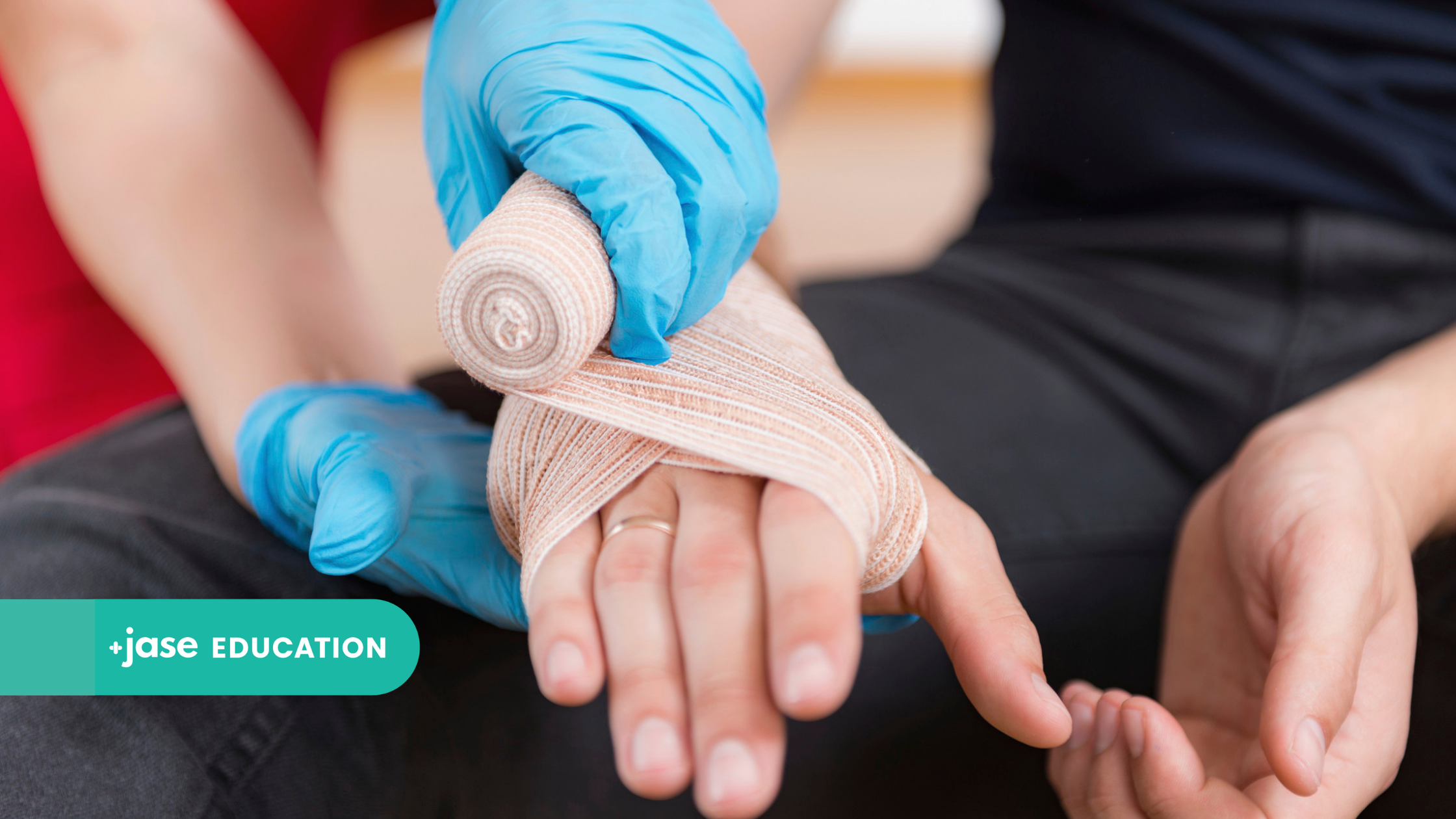
Burns in a Blackout: First Aid When the Tap Doesn’t Run
By the Jase Medical Team
Almost every burn first aid guide starts with the same instruction: cool the burn under clean, cool running water.
But what happens when the tap doesn’t run?
For households that rely on a well, a power outage can also mean losing the electric pump that moves water through the house. At the same time, blackouts can introduce new burn risks as families start using candles, generators, space heaters, camp stoves, and other backup sources of light, heat, and cooking.
After Hurricane Ida, generator and cooking accidents accounted for 56% of storm-related burns treated at one New Orleans burn center, and most of those patients were admitted to the hospital.
So burn first aid during a blackout requires a slightly different plan. The fundamentals haven’t changed. Cool the burn, protect it, and know when it needs medical care. What changes is how you accomplish that when the usual faucet isn’t available.
First, Forget the Home Remedies
Before we get to the water problem, there are a few things that should never become the substitute.
Don’t put ice directly on a burn. Extreme cold can further damage already injured tissue. You want to cool the burn, not freeze it.
And skip the butter, oil, toothpaste, and other kitchen or bathroom remedies that tend to get passed down through generations. Greasy substances can trap heat against the skin and make the burn harder to assess and clean.
Butter does roughly the same thing for a burn that it does for a steak. It isn’t first aid.
For a fresh thermal burn, the goal is much less dramatic: clean, cool water.
What If You Don’t Have Running Water?
Running water is convenient because it continuously carries heat away from the injured tissue. But losing the faucet doesn’t mean you should skip cooling altogether.
If you have access to clean, cool water, use it to cool the burn. That might mean clean bottled water, stored potable water, or another safe source of cool water available in the home.
The water should be cool, not icy.
If you’re using a limited supply rather than a running faucet, the practical goal is still to cool the injured area without making the person excessively cold. This is especially important for children and for larger burns, where prolonged cooling can contribute to hypothermia.
Don’t sacrifice drinking water recklessly during a prolonged outage, but don’t assume that burn cooling only counts if the water comes directly from a faucet. If clean, cool water is available, it can still be useful.
A Few Seconds of Cooling Isn’t Enough
This is another place where common first aid habits can fall short.
Someone burns a hand on a hot pan, holds it under water for ten seconds, decides it still hurts, and moves on to finding a cream or bandage.
Cooling needs more time than that.
The American Burn Association recommends cooling thermal burns with clean, cool running water for at least five minutes. International burn guidance commonly recommends approximately 20 minutes of cooling, and research supports a meaningful benefit from adequate cool running water first aid.
The exact duration recommendations differ somewhat between guidelines, but the practical lesson is the same: don’t treat burn cooling as a quick rinse.
And if you couldn’t cool the burn immediately, don’t assume you missed your chance. Research suggests cooling can still provide benefit when started later, potentially up to several hours after the injury.
That matters during an outage. Maybe the burn happened while you were away from the house. Maybe clean water wasn’t immediately accessible. Maybe the first priority was getting away from the fire or shutting down the source of the injury.
Once the immediate danger is controlled and clean, cool water becomes available, cooling the burn may still be worthwhile.
After Cooling, Keep It Simple
Once the burn has been adequately cooled, remove jewelry, watches, or tight clothing near the injured area if they aren’t stuck to the skin. Swelling can develop quickly, and something that fits comfortably now may become constricting later.
Don’t pull away clothing or material that has adhered to the burn.
Then cover the area loosely with a clean, dry cloth or appropriate clean dressing. The goal is to protect the injured skin without wrapping it tightly.
For a small, superficial burn, that basic care may be enough while you monitor how it develops. But not every burn belongs in the home care category, and a blackout doesn’t change the threshold for getting help.
Some Burns Can’t Wait for the Power to Come Back
If the lights are out, roads are difficult, or the nearest urgent care is closed, it’s tempting to lower the threshold for what you’re willing to manage at home.
With serious burns, don’t.
Burns that are deep, extensive, or located in certain high-risk areas need professional evaluation. Burns involving the face, hands, feet, genitals, perineum, or major joints deserve particular attention because even a relatively small injury in these areas can affect function or require specialized care.
As a simple household reference, a burn larger than the injured person’s hand deserves medical attention. Deep burns, burns with white, charred, leathery, or numb areas, electrical burns, and chemical burns also require prompt evaluation.
Smoke exposure changes the situation too. Burns around the face or mouth, soot around the nose or mouth, coughing, hoarseness, difficulty breathing, or suspected smoke inhalation can signal an airway injury that isn’t visible from the outside.
Young children also deserve a lower threshold for evaluation. Their smaller bodies make both burn severity and problems such as hypothermia more consequential.
If you’re looking at the burn and wondering whether it’s serious enough to make the drive despite the outage, location, depth, size, age, and breathing symptoms matter more than whether the lights are on.
What About Blisters?
Blisters can develop with partial-thickness burns, often called second-degree burns. They don’t automatically mean a burn requires hospitalization, but they do tell you that the injury extends deeper than simple surface redness.
Avoid deliberately popping or peeling the blisters at home. The skin provides protection to the tissue underneath, and opening it creates another pathway for contamination.
Large or extensive blistering, significant pain, worsening swelling, signs of infection, or blistering involving high-risk areas such as the hands, face, feet, or major joints should prompt medical evaluation.
When you’re uncertain about the depth of a burn, let a healthcare professional make that assessment rather than trying to classify it from an online photo or description.
Preventing the Blackout Burn Is Easier Than Treating It
Power outages change normal household routines, and that’s often where the burn risk comes from.
Use flashlights or battery-powered lighting instead of candles whenever possible. Keep portable heaters well away from furniture, bedding, curtains, and anything else that can burn. If you’re using a generator, let it cool before adding fuel. Gasoline spilled onto a hot generator can ignite.
Generators also introduce another danger that may not produce a burn at all: carbon monoxide. They should never be operated inside a home, garage, or other enclosed space. We’ve covered that risk separately in our guide to carbon monoxide after a storm, including why early symptoms can be mistaken for the flu or heat exhaustion.
A few minutes of planning before an outage is easier than trying to improvise around heat, flame, fuel, and darkness once the power is already gone.
Medical Readiness Is Knowing What You Can Handle at Home
Burn first aid is a good example of why medical preparedness isn’t simply a matter of owning more supplies.
A first aid kit can’t make a deep burn superficial. A medication can’t undo an electrical injury. And nothing you keep in a cabinet changes the urgency of smoke inhalation.
What preparation can do is help you make better decisions before stress starts making them for you.
At Jase Medical, we’re a family team of medical doctors, PAs, and pharmacists focused on appropriate medical preparation held to high clinical standards. That includes knowing what can reasonably be managed at home when normal access to care is disrupted and recognizing the point where home care needs to stop.
JaseCase provides physician-prescribed contingency medications for specific medical situations after review by a licensed provider. Those medications are intended for emergency use after first trying to reach a qualified healthcare provider. They don’t replace professional treatment for a serious burn.
So if the lights go out and someone gets burned, remember the basics. Cool it with clean, cool water if available. Skip the ice and home remedies. Cover it loosely. Then look at the burn itself, not the blackout, to decide whether it’s time to go in.
Because the power may be able to wait until morning.
A serious burn can’t.
The Jase Medical Team is a family team of medical doctors, PAs, and pharmacists focused on appropriate medical preparation: clinically grounded readiness that complements, rather than replaces, the healthcare professionals you already trust.
This article was prepared by the Jase Medical content team for informational purposes only and does not constitute medical advice. Prescription requirements, emergency dispensing rules, insurance coverage, and controlled-substance regulations vary by medication, jurisdiction, and individual circumstances. Consult a licensed healthcare provider or pharmacist regarding your specific medications.
Lifesaving Solutions
Recent Posts
Keeping you informed and safe.

What to Do If You’re Bitten by a Snake?
What to Do If You're Bitten by a Snake: Forget What the Movies Taught You By the Jase Medical Team If you're bitten by a venomous snake, forget almost everything the movies taught you about snakebite first aid. Don't cut an X over the fang marks. Don't suck out the...
For Clinicians | Should You Suck Out Snake Venom?
For Clinicians | Should You Suck Out Snake Venom? The Snakebite Myths Your Patients Still Believe By Dr. Jamie Wilkey, PharmD, Director of Clinical EducationMedically reviewed and edited by Aaron Asay, PA-C, DMSc, FIBODM, FAWM I really love gathering my little boys...
How to Rehydrate Someone Properly When There Is No IV
How to Rehydrate Someone Properly When There Is No IV By the Jase Medical Team When someone is losing fluid from vomiting or diarrhea, rehydration isn't simply a matter of getting them to drink something. The type of fluid matters. The amount matters. And especially...
For Clinicians | Oral Rehydration When IV Fluids Aren’t Available
For Clinicians | Oral Rehydration When IV Fluids Aren't Available By Dr. Jamie Wilkey, PharmD, Director of Clinical EducationMedically reviewed and edited by Kristen Carpenter, PA-C Hi again, it's Jamie, your pharmacist who loves writing about appropriate medical...