For Clinicians | Appropriate Medical Preparation The Clinical Category We've Been Practicing Without a Name By Dr. Jamie Wilkey, PharmD — Director of Clinical Strategy, JaseMedically reviewed by Kristen Carpenter, PA-C — Clinical Advisory Board Member Patients have...
For Clinicians | Drug Shortages 2026
Prescribing Inside a Supply Chain the System Has Admitted Isn’t Built for Disruption
By Dr. Jamie Wilkey, PharmD — Director of Clinical Strategy, Jase
Medically reviewed by Kristen Carpenter, PA-C — Clinical Advisory Board Member
A Dad comes to the counter an hour before the pharmacy closes for the night and asks why his daughter’s strep Rx isn’t ready yet.
“Sorry, sir, that antibiotic for your child isn’t something we have in stock right now so I can’t fill the prescription for you tonight since I don’t have anything on hand I can easily switch it to.”
“Ah. That’s so frustrating!!!! You’ll get it in tomorrow, right?!”
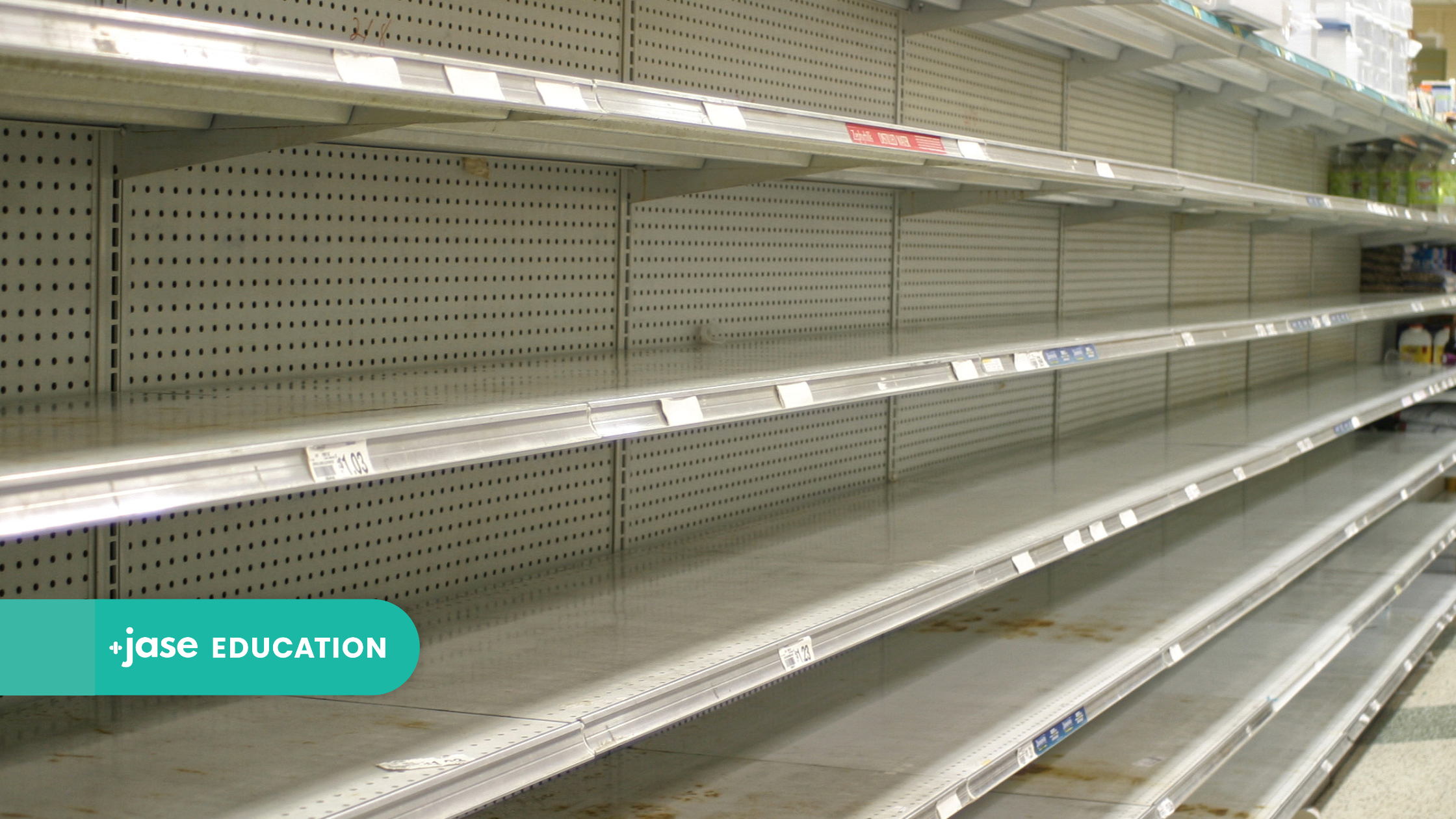
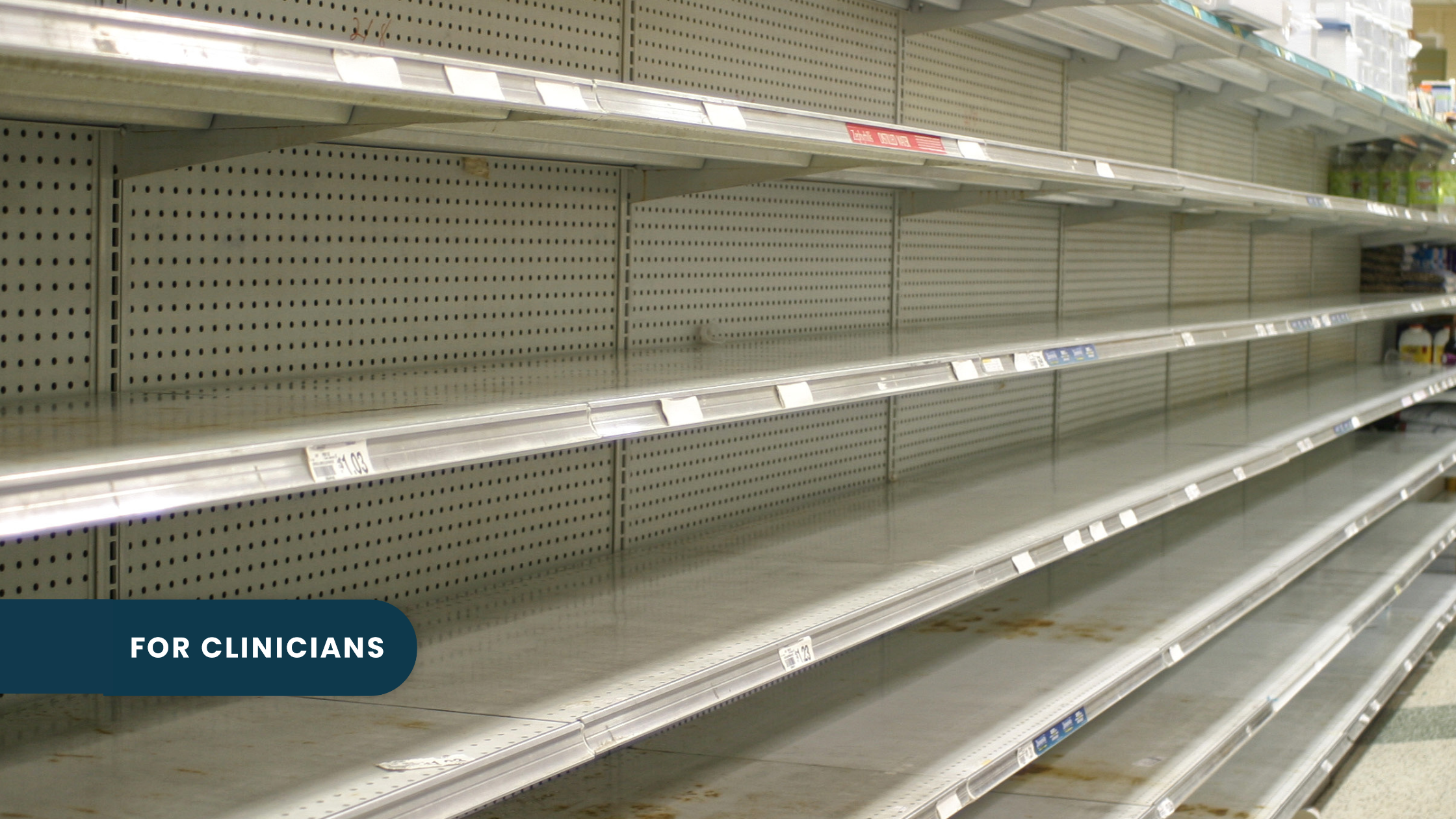
That’s the question I’ve answered more times than I can count, standing behind a pharmacy counter on a holiday weekend, looking at a parent trying to fill a script for liquid amoxicillin or azithromycin for a kid who is miserable. The shelves behind me look full. They are. They just don’t have what this family needs. The wholesaler order will show up on Monday or Tuesday…. but I won’t know what’s actually in it until I open the tote and see what ABC or Cardinal sent me. Until then, all I can tell her is, “I don’t have it now, and I hope to get it on Monday.” She can’t bank on that either. She knows it.
The next options aren’t great. The pharmacy across town might have it, but her insurance isn’t accepted there, or it’s already closed for the weekend, or it has shorter holiday hours and will be closed before she can get there, or it means setting up a new profile and re-entering all her billing info just for this one prescription. That’s a big old pain. And the kid feels worse by the hour.
This isn’t a one-off year. It feels monthly. And when there’s no substitute formulation on the shelf, the call goes back to the prescriber for a new drug at a different dose. On a Saturday night, both of us trying to track each other down in time to actually get the kid treated.
Today we’re talking about drug shortages in 2026: what ASPE/HHS now says on the record about a supply chain that isn’t built for disruption, and what a stable practice posture looks like when you’re prescribing inside it.
How bad are drug shortages in 2026, really?
Worse than we realize, and lasting longer than the system has trained us to expect.
Three-quarters of the drug shortages currently active in the US began in 2022 or later¹. The median active shortage now runs 2.55 years across all drugs, and 4.60 years for sterile injectables². This isn’t a temporary interruption you and your patient ride out. It’s a sustained structural condition we’re prescribing inside.
The supply side explains the durability. As of August 2024, only 24% of the API manufacturing facilities producing drugs for the US market sat inside the United States, down from 28% in August 2019³. Most of what we hand a patient is made upstream of a global chain we don’t control, and the chain isn’t getting more local.
In its September 2025 report on supply chain resilience, ASPE/HHS reviewed the methods that exist for measuring whether the medical supply chain is actually prepared, and concluded that “few have been widely adopted or proven scalable across product types or supply chain segments”⁴. HHS doesn’t yet have widely-adopted tools for measuring its own resilience. We’re prescribing inside it anyway.
What’s actively short in summer 2026
In Q1 2026, ASHP counted 223 active national drug shortages, the second consecutive quarter the count has risen⁵. The mix isn’t the headlines you might remember.
ADHD stimulants: amphetamine mixed salts (IR and XR), lisdexamfetamine, and methylphenidate ER are in their fourth year of active shortage. Specific strengths of amphetamine XR had release dates as recently as mid-May and early-June 2026.
Sterile injectable chemotherapy: vinblastine, methotrexate, and cisplatin are all currently short. Vinblastine is the most-shorted oncology drug, reported in shortage at 57% of surveyed centers⁶.
Injectable opioids: morphine sulfate (on the FDA shortage list since 2017) and fentanyl citrate (since 2012) remain chronically short. Acute pain, surgical anesthesia, palliative care.
Estradiol and progesterone: added to the shortage list in January and February 2026. Demand is up; manufacturing capacity hasn’t caught up.
88% of PCPs hit a shortage in the past six months
Pharmacy school, medical school, PA school: all of us trained inside a system where medication stock was reasonably predictable. That system isn’t real life these days. What replaced it is a fragmented, partly-imported, partly-allocated, partly-rationed pipeline that none of us were taught to prescribe inside. The training assumed reliability. The job no longer offers it.
And the data has caught up to what we already knew. In a JAMA Network Open survey published January 7, 2026, 88% of primary care physicians (795 of 902 surveyed) reported experiencing a drug shortage in the prior six months. Eighty-seven percent of those PCPs reported quality-of-care changes tied directly to the shortage. Forty-nine percent watched a patient’s disease progress while they were trying to find a workaround. Thirteen percent had a patient hit a major adverse event7. That isn’t a hypothetical risk profile. That’s the clinical environment we’re working in right now.
The 2022-2023 amoxicillin shortage is the clean case. After the FDA shortage declaration, the odds of a pediatric acute otitis media patient being prescribed amoxicillin dropped by 91%. Amoxicillin-clavulanate and cefdinir prescriptions rose 7-fold and 9-fold8. The shortage didn’t just delay care; it shifted the entire prescribing pattern for the most common pediatric bacterial infection toward broader-spectrum, second-line antibiotics. The stewardship cost of that shift is real, and nobody planned for it.
This is what practicing inside a structurally unreliable supply chain looks like, right now.
What stable practice posture looks like in 2026
Stable practice posture inside this environment has three concrete components. Together they hold when the routine channel doesn’t.
- Chronic supply, patient-held: the patient holds an extended physical supply of their actual maintenance medications, with a written list they and any covering provider can read. Ninety days, where insurance allows. Longer where it doesn’t, by self-pay or workaround. The point is the patient has the medication in hand before the routine channel breaks, not after.
- Contingency layer: for shortage-prone categories like antibiotics and emergency medications, the patient holds a prescribed supply with clear guidance on when to use it. The clinical work happens on the front end. The patient isn’t winging it on their own at 11pm.
- Documentation and decision criteria: what the patient has, what triggers its use, when to defer back to primary care. The framework is written down. Any provider can read it in thirty seconds.
This is what Jase has been building carefully for more than 5 years: appropriate medical preparation. It complements primary care; it does not replace it. The second layer is there for the gap, not the relationship.
Charting the grey area in public
Appropriate medical preparation is a new clinical category, and we’re building it carefully. Documented criteria, not vibes. If a patient is asking you what to have at home just in case and the conversation is going to take longer than you have, you can refer them to us at Jase.com. We’ll do the clinical work in front, document it, and route them back to you for everything else.
Going forward, we’ll share how we make those calls: what we prescribe and why, where the evidence is solid, and where it’s still being written. Public knowledge gets better when clinicians chart the grey area in public, not when we leave the internet to do it.
The team is family medicine physicians, physician assistants, and pharmacists with field experience in disaster medicine and humanitarian response. The clinical work happens on the front end, so the patient isn’t winging it on their own at 11pm.
Sources
- ASHP National Drug Shortages Report, Q4 2025. Released January 2026. https://www.ashp.org/drug-shortages/shortage-resources/drug-shortages-statistics
- ASPE/HHS Office of Science and Data Policy. Analysis of Drug Shortages, 2018-2023 (Data Brief). January 10, 2025. https://aspe.hhs.gov/reports/drug-shortages-data-brief
- ASPE/HHS Office of Science and Data Policy. Analysis of Drug Shortages, 2018-2023 (Data Brief). January 10, 2025. The 28% (August 2019) baseline references Janet Woodcock, FDA testimony, “Safeguarding Pharmaceutical Supply Chains in a Global Economy,” October 30, 2019. https://aspe.hhs.gov/reports/drug-shortages-data-brief
- ASPE/HHS (Mathematica). Defining and Measuring the Resilience, Criticality, and Vulnerability of Medical Product Supply Chains. September 2025. https://aspe.hhs.gov/reports/measuring-supply-chain-resilience
- ASHP Drug Shortage Statistics. Current National Shortages list, Q1 2026. Cross-referenced with the FDA Drug Shortages Database. https://www.ashp.org/drug-shortages/current-shortages and https://www.fda.gov/drugs/drug-safety-and-availability/drug-shortages
- JCO Oncology Practice. National survey on the impact of cancer drug shortages on US oncology practices, 2025. doi:10.1200/OP-25-00381. https://ascopubs.org/doi/10.1200/OP-25-00381
- Jarrett JB, Dillane KE, Hollett G, et al. Treatment Modifications After Drug Shortages Among Primary Care Physicians. JAMA Network Open. January 7, 2026. doi:10.1001/jamanetworkopen.2025.52802. https://jamanetwork.com/journals/jamanetworkopen/fullarticle/2843516
- Brewster RC, Khazanchi R, Butler A, O’Meara D, Bagchi D, Michelson KA. The 2022 to 2023 Amoxicillin Shortage and Acute Otitis Media Treatment. Pediatrics. September 2023;152(3):e2023062482. doi:10.1542/peds.2023-062482. https://pmc.ncbi.nlm.nih.gov/articles/PMC10895544/
Lifesaving Solutions
Everyone should be empowered to care for themselves and their loved ones during the unexpected. Check out our recent lifesaving products today.
Recent Posts
Keeping you informed and safe.

For Clinicians | Appropriate Medical Preparation
What Gets Missed in Disaster Preparedness: The Family Medical Plan Most Emergency Kits Miss
What Gets Missed in Disaster Preparedness The Family Medical Plan Most Emergency Kits Miss By Aaron Asay, PA-C, DMSc — Executive Director, JaseResponse Over the last 25 years, I've had a front-row seat to some of life's hardest moments. Through my work in emergency...
For Clinicians | Off-Grid Health Care: A Guide to Medical Preparation When the System Fails (aka SHTF)
For Clinicians | Off-Grid Health Care A Guide to Medical Preparation When the System Fails (aka SHTF) By Dr. Jamie Wilkey, PharmD — Director of Clinical Strategy, JaseEdited and approved by Kristen Carpenter, PA-C — Clinical Advisory Board Member Your patient has...
For Clinicians | Azithromycin (Z-Pack): Why It Earns a Place in Appropriate Medical Preparation
For Clinicians | Azithromycin (Z-Pack) Why It Earns a Place in Appropriate Medical Preparation By Dr. Jamie Wilkey, PharmD — Director of Clinical Strategy, JaseEdited and approved by Kristen Carpenter, PA-C — Clinical Advisory Board Member Can’t you just call in a...