
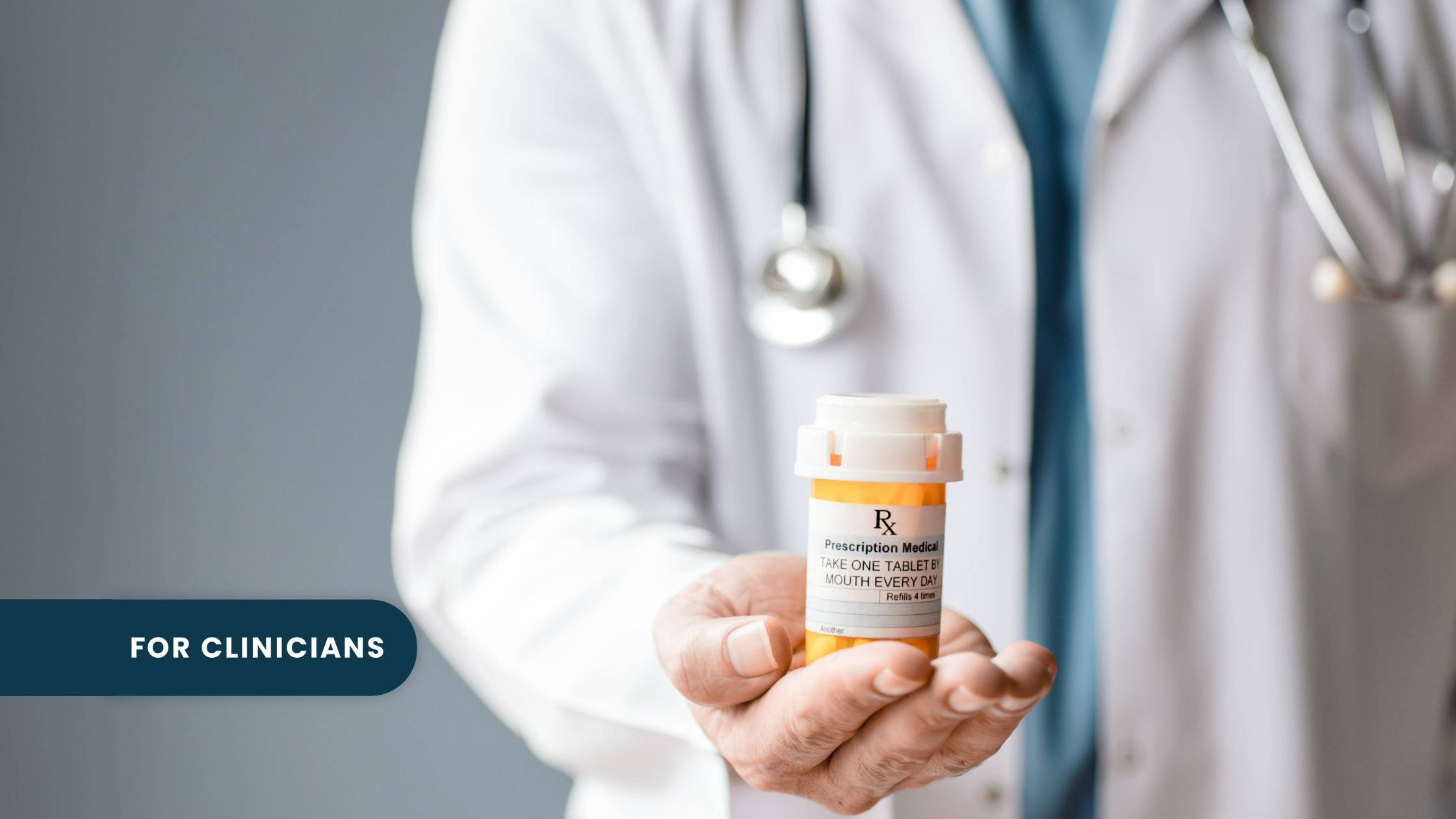
For Clinicians | Why Patients Run Out of Medication: The Ordinary Disruptions, Not the Disaster
By Dr. Jamie Wilkey, PharmD, Director of Clinical Education
Medically reviewed and edited by Kristen Carpenter, PA-C
As a pharmacist, I’ve helped patients keep access to their medications through real disasters (especially wildfires out here in Utah). Much much more commonly, I spent my time behind the counter helping patients get access to their medications during ‘normal life.‘ No epic natural or structural disaster caused the disruption, but it was still a giant pain for my patients to deal with.
Some of what got in their way, patients could do something about: whether they had a ride that week, or whether they could pay for their medications when they got to the counter.
The rest was totally out of their hands.
- A manufacturer stops making a product and the shortage runs for months (and we covered how long those actually last here).
- The pharmacy that filled their prescriptions for twenty years just closed.
- Their prescriber leaves the practice and the refill request sits in a queue nobody is watching.
- The insurance plan changes its coverage rules on January 1 and nobody clearly loops in the patient on that
- The local chain pharmacy keeps temporarily closing due to staff shortages
Today we’re walking through both: what patients can stay ahead of, and what is out of their control. Most of the practical tips sit in that second group, because that’s where patients have the least wiggle room. It’s not quite as exciting as a full-scale disaster, but it’s a part of daily life I believe you should be prepared for because I dealt with it in some form daily with my patients for over a decade.
What patients can get ahead of
Cost is a big factor.
- About 8% of US adults taking a prescription didn’t take it as prescribed in order to save money¹. Patients are getting better about raising the issue of medication cost with you in the appointment. GoodRx is the best tool we have here, especially for anyone with a high copay or anyone choosing not to run it through insurance. It’s a good, simple way to eyeball the cash cost of an Rx ahead of time.
Travel is the one that arrives as an emergency.
- Someone flies out Thursday and realizes Wednesday afternoon they don’t have enough medications for the trip. Their home pharmacy already has the prescriptions on file and can usually put together a vacation supply, but that takes lead time and sometimes a call to the plan. A pharmacy at their destination has none of their history and far less to work with. Tell patients to start working on their medications weeks before the departure date, not the night before (especially for overseas travel!). The more warning we in the pharmacy get, the more we can do, and their emergency doesn’t have to become ours.
For patients who depend on someone else for a ride, the best fix is usually removing the trip entirely.
- I worked for a big chain for years, and it was clear that delivery there is a low priority and gets missed very often. A locally owned pharmacy that delivers is a different experience: you get to work with the same humans every time, and they have a stake in it going right. Mail order can work as well, depending on how easy the company is to work with. Some are atrocious and others are the easiest thing in the world.
And finally, theft.
- Theft as a loss for medications is more infrequent, and almost always a controlled substance and almost always someone living in the house with the patient. There isn’t much a pharmacy can do with it. The patient needs a police report, and for a Schedule II they need a new prescription from the prescriber, because those can’t be refilled at all.
What’s out of their hands:
- The drug is on shortage: ASHP was tracking 227 active drug shortages as of mid-2026, the third straight quarterly increase². Even so, the pharmacy has more room here than patients expect. We can usually work with whatever we have of it in stock, and at a chain we can see which nearby stores are holding it and send the prescription over so it’s in process within minutes. Patients can call around themselves, and once they find a pharmacy that has it, that pharmacy can pull it across. When it’s really gone gone everywhere, that’s when we need a new prescription from you.
- Their pharmacy closed for good: Nearly one in three US retail pharmacies closed between 2010 and 2021, and roughly a third of counties ended that period with fewer pharmacies than they started with³. When a pharmacy closes, whoever bought the files now has the prescriptions, so nothing vanishes. Patients will feel friction on the first few fills, because pulling another location’s information into our system takes longer than it looks. They should have gotten a letter, but profile addresses are almost always outdated, so there’s no guarantee the patient heard anything ahead of time. Tell them to expect a few extra days and start the refill process early with a new pharmacy.
- Their pharmacy is closed today: We’ve had a pharmacist shortage across Utah for a while, so stores that should be open Saturday aren’t, and some close mid-day when nobody can cover a shift. It’s not just Utah, but all across the US. Patients find out by driving there and seeing a handwritten sign: ‘closed due to pharmacist/staff shortage, will reopen on X date/time.’ Chains are more exposed to staffing shortages, and also easier to recover from, because any store in the chain can see the profile and patch around the closed one.
- The refill request never reached you: This is usually a routing problem. Pharmacy systems grab the first address on file for a prescriber rather than the clinic the prescription came from, which breaks constantly for urgent care and for anyone practicing at several sites. If you’ve wondered where those requests go, that’s where.
- It’s January: Formularies change, and the bigger shock is the deductible resetting. The patient who paid nothing in December pays full price until they clear it, up to $615 on Part D this year⁴. The year has a shape now: expensive at the start, copays through the middle, then nothing once they hit the $2,100 cap⁴. Insurance doesn’t explain any of that. We do, at the counter, and we hate it too. We don’t set the prices. We just charge what insurance tells us to charge.
- You don’t know whether the plan will cover it: Plan policies vary wildly, so don’t guess. Pharmacy billing is live, so as soon as we get the Rx we can tell you on the spot whether the plan will cover a vacation supply, an early refill, or a replacement. It isn’t a medical claim and it doesn’t take days.
Two things from the pharmacy side prevent most of what’s in this article.
Write for 90 days at a time wherever the clinical picture allows it. I know most of you are doing that already. Keep it up! More insurers are covering 90 days supplies and it really does help a lot.
This feels obvious, but make sure the right office phone number is on the prescription when you eRx it over. I’ve lost a lot of time calling the number on file and finding out the prescriber is somewhere else that day.
Last Thought
We’re a medical preparation company, and most of what we publish is about disasters. This is the other half of the same work. Appropriate medical preparation fits in daily life as well, not just big behemoth disasters. The same habits carry a patient through a wildfire, and they’ll use them far more often on an ordinary Tuesday. None of it replaces primary care. It’s the layer underneath, that keeps everything humming along.
Patients who are prepared are easier to take care of. They call before they’re out, they know what they take and who prescribes it, and the care goes better on both sides of the counter.
Sources
- Mykyta L, Cohen RA. Characteristics of Adults Aged 18–64 Who Did Not Take Medication as Prescribed to Reduce Costs: United States, 2021. NCHS Data Brief No. 470. National Center for Health Statistics, June 2023. Cost-saving measures included skipping doses, taking less medication than prescribed, or delaying filling a prescription. https://www.cdc.gov/nchs/data/databriefs/db470.pdf
- American Journal of Managed Care. Active US Drug Shortages Rise for Third Straight Quarter. 227 active shortages as of Q2 2026, reporting ASHP tracking data. https://www.ajmc.com/view/active-us-drug-shortages-rise-for-third-straight-quarter
- Health Affairs, December 3, 2024. DOI 10.1377/hlthaff.2024.00192. Nearly one in three US retail pharmacies closed between 2010 and 2021; roughly one-third of counties saw a net decline in pharmacies. Summary: https://schaeffer.usc.edu/research/pharmacy-closures-united-states-health-affairs/
- Centers for Medicare & Medicaid Services. Final CY 2026 Part D Redesign Program Instructions. Annual deductible $615; annual out-of-pocket threshold $2,100. https://www.cms.gov/newsroom/fact-sheets/final-cy-2026-part-d-redesign-program-instructions
Lifesaving Solutions
Recent Posts
Keeping you informed and safe.
For Clinicians | Diabetes Sick-Day Rules in a Disaster
For Clinicians | Diabetes Sick-Day Rules in a Disaster By Dr. Jamie Wilkey, PharmD, Director of Clinical EducationMedically reviewed and edited by Kristen Carpenter, PA-C Diabetes is already hard to manage. Sick days just make everything worse. And a sick day in a...
Burns in a Blackout
Burns in a Blackout: First Aid When the Tap Doesn't Run By the Jase Medical Team Almost every burn first aid guide starts with the same instruction: cool the burn under clean, cool running water. But what happens when the tap doesn't run? For households that rely on a...
For Clinicians | Burn First Aid Without Running Water
For Clinicians | Burn First Aid Without Running Water By Dr. Jamie Wilkey, PharmD, Director of Clinical EducationMedically reviewed and edited by Aaron Asay, PA-C, DMSc, FIBODM, FAWM Every burn first-aid guide starts the same way: cool it under running water. That's...

What to Do If You’re Bitten by a Snake?
What to Do If You're Bitten by a Snake: Forget What the Movies Taught You By the Jase Medical Team If you're bitten by a venomous snake, forget almost everything the movies taught you about snakebite first aid. Don't cut an X over the fang marks. Don't suck out the...