
Carbon Monoxide After the Storm: The Symptoms Mistaken for the Flu
By the Jase Medical Team
The storm has passed, but the power is still out.
It’s raining, so the generator gets moved a little closer to the house—maybe under the porch or near an open garage. You’re making do, charging phones, keeping the refrigerator cold, trying to get through another day without power.
By day three, everyone feels terrible.
You’ve got a headache. Your spouse is nauseated. Someone feels weak and achy. Maybe the dog isn’t acting like itself either.
In February, it’s easy to think: The flu finally got us.
In July: Probably the heat. Maybe a stomach bug.
But there’s one question that should make you consider something entirely different:
Does everyone in the house feel sick at the same time—and do you start feeling better when you leave?
If the answer is yes, get everyone outside into fresh air and call 911. Carbon monoxide could be the reason.
Why Carbon Monoxide Can Look Like the Flu
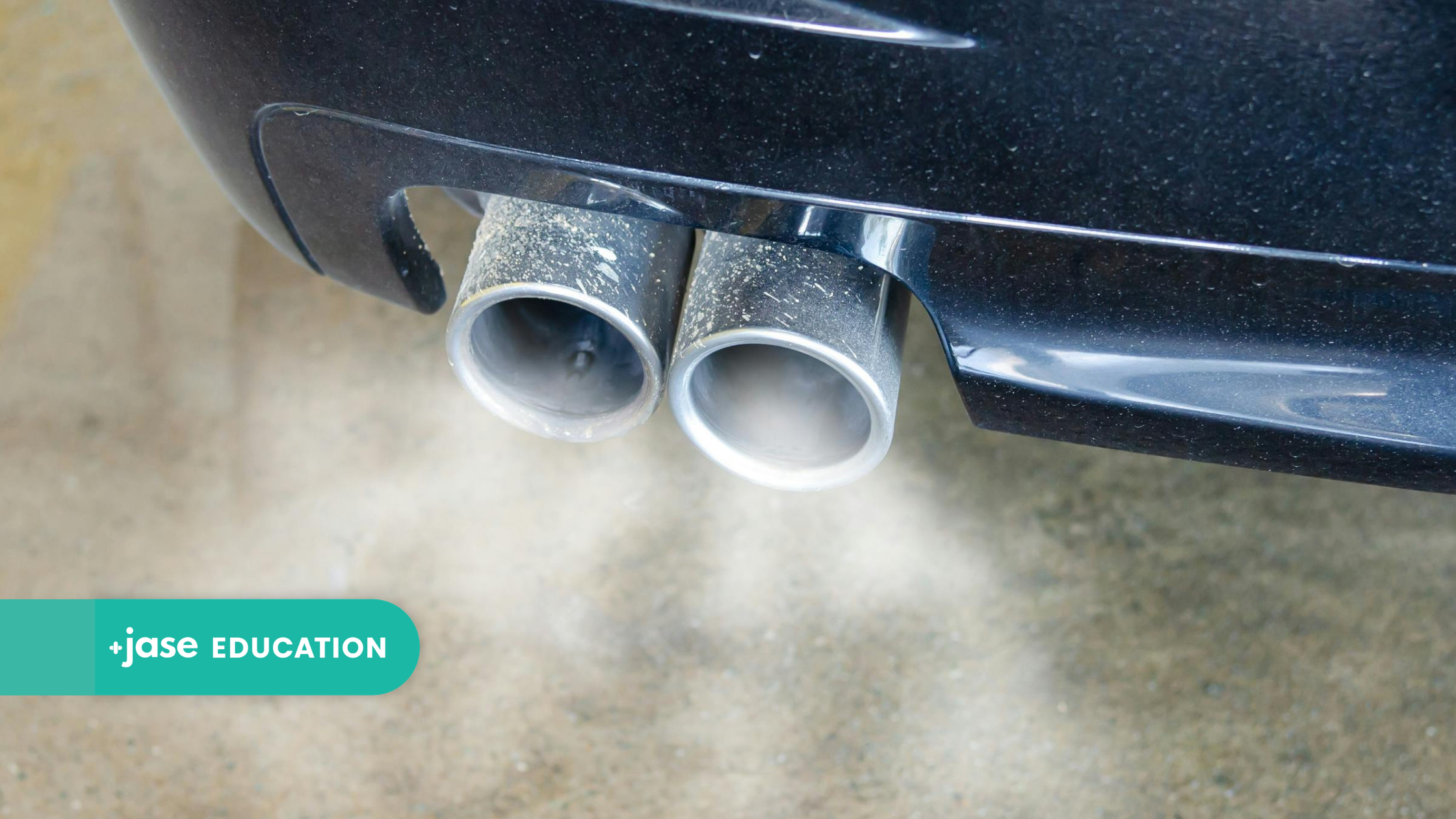
Carbon monoxide (CO) is a colorless, odorless gas produced when fuels don’t burn completely. Generators, charcoal grills, vehicles, and other fuel-burning equipment can all produce it.
After storms and power outages, the risk increases because people start improvising.
A generator gets moved closer to the house because it’s raining. A grill gets pulled into a garage. A vehicle is left running in an enclosed or partially enclosed space.
The problem is that early carbon monoxide poisoning doesn’t necessarily look like poisoning.
It can cause headache, dizziness, weakness, nausea, vomiting, chest discomfort, and confusion.
Those symptoms overlap with plenty of ordinary illnesses.
That’s why the symptom list isn’t necessarily the most useful thing to remember.
The pattern is.
The Question That Can Break the Case Open
Imagine you’ve had a headache all morning.
You drive somewhere to pick up supplies and realize that after being away from the house for a while, you feel noticeably better.
You come home.
The headache returns.
Then you realize your spouse has a headache too. Someone else feels nauseated. The dog is unusually sluggish.
A virus can certainly spread through a household. But several people becoming sick at roughly the same time—and improving when they’re away from the same environment—is an important clue that the environment itself may be the problem.
Carbon monoxide exposure can affect multiple people sharing the same space.
So after a storm or during a power outage, remember this question:
Who else feels sick, and do we feel better when we leave?
If that pattern is present, don’t stay inside trying to determine whether it’s the flu, heat exhaustion, food poisoning, or carbon monoxide.
Get out.
A Normal Pulse Oximeter Doesn’t Rule Out Carbon Monoxide
This is an especially important misconception if you keep a fingertip pulse oximeter at home.
You feel terrible, put it on your finger, and see: 98%.
That can feel reassuring.
With suspected carbon monoxide poisoning, it shouldn’t.
A standard two-wavelength pulse oximeter cannot reliably distinguish normal oxygen-carrying hemoglobin from hemoglobin carrying carbon monoxide. As a result, the number displayed on a typical home pulse oximeter can appear normal even when significant carbon monoxide exposure has occurred.
A normal pulse ox reading does not rule out carbon monoxide poisoning.
If the circumstances and symptoms make you suspect CO, don’t use a reassuring-looking oxygen saturation number as a reason to stay inside.
What Should You Do If You Suspect Carbon Monoxide?
The immediate action is straightforward:
Get everyone out of the building and into fresh air. Then call 911.
Don’t remain inside looking for the source. Don’t wait to see whether the headache improves. Don’t rely on opening a window or door and staying in the home.
Emergency medical professionals can evaluate the exposure and provide oxygen and other treatment as appropriate.
If someone is confused, collapses, loses consciousness, has significant difficulty breathing, or is otherwise severely ill, treat it as an emergency.
And don’t forget everyone sharing the environment—including pets. If multiple members of the household seem unexpectedly sick at once, that’s part of the clue.
Generators Need Distance From the House
Generators are one of the most important carbon monoxide risks following storms.
They should be operated outdoors and away from the home, not inside a house, garage, basement, shed, carport, porch, or other enclosed or partially enclosed area.
Moving one “just under the porch” to keep it out of the rain can unintentionally move carbon monoxide closer to doors, windows, and vents where exhaust can enter the home.
The same principle applies to other fuel-burning equipment.
A charcoal grill doesn’t become safe to use indoors because the power is out. A vehicle shouldn’t be left running inside a garage to generate power or charge devices.
If it burns fuel, think about where the exhaust is going.
One of the Best Preparedness Tools Is Already on the Wall
There is a simple layer of protection that doesn’t require recognizing symptoms at all:
working carbon monoxide alarms.
Install CO alarms on every level of your home and outside sleeping areas, and make sure they’re functioning properly.
If an alarm sounds, move everyone outside and follow emergency guidance. Don’t assume it’s malfunctioning because nobody feels sick yet.
A CO alarm can identify the problem before your body has to.
Sometimes Preparedness Is Knowing Which Question to Ask
After a hurricane, tornado, winter storm, or extended power outage, there are plenty of things competing for your attention.
Is the refrigerator staying cold? Do you have enough fuel? When will the electricity come back? Is everyone hydrated? Can you get to the pharmacy?
Carbon monoxide doesn’t necessarily announce itself as a dramatic emergency. Sometimes it looks like a family that simply feels lousy on day three.
That’s why appropriate medical preparation isn’t just a shelf full of supplies.
Sometimes it’s knowing enough to notice when the story doesn’t fit.
At Jase Medical, we’re a family team of medical doctors, PAs, and pharmacists focused on that grey space—the moments when normal healthcare access and normal routines are disrupted, and knowing what to do next matters.
We’re not a replacement for primary care or emergency medicine.
We’d simply rather you recognize this pattern on day one:
If everyone in the house feels sick at the same time and starts feeling better when they leave, get out into fresh air and call 911.
Don’t let a normal pulse oximeter reading talk you out of it.
The Jase Medical Team is a family team of medical doctors, PAs, and pharmacists focused on appropriate medical preparation: clinically grounded readiness that complements, rather than replaces, the healthcare professionals you already trust.
This article was prepared by the Jase Medical content team for informational purposes only and does not constitute medical advice. Prescription requirements, emergency dispensing rules, insurance coverage, and controlled-substance regulations vary by medication, jurisdiction, and individual circumstances. Consult a licensed healthcare provider or pharmacist regarding your specific medications.
Lifesaving Solutions
Recent Posts
Keeping you informed and safe.
For Clinicians | Diabetes Sick-Day Rules in a Disaster
For Clinicians | Diabetes Sick-Day Rules in a Disaster By Dr. Jamie Wilkey, PharmD, Director of Clinical EducationMedically reviewed and edited by Kristen Carpenter, PA-C Diabetes is already hard to manage. Sick days just make everything worse. And a sick day in a...

Burns in a Blackout
Burns in a Blackout: First Aid When the Tap Doesn't Run By the Jase Medical Team Almost every burn first aid guide starts with the same instruction: cool the burn under clean, cool running water. But what happens when the tap doesn't run? For households that rely on a...
For Clinicians | Burn First Aid Without Running Water
For Clinicians | Burn First Aid Without Running Water By Dr. Jamie Wilkey, PharmD, Director of Clinical EducationMedically reviewed and edited by Aaron Asay, PA-C, DMSc, FIBODM, FAWM Every burn first-aid guide starts the same way: cool it under running water. That's...

What to Do If You’re Bitten by a Snake?
What to Do If You're Bitten by a Snake: Forget What the Movies Taught You By the Jase Medical Team If you're bitten by a venomous snake, forget almost everything the movies taught you about snakebite first aid. Don't cut an X over the fang marks. Don't suck out the...