For Clinicians | Controlled Substance Emergency Refill Rules
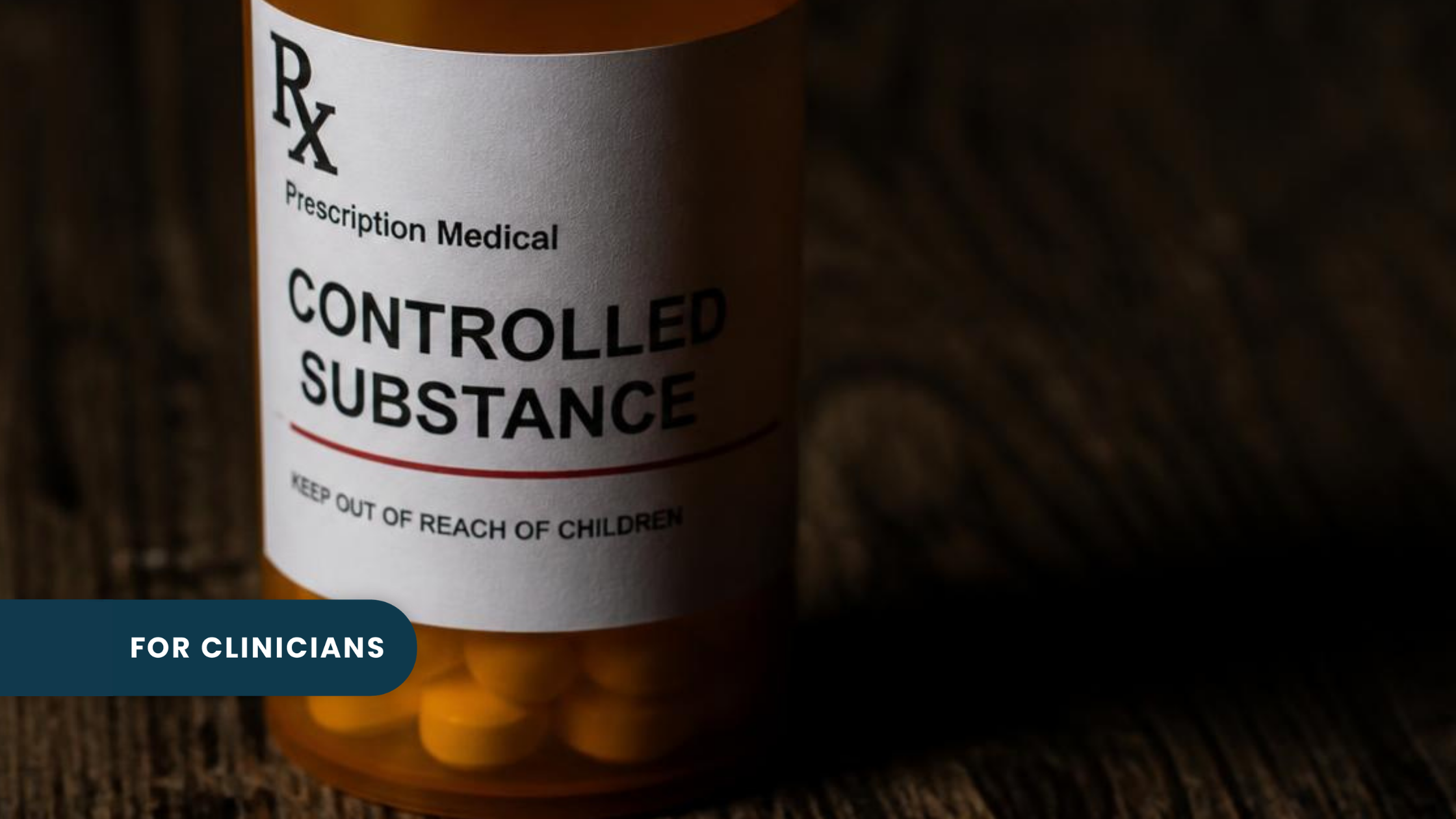
For Clinicians | Controlled Substance Emergency Refill Rules: A Pharmacist’s Q&A

By Dr. Jamie Wilkey, PharmD — Director of Clinical Strategy, Jase
Medically reviewed and edited by Kristen Carpenter, PA-C

Hi again, it’s Jamie, your pharmacist. 

Here at Jase, we really like to help people be prepared for disasters, whether they be natural or supply chain or just being far from medical care. Most of the time we’re talking about regular medications, blood pressure and diabetes, etc.  But those aren’t the only medications that are really important to patients.

Today we’re talking about controlled substances, because they are much more complicated in a disaster. The same rules don’t apply for them as they do for the regular, or legend, medications. So here’s how these controlled substances generally work, what the different categories mean, and the problems I see go wrong most often when someone can’t get one filled.

One caveat: each state has different rules, so this is an overview and in no way comprehensive. Your local pharmacist knows your state’s rules very well and can help you the most.

Before we start, three things. 

  1. We are not telling anyone to get extra opioids or extra stimulants. We never will, and federal law mostly doesn’t allow for it anyway. 
  2. Jase does not sell controlled substances at all, not one, in any kit or any add-on. 
  3. This class gets complicated faster than anything else in the medicine cabinet, which is exactly why we’re covering it instead of skipping it like most preparedness writing does.

“What schedule is it?”

This is the first question I ask, and most patients have no idea their prescription has a number, or schedule as we call it, attached to it. Here’s how those drug classes work:

  • Schedule II is the stimulants, oxycodone, hydrocodone, morphine, methadone. No refills, ever. That’s federal law, not a pharmacy policy. But a prescriber can write two or three prescriptions at the same visit, up to a 90-day total supply, each with a “do not fill until” date on it.¹ That’s federal too, where state law allows it.
  • Schedule III through V is buprenorphine, most benzodiazepines, tramadol, pregabalin. Those can carry refills. They can be transferred between pharmacies if both are open and willing to transfer. In a lot of states a pharmacist can step in during an emergency here.
  • There is a Schedule I, but I’m not writing about it here because these meds are not allowed to be dispensed in a pharmacy in any state ever. Think heroin or LSD, etc. 

Two bottles can sit in the same drawer in the same house for the same patient and be in completely different situations. The Rx label won’t tell you which class of medication the drug is, either.

“Which ones are actually dangerous to stop?”

Benzodiazepines are the medical emergency. Stopping abruptly in a physically dependent patient can cause seizures and delirium, and that includes patients on a therapeutic dose who have never had a seizure in their life. ASAM and nine other societies published a tapering guideline in June 2025 that says outright not to discontinue abruptly in anyone likely to be dependent.²

Opioids are the opposite problem. The withdrawal is miserable and rarely lethal on its own, though it isn’t benign in pregnancy. The danger is the restart. Tolerance drops within days, and the dose that was routine two weeks ago can be the one that stops their breathing. So the plan has to cover going back on, not just running out.

Stimulants aren’t physiologically dangerous to stop, and CDC issued a health advisory about it anyway.³ In June 2024 a federal indictment against a large subscription telehealth company put 30,000 to 50,000 adults at risk of losing their ADHD prescriber, in all 50 states, more or less at once. CDC’s worry wasn’t withdrawal. It was that people go looking, and what’s on the street pressed to look like Adderall is frequently fentanyl.

Only the benzodiazepines are likely to hurt someone in the first week. The other two hurt them later, and need to be a part of the patient’s post-disaster care plan.


“Can another pharmacy just fill it?”

Sometimes. It depends on whether it’s already been filled at another pharmacy.

If the prescription is still sitting at a pharmacy unfilled, a rule that took effect in August 2023 lets it move.⁴ Any electronic controlled substance prescription, Schedule II included, can be transferred one time to another retail pharmacy. The patient has to ask, and has to name the pharmacy they want it sent to. The two pharmacists handle it directly. That’s it. One transfer, and the prescription has to still be electronic and unfilled. And both pharmacists have to agree to it. I know in practice still in mid-2026 not all pharmacies are connected online, so from my experience in Utah there’s about a 45%ish success rate between pharmacies in the same state. It’s less successful as you move out of state. I’m sure it’ll improve every month as time marches on, but that’s where we are now. 

If it’s already been filled and you’re looking for the refills, that’s a different rule, and Schedule II is out because there are no refills to transfer. For Schedule III through V, refill information can be transferred once, unless the two pharmacies share a real-time database.⁵ And again, both pharmacists must agree. If a pharmacist doesn’t feel comfortable dispensing it they can refuse the prescription. 

“Can’t the pharmacist just give me a few days’ worth?”

For a lot of medications, yes. Most states let a pharmacist dispense an emergency supply when the prescriber can’t be reached, and many widen that once a governor declares an emergency. How much and under what conditions varies state to state.6

Schedule II is almost always carved out, and the reason is structural. Those laws work by letting a pharmacist extend an existing prescription, and Schedule II has no refills to extend.

There is a federal path for Schedule II. In an emergency a pharmacist can dispense a Schedule II on a prescriber’s spoken authorization, limited to the amount needed to get through the emergency.7 The pharmacist writes it down on the spot, and the prescriber has seven days to send a written prescription marked “Authorization for Emergency Dispensing.” Again, it is still within the pharmacist’s purview to choose to fill it or not if a prescriber calls the emergency Rx in. 

Methadone runs on two different systems depending on what’s being treated. Prescribed for pain, it’s an ordinary Schedule II prescription and everything above applies. Prescribed for opioid use disorder, it can only be dispensed by a federally certified opioid treatment program.⁸ Not a retail pharmacy, not in an emergency, not with a prescriber on the phone. So a displaced patient calling pharmacies is wasting the day. What they need is another certified program willing to dose them temporarily, which programs already do routinely for people who travel.

The bottom line

Every option in this article runs through a prescriber someone can reach. That’s the part that can fail first in a real life emergency. 

For every patient on a controlled substance who’s worried about this and wants to plan ahead with you, decide now what happens if they can’t fill for a week, and talk it through together. Which schedule is it? Does it taper or wait if it can’t be filled? Who authorizes an emergency dose, and at what contact number?

That’s what appropriate medical preparation looks like for a class where preparation can’t mean an extra supply on the shelf. None of this replaces the relationship these patients already have with you, and for this class nothing could. We’ll keep publishing how we work these questions out. For questions in your own state pick up the phone and call your local pharmacist. They are the experts here and happy to help.


Sources

  1. 21 CFR 1306.12, Refilling prescriptions; issuance of multiple prescriptions. Schedule II refills prohibited under (a). Paragraph (b) permits multiple prescriptions totaling up to a 90-day supply, each carrying written instructions on the earliest date a pharmacy may fill it. https://www.ecfr.gov/current/title-21/chapter-II/part-1306/subject-group-ECFR8588b52940237ef/section-1306.12
  2. American Society of Addiction Medicine et al., Joint Clinical Practice Guideline on Benzodiazepine Tapering: Considerations When Risks Outweigh Benefits. Journal of General Internal Medicine, June 2025. ASAM with nine partnering societies, modified GRADE methodology. Recommends against abrupt discontinuation in patients likely to be physically dependent, with initial reductions of 5 to 10% every 2 to 4 weeks and not exceeding 25% every two weeks. https://link.springer.com/article/10.1007/s11606-025-09499-2
  3. CDC Health Advisory CDCHAN-00510, Disrupted Access to Prescription Stimulant Medications Could Increase Risk of Injury and Overdose. June 13, 2024. https://www.cdc.gov/han/2024/han00510.html
  4. DEA final rule, Transfer of Electronic Prescriptions for Schedules II-V Controlled Substances Between Pharmacies for Initial Filling. Federal Register, July 27, 2023, effective August 28, 2023. One-time transfer at the patient’s request, prescription must be unfilled and remain electronic, communicated directly between two licensed pharmacists. https://www.federalregister.gov/documents/2023/07/27/2023-15847/transfer-of-electronic-prescriptions-for-schedules-ii-v-controlled-substances-between-pharmacies-for
  5. 21 CFR 1306.25, Transfer between pharmacies of prescription information for Schedules III, IV, and V controlled substances for refill purposes. One-time basis only, unless the two pharmacies share a real-time online database. https://www.ecfr.gov/current/title-21/chapter-II/part-1306/subject-group-ECFRe4ae2bfb4eae102/section-1306.25
  6. Healthcare Ready, A Review of State Emergency Prescription Protocols. https://healthcareready.org/a-review-of-state-emergency-prescription-protocols/
  7. 21 CFR 1306.11(d), Requirement of prescription. Emergency dispensing of a Schedule II on a practitioner’s oral authorization, limited to the quantity needed for the emergency period, with a written prescription marked “Authorization for Emergency Dispensing” delivered within seven days. https://www.ecfr.gov/current/title-21/chapter-II/part-1306/subject-group-ECFR8588b52940237ef/section-1306.11
  8. 42 CFR Part 8, Medications for the Treatment of Opioid Use Disorder. No program may dispense methadone for opioid use disorder without SAMHSA certification. https://www.ecfr.gov/current/title-42/chapter-I/subchapter-A/part-8


Lifesaving Solutions

Everyone should be empowered to care for themselves and their loved ones during the unexpected. Check out our recent lifesaving products today.

Recent Posts

Keeping you informed and safe.

Pink Eye: When You Actually Need Antibiotic Eye Drops

Pink Eye: When You Actually Need Antibiotic Eye Drops

Pink Eye: When You Actually Need Antibiotic Eye Drops By the Jase Medical Team It’s Monday morning, and your child wakes up with one eye crusted shut. You clean it up, get everyone out the door, and hope for the best. By 9:15, the school calls. Your child has pink...
read more
Controlled Substances in a Disaster

Controlled Substances in a Disaster

Controlled Substances in a Disaster: Why the Schedule on Your Prescription Changes Everything By the Jase Medical Team ou evacuated with four days of medication in your bag. Now you're two states from home, the pharmacy holding your prescription is closed, and you're...

read more

Join Our Newsletter

Our mission is to help you be more medically prepared. Join our newsletter and follow us on social media for health and safety tips each week!

Your Medication Is on Backorder. Now What?

Your Medication Is on Backorder. Now What?

By the Jase Medical Team

You’ve taken the same prescription for eleven years. You request the same refill from the same pharmacy, and this time the technician tells you:

“It’s on backorder. No ETA.”

You ask when it will be available again. The answer is frustratingly vague because, in many cases, nobody knows.

Here’s what makes that more important than it sounds: fewer new drug shortages started in 2025 than in any year since 2006. Just 89 new shortages were reported.

That sounds like great news. But the medications already in shortage are telling a different story. Active shortages remained high because many of them simply aren’t resolving quickly.

From 2018 through 2023, the median drug shortage lasted 2.55 years. For oral medications, the median was 1.59 years. Injectable shortages lasted even longer.

In other words, “backorder” doesn’t necessarily mean “check again next week.”

So what should you actually do when the prescription you depend on isn’t available?

First, Ask What Is Available

When a pharmacy tells you your medication is out of stock, your next question doesn’t have to be only, “When will you get more?”

Ask what options are available now.

Depending on the medication and your individual prescription, your pharmacist and prescriber may be able to explore:

  • The same medication from another manufacturer
  • Another available strength that your prescriber determines can appropriately provide the prescribed dose
  • Another formulation of the medication
  • A transfer to another pharmacy that has the medication available
  • Another treatment option your prescriber considers appropriate

None of these are substitutions to make yourself. A different strength, formulation, manufacturer, or medication may carry considerations specific to your treatment.

The point is simply to move the conversation from “When will this exact bottle come back?” to “What options do my pharmacist and prescriber have right now?”

What If Another Pharmacy Has Your Prescription?

If another pharmacy has the medication available, ask whether your prescription can be transferred.

The answer depends on the prescription and applicable pharmacy rules, but your pharmacist can tell you what’s possible and what information or involvement from your prescriber may be needed.

If you’re calling other pharmacies, have your medication information in front of you: the exact drug name, strength, current prescription bottle if available, your prescriber’s information, and your regular pharmacy.

And call before driving across town. Medication availability can change quickly, and a pharmacy showing inventory in one system doesn’t necessarily mean the prescription will be fillable when you arrive.

Why Isn’t My Medication on the FDA Drug Shortage List?

Here’s one of the most confusing situations for patients: your pharmacist tells you there’s a shortage, so you search the FDA Drug Shortages database.

Your medication isn’t there.

That doesn’t necessarily mean the pharmacy is wrong.

The FDA and the American Society of Health-System Pharmacists (ASHP) don’t maintain identical shortage lists. They use different criteria and collect information differently, with the FDA’s definition generally being narrower.

A medication may therefore be difficult or impossible for your pharmacy to obtain without appearing as an active shortage on the FDA list. Availability can also vary by wholesaler, manufacturer, pharmacy, and region.

So don’t let the absence of your medication from a national database stop the conversation with your pharmacist.

The practical problem is still the same: your prescription isn’t available where you normally fill it.

How Long Do Drug Shortages Actually Last?

This is where today’s shortage landscape changes the way patients should think about “waiting it out.”

Some availability problems are short. A pharmacy may be waiting for its next shipment, another manufacturer may still have product available, or another location may be able to fill the prescription.

But national shortage data shows that many drug shortages can persist much longer.

Across shortages occurring from 2018 through 2023, the median duration was more than two and a half years. Oral drug shortages had a median duration of 1.59 years, while injectable shortages had a median duration of 4.60 years.

That doesn’t tell you how long your medication will be unavailable. It does tell you why an indefinite “check back next week” shouldn’t necessarily be the entire plan.

If the pharmacy can’t give you a clear timeline, ask what the next step should be and whether your prescriber needs to be involved.

The goal is to have that conversation before an uncertain backorder becomes an interruption in your treatment.

Don’t Respond by Trying to Accumulate Medication

Learning that some shortages can last months or years creates an understandable instinct: Maybe I should get as much as I can whenever it’s available.

But this can make shortages worse. When limited medication is accumulated at multiple levels of the system, fewer doses remain available for other patients who need them.

That’s not the kind of preparedness we’re talking about.

Appropriate medical preparation means knowing your medication information, knowing who to call, and understanding your options when normal access changes. It does not mean competing with other patients for a limited medication supply.

Prepare for the Conversation, Not the Shortage

You can’t predict which medication will be on backorder next month. You can make sure you’re not starting from zero if one of yours is.

Keep an updated medication list with the name, strength, dose, prescriber, and pharmacy for every prescription you take. Make sure you know how to reach your prescriber. If you manage medications for a child, parent, or another family member, keep their information accessible too.

Then, if you hear “backorder, no ETA,” you know where to start: ask what is available, whether another pharmacy can fill the prescription, and what options you should discuss with your prescriber.

At Jase Medical, our family team of medical doctors, PAs, and pharmacists calls this appropriate medical preparation. It’s not about replacing primary care or making medication decisions yourself. It’s about being better prepared for the moments when normal healthcare access doesn’t work the way you expected.

Because a drug shortage is a supply-chain problem.

The goal is to address it before it becomes your treatment problem.

The Jase Medical Team is a family team of medical doctors, PAs, and pharmacists focused on appropriate medical preparation: clinically grounded readiness that complements, rather than replaces, the healthcare professionals you already trust.


This article was prepared by the Jase Medical content team for informational purposes only and does not constitute medical advice. Prescription requirements, emergency dispensing rules, insurance coverage, and controlled-substance regulations vary by medication, jurisdiction, and individual circumstances. Consult a licensed healthcare provider or pharmacist regarding your specific medications.

Lifesaving Solutions

Everyone should be empowered to care for themselves and their loved ones during the unexpected. Check out our recent lifesaving products today.

Recent Posts

Keeping you informed and safe.

Pink Eye: When You Actually Need Antibiotic Eye Drops

Pink Eye: When You Actually Need Antibiotic Eye Drops

Pink Eye: When You Actually Need Antibiotic Eye Drops By the Jase Medical Team It’s Monday morning, and your child wakes up with one eye crusted shut. You clean it up, get everyone out the door, and hope for the best. By 9:15, the school calls. Your child has pink...

read more
Controlled Substances in a Disaster

Controlled Substances in a Disaster

Controlled Substances in a Disaster: Why the Schedule on Your Prescription Changes Everything By the Jase Medical Team ou evacuated with four days of medication in your bag. Now you're two states from home, the pharmacy holding your prescription is closed, and you're...

read more

Join Our Newsletter

Our mission is to help you be more medically prepared. Join our newsletter and follow us on social media for health and safety tips each week!

For Clinicians | Why Drug Shortages Happen and How Long They Actually Last

For Clinicians | Why Drug Shortages Happen and How Long They Actually Last

By Dr. Jamie Wilkey, PharmD — Director of Clinical Strategy, Jase
Medically reviewed and edited by Kristen Carpenter, PA-C

Hi, I’m Jamie. I’m also a pharmacist. I’ve spent more than ten years behind the pharmacy counter, and I’ve helped thousands of patients and prescribers work around a drug shortage. Unfortunately, I know a lot about drug shortages and what a pain they can be. 

Drug shortages peaked in 2024, when 323 of them were active at once. We’re lower now, but 227 drugs are still in shortage as of mid-2026.¹ So I thought it would be fun to do this one question-and-answer style: what a shortage actually is, why they happen, what your pharmacist can and can’t do, and what you should know as a prescriber to help your patient through one.

These are the questions I get the most, and my answers.

“Why do drug shortages keep happening?”

Most of the time nobody tells us. When the University of Utah Drug Information Service asked manufacturers why a drug went short in 2025, 59% either didn’t know or wouldn’t say.¹ Independent analysis fills in some of that gap and points to manufacturing quality problems as the largest single driver.² A problem turns up at a plant, the manufacturer slows or halts production to fix it, and supply that was already thin disappears. Just under half of this year’s new shortages came from sole-source products, where one manufacturer is the whole supply.¹Most of the drugs that go short are generic sterile injectables, hard to make and sold for almost nothing because hospitals buy on price.³

Which explains why a shortage doesn’t ease just because the whole country needs the drug. In most markets, high demand pulls in new suppliers. Here in the pharmacy manufacturing world it barely does. A company that wanted to start making a short drug needs its own FDA approval for that product at that specific plant, plus tech transfer and validation batches on a sterile line. That’s a multi-year project ending in a product that sells for pennies, and the shortage may be over before they arrive. So nobody comes and medication stays short sometimes for whole years.

The drug comes back when that manufacturer fixes what the FDA found, revalidates the line, and passes reinspection. That clock runs on remediation, not on how badly your patient needs it.

“How long do drug shortages last?”

Way too long. HHS looked at every shortage between 2018 and 2023 and found a median duration of 2.55 years.⁴ Not weeks or months that you’d mentally expect. Years.

The split by dosage form is important here for you healthcare providers. Oral drugs ran a median of 1.59 years, injectables 4.60.⁴ Three years into a shortage, 8.1% of oral products were still short. For injectables it was 64.6%.⁴ So if what your patient needs is a tablet, waiting it out is at least a real strategy. If it’s an injectable, the odds are close to two in three that it’s still short three years from now.


“So what does this mean for your patients?”

Here’s the weird part: a drug in shortage is usually not 100% unavailable. Shortage means supply isn’t meeting demand, and day to day that looks like dribs and drabs are coming into the pharmacy. Some weeks the wholesaler releases a little, some weeks nothing. One strength ships while another doesn’t. Most of the time the drug goes on allocation, so a pharmacy can order only a fraction of what it normally buys, based on its own purchase history.

Which is why two pharmacies in the same town tell your patient different things in the same week, and both are being truthful for their situation. One got a partial shipment Tuesday. The other is capped well below what it needs and spent its allocation on patients already established on the drug.

So when a pharmacy says they can’t get it, that’s true, and it’s also not the whole story. It’s this pharmacy, this week, this strength.

“But the FDA site says there’s no shortage…”

Great question. And it is confusing here! Two national lists intentionally count different things. FDA calls it a shortage when nationwide supply isn’t meeting current or projected demand. ASHP lists any shortage a practitioner reports and it confirms, down to the specific manufacturer, strength, and vial size.7 So a drug can be truly unavailable from the manufacturer your patient’s pharmacy buys from and never show up on FDA’s list, because nationally the supply is holding.

Same reason this year’s headline numbers look like they contradict each other. Only 89 new shortages started in 2025, the fewest since 2006.⁵ Active shortages climbed anyway, three quarters in a row.⁶ Fewer beginnings, yes, but the existing backlog isn’t clearing.

So when your patient says the FDA site shows their drug isn’t short, they aren’t wrong. They’re reading the answer to a different question.

“What can the pharmacy actually do?”

Most of this is our job as pharmacists and pharmacy technicians, and it starts before we call you. We’re checking what the wholesaler will release, calling nearby locations, pulling the manufacturer’s estimated resupply date, and working out which substitution is actually available today. By the time your phone rings, we’ve usually ruled out the easy options and we’re calling because the remaining one needs your signature.

Here’s what we’re working through behind the scenes:

  • Another manufacturer. For a generic we can usually source a different labeler without calling you at all, unless you wrote it brand-specific or dispense as written.
  • Another strength at the same total dose. Two 10 mg tablets instead of one 20 mg. Depending on your state, we can often do this without a new prescription.
  • Another formulation. A capsule substituted for a tablet, etc. Requires a new Rx from you.
  • A transfer (as long as it hasn’t been filled yet). Since 2023, even controlled substances can move. An electronic prescription for a Schedule II through V drug can transfer between retail pharmacies one time, at the patient’s request, pharmacist to pharmacist, where state law allows.⁸

One caution on the resupply date we quote you. It comes from the manufacturer and it moves. Treat it as an estimate with the best information we get…. not a promised delivery date.

“How do I work with the pharmacy most efficiently on this?”

Your pharmacist will probably reach out with a substitution already in mind, or handle it without you when we’re able to. That’s going to be more effective than sending over a best guess that may well be out of stock too.

Controlled substances are where the order of operations flips. A Schedule II prescription can’t be refilled, so every fill is a new prescription, and you can’t scatter one across three pharmacies to see who has stock. ADHD stimulants are the poster-child drug classes most of us have lived through recently.⁵ So have your patient call around first and confirm the exact drug, strength, and quantity is physically on the shelf of a pharmacy, then send the prescription to that pharmacy. Some won’t confirm controlled stock over the phone, so your patient may have to walk in and ask. Either way it beats your staff calling every pharmacy in the county. And if a prescription is already sitting at the first pharmacy, ask them to delete it so you don’t leave a duplicate out there.

The bottom line

Shortage guidance exists, but look who it’s written for. ASHP’s is built for a P&T committee, FDA’s for manufacturers. Neither one tells you what to do about one patient, one prescription, and one pharmacy that got a partial shipment Tuesday with a waitlist a mile long.

Shortages have stopped being interruptions. They’re part of the job now. The prescribers who handle them well decided how they would handle them before the call came in. That outpatient gap is where we work. Appropriate medical preparation is our name for it: a licensed provider reviews the request and writes the prescription ahead of the moment a patient needs it, for a short list of common conditions. It complements primary care, it doesn’t replace it.

If your patients are asking questions you don’t have time for, send them to us at Jase.com. We’d rather help you plan for the next shortage than help your patient recover from the last one.


Sources

  1. National Drug Shortages, January 2001 to June 2026. American Society of Health-System Pharmacists, data from the University of Utah Drug Information Service. 227 active shortages as of Q2 2026, up for a third consecutive quarter, against an all-time high of 323 in the first quarter of 2024; 89 new shortages in 2025; 16% of active shortages are controlled substances; 48% of new 2026 shortages are sole-source; manufacturers reported no reason or an unknown reason for 59% of 2025 shortages. https://www.ashp.org/drug-shortages/shortage-resources/drug-shortages-statistics 
  2. Wosińska ME. Drug shortages: a guide to policy solutions. Brookings Institution, March 13, 2024. Manufacturing quality disruptions the leading cause of shortages, 46% in 2022; generic sterile injectables 63% of current shortages. https://www.brookings.edu/articles/drug-shortages-a-guide-to-policy-solutions/ 
  3. McGeeney JD, McAden E, Sertkaya A. Analysis of Drug Shortages, 2018-2023, Introduction. Data brief prepared for HHS ASPE Office of Science and Data Policy, January 8, 2025. Purchasers have limited ability to assess manufacturers’ quality systems or backup capacity and often choose drugs solely on price, rewarding companies that reach lower costs by sacrificing investment in resilient manufacturing; facilities typically run above 80% capacity, so firms cannot easily increase production during a shortage. https://aspe.hhs.gov/reports/drug-shortages-2018-2023 
  4. McGeeney JD, McAden E, Sertkaya A. Analysis of Drug Shortages, 2018-2023, Results. Median shortage duration 2.55 years overall, 1.59 years oral, 4.60 years injectable. Three years after onset, 64.6% of injectable shortages remained unresolved, against 8.1% of orals and 26.1% of topicals. https://aspe.hhs.gov/reports/drug-shortages-2018-2023 
  5. Silverman E. The number of new drug shortages in the U.S. hits lowest level in 20 years, but myriad problems remain. STAT News, January 22, 2026, reporting ASHP’s year-end 2025 data. 89 new shortages in 2025, the fewest since 2006; ADHD medications and controlled substances remain difficult to source. https://www.statnews.com/pharmalot/2026/01/22/medicines-pharma-biotech-shortages-hospitals-injectables/ 
  6. Active US drug shortages rise for third straight quarter. AJMC. 227 active shortages as of the second quarter of 2026. https://www.ajmc.com/view/active-us-drug-shortages-rise-for-third-straight-quarter
  7. FDA vs. ASHP Drug Shortages List. American Society of Health-System Pharmacists. ASHP confirms practitioner-reported shortages at the manufacturer, strength, and fill-volume level; FDA assesses shortages against nationwide supply and demand. https://www.ashp.org/-/media/assets/drug-shortages/docs/drug-shortages-fda-vs-ashp-shortage-list.pdf 
  8. Transfer of Electronic Prescriptions for Schedules II-V Controlled Substances Between Pharmacies for Initial Filling. Drug Enforcement Administration final rule, 88 Fed. Reg. 48365 (July 27, 2023), effective August 28, 2023; Docket No. DEA-637, RIN 1117-AB64. One-time transfer for initial filling at the patient’s request, communicated directly between two licensed pharmacists, prescription unaltered and in electronic form, permissible only where state law allows. https://www.federalregister.gov/documents/2023/07/27/2023-15847/transfer-of-electronic-prescriptions-for-schedules-ii-v-controlled-substances-between-pharmacies-for


Lifesaving Solutions

Everyone should be empowered to care for themselves and their loved ones during the unexpected. Check out our recent lifesaving products today.

Recent Posts

Keeping you informed and safe.

Pink Eye: When You Actually Need Antibiotic Eye Drops

Pink Eye: When You Actually Need Antibiotic Eye Drops

Pink Eye: When You Actually Need Antibiotic Eye Drops By the Jase Medical Team It’s Monday morning, and your child wakes up with one eye crusted shut. You clean it up, get everyone out the door, and hope for the best. By 9:15, the school calls. Your child has pink...

read more
Controlled Substances in a Disaster

Controlled Substances in a Disaster

Controlled Substances in a Disaster: Why the Schedule on Your Prescription Changes Everything By the Jase Medical Team ou evacuated with four days of medication in your bag. Now you're two states from home, the pharmacy holding your prescription is closed, and you're...

read more

Join Our Newsletter

Our mission is to help you be more medically prepared. Join our newsletter and follow us on social media for health and safety tips each week!

What to Do When You Can’t Access a Pharmacy in an Emergency

What to Do When You Can’t Access a Pharmacy in an Emergency

By the Jase Medical Team

A pharmacy doesn’t have to be in the path of a hurricane to suddenly become inaccessible.

It can happen over a holiday weekend. A power outage can shut down the register and dispensing system. A staffing shortage can close the counter hours earlier than expected. Your regular location can permanently close and transfer prescriptions somewhere across town.

Or you can simply be away from home when you realize you don’t have enough medication to get back.

One of our clinicians, Dr. Jamie Wilkie, PharmD, worked as a pharmacist in a small mountain town where this happened regularly. Patients would get snowed in over the weekend, separated from the pharmacy that normally filled their prescriptions.

Her advice is surprisingly simple:

“If they gave me their bottle from a different pharmacy, I could much more easily provide an emergency supply, because I could verify the prescription from the bottle and then call the office on Monday to get a formal Rx sent over.”

Sometimes appropriate medical preparation is that uncomplicated.

Bring the bottle. Call ahead. And don’t wait until you’ve swallowed the last pill to start figuring out what comes next.

Here’s what our clinical team wants families to know before they ever find themselves standing in front of a locked pharmacy door.

Before the Pharmacy Closes: Build a Medication Buffer

Most of us don’t think about how much medication is actually in the house.

You pick up the prescription. You take it every morning. When the bottle starts feeling light, you request another refill.

That system works beautifully—as long as the system is working.

If you take stable chronic medications, ask your prescriber and pharmacist whether a 90-day fill is appropriate and available for your prescriptions. Depending on the medication and other circumstances, your prescriber may also be able to authorize multiple refills in advance.

This isn’t about stockpiling medication. It’s about creating a reasonable buffer between you and the disruptions that happen in ordinary life.

A storm shouldn’t become a medication emergency because you happened to have four tablets left when the pharmacy lost power.

Sync Your Refills

If you take several medications, there’s another simple question worth asking your pharmacist:

Can we get these onto the same refill schedule?

Instead of picking up one medication this week, another in two weeks, and another at the end of the month, medication synchronization can help bring eligible prescriptions onto the same schedule.

One pickup. One date to remember. And one opportunity to look at what you have and make sure you’re prepared for the weeks ahead.

That’s useful during an emergency, but it’s also just easier during normal life.

Keep a Written Medication List

Every adult should have an up-to-date medication list that includes:

  • Medication name
  • Dose
  • How often you take it
  • Prescriber
  • Regular pharmacy
  • Important medication allergies

Keep a paper copy somewhere accessible, particularly when you travel.

Your patient portal is useful. Your pharmacy app is useful. Your phone is useful.

But a written list still works when the battery is dead, the internet is down, or you’re standing at a pharmacy that has never seen you before.

And if you’re helping an older parent manage several prescriptions, make sure you have a current copy of their list too.

The Pharmacy Is Closed. Now What?

Let’s say you didn’t get ahead of it.

You have three pills left. Your pharmacy is closed. You need to figure out what to do next.

Start by calling rather than driving from pharmacy to pharmacy.

If another location in the same chain is open, contact them first. They may be able to access information about your existing prescriptions and determine what options are available.

If that doesn’t solve the problem, call another open pharmacy and explain the situation.

And then use Dr. Wilkie’s advice:

Bring the bottle.

The original prescription bottle gives the pharmacist useful information immediately: what medication you take, the dose, the pharmacy that filled it, the prescriber, and the prescription details printed on the label.

That doesn’t guarantee that the pharmacist can provide an emergency supply. Rules vary by state and medication, and controlled substances in particular have additional restrictions.

But you’ve given the pharmacist something concrete to work with.

Give the Pharmacist Time to Help You

There’s a big difference between calling an open pharmacy when you notice you have three pills left and arriving five minutes before closing with an empty bottle—or no bottle at all.

As Dr. Wilkie explains:

“Calling ahead, bringing the bottle, and giving them as much heads up as you can opens a lot of doors.”

Pharmacists may need time to review your information, contact another pharmacy, reach your prescriber, or determine what emergency options are legally available where you are.

Give them that time whenever you can.

And be prepared for another practical reality: you may need to pay cash.

An emergency supply or a fill processed outside your normal pharmacy arrangement may not go through insurance the way you expect. Knowing that before you arrive at the counter is better than finding out after the pharmacist has spent an hour helping you.

During a Disaster, Check Which Pharmacies Are Actually Open

After a hurricane, wildfire, flood, or other widespread emergency, don’t assume the pharmacy you normally use—or the one Google says is open—is actually operating.

Healthcare Ready’s Rx Open tool is designed to provide information about pharmacy operating status during disasters and other large-scale emergencies.

Government emergency programs may also become available after certain federally declared disasters. The federal Emergency Prescription Assistance Program, or EPAP, can help eligible people without health insurance replace certain prescription medications and medical equipment when the program has been activated for a disaster.

These programs aren’t substitutes for preparing ahead of time. But they’re worth knowing about before you need them.

Your Regular Medications Are Only One Layer

At Jase Medical, we think about medication readiness in layers.

Layer one is the medication you already depend on.

Your blood pressure medication. Thyroid medication. Asthma medication. Whatever your healthcare provider has prescribed for an ongoing condition.

Build an appropriate buffer where possible. Keep the list current. Know how to reach your prescriber and pharmacist.

Layer two is the acute medical problem that happens while normal access is disrupted.

A urinary tract infection doesn’t know your pharmacy lost power. A wound doesn’t wait until the roads reopen. A dental infection can start on the first day of a holiday weekend.

That’s where contingency medications can become part of a broader medical preparedness plan.

Every JaseCase request is reviewed by a licensed medical provider, and every prescription is written for the individual receiving it. It’s designed to provide physician-prescribed contingency medications before an emergency occurs, along with guidance for their appropriate use.

JaseCase doesn’t replace your primary care provider or pharmacist. It’s another layer of appropriate medical preparation for the times normal healthcare access is temporarily disrupted.

The Pharmacy Can Be Plan A. It Shouldn’t Be Your Only Plan.

Most pharmacy closures are not dramatic.

They’re inconvenient.

A snowstorm. A holiday. A staffing problem. A power outage. A location that closes permanently.

But when the medication behind that locked door is something you depend on every day, an ordinary inconvenience can become a medical problem surprisingly quickly.

The answer isn’t fear. And it isn’t filling a closet with medication.

It’s sensible preparation:

Ask about 90-day fills.

Sync your prescriptions where possible.

Keep a written medication list.

Know where you would go if your regular pharmacy were unavailable.

And if you find yourself away from home with only a few pills left?

Call ahead. Grab the bottle. Give the pharmacist time to work with you.

We’re a family team of medical doctors, PAs, and pharmacists pioneering what we call appropriate medical preparation: clinically grounded steps that help families prepare for gaps in normal healthcare access without replacing the providers and pharmacists they already trust.

Your pharmacy can be Plan A.

It just shouldn’t be your only plan.


This article was prepared by the Jase Medical content team for informational purposes only and does not constitute medical advice. Prescription requirements, emergency dispensing rules, insurance coverage, and controlled-substance regulations vary by medication, jurisdiction, and individual circumstances. Consult a licensed healthcare provider or pharmacist regarding your specific medications.

Lifesaving Solutions

Everyone should be empowered to care for themselves and their loved ones during the unexpected. Check out our recent lifesaving products today.

Recent Posts

Keeping you informed and safe.

Pink Eye: When You Actually Need Antibiotic Eye Drops

Pink Eye: When You Actually Need Antibiotic Eye Drops

Pink Eye: When You Actually Need Antibiotic Eye Drops By the Jase Medical Team It’s Monday morning, and your child wakes up with one eye crusted shut. You clean it up, get everyone out the door, and hope for the best. By 9:15, the school calls. Your child has pink...

read more
Controlled Substances in a Disaster

Controlled Substances in a Disaster

Controlled Substances in a Disaster: Why the Schedule on Your Prescription Changes Everything By the Jase Medical Team ou evacuated with four days of medication in your bag. Now you're two states from home, the pharmacy holding your prescription is closed, and you're...

read more

Join Our Newsletter

Our mission is to help you be more medically prepared. Join our newsletter and follow us on social media for health and safety tips each week!

The Medical Layer Most Family Emergency Plans Never Include

The Medical Layer Most Family Emergency Plans Never Include

By Aaron Asay, PA-C, DMSc

I’ve been in the room when a disaster happens and a family is completely prepared in every way except the one that suddenly matters most.

An elderly parent is evacuated from an assisted living facility, but the family doesn’t know where she was taken.

A child with a complex medical condition lands in an unfamiliar ER two states away from the specialists who know his history, and the physician treating him has almost nothing to go on.

A house floods or burns, and the binder containing the family’s medication lists, medical records, and important documents is still sitting on a shelf inside it.

Every one of these situations creates unnecessary chaos. And every one is preventable.

Most family emergency plans do a good job answering questions like: Where will we meet? Who will we call? What goes in the go-bag?

What they often miss is the medical layer: the information that needs to follow a person when an emergency separates them from their home, pharmacy, doctor, caregiver, or normal healthcare system.

The good news is that building this layer doesn’t require a lawyer, a giant binder, or an entire weekend.

Give it one Sunday afternoon.

Here’s the checklist I’d want my own family to have.

1. Start With the People Who Need to Be Called

Your emergency contact list should include more than family members.

For each person in your household, document the healthcare contacts someone might need if you couldn’t make the call yourself: primary care provider, relevant specialists, pharmacy, and other essential members of the care team.

For a child, make sure another trusted adult knows where this information is stored. If an elderly parent lives separately or in assisted living, know who at the facility should contact you during an emergency—and have a backup contact in case you can’t be reached.

The goal is simple: nobody should have to start searching for phone numbers while someone you love is already in crisis.

2. Create a Written Medication List

This is one of the simplest things you can do, and one of the most useful.

For every person in the household, write down:

  • Medication name
  • Dose
  • How often it’s taken
  • Who prescribes it
  • Which pharmacy normally fills it
  • Important medication allergies

Keep one copy with the person or in the go-bag and another with a trusted emergency contact.

Don’t rely exclusively on your phone or an online patient portal. Phones die. Passwords get forgotten. Internet access disappears.

An unfamiliar clinician or pharmacist can do much more with an accurate medication list than with, “I take a little white pill for my blood pressure.”

If you’re also working on how much of your regular medication to keep available for disruptions, talk with your prescriber and pharmacist about an appropriate buffer supply for your specific prescriptions.

3. If Your Child Has Complex Medical Needs, Ask About an Emergency Information Form

This is one of the preparedness tools I wish more parents knew existed.

The American Academy of Pediatrics and the American College of Emergency Physicians developed the Emergency Information Form (EIF) for children with special healthcare needs.

Think about a child with congenital heart disease, a serious seizure disorder, severe asthma, or another condition where an unfamiliar emergency physician needs more than a diagnosis on a chart.

The EIF is designed to put critical clinical information in one place: diagnoses, medications, allergies, specialist information, and other details an emergency team may need to understand the child quickly.

If your child has a complex health condition, ask their pediatrician or specialist whether an EIF or similar emergency care document is appropriate.

Build it with the clinicians who know your child before you’re standing in an unfamiliar ER trying to reconstruct years of medical history from memory.

4. Name the Person Who Can Speak for You

Healthcare proxies and advance directives tend to sound like documents we only need to discuss with elderly parents.

They’re not.

Every adult should know the answer to a basic question:

If I couldn’t communicate my own medical decisions, who would I want speaking for me?

Talk to that person. Make sure they’re willing to take that responsibility. Then complete the appropriate healthcare proxy, power-of-attorney, or advance-directive documentation for your state and make sure the people who may need it can access it.

This doesn’t have to be a frightening conversation about the end of life. It’s simply making an important decision calmly, while you’re able to make it yourself.

5. Make a Separate Plan for Anyone Who Can’t Simply Grab a Bag and Leave

An elderly parent in assisted living, someone with limited mobility, or a family member who depends on powered medical equipment needs another layer of planning.

If someone you love lives in a facility, ask:

What happens during an evacuation?

Where could residents be transferred?

How and when are families notified?

Who is my point of contact if normal communication systems are disrupted?

If someone depends on oxygen, a ventilator, CPAP, or another powered medical device, talk with the equipment supplier about backup options and contact your utility to ask what medical-need or medical-baseline programs are available in your area.

6. Don’t Forget the Pets

Pets need a small medical plan, too.

Keep your veterinarian’s contact information, a list of important medications, vaccination information, and any relevant medical needs with the rest of your emergency information.

And know where your pet can go if you have to evacuate. Not every shelter, hotel, or temporary housing option will accept animals.

This section doesn’t need its own giant binder. It just needs an answer before you’re loading the car.

7. Store the Plan Somewhere the Emergency Can’t Destroy It

A beautifully organized emergency binder that burns with the house isn’t much of a backup plan.

Keep copies of important medical information in at least two locations that aren’t the same building.

That might mean:

  • A physical copy in your go-bag
  • A copy with a trusted relative or emergency contact
  • A secure digital or cloud backup

The people who would actually need these documents should also know where to find them.

Your medication list, healthcare proxy, your child’s emergency medical information, and other essential records only help if they’re accessible when normal systems aren’t.

Your Family Emergency Health Plan Checklist

If you do nothing else, start here:

□ Emergency contacts and healthcare providers

□ Current medication and allergy list for each family member

□ Emergency Information Form for a child with complex medical needs, if applicable

□ Healthcare proxy or advance-directive information for adults

□ Plan for elderly, disabled, or medically dependent relatives

□ Basic medical and veterinary information for pets

□ Copies stored in at least two separate locations

Across the disaster medicine work I’ve done, I’ve seen the same gap repeatedly: families have prepared for what might happen to the house, but not always for what happens when the disruption reaches a person.

That’s not because families don’t care. Most were simply never told what information they should have ready.

This kind of preparation doesn’t replace your physicians, pharmacists, specialists, or other healthcare providers. It helps preserve those relationships and the information they’ve built with you when you suddenly find yourself outside your normal healthcare system.

So give yourself one Sunday afternoon.

Write the lists. Have the conversations. Make the copies. Put them where the right people can find them.

Most emergency plans tell your family where to go.

A family emergency health plan makes sure the medical information they need goes with them.


Aaron Asay, PA-C, DMSc, is a disaster medicine practitioner and PA working with the Jase Medical Response team. This post is for informational purposes only and does not constitute medical or legal advice. Requirements for healthcare proxies, advance directives, emergency medication access, and utility medical programs vary by jurisdiction and individual circumstances. Consult the appropriate licensed healthcare or legal professional for guidance specific to your situation.

Lifesaving Solutions

Everyone should be empowered to care for themselves and their loved ones during the unexpected. Check out our recent lifesaving products today.

Recent Posts

Keeping you informed and safe.

Pink Eye: When You Actually Need Antibiotic Eye Drops

Pink Eye: When You Actually Need Antibiotic Eye Drops

Pink Eye: When You Actually Need Antibiotic Eye Drops By the Jase Medical Team It’s Monday morning, and your child wakes up with one eye crusted shut. You clean it up, get everyone out the door, and hope for the best. By 9:15, the school calls. Your child has pink...

read more
Controlled Substances in a Disaster

Controlled Substances in a Disaster

Controlled Substances in a Disaster: Why the Schedule on Your Prescription Changes Everything By the Jase Medical Team ou evacuated with four days of medication in your bag. Now you're two states from home, the pharmacy holding your prescription is closed, and you're...

read more

Join Our Newsletter

Our mission is to help you be more medically prepared. Join our newsletter and follow us on social media for health and safety tips each week!