
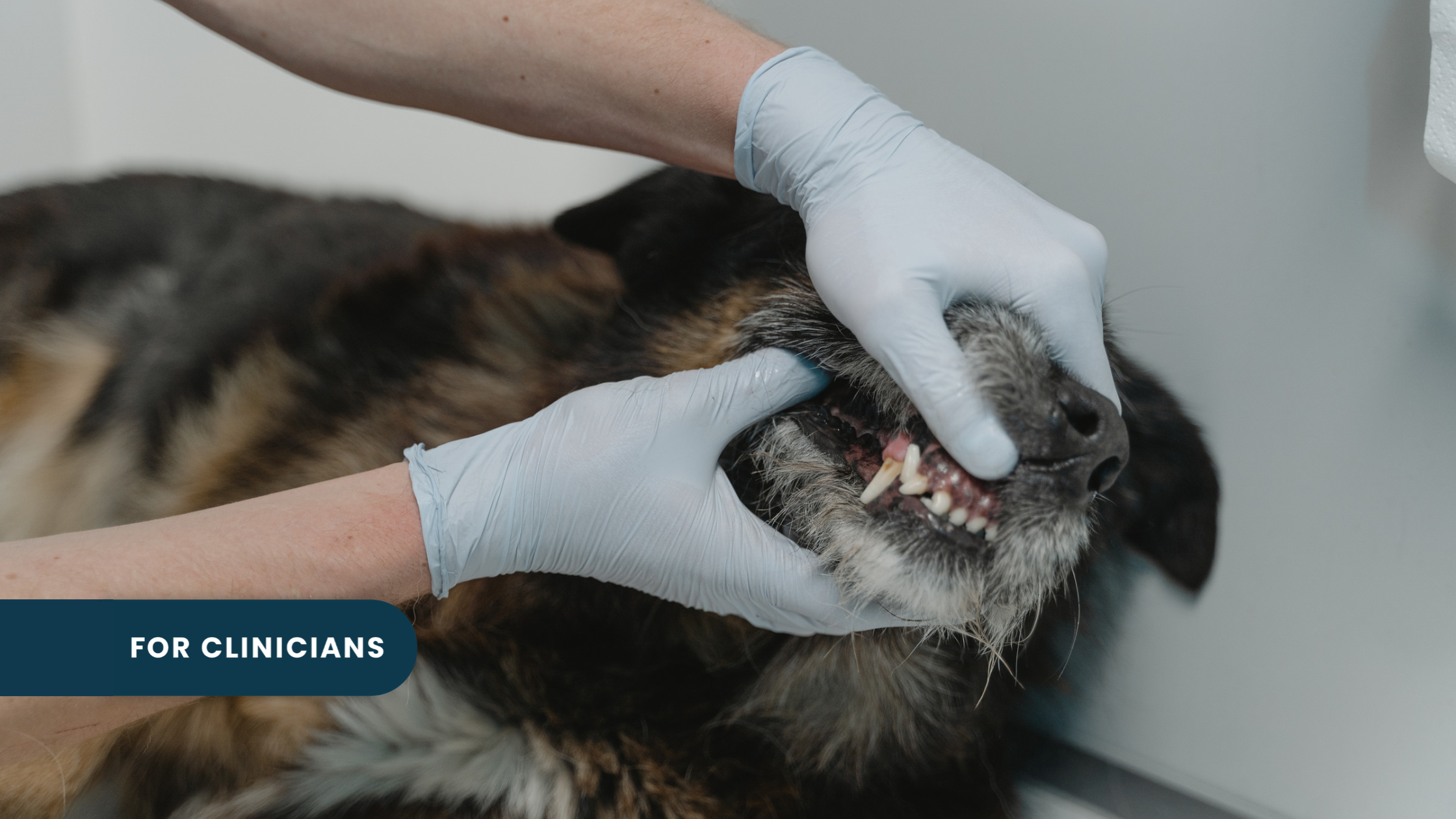
For Clinicians | It Was Only a Lick: A Rabies Exposure Case Study
Off Duty Series: Part 1 of 6
By Aaron Asay, PA-C, DMSc, FIBODM, FAWM
Medically reviewed and edited by Dr. Jamie Wilkey, PharmD, Director of Clinical Education
Off Duty is a six-part series on the emergencies clinicians end up handling outside of work: a call from family overseas, a car crash, a choking baby, a bad bleed. Aaron Asay has spent his career in emergency, disaster, and austere medicine. Part 1 comes from his own family: his daughter’s rabies exposure while volunteering in Peru.
At the mention of rabies, most people think of wild dogs, angry bats, and a painful shot if you get exposed. But due to increased vaccination rates and more careful wildlife management, actual human cases of this illness have all but disappeared in the majority of our communities and neighborhoods. However, that doesn’t mean exposure doesn’t still occur, nor does it mean that the rest of the world has the same safety record as we do here in the United States.
This is a case study on a rabies exposure that occurred in South America recently. Some details have been changed to protect the privacy of those involved, but for the sake of full disclosure, this was my own daughter, and in the process of navigating her experience, I realized I knew less than I thought I did regarding the management of a rabies exposure while traveling. As an emergency medicine Physician Assistant, and even with a doctorate degree and training in Global Health, I wasn’t fully prepared for this situation. I hope this article helps to clear up some misconceptions and gives others a better understanding of managing a case like this one. This isn’t an academic paper; rather, it’s more of an awareness campaign for laypeople and providers alike.
The Story
My daughter has been living in a small town in Peru for several months, teaching English with a group of other volunteers in their early twenties. About three weeks ago, several of them took a trip to Machu Picchu. On the way back they got stuck at a bus stop with a long wait ahead of them. The mosquitoes had eaten her alive, and she had scratched the bites on her arm until several were open and bleeding. Worn out from the hike, she dozed off. She woke up to a dog licking her arm.
That alone would make most of us jump, but it was the dog itself that made the girls nervous. It staggered when it walked, drooled constantly, and wandered around like it was searching for water. They were fairly sure it was blind. Before they could decide what to do, a local boy grabbed it and disappeared. One of the girls finally said out loud what they were all thinking. Rabies. Three of the girls had been licked, and all three had broken skin where the saliva made contact. That night, back at the hotel, they scrubbed their arms and called me.
What Is Rabies?
I need to stop here and explain something I didn’t fully appreciate until that phone call. Rabies virus can be present in the saliva of an infected animal, and a bite isn’t the only way in. Saliva on broken skin, even a scratched-open mosquito bite, can transmit it. The World Health Organization sorts animal exposures into three categories, and saliva on broken skin lands in Category III, the most serious, right alongside bites that penetrate the skin. Once symptoms start, rabies is virtually always fatal. Before that, appropriate treatment is extremely effective. Everything depends on what happens in between¹,².
Most of the exposures I’ve managed in the ER involved bats. Here at home, bats are responsible for approximately 70 percent of human rabies cases acquired in the United States³. Worldwide, dogs account for up to 99 percent of human rabies transmission, and WHO estimates that rabies kills tens of thousands of people every year, likely more given how many cases go unreported².
So I did what I tell my students to do. I pulled up the guidance, confirmed that saliva contacting broken skin was a Category III exposure, and told her she needed wound care, a series of vaccines, and rabies immune globulin, which we call RIG¹,⁴.
If you’re unfamiliar with RIG, that’s OK. Most people are. The vaccine teaches your body to make its own antibodies, but that takes time. RIG provides ready-made antibodies that cover the gap, and whenever possible it’s infiltrated directly into and around the wounds. It isn’t just another shot in the arm, and as I would soon find out, even healthcare providers get that part wrong⁴.
Why I Was Worried
It took an extra day to get seen at the local health center, so her first vaccine dose came on day three after the lick. They were told RIG wasn’t available to foreigners through the local system and they would have to leave the country to get it. The staff didn’t seem worried anyway. Rabies, they said, doesn’t really happen here.
To be fair, they had a point about the odds. Dog rabies has circulated in the Arequipa region since it returned there in 2014, with a confirmed human case in Arequipa in 2023⁵. CDC identifies dog rabies primarily in Arequipa, Puno, and southern Cusco, rather than the area around Machu Picchu, and notes that bat rabies is more common in Peru than dog rabies⁶.
But odds describe populations. We had one specific dog that staggered, drooled, and seemed blind, and it vanished before anyone could observe or test it. Those symptoms aren’t unique to rabies. Other illnesses and injuries can produce similar behavior. But combined with saliva contacting broken skin, and no way to rule out rabies in the animal, I wasn’t willing to dismiss it.
Then there was the chart. Her scratches had scabbed over by the time she was examined, so the provider wrote that there were no obvious wounds and RIG wasn’t recommended. The leaders of her volunteer organization leaned on that note and tried to talk the girls into staying put. I understand why, but the exposure category is decided by what happened at the bus stop, not by how the skin looks three days later¹.
Why We Publish Guidelines
This is where the story takes a turn that still bothers me. My daughter and one friend decided to get the immune globulin. The third girl, reassured by the health center and her organization, chose to continue the vaccines without it. She decided to “risk it.” I don’t blame her. She was a young woman in a foreign country getting conflicting advice, with local providers on one side and somebody’s dad on the phone on the other. Who would you believe? But all three had saliva contact with broken skin, the dog couldn’t be observed or tested, and it showed neurological signs that could have been consistent with rabies. Those are exactly the circumstances the guidelines were written for¹,⁴.
RIG also comes with a deadline. It can be given up to seven days after the first vaccine dose, but isn’t recommended after that because the body is expected to be developing its own antibodies and RIG can interfere with that response. The clock starts with the first vaccine dose, not the exposure. And the vaccine should never be held back just because RIG isn’t available¹,⁴.
Healthcare Shortfalls Are Similar Everywhere
The closest place we could arrange treatment was Miami. My daughter got her second dose in Peru, right on schedule, and got on a plane with her friend.
The Miami ER visit took about nine hours, and it was clear this wasn’t routine for the team. My daughter received her RIG the right way, infiltrated into and around the identifiable wounds on her arm, along with her third vaccine dose. Her friend’s lesions had healed over, so the nurse split her RIG between injections in both arms instead. The thing is, those spots were still visible. Anyone who took a minute to look could have found exactly where the saliva had touched broken skin.
For my fellow providers, this is the part I’d underline. CDC guidance is to infiltrate as much of the calculated RIG dose as anatomically feasible into and around the wounds, with any remainder administered intramuscularly at a site distant from the vaccine. RIG and the first vaccine dose should not be administered in the same anatomical location⁴. WHO goes further, emphasizing local wound infiltration, and no longer recommends injecting leftover RIG into a distant muscle¹. The wound is the priority. When no wound can be identified, CDC still calls for RIG, given intramuscularly at a site away from the vaccine⁴. But when the original exposure sites are identifiable, they should be assessed for infiltration. If RIG was given incorrectly, don’t assume the treatment has failed. CDC guidance addresses situations where additional RIG infiltration may be considered, subject to dose and timing limitations⁴. Call your public health department or a rabies specialist before attempting corrective treatment.
One Last Hurdle
Back in Peru, the schedule brought one more surprise. The standard CDC schedule for someone never vaccinated, who is not immunocompromised, is four doses on days 0, 3, 7 and 14⁴. Day zero means the day the first vaccine is administered, not the day of exposure. Peru wanted her fourth dose on day 28. My first reaction was that somebody had it wrong. They didn’t. WHO recognizes a four-dose intramuscular schedule that allows the final dose anywhere from day 14 to day 28¹. Different countries use different approved schedules, and an unfamiliar protocol doesn’t necessarily mean an incorrect one.
I’ve worked in enough health systems abroad that I should have remembered that. But when your daughter’s record says day 14 and a clinic tells her to come back two weeks later, it gets your attention.
It’s now been about three weeks since the exposure. All three girls are doing well and are scheduled to receive their fourth and final rabies vaccine dose next week. My daughter’s biggest worry has been for her two friends, one who received RIG in the wrong place and one who went without it. Rabies usually takes weeks to months to show itself, sometimes longer². That worry doesn’t go away quickly. Neither situation means either girl will develop rabies, but both deserve review with public health or a rabies specialist. Completing the vaccine series will be reassuring, but it doesn’t change the fact that immune globulin was recommended for their Category III exposures.
Then came the bill. When we filed with our travel insurance for the flight to Miami, they asked for a signed note from the treating doctor. The only note we had was the one saying RIG wasn’t needed. They denied the claim. One line in a chart, written after a quick look at some scabs, cost us thousands of dollars. Providers, what you write follows the patient, sometimes across borders and all the way to an insurance claim. Classify the exposure by what happened, not by what the skin looks like when the patient finally gets to you.
I’ve gone back and forth on the pre-exposure vaccine, and I’m not convinced every short-term traveler needs it. But CDC recommends considering it for expatriates and people spending time in rural areas where access to appropriate rabies treatment may be limited⁶,⁸. Which describes my daughter. The initial pre-exposure series is two doses, a week apart. If you’re subsequently exposed and meet the criteria for being previously vaccinated, you generally need two more vaccine doses and no RIG. People with ongoing risk may need antibody testing or a booster to maintain their protection⁷,⁸. Where RIG is hard to find, that takes one of the hardest parts of the problem off the table before you leave home.
For other travelers, keep unfamiliar animals away, even the friendly ones, and keep open wounds covered. If an animal bites, scratches, or licks broken skin, wash it with soap and running water for at least fifteen minutes and get medical care promptly². If human RIG isn’t available, ask what alternatives are approved and available locally. Equine rabies immune globulin and, in some countries, rabies monoclonal antibody products may be options, depending on local regulatory approval and availability¹,²,⁸. Photograph the vaccine products you receive, keep a record of the dates and doses, and read your insurance fine print on evacuation before you need it.
I’ve spent years working in places where medical resources are limited, and a good part of my career has involved teaching people how to prepare for emergencies. Yet here I was, trying to get my own daughter the treatment she needed, and discovering just how difficult that could be. The medication wasn’t available, the medical advice was conflicting, and even after we got her to an American emergency department, things didn’t go quite as expected. I learned a few things about rabies that I should have known already. But I also got a reminder of something I’ve been teaching for years. Knowing what to do doesn’t always mean you’ll have the resources to do it. I started this thinking I had a pretty good handle on rabies. The lesson came from a dog at a bus stop in Peru. It was only a lick. It was also a Category III rabies exposure.
Quick Reference: Rabies Exposure
| Question | Answer | Source |
|---|---|---|
| Does a lick count? | Yes, if saliva contacts broken skin or a mucous membrane. This is WHO Category III. | 1 |
| First thing to do? | Wash thoroughly with soap and running water for at least 15 minutes, then seek medical care. | 2 |
| Category III, never vaccinated? | Wound care, vaccine, and immune globulin, or an approved alternative where indicated and available. | 1, 2, 4 |
| No RIG available? | Start vaccination without delay. Seek expert guidance about obtaining the remaining recommended treatment. | 1, 4 |
| RIG deadline? | No later than day 7 after the first vaccine dose. | 1, 4 |
| Where does RIG go? | Into and around identifiable wounds as anatomically feasible. Follow product-specific and national guidance for any remaining volume. | 1, 4 |
| US vaccine schedule? | Days 0, 3, 7 and 14. Immunocompromised patients require an additional dose on day 28 and further assessment. | 4 |
| WHO four-dose IM schedule? | Days 0, 3, 7 and a fourth dose between days 14 and 28. | 1 |
| Pre-exposure vaccination? | Initial doses on days 0 and 7. Previously vaccinated people generally receive two post-exposure doses without RIG, subject to applicable guidance. | 7, 8 |
| Treated abroad? | Keep product names, dates, doses, and administration records. Consult public health if schedules or products differ. | 4, 8 |
Sources
- World Health Organization. Rabies vaccines: WHO position paper, April 2018. Weekly Epidemiological Record. 2018;93(16):201-220. https://www.who.int/publications/i/item/who-wer9316
- World Health Organization. Rabies. Fact sheet. https://www.who.int/news-room/fact-sheets/detail/rabies
- Pieracci EG, Pearson CM, Wallace RM, et al. Vital Signs: Trends in Human Rabies Deaths and Exposures, United States, 1938-2018. MMWR. 2019;68:524-528. https://www.cdc.gov/mmwr/volumes/68/wr/mm6823e1.htm
- Centers for Disease Control and Prevention. Rabies Post-exposure Prophylaxis Guidance. https://www.cdc.gov/rabies/hcp/clinical-care/post-exposure-prophylaxis.html
- Centro Nacional de Epidemiología, Prevención y Control de Enfermedades (CDC Perú). CDC Perú emite alerta epidemiológica sobre un caso confirmado de rabia humana urbana en Arequipa. October 17, 2023. https://www.dge.gob.pe/portalnuevo/informativo/prensa/cdc-peru-emite-alerta-epidemiologica-sobre-un-caso-confirmado-de-rabia-humana-urbana-en-arequipa/
- Centers for Disease Control and Prevention. Peru. CDC Yellow Book, 2026 edition. https://www.cdc.gov/yellow-book/hcp/americas-caribbean/peru.html
- Rao AK, Briggs D, Moore SM, et al. Use of a Modified Preexposure Prophylaxis Vaccination Schedule to Prevent Human Rabies. MMWR. 2022;71:619-627. https://www.cdc.gov/mmwr/volumes/71/wr/mm7118a2.htm
- Centers for Disease Control and Prevention. Rabies. CDC Yellow Book, 2026 edition. https://www.cdc.gov/yellow-book/hcp/travel-associated-infections-diseases/rabies.html
Lifesaving Solutions
Recent Posts
Keeping you informed and safe.
For Clinicians | How Long Does the Flu Shot Take to Work? Holiday Flu Prevention
For Clinicians | How Long Does the Flu Shot Take to Work? Holiday Flu Prevention By Dr. Jamie Wilkey, PharmD, Director of Clinical EducationMedically reviewed and edited by Kristen Carpenter, PA-C Hi again, everyone. Last week I had a lot of fun writing about flu...
Flu vs. COVID Antivirals: Is It Too Late to Take Tamiflu or Paxlovid?
Flu vs. COVID Antivirals: Is It Too Late to Take Tamiflu or Paxlovid? By the Jase Medical Team You've been sick for three days. The fever isn't improving, you're exhausted, and you're wondering whether an antiviral medication could help. But you've heard that...
For Clinicians | Tamiflu After 48 Hours, Paxlovid After 5 Days
For Clinicians | Tamiflu After 48 Hours, Paxlovid After 5 Days: Antiviral Timing for Flu and COVID By Dr. Jamie Wilkey, PharmD, Director of Clinical EducationMedically reviewed and edited by Kristen Carpenter, PA-C As the weather turns colder, every retail pharmacist...
Do You Need Antibiotics for a Sinus Infection? What the New Guidelines Say
Do You Need Antibiotics for a Sinus Infection? What the New Guidelines Say By the Jase Medical Team Do you need antibiotics for a sinus infection? Usually not right away. Even when a sinus infection is caused by bacteria, many people recover without antibiotics....