How to Rehydrate Someone Properly When There Is No IV

How to Rehydrate Someone Properly When There Is No IV

By the Jase Medical Team

When someone is losing fluid from vomiting or diarrhea, rehydration isn’t simply a matter of getting them to drink something.

The type of fluid matters. The amount matters. And especially when someone is vomiting, the rate matters.

That’s the science behind oral rehydration therapy, a remarkably effective approach to dehydration that has been used around the world for decades. The World Health Organization’s oral rehydration solution (ORS) contains glucose and sodium in carefully balanced concentrations, 75 mmol/L of each, with a total osmolarity of 245 mOsm/L. The glucose helps the intestine absorb sodium, and sodium helps bring water with it.

In other words, oral rehydration isn’t just “drink more water.”

It’s using the gut’s own transport system to move water back into the body.

An Electrolyte Drink Isn’t Necessarily an Oral Rehydration Solution

Walk down the hydration aisle and you’ll see sports drinks, electrolyte powders, flavored waters, hydration packets, and products promising rapid hydration.

They aren’t all the same thing.

A true oral rehydration solution is formulated with a specific balance of glucose and electrolytes designed for replacing fluid lost through illnesses such as diarrhea and vomiting. WHO’s reduced-osmolarity ORS contains 75 mmol/L of sodium and 75 mmol/L of glucose.

That is different from a beverage designed primarily for exercise, flavor, or everyday hydration.

So if someone is dehydrated from a stomach illness, prepackaged oral rehydration solution should be your first choice when it’s available. Look for a product specifically labeled for oral rehydration rather than assuming anything marketed as an “electrolyte drink” serves the same purpose.

And don’t assume you can turn a sports drink into ORS simply by diluting it. Adding water changes all of its concentrations—including the sodium you’re trying to replace.

When Someone Is Vomiting, How They Drink Matters

One of the most common problems with oral rehydration happens when a very thirsty person tries to drink a large amount at once.

Their stomach may send it right back up.

Instead, oral rehydration can be given in small, frequent amounts and gradually increased as tolerated. CDC guidance for children with vomiting describes starting with about 5 mL, roughly one teaspoon, every five minutes and increasing gradually. A spoon or oral syringe can make those small amounts easier to control.

That may feel painfully slow when a child is thirsty and you know they need fluid. But getting a small amount to stay down repeatedly can be more useful than having them drink a large glass and vomit it back up.

Vomiting also doesn’t automatically mean oral rehydration has failed. CDC guidance notes that most children with vomiting accompanying acute gastroenteritis can still be successfully rehydrated orally when ORS is given in limited, frequent amounts.

How Much Oral Rehydration Solution Does Someone Need?

This is where age, weight, degree of dehydration, ongoing fluid losses, and medical history matter.

For children, clinicians use weight-based approaches to determine how much fluid is needed for rehydration and how much additional ORS should be given to replace continuing losses from diarrhea or vomiting. WHO guidance also provides age-based amounts of ORS after loose stools when preventing dehydration: for example, 50–100 mL after each loose stool for children under 2 and 100–200 mL for children ages 2–10.

That doesn’t mean every sick child should be managed at home by calculating a formula.

If you’re unsure how much fluid a child needs, or you’re concerned they’re already significantly dehydrated, contact their pediatrician or another qualified medical professional.

The useful household principle is simpler: oral rehydration isn’t one big drink. It’s a process of replacing what has already been lost while continuing to replace what the person is still losing.

What If You Don’t Have Commercial ORS?

Prepackaged oral rehydration solution is preferable because the concentrations have already been measured for you. WHO describes ORS as a pharmaceutical product and recommends manufacturing it according to quality standards.

If proper ORS truly isn’t available, a homemade sugar-and-salt solution may be used as an emergency fallback following established public-health instructions.

Do not improvise the proportions.

Too much salt can be dangerous, particularly for infants and young children. Don’t use heaping spoonfuls, estimate quantities by eye, or decide that making the solution “stronger” will make it work better.

For that reason, we recommend keeping commercially prepared ORS packets or ready-to-use oral rehydration solution available rather than relying on memory for an emergency recipe.

If you do need to make a homemade solution, use a recipe from a recognized public-health authority and follow the measurements exactly using level measures and the specified amount of clean water.

Pedialyte vs. Gatorade: Does It Matter?

For ordinary exercise or replacing fluid after sweating, a sports drink may be perfectly reasonable for many people.

But rehydrating someone who is losing significant fluid through vomiting or diarrhea is a different job.

Products formulated as oral rehydration solutions are designed around the balance of glucose and electrolytes needed to promote absorption and replace losses. Sports drinks are formulated for a different purpose and may contain considerably different amounts of sodium and sugar.

So when the problem is dehydration from gastroenteritis, don’t choose solely by which bottle says “electrolytes” on the front.

Look for an actual oral rehydration solution.

When Oral Rehydration Stops Being a Home Problem

Oral rehydration is powerful, but it isn’t appropriate for every situation.

Severe dehydration or shock requires urgent medical treatment and may require IV fluids. CDC guidance specifically identifies shock or near-shock as situations requiring initial IV treatment.

Seek urgent medical care for concerning signs such as severe lethargy or difficulty waking, confusion, fainting, very little or no urine, inability to keep even small amounts of fluid down, blood in the stool or vomit, severe abdominal pain, or other signs that the person is becoming seriously ill.

Infants deserve an especially low threshold for contacting a pediatrician because dehydration can progress quickly.

And if your instinct is telling you that someone is getting worse rather than better, don’t let the fact that you’re giving ORS create false reassurance. Oral rehydration is a treatment tool, not a substitute for medical evaluation when someone is seriously ill.

Why Knowing Oral Rehydration Still Matters

It’s easy to think of IV fluids as the “real” treatment and oral fluids as the backup.

The healthcare system has repeatedly been reminded why that isn’t always true.

After Hurricane Helene damaged Baxter’s North Cove manufacturing facility in 2024, the disruption affected a facility that had been producing approximately 60% of the IV solutions used each day in the United States. Hospitals and health systems had to conserve IV fluids and reconsider when patients could safely receive hydration through other routes.

But households never had an IV bag hanging in the kitchen in the first place.

What you can have is an appropriate oral rehydration solution and an understanding of how to use it: the right fluid, the right amount, and the right pace.

At Jase Medical, we’re a family team of physicians, PAs, and pharmacists focused on appropriate medical preparation. That doesn’t mean trying to turn your home into an emergency department. It means understanding which simple, evidence-based tools can help when ordinary access to care is delayed and knowing exactly where home care needs to stop.

For vomiting and diarrhea, that starts with something surprisingly basic:

Don’t just replace water. Rehydrate properly.


The Jase Medical Team is a family team of medical doctors, PAs, and pharmacists focused on appropriate medical preparation: clinically grounded readiness that complements, rather than replaces, the healthcare professionals you already trust.

This article was prepared by the Jase Medical content team for informational purposes only and does not constitute medical advice. Prescription requirements, emergency dispensing rules, insurance coverage, and controlled-substance regulations vary by medication, jurisdiction, and individual circumstances. Consult a licensed healthcare provider or pharmacist regarding your specific medications.

Lifesaving Solutions

Everyone should be empowered to care for themselves and their loved ones during the unexpected. Check out our recent lifesaving products today.

Recent Posts

Keeping you informed and safe.
For Clinicians | Diabetes Sick-Day Rules in a Disaster

For Clinicians | Diabetes Sick-Day Rules in a Disaster

For Clinicians | Diabetes Sick-Day Rules in a Disaster By Dr. Jamie Wilkey, PharmD, Director of Clinical EducationMedically reviewed and edited by Kristen Carpenter, PA-C Diabetes is already hard to manage. Sick days just make everything worse. And a sick day in a...

read more
Burns in a Blackout

Burns in a Blackout

Burns in a Blackout: First Aid When the Tap Doesn't Run By the Jase Medical Team Almost every burn first aid guide starts with the same instruction: cool the burn under clean, cool running water. But what happens when the tap doesn't run? For households that rely on a...
read more
For Clinicians | Burn First Aid Without Running Water

For Clinicians | Burn First Aid Without Running Water

For Clinicians | Burn First Aid Without Running Water By Dr. Jamie Wilkey, PharmD, Director of Clinical EducationMedically reviewed and edited by Aaron Asay, PA-C, DMSc, FIBODM, FAWM Every burn first-aid guide starts the same way: cool it under running water. That's...

read more
What to Do If You’re Bitten by a Snake?

What to Do If You’re Bitten by a Snake?

What to Do If You're Bitten by a Snake: Forget What the Movies Taught You By the Jase Medical Team If you're bitten by a venomous snake, forget almost everything the movies taught you about snakebite first aid. Don't cut an X over the fang marks. Don't suck out the...


read more

Join Our Newsletter

Our mission is to help you be more medically prepared. Join our newsletter and follow us on social media for health and safety tips each week!

Why You Can’t Dose a Child From an Adult Tablet

Why You Can’t Dose a Child From an Adult Tablet

You cannot reliably turn an adult medication into a child’s dose just by cutting the tablet smaller.

That can be frustrating to hear at 9 p.m. when the children’s ibuprofen bottle is empty, the pharmacy is closed, and the only thing in the medicine cabinet is the adult version.

The temptation is obvious. Look up the dose, do a little math, cut the tablet, and make it work.

But pediatric medication dosing is not just smaller adult dosing. A child’s weight matters. The formulation matters. The concentration matters. The way the medication releases into the body matters.

And the place pediatric medication errors often happen is not necessarily in determining what medication a child needs. It is translating the prescribed dose into what actually goes into the child’s mouth.

Instead of learning how to improvise, there are four things parents can check now that make improvisation much less likely later.

1. Know Your Child’s Current Weight in Kilograms

Pediatric medications are often dosed based on weight, which means the number you remember from last year’s physical may no longer be particularly useful.

Children grow quickly.

Keep your child’s current weight somewhere accessible and record it in kilograms as well as pounds. If you only know pounds, ask your child’s healthcare provider to confirm the current kilogram weight at their next visit.

This is particularly useful when you’re calling an after-hours nurse line, speaking with an unfamiliar clinician, or trying to answer questions while traveling.

The goal is not to calculate a dose yourself.

The goal is to give the clinician or pharmacist accurate information so they can.

2. Check the Concentration on the Bottle

Two bottles can contain the same medication without giving you the same amount of medication in the same volume of liquid.

That’s why instructions for one product should not automatically be transferred to another bottle simply because the medication name looks familiar.

Before giving a liquid medication, look at the label for the concentration. It will typically tell you how many milligrams of medication are contained in a specific number of milliliters.

Then use the instructions provided for that specific medication and formulation.

This is also why remembering that your child “usually gets 5 mL” is not enough. Milliliters tell you how much liquid you’re giving. The concentration tells you how much medication is inside that liquid.

If the product has changed, confirm the dose rather than assuming the old volume still applies.

3. Use the Syringe, Not a Kitchen Spoon

A teaspoon sounds like a standard measurement.

The spoon in your silverware drawer is not.

Household spoons vary significantly in size, which makes them a poor tool for measuring medication. Research has also found that medication dosing errors are more common when parents use teaspoon-based instructions rather than milliliter-only instructions.

The measuring device matters too.

Studies have found fewer dosing errors with oral syringes than with dosing cups, particularly when measuring smaller amounts.

So if a children’s liquid medication comes with an oral syringe, keep the syringe with the medication and use the markings on it.

Measure in milliliters. Skip the kitchen spoon.

It’s a small change that removes one unnecessary opportunity for error.

4. Know Which Medications You Should Not Improvise

This is where the adult tablet becomes particularly problematic.

Even if you know your child’s weight, that does not mean you can calculate a pediatric dose and create it by cutting an adult tablet.

Some tablets are coated or manufactured specifically to control where or how quickly the medication is released. Labels such as EC, SR, ER, XR, or XL can indicate formulations that should not simply be crushed, split, or altered without professional guidance.

Even tablets that can physically be split do not necessarily divide into perfectly equal amounts of medication.

And pediatric dosing can leave much less room for error than simply estimating half a tablet or a quarter of a tablet.

If the children’s medication you need isn’t available, call your child’s pediatrician, an after-hours clinical line, or a pharmacist for guidance rather than trying to convert an adult tablet yourself.

What About Children’s Dosing Charts by Age?

Age-based charts are convenient, but weight is often more useful for pediatric medication decisions.

Two healthy 6-year-olds can weigh very different amounts. Growth patterns also change over time, which means broad age categories cannot account for every child.

If a medication’s official label provides age-based instructions, follow the product labeling and your child’s healthcare provider’s guidance. But don’t use a general age chart from the internet to reverse-engineer an adult medication into a pediatric dose.

If you have access to your child’s current weight, give that information to the clinician or pharmacist helping you.

Why Adult Tablets Aren’t a Backup Plan

It can feel wasteful to keep a separate children’s formulation when the medicine cabinet already contains an adult version of the same medication.

But the formulation is part of the safety system.

A pediatric liquid lets the appropriate amount be measured much more precisely. Its label provides the concentration. Its measuring device is designed for small volumes. And when the medication is prescribed, the formulation can be selected specifically for the child.

An adult tablet removes many of those safeguards and leaves the parent trying to recreate them at the kitchen counter.

That’s not the kind of medical preparedness we want families relying on.

The Four-Point Pediatric Medication Check

You don’t need to memorize pediatric dosing calculations to be better prepared.

Instead, check four things:

  1. Current weight: Do you know your child’s current weight in kilograms?
  2. Concentration: Have you checked the concentration printed on the medication you’re actually holding?
  3. Measuring device: Do you have the appropriate oral syringe or dosing device with it?
  4. Medication restrictions: Do you know whether the medication and formulation are appropriate for your child’s age?

If your child takes a prescription medication every day, add one more layer. Keep a written record of the drug, dose, prescriber, and pharmacy somewhere another caregiver could access it.

That is far more useful than hoping someone can reconstruct the information from memory when your child is sick.

Pediatric Preparedness Should Reduce Improvisation

At Jase Medical, we’re a family team of physicians, PAs, and pharmacists. We built KidCase for children ages 2 to 11 around the same principle: parents shouldn’t have to improvise pediatric medication from adult supplies when normal access to care is disrupted.

KidCase provides pediatric formulations and dosing selected for the individual child after a licensed provider reviews each request.

It is intended for emergency use only, after first trying to reach your child’s healthcare provider. It complements your child’s regular pediatric care rather than replacing it.

Because good medical preparedness isn’t about becoming your child’s pharmacist at the kitchen counter.

It’s about having the right information, the right formulation, and a plan already in place before Saturday night arrives and the children’s bottle is empty.

The goal isn’t to get better at improvising. It’s to make improvisation unnecessary.


The Jase Medical Team is a family team of medical doctors, PAs, and pharmacists focused on appropriate medical preparation: clinically grounded readiness that complements, rather than replaces, the healthcare professionals you already trust.

This article was prepared by the Jase Medical content team for informational purposes only and does not constitute medical advice. Prescription requirements, emergency dispensing rules, insurance coverage, and controlled-substance regulations vary by medication, jurisdiction, and individual circumstances. Consult a licensed healthcare provider or pharmacist regarding your specific medications.

Lifesaving Solutions

Everyone should be empowered to care for themselves and their loved ones during the unexpected. Check out our recent lifesaving products today.

Recent Posts

Keeping you informed and safe.

For Clinicians | Diabetes Sick-Day Rules in a Disaster

For Clinicians | Diabetes Sick-Day Rules in a Disaster

For Clinicians | Diabetes Sick-Day Rules in a Disaster By Dr. Jamie Wilkey, PharmD, Director of Clinical EducationMedically reviewed and edited by Kristen Carpenter, PA-C Diabetes is already hard to manage. Sick days just make everything worse. And a sick day in a...

read more
Burns in a Blackout

Burns in a Blackout

Burns in a Blackout: First Aid When the Tap Doesn't Run By the Jase Medical Team Almost every burn first aid guide starts with the same instruction: cool the burn under clean, cool running water. But what happens when the tap doesn't run? For households that rely on a...

read more
For Clinicians | Burn First Aid Without Running Water

For Clinicians | Burn First Aid Without Running Water

For Clinicians | Burn First Aid Without Running Water By Dr. Jamie Wilkey, PharmD, Director of Clinical EducationMedically reviewed and edited by Aaron Asay, PA-C, DMSc, FIBODM, FAWM Every burn first-aid guide starts the same way: cool it under running water. That's...

read more
What to Do If You’re Bitten by a Snake?

What to Do If You’re Bitten by a Snake?

What to Do If You're Bitten by a Snake: Forget What the Movies Taught You By the Jase Medical Team If you're bitten by a venomous snake, forget almost everything the movies taught you about snakebite first aid. Don't cut an X over the fang marks. Don't suck out the...

read more

Join Our Newsletter

Our mission is to help you be more medically prepared. Join our newsletter and follow us on social media for health and safety tips each week!

What is Plague?

What Is Plague?

By the Jase Medical Team

Plague is back in the headlines, and people are suddenly Googling a disease they may not have thought about since history class.

A 28-year-old laboratory worker at an anti-plague research institute in Siberia recently died after developing pneumonia of unknown origin. Unofficial reports raised the possibility of pneumonic plague, but Russian health authorities say testing has not identified plague or another dangerous pathogen associated with her work. The World Health Organization has assessed the broader public health risk as low while continuing to seek information.

In other words, we don’t know that this was plague, and we’re not going to guess.

But the headlines offer a good reason to answer a more useful question:

What actually is plague?

The simplest explanation is this: one bacterium can cause three major forms of disease, depending largely on where the infection takes hold in the body.

That bacterium is Yersinia pestis.

And despite its medieval reputation, plague still exists today.

First Myth: Plague Is Not a Virus

Plague is a bacterial infection.

That’s an important distinction because bacterial plague can be treated with antibiotics. Prompt diagnosis and treatment dramatically improve the odds of survival.

Before effective antibiotics became available, about two out of every three documented U.S. plague cases with known outcomes were fatal. After antibiotics were introduced, that fell to roughly one in six.

Treatment matters, and timing matters.

Untreated plague can progress rapidly, particularly when the bacteria reach the bloodstream or lungs.

One Bacterium, Three Diseases

The three forms you’ve probably heard about are bubonic, septicemic, and pneumonic plague.

They’re not three unrelated diseases. They’re different manifestations of infection with the same bacterium.

Think of it as a question of location.

Bubonic Plague: The Lymph Nodes

This is the classic form associated with the Black Death, and it’s still the most common form seen in the United States.

An infected flea bites a person and introduces Yersinia pestis through the skin. The bacteria can then travel through the lymphatic system to a nearby lymph node, where they multiply.

The result can be a dramatically swollen and painful lymph node called a bubo.

People may also develop sudden fever, chills, headache, weakness, and other signs of serious infection.

More than 8 in 10 U.S. plague cases have been bubonic.

Without prompt treatment, however, the bacteria don’t necessarily stay in the lymph node. They can spread elsewhere in the body.

Septicemic Plague: The Bloodstream

When Yersinia pestis infects the bloodstream, the result is septicemic plague.

It can develop as a complication of bubonic plague, or infection can sometimes present primarily in the bloodstream without an obvious bubo.

People can develop fever, severe weakness, abdominal symptoms, shock, bleeding, and tissue damage as the infection progresses.

This is one reason plague isn’t always as visually obvious as the history-book version. Someone doesn’t necessarily develop a giant swollen lymph node first.

Pneumonic Plague: The Lungs

When plague infects the lungs, it’s called pneumonic plague.

This is the fastest-moving and most dangerous major form. It can develop when untreated infection elsewhere in the body spreads to the lungs, or someone can develop primary pneumonic plague after inhaling infectious respiratory droplets.

Pneumonic plague is also the form that can spread from one person to another through respiratory droplets during close contact.

That doesn’t mean plague spreads casually through a community like a common cold. Person-to-person transmission requires exposure to someone with pneumonic plague, and public health officials can use antibiotics, isolation, and monitoring of close contacts to interrupt transmission.

But suspected pneumonic plague is treated seriously because illness can progress rapidly.

Is Plague Contagious?

Sometimes.

Bubonic plague is usually acquired from an infected flea or through contact with an infected animal. It doesn’t ordinarily spread from person to person.

Pneumonic plague is different because infection in the lungs can produce infectious respiratory droplets.

So when someone asks, “Is plague contagious?” the better answer is:

It depends on the form.

That’s one of the reasons understanding the three forms matters.

Is Plague Curable?

Plague is treatable with antibiotics, and treatment should begin as quickly as possible when plague is suspected.

That fact completely changed the disease’s prognosis.

Historical U.S. data show that about 66% of documented plague cases were fatal before antibiotics became available. After their introduction, overall mortality fell dramatically.

But modern treatment doesn’t make plague harmless. Pneumonic and septicemic disease can progress particularly quickly, and delays in treatment increase the danger.

This is not an infection to watch at home and see how you feel tomorrow.

Is Plague Still in the United States?

Yes, but it’s rare.

The United States averages about seven human plague cases per year, and most occur in rural areas of the West.

Cases are concentrated particularly in parts of New Mexico, Arizona, Colorado, California, Oregon, and Nevada, where Yersinia pestis circulates among wild rodents and their fleas.

That means the person who should actually know a little about plague isn’t necessarily someone worried about an international headline.

It may be someone who hikes, camps, hunts, works outdoors, or lives around wildlife in the rural West.

Fleas, Rodents, and Yes, Your Cat

Plague is fundamentally a zoonotic disease, meaning it can move between animals and humans.

Rodents and their fleas play an important role in maintaining the bacteria in the environment. When an infected animal becomes sick or dies, fleas can seek another host.

That can include humans.

People can also become infected through direct contact with tissues or fluids from an infected animal.

And domestic animals aren’t automatically outside that equation.

Cats can become infected after encountering infected rodents or fleas, and human plague cases have been associated with contact with infected cats. If you live in or travel through an area where plague occurs, flea control for pets isn’t simply about keeping them comfortable.

It’s part of reducing exposure.

What Should You Actually Do About Plague?

For most Americans, plague doesn’t require a new preparedness protocol.

If you’re spending time outdoors in areas where plague occurs, use insect repellent as appropriate, keep fleas off pets, avoid handling sick or dead wild animals with bare hands, and don’t encourage rodents to live around your home or campsite.

If you need to handle a potentially infected animal, use appropriate protection rather than direct bare-hand contact.

And pay attention to symptoms after a plausible exposure.

A sudden fever accompanied by an unusually painful, swollen lymph node deserves prompt medical evaluation, particularly after time in an area where plague occurs or after contact with rodents, fleas, or a sick animal.

Tell the healthcare professional where you’ve been and what you’ve been around.

Those details can make a rare diagnosis easier to recognize.

A Scary Headline Becomes Less Scary When You Understand the Disease

The current situation in Siberia is still being investigated. Russian authorities have not confirmed plague as the cause of the laboratory worker’s death, and international health officials continue to seek information.

That’s where the facts stop.

We don’t need to fill the gap with speculation.

At Jase Medical, we’re a family team of medical doctors, PAs, and pharmacists, and we’d rather explain a scary medical word than simply repeat it.

Plague is not a mysterious medieval force. It’s a bacterial infection caused by Yersinia pestis. It can take three major forms depending on where the infection develops. Bubonic plague affects the lymphatic system. Septicemic plague involves the bloodstream. Pneumonic plague affects the lungs and can spread between people through respiratory droplets.

It still occurs in the United States, but it’s rare. And unlike during the Black Death, we have effective antibiotics to treat it when it’s recognized and treated promptly.

So if plague appears in your news feed, remember the framework:

One bacterium. Three major forms. Early treatment matters.

And if you’re one of the Americans who actually lives, works, hikes, hunts, or camps where plague occurs, the practical advice is much less dramatic than the headline:

Avoid fleas. Be careful around wild animals. And if sudden fever and a painful swollen lymph node appear after a possible exposure, get seen quickly and tell them where you’ve been.


The Jase Medical Team is a family team of medical doctors, PAs, and pharmacists focused on appropriate medical preparation: clinically grounded readiness that complements, rather than replaces, the healthcare professionals you already trust.

This article was prepared by the Jase Medical content team for informational purposes only and does not constitute medical advice. Prescription requirements, emergency dispensing rules, insurance coverage, and controlled-substance regulations vary by medication, jurisdiction, and individual circumstances. Consult a licensed healthcare provider or pharmacist regarding your specific medications.

Lifesaving Solutions

Everyone should be empowered to care for themselves and their loved ones during the unexpected. Check out our recent lifesaving products today.

Recent Posts

Keeping you informed and safe.

For Clinicians | Diabetes Sick-Day Rules in a Disaster

For Clinicians | Diabetes Sick-Day Rules in a Disaster

For Clinicians | Diabetes Sick-Day Rules in a Disaster By Dr. Jamie Wilkey, PharmD, Director of Clinical EducationMedically reviewed and edited by Kristen Carpenter, PA-C Diabetes is already hard to manage. Sick days just make everything worse. And a sick day in a...

read more
Burns in a Blackout

Burns in a Blackout

Burns in a Blackout: First Aid When the Tap Doesn't Run By the Jase Medical Team Almost every burn first aid guide starts with the same instruction: cool the burn under clean, cool running water. But what happens when the tap doesn't run? For households that rely on a...

read more
For Clinicians | Burn First Aid Without Running Water

For Clinicians | Burn First Aid Without Running Water

For Clinicians | Burn First Aid Without Running Water By Dr. Jamie Wilkey, PharmD, Director of Clinical EducationMedically reviewed and edited by Aaron Asay, PA-C, DMSc, FIBODM, FAWM Every burn first-aid guide starts the same way: cool it under running water. That's...

read more
What to Do If You’re Bitten by a Snake?

What to Do If You’re Bitten by a Snake?

What to Do If You're Bitten by a Snake: Forget What the Movies Taught You By the Jase Medical Team If you're bitten by a venomous snake, forget almost everything the movies taught you about snakebite first aid. Don't cut an X over the fang marks. Don't suck out the...
read more

Join Our Newsletter

Our mission is to help you be more medically prepared. Join our newsletter and follow us on social media for health and safety tips each week!

Nobody Has Your Medication List, Including Your Doctor and Your Pharmacy

Nobody Has Your Medication List, Including Your Doctor and Your Pharmacy

By the Jase Medical Team

Most of us assume that somewhere in the healthcare system, there is one correct list of every medication we take.

Your primary care doctor has a list. Your pharmacy has a list. Your specialists have records. And if you ever end up in the hospital, surely someone can pull all of that together and see exactly what you’re taking.

The problem is: that single, authoritative medication list often doesn’t exist.

Researchers studying 751 older adults compared three versions of their medication information: what the patient reported taking, what the family doctor’s records showed, and what the community pharmacy had on file. For roughly seven in ten patients, the lists didn’t agree.

None of the three was necessarily the master copy.

That changes the purpose of the medication list you keep at home. It isn’t simply a backup of information the healthcare system already has. It may be the only place where what you actually take, what your doctor thinks you take, and what your pharmacy has dispensed can be brought together.

And you’re the only person who routinely stands in all three rooms.

Why Your Doctor’s Medication List May Be Wrong

An inaccurate medication list doesn’t necessarily mean someone made a careless mistake.

Think about how many places your medication information comes from. Your primary care doctor may prescribe several medications. A specialist adds another. An urgent care clinician gives you something temporarily. Your doctor tells you to stop a medication, but the old prescription remains visible in another system. You start taking an over-the-counter medication or supplement that your pharmacy never sees.

Meanwhile, your pharmacy’s records primarily tell it what has been prescribed or dispensed through that pharmacy. That isn’t always the same thing as knowing exactly what you are taking today.

Even patients who are organized enough to bring their own medication lists to medical appointments can have discrepancies. In one U.S. study of patients arriving at a surgical clinic with their own lists, the typical patient list contained multiple errors.

The point isn’t that medication lists are unreliable and therefore useless.

It’s the opposite: your list becomes more important because the other records aren’t guaranteed to agree.

Your Medication List Should Help Someone Check Your Work

A useful medication list needs the basics. For each medication, record its name, dose, and how you take it. Include the medications you’re actually taking, not simply everything that has ever appeared in your patient portal.

But there’s another piece of information that’s easy to overlook: your pharmacy’s name and phone number.

The Agency for Healthcare Research and Quality (AHRQ) publishes a free medication-record form patients can use. Before it even gets to the individual medications, it asks for your pharmacy name and phone number.

That little box matters more than it looks.

In a study of emergency department patients, researchers found that leaving pharmacy information off a personal medication list was strongly associated with having an inaccurate list. That doesn’t mean adding a phone number magically makes everything else correct.

It means you’re giving the next clinician something extremely useful: a way to verify the information.

If you’re in an emergency department and can’t remember whether a prescription changed from one strength to another, the clinician now knows which pharmacy to contact. If an adult child is trying to help manage your care while you’re unable to answer questions, they know where your prescriptions are normally filled.

A good medication list shouldn’t just tell someone what you believe you take. It should help them rebuild and verify your regimen if they need to.

The Test: Could Someone Rebuild Your Regimen Without You?

That’s a useful way to audit your current list.

Imagine that you can’t answer questions. Could your spouse, adult child, emergency physician, or another clinician look at the document and understand what medications you’re currently taking?

Could they tell which medication is which? Could they see the dose? Could they identify who normally prescribes it? Most importantly, would they know which pharmacy to contact if something needed to be verified?

That’s a higher standard than simply having a note in your phone that says “blood pressure pill.”

And if you take several maintenance prescriptions, it’s worth doing the work now rather than assuming you’ll remember all of the details when someone asks.

Then Spend Ten Minutes With Your Pharmacist

Once you’ve created your list, don’t assume it’s finished.

Take it to your pharmacist and walk through it out loud.

Pharmacists routinely work with medication histories and are particularly well positioned to notice when something on your list doesn’t line up with the information available to them.

Research suggests that this kind of medication reconciliation can make a meaningful difference. In one randomized trial, having a pharmacist take the medication history substantially reduced the proportion of patients whose histories contained at least one medication error.

It didn’t make every list perfect.

That’s worth emphasizing because perfection isn’t really the goal. Healthcare information changes. Prescriptions change. People stop medications, start new ones, change pharmacies, and see different clinicians.

The goal is to make your list better, current, and verifiable.

So bring the list to the pharmacy and say something simple: “Can we take ten minutes to make sure this matches what I actually take?”

Then update your copy based on that conversation.

Don’t Forget to Update the List When Something Changes

A medication list that’s accurate today can become outdated surprisingly quickly.

When a medication is started, stopped, or changed, update your personal list. If you switch pharmacies, change the pharmacy information. If a specialist changes a medication another doctor originally prescribed, make sure that change makes it onto the version you carry.

You don’t need an elaborate system. In fact, a simple document you consistently maintain is more useful than a sophisticated one you never update.

Keep a copy somewhere accessible. If you primarily store it on your phone, consider whether someone else could access the information if you couldn’t unlock or use the device yourself.

The purpose is not to create another medical record.

It’s to create a reliable bridge between the records that already exist.

Two Things You Can Do Today

This is one of the rare pieces of medical preparedness that doesn’t require buying anything.

First, create or update your medication list and include your pharmacy name and phone number. If you don’t already have a format you like, AHRQ offers a free medication form you can use rather than starting from scratch.

Second, take that list to your pharmacist and review it together. Ask whether what you’ve written matches the prescription information they have available, and correct discrepancies while you’re standing there.

At Jase Medical, we’re a family team of medical doctors, PAs, and pharmacists focused on appropriate medical preparation, clinically grounded readiness for the moments when ordinary healthcare access doesn’t work exactly as expected.

We’re not a replacement for primary care, your pharmacist, or the medical professionals who know your health history. This kind of preparation actually makes those relationships more useful by giving everyone better information to work from.

Because the test of your medication list isn’t whether it looks complete sitting in your wallet or on your phone.

It’s whether someone else could use it to rebuild your medication regimen on a day you can’t answer for yourself.


The Jase Medical Team is a family team of medical doctors, PAs, and pharmacists focused on appropriate medical preparation: clinically grounded readiness that complements, rather than replaces, the healthcare professionals you already trust.

This article was prepared by the Jase Medical content team for informational purposes only and does not constitute medical advice. Prescription requirements, emergency dispensing rules, insurance coverage, and controlled-substance regulations vary by medication, jurisdiction, and individual circumstances. Consult a licensed healthcare provider or pharmacist regarding your specific medications.

Lifesaving Solutions

Everyone should be empowered to care for themselves and their loved ones during the unexpected. Check out our recent lifesaving products today.

Recent Posts

Keeping you informed and safe.

For Clinicians | Diabetes Sick-Day Rules in a Disaster

For Clinicians | Diabetes Sick-Day Rules in a Disaster

For Clinicians | Diabetes Sick-Day Rules in a Disaster By Dr. Jamie Wilkey, PharmD, Director of Clinical EducationMedically reviewed and edited by Kristen Carpenter, PA-C Diabetes is already hard to manage. Sick days just make everything worse. And a sick day in a...

read more
Burns in a Blackout

Burns in a Blackout

Burns in a Blackout: First Aid When the Tap Doesn't Run By the Jase Medical Team Almost every burn first aid guide starts with the same instruction: cool the burn under clean, cool running water. But what happens when the tap doesn't run? For households that rely on a...

read more
For Clinicians | Burn First Aid Without Running Water

For Clinicians | Burn First Aid Without Running Water

For Clinicians | Burn First Aid Without Running Water By Dr. Jamie Wilkey, PharmD, Director of Clinical EducationMedically reviewed and edited by Aaron Asay, PA-C, DMSc, FIBODM, FAWM Every burn first-aid guide starts the same way: cool it under running water. That's...

read more
What to Do If You’re Bitten by a Snake?

What to Do If You’re Bitten by a Snake?

What to Do If You're Bitten by a Snake: Forget What the Movies Taught You By the Jase Medical Team If you're bitten by a venomous snake, forget almost everything the movies taught you about snakebite first aid. Don't cut an X over the fang marks. Don't suck out the...

read more

Join Our Newsletter

Our mission is to help you be more medically prepared. Join our newsletter and follow us on social media for health and safety tips each week!

Carbon Monoxide After the Storm

Carbon Monoxide After the Storm: The Symptoms Mistaken for the Flu

By the Jase Medical Team

The storm has passed, but the power is still out.

It’s raining, so the generator gets moved a little closer to the house—maybe under the porch or near an open garage. You’re making do, charging phones, keeping the refrigerator cold, trying to get through another day without power.

By day three, everyone feels terrible.

You’ve got a headache. Your spouse is nauseated. Someone feels weak and achy. Maybe the dog isn’t acting like itself either.

In February, it’s easy to think: The flu finally got us.

In July: Probably the heat. Maybe a stomach bug.

But there’s one question that should make you consider something entirely different:

Does everyone in the house feel sick at the same time—and do you start feeling better when you leave?

If the answer is yes, get everyone outside into fresh air and call 911. Carbon monoxide could be the reason.

Why Carbon Monoxide Can Look Like the Flu

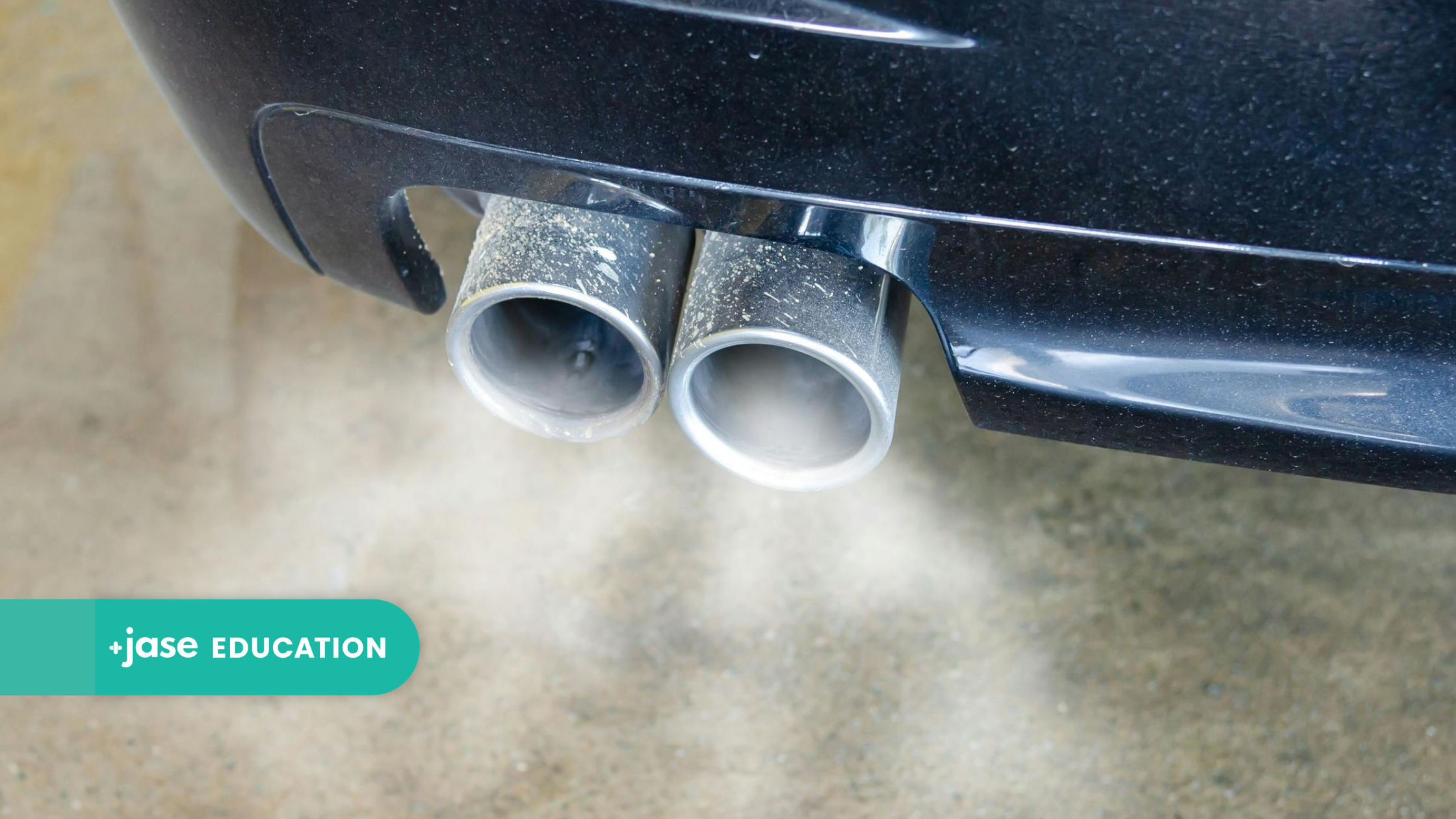
Carbon monoxide (CO) is a colorless, odorless gas produced when fuels don’t burn completely. Generators, charcoal grills, vehicles, and other fuel-burning equipment can all produce it.

After storms and power outages, the risk increases because people start improvising.

A generator gets moved closer to the house because it’s raining. A grill gets pulled into a garage. A vehicle is left running in an enclosed or partially enclosed space.

The problem is that early carbon monoxide poisoning doesn’t necessarily look like poisoning.

It can cause headache, dizziness, weakness, nausea, vomiting, chest discomfort, and confusion.

Those symptoms overlap with plenty of ordinary illnesses.

That’s why the symptom list isn’t necessarily the most useful thing to remember.

The pattern is.

The Question That Can Break the Case Open

Imagine you’ve had a headache all morning.

You drive somewhere to pick up supplies and realize that after being away from the house for a while, you feel noticeably better.

You come home.

The headache returns.

Then you realize your spouse has a headache too. Someone else feels nauseated. The dog is unusually sluggish.

A virus can certainly spread through a household. But several people becoming sick at roughly the same time—and improving when they’re away from the same environment—is an important clue that the environment itself may be the problem.

Carbon monoxide exposure can affect multiple people sharing the same space.

So after a storm or during a power outage, remember this question:

Who else feels sick, and do we feel better when we leave?

If that pattern is present, don’t stay inside trying to determine whether it’s the flu, heat exhaustion, food poisoning, or carbon monoxide.

Get out.

A Normal Pulse Oximeter Doesn’t Rule Out Carbon Monoxide

This is an especially important misconception if you keep a fingertip pulse oximeter at home.

You feel terrible, put it on your finger, and see: 98%.

That can feel reassuring.

With suspected carbon monoxide poisoning, it shouldn’t.

A standard two-wavelength pulse oximeter cannot reliably distinguish normal oxygen-carrying hemoglobin from hemoglobin carrying carbon monoxide. As a result, the number displayed on a typical home pulse oximeter can appear normal even when significant carbon monoxide exposure has occurred.

A normal pulse ox reading does not rule out carbon monoxide poisoning.

If the circumstances and symptoms make you suspect CO, don’t use a reassuring-looking oxygen saturation number as a reason to stay inside.

What Should You Do If You Suspect Carbon Monoxide?

The immediate action is straightforward:

Get everyone out of the building and into fresh air. Then call 911.

Don’t remain inside looking for the source. Don’t wait to see whether the headache improves. Don’t rely on opening a window or door and staying in the home.

Emergency medical professionals can evaluate the exposure and provide oxygen and other treatment as appropriate.

If someone is confused, collapses, loses consciousness, has significant difficulty breathing, or is otherwise severely ill, treat it as an emergency.

And don’t forget everyone sharing the environment—including pets. If multiple members of the household seem unexpectedly sick at once, that’s part of the clue.

Generators Need Distance From the House

Generators are one of the most important carbon monoxide risks following storms.

They should be operated outdoors and away from the home, not inside a house, garage, basement, shed, carport, porch, or other enclosed or partially enclosed area.

Moving one “just under the porch” to keep it out of the rain can unintentionally move carbon monoxide closer to doors, windows, and vents where exhaust can enter the home.

The same principle applies to other fuel-burning equipment.

A charcoal grill doesn’t become safe to use indoors because the power is out. A vehicle shouldn’t be left running inside a garage to generate power or charge devices.

If it burns fuel, think about where the exhaust is going.

One of the Best Preparedness Tools Is Already on the Wall

There is a simple layer of protection that doesn’t require recognizing symptoms at all:

working carbon monoxide alarms.

Install CO alarms on every level of your home and outside sleeping areas, and make sure they’re functioning properly.

If an alarm sounds, move everyone outside and follow emergency guidance. Don’t assume it’s malfunctioning because nobody feels sick yet.

A CO alarm can identify the problem before your body has to.

Sometimes Preparedness Is Knowing Which Question to Ask

After a hurricane, tornado, winter storm, or extended power outage, there are plenty of things competing for your attention.

Is the refrigerator staying cold? Do you have enough fuel? When will the electricity come back? Is everyone hydrated? Can you get to the pharmacy?

Carbon monoxide doesn’t necessarily announce itself as a dramatic emergency. Sometimes it looks like a family that simply feels lousy on day three.

That’s why appropriate medical preparation isn’t just a shelf full of supplies.

Sometimes it’s knowing enough to notice when the story doesn’t fit.

At Jase Medical, we’re a family team of medical doctors, PAs, and pharmacists focused on that grey space—the moments when normal healthcare access and normal routines are disrupted, and knowing what to do next matters.

We’re not a replacement for primary care or emergency medicine.

We’d simply rather you recognize this pattern on day one:

If everyone in the house feels sick at the same time and starts feeling better when they leave, get out into fresh air and call 911.

Don’t let a normal pulse oximeter reading talk you out of it.


The Jase Medical Team is a family team of medical doctors, PAs, and pharmacists focused on appropriate medical preparation: clinically grounded readiness that complements, rather than replaces, the healthcare professionals you already trust.

This article was prepared by the Jase Medical content team for informational purposes only and does not constitute medical advice. Prescription requirements, emergency dispensing rules, insurance coverage, and controlled-substance regulations vary by medication, jurisdiction, and individual circumstances. Consult a licensed healthcare provider or pharmacist regarding your specific medications.

Lifesaving Solutions

Everyone should be empowered to care for themselves and their loved ones during the unexpected. Check out our recent lifesaving products today.

Recent Posts

Keeping you informed and safe.

For Clinicians | Diabetes Sick-Day Rules in a Disaster

For Clinicians | Diabetes Sick-Day Rules in a Disaster

For Clinicians | Diabetes Sick-Day Rules in a Disaster By Dr. Jamie Wilkey, PharmD, Director of Clinical EducationMedically reviewed and edited by Kristen Carpenter, PA-C Diabetes is already hard to manage. Sick days just make everything worse. And a sick day in a...

read more
Burns in a Blackout

Burns in a Blackout

Burns in a Blackout: First Aid When the Tap Doesn't Run By the Jase Medical Team Almost every burn first aid guide starts with the same instruction: cool the burn under clean, cool running water. But what happens when the tap doesn't run? For households that rely on a...

read more
For Clinicians | Burn First Aid Without Running Water

For Clinicians | Burn First Aid Without Running Water

For Clinicians | Burn First Aid Without Running Water By Dr. Jamie Wilkey, PharmD, Director of Clinical EducationMedically reviewed and edited by Aaron Asay, PA-C, DMSc, FIBODM, FAWM Every burn first-aid guide starts the same way: cool it under running water. That's...

read more
What to Do If You’re Bitten by a Snake?

What to Do If You’re Bitten by a Snake?

What to Do If You're Bitten by a Snake: Forget What the Movies Taught You By the Jase Medical Team If you're bitten by a venomous snake, forget almost everything the movies taught you about snakebite first aid. Don't cut an X over the fang marks. Don't suck out the...

read more

Join Our Newsletter

Our mission is to help you be more medically prepared. Join our newsletter and follow us on social media for health and safety tips each week!