
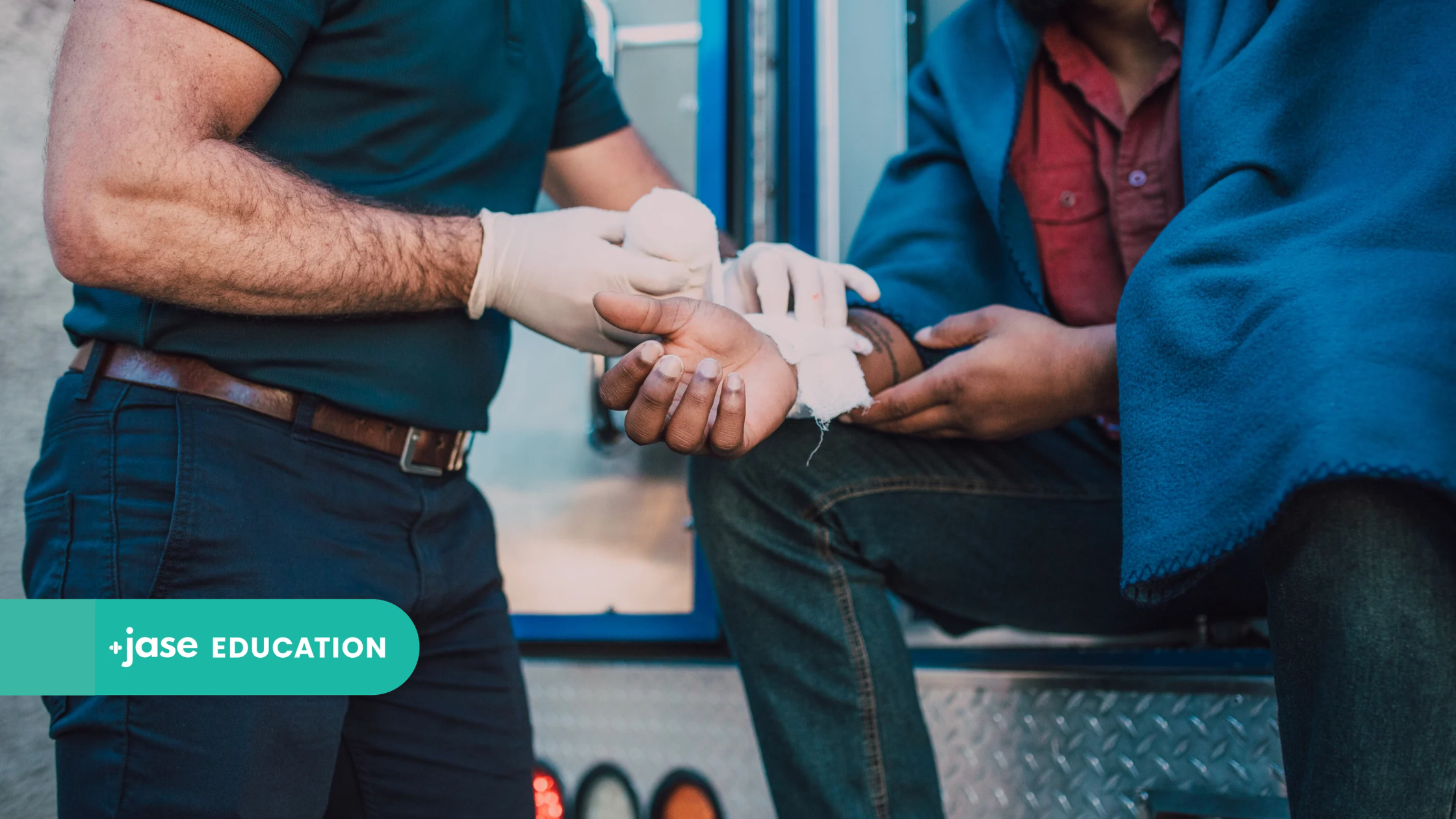
How to Stop Severe Bleeding Before Help Arrives: 5 First Aid Steps That Could Save a Life
By the Jase Medical Team
How do you stop severe bleeding? Start by pressing firmly and directly on the wound, and don’t let go. Severe blood loss can become life-threatening within minutes, but the actions you take before an ambulance arrives could save someone’s life.
Imagine you’re preparing Thanksgiving dinner when someone suffers a deep cut from a carving knife. Or you’re clearing a fallen tree after a storm when a chainsaw slips. Maybe you’re driving home on a winter road and witness a serious car accident.
In each situation, professional help may be on the way, but the first few minutes belong to whoever is standing there.
You don’t need to be a medical professional to help control life-threatening bleeding. You just need to know what to do.
Why Severe Bleeding Is So Dangerous
Uncontrolled bleeding is a leading cause of preventable death following traumatic injuries.
When someone loses too much blood, their body can no longer deliver enough oxygen to vital organs. Without prompt intervention, severe blood loss can lead to shock, organ failure, and death. It can happen faster than many people realize, and hat’s why emergency responders prioritize controlling major bleeding as soon as possible.
In his Off Duty Part VI: Stop the Bleed article, Aaron Asay draws on his experience in disaster and emergency response to explain the lifesaving steps bystanders can take before professional help arrives. Although his guidance comes from responding to serious traumatic injuries, the same basic principles apply to emergencies at home, on the road, or outdoors.
How to Recognize Life-Threatening Bleeding
Not every cut requires emergency intervention. But certain warning signs mean you need to act immediately.
Look for:
- Blood that is spurting or flowing continuously from a wound.
- Blood rapidly pooling on the ground or soaking through clothing.
- Bleeding that doesn’t stop with firm pressure.
- A deep wound or partial or complete amputation.
- Signs of shock, including pale, cool skin, confusion, weakness, or rapid breathing.
If you suspect life-threatening bleeding, call 911 immediately. If someone else is nearby, have them call while you begin controlling the bleeding.
Before approaching, make sure the scene is safe. Don’t enter moving traffic, approach dangerous machinery, or put yourself at risk.
5 Steps to Stop Severe Bleeding Before Help Arrives
1. Apply Firm, Direct Pressure
Your first action is simple: press hard, directly on the wound.
Use both hands if necessary. Apply pressure with gauze, a clean cloth, or a T-shirt if that’s what you have available. Maintain steady, continuous pressure. Don’t repeatedly lift the cloth to check whether the bleeding has stopped. Doing so can interrupt clot formation and allow bleeding to resume. If blood soaks through, maintain pressure rather than removing the original material.
For many bleeding injuries, direct pressure is the most important immediate action you can take.
Remember: Press hard. Keep pressing.
2. Pack a Deep Wound and Secure the Dressing
Some injuries create deep wounds where pressure over the surface may not be enough. For severe bleeding from a deep wound, particularly in areas such as the groin or shoulder where a standard limb tourniquet cannot be applied, trained bystanders may use wound packing.
This involves placing gauze firmly into the wound cavity to apply pressure directly to the source of bleeding. If appropriate gauze isn’t available, clean cloth may be used in an emergency. Continue applying firm pressure after packing the wound, then secure a pressure dressing when bleeding is controlled.
Wound packing is a skill best learned through hands-on training. It isn’t appropriate for every injury, and you should never attempt to pack a wound in the chest or abdomen. If you aren’t trained or aren’t sure whether packing is appropriate, maintain firm direct pressure and follow emergency dispatcher instructions.
3. Use a Tourniquet for Life-Threatening Arm or Leg Bleeding
If someone has severe bleeding from an arm or leg, a properly applied tourniquet can be lifesaving. Tourniquets are designed to stop blood flow to an injured limb when bleeding is life-threatening.
For severe extremity bleeding, a tourniquet may be appropriate immediately, particularly if bleeding cannot be controlled with direct pressure.
Where should you place a tourniquet?
Position it approximately 2 to 3 inches above the wound, between the injury and the heart. Never place it directly over a joint.
If you cannot identify the exact location of the injury, such as when clothing obscures the wound, place the tourniquet high on the injured arm or leg. Tighten the tourniquet until the bleeding stops completely. This may be painful, but a properly applied tourniquet must be tight enough to control the bleeding.
Do not loosen or remove a tourniquet once it’s applied. Leave that decision to trained medical professionals.
Tourniquets are for severe bleeding from arms and legs, not injuries to the neck, chest, or abdomen.
4. Record the Time the Tourniquet Was Applied
Once the bleeding is controlled, note the time the tourniquet was applied. Write it down or record it on your phone so you can tell emergency responders. This information helps medical professionals understand how long the tourniquet has been in place and plan the patient’s continued treatment.
If bleeding continues despite a tourniquet, follow emergency dispatcher guidance. A second tourniquet may be needed above the first, particularly for a large limb or severe injury.
Remember: Apply it, tighten it, record the time, and leave it in place.
5. Keep the Injured Person Warm
After controlling life-threatening bleeding, help protect the injured person from losing body heat. Serious injuries and blood loss can interfere with the body’s ability to regulate temperature. Even on a mild day, someone lying on cold pavement, wet ground, or exposed to wind can lose heat quickly.
If it’s safe to do so, insulate them from the ground and cover them with blankets, coats, or other dry materials. Keep them as still as possible, especially if they may have a head, neck, or spinal injury.
Don’t give food or drinks to someone with a serious injury or signs of shock. Continue monitoring their breathing and responsiveness while waiting for emergency responders.
Stopping the bleeding is the priority, but preventing heat loss is an important part of keeping a seriously injured person stable.
What If You Don’t Have Medical Supplies Nearby?
A serious injury doesn’t wait until you’re standing next to a first aid kit.
You might be working in the yard, hiking with family, or helping someone after a car accident. If you don’t have gauze immediately available, use a clean cloth or clothing to apply direct pressure. Don’t waste precious time searching for the perfect supplies while someone is losing blood.
Your hands and the ability to apply firm pressure are often the most important tools available in those first moments.
However, wound packing and tourniquet application require specific techniques. That’s why practicing these skills ahead of time matters.
The Best Way to Prepare? Take a Stop the Bleed Class
Reading about severe bleeding is a valuable first step, but practicing the techniques makes a difference.
A hands-on bleeding control course can teach you how to:
- Recognize life-threatening bleeding.
- Apply effective direct pressure.
- Pack a wound when appropriate.
- Position and tighten a tourniquet correctly.
- Respond calmly while waiting for emergency medical services.
The national Stop the Bleed training initiative offers courses designed to help everyday people learn these lifesaving skills.
You don’t need a healthcare background to participate.
And whether you’re a parent, grandparent, homeowner, outdoor enthusiast, or frequent traveler, the knowledge can help you respond more confidently when an emergency happens.
Medical Preparedness Starts With Knowing Where Your Hands Go
Throughout Jase Medical’s Off Duty series, we’ve explored the moments when ordinary people become the first line of help in an emergency. From recognizing danger and prioritizing injuries to responding to choking and cardiac arrest, the message has remained consistent:
The first person on scene is rarely a paramedic.
It’s a spouse, a neighbor, a coworker, or someone who happened to be nearby. At Jase Medical, our family team of doctors, physician assistants, and pharmacists believes appropriate medical preparation includes the skills that help you care for others before professional treatment is available.
You may not be able to control when an accident happens or how quickly emergency responders arrive. But you can learn to recognize severe bleeding, apply pressure, and take the right next steps.
Because when someone is bleeding badly, the first few minutes matter, and knowing where your hands go could save their life.
Ready to learn? Visit Stop the Bleed to find a hands-on bleeding control class and practice these skills before you ever need them.
Medical disclaimer: This article is for general educational purposes and does not replace hands-on first aid training or emergency medical care. Call 911 or your local emergency number immediately for life-threatening bleeding. Follow emergency dispatcher instructions, prioritize scene safety, and provide care within your training and abilities. Wound packing and tourniquet use should be learned through qualified instruction.
Lifesaving Solutions
Recent Posts
Keeping you informed and safe.
What to Do If Someone Is Choking: The New 2025 First Aid Guidelines
What to Do If Someone Is Choking: The New 2025 First Aid Guidelines By the Jase Medical Team Choking first aid changed in 2025. If an adult or child is severely choking, the American Heart Association now recommends starting with five back blows, followed by five...
For Clinicians | “There’s Something Wrong With My Baby”: Would You Know What to Do?
For Clinicians | "There's Something Wrong With My Baby": Would You Know What to Do? Off Duty Series: Part 5 of 6 By Aaron Asay, PA-C, DMSc, FIBODM, FAWMMedically reviewed and edited by Dr. Jamie Wilkey, PharmD Off Duty is a six-part series on the emergencies...
Who Do You Help First in an Emergency? How to Prioritize Injuries When Every Second Counts
Who Do You Help First in an Emergency? How to Prioritize Injuries When Every Second Counts By the Jase Medical Team When two people are injured in an emergency, who should you help first? Start by checking the person who is quiet, unresponsive, or struggling to...
For Clinicians | Emergency Priorities: How First Responders Decide What Injuries to Manage First
For Clinicians | Emergency Priorities: How First Responders Decide What Injuries to Manage First Off Duty Series: Part 4 of 6 By Aaron Asay, PA-C, DMSc, FIBODM, FAWMMedically reviewed and edited by Dr. Jamie Wilkey, PharmD Off Duty is a six-part series on the...