Can You Get Rabies From a Dog Lick? What Travelers Need to Know
Can You Get Rabies From a Dog Lick? What Travelers Need to Know

By the Jase Medical Team

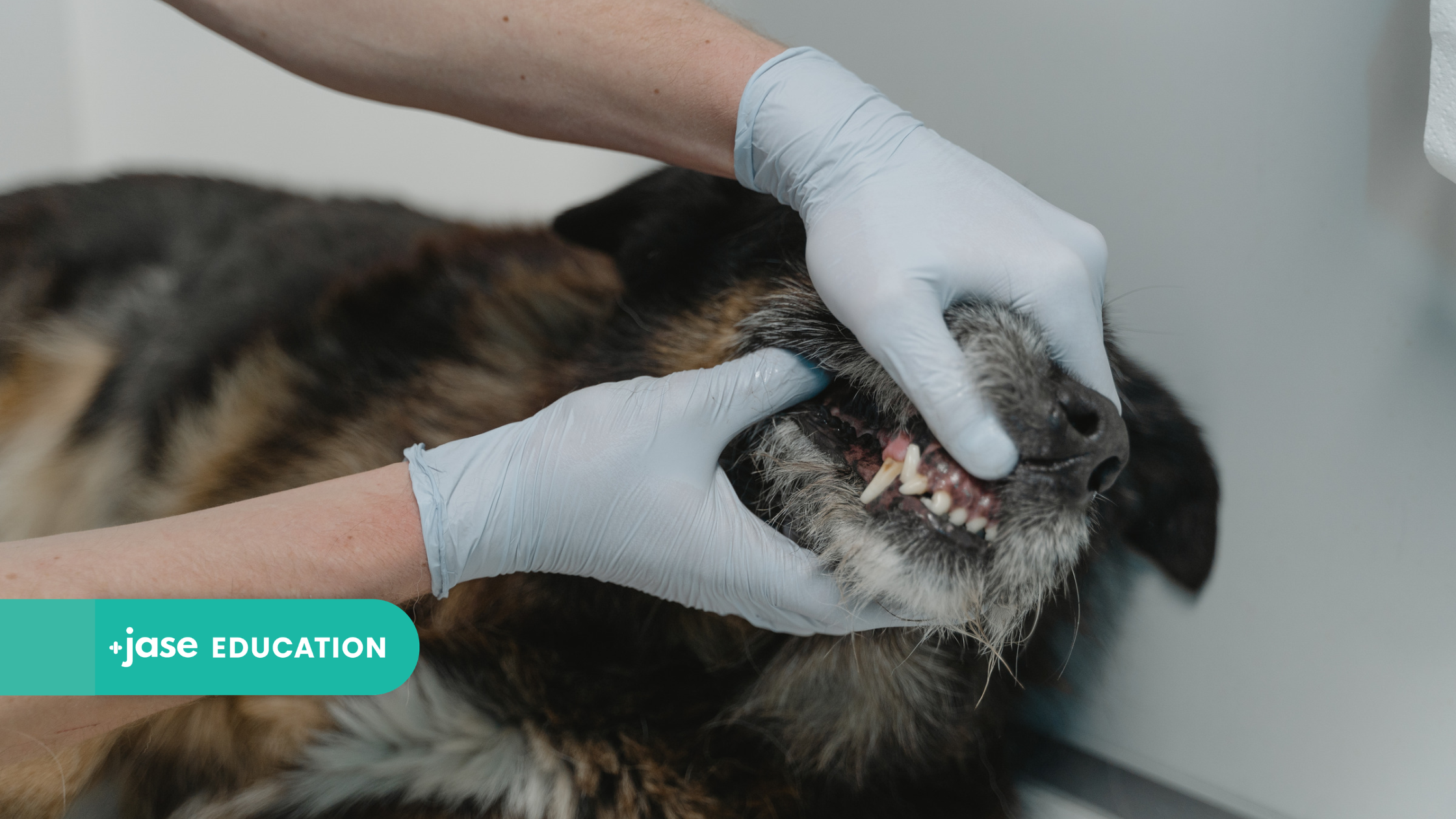
Can you get rabies from a dog licking you? Yes, if the animal’s saliva comes into contact with broken skin or the moist membranes of your eyes, nose, or mouth.

Most people associate rabies with an animal bite. But a bite isn’t the only way the virus can enter your body.

Imagine you’re traveling abroad when a friendly stray dog approaches and licks your ankle. You think nothing of it until you remember the mosquito bite you’ve been scratching all morning.

If that bite has broken the skin, the encounter could count as a rabies exposure.

It’s an easy detail to overlook, especially when you’re traveling somewhere unfamiliar.

And while rabies is rare in the United States, it’s still a serious public health concern in many parts of the world.

The good news? Rabies is preventable when the right treatment is given promptly after exposure.

Why a Dog Lick Can Be Dangerous

Rabies is a viral infection that attacks the central nervous system. It’s transmitted through the saliva of an infected animal, most commonly through bites.

But saliva doesn’t need a bite wound to enter your body.

According to the World Health Organization (WHO), saliva from a potentially rabid animal contacting broken skin or mucous membranes is considered a Category III exposure, the highest exposure category.

That includes:

  • A dog licking a cut, scrape, or open blister.
  • Saliva contacting a mosquito bite you’ve scratched until it bleeds or breaks the skin.
  • An animal licking your eyes, mouth, or other mucous membranes.
  • A bite or scratch that penetrates the skin.

A lick on completely intact, healthy skin is not considered a rabies exposure.

The distinction matters because an interaction that seems harmless can require urgent medical attention if the skin barrier has been broken.

Why Travelers Should Pay Attention

In the United States, human rabies cases are uncommon, thanks in part to widespread animal vaccination and public health programs.

But the situation is different in many other countries.

According to the WHO, dogs are responsible for up to 99% of human rabies cases worldwide.

Travelers visiting rural communities, volunteering abroad, or spending time around free-roaming animals may encounter dogs whose vaccination status is unknown.

And you don’t have to be doing anything adventurous to experience a potential exposure.

It could happen while walking through a market, waiting at a bus stop, or visiting a neighborhood during a mission trip.

The challenge isn’t always recognizing an aggressive animal. Sometimes it’s recognizing that a friendly interaction still carries risk.

When “It Was Only a Lick” Became a Medical Emergency

For Aaron Asay, a longtime disaster responder and member of the Jase Medical family, this lesson became personal during a family trip to Peru.

His daughter was licked by a dog that appeared sick.

What might have seemed like a minor encounter quickly became a serious medical concern. Getting the appropriate rabies post-exposure treatment required the family to travel to Miami.

Their experience highlights an important reality of international travel: the medical treatment you need may not always be readily available where you are.

Rabies vaccines and rabies immune globulin are not equally accessible in every country or medical facility.

That’s why knowing what qualifies as an exposure, and what treatment may be required, matters before you leave home.

Aaron shares more about his family’s experience in his companion article, Off Duty Part I: It Was Only a Lick, part of Jase Medical’s For Clinicians series.

What to Do Immediately After a Possible Rabies Exposure

If you’re bitten, scratched, or licked on broken skin by an animal that could have rabies, don’t wait for symptoms.

Take these steps immediately:

1. Wash the area for at least 15 minutes.

Use soap and running water to thoroughly wash the affected area. This is one of the most important first steps because it helps remove and inactivate virus particles at the exposure site.

2. Seek medical care the same day.

Contact a healthcare professional or visit an appropriate medical facility as soon as possible. Tell them where the exposure occurred, what type of animal was involved, and whether the animal’s vaccination status is known.

3. Ask whether you need rabies post-exposure prophylaxis (PEP).

A healthcare professional or public health authority will evaluate your exposure and determine whether preventive treatment is necessary.

4. Don’t wait to see if you feel sick.

Rabies is almost always fatal once clinical symptoms appear. Fortunately, post-exposure treatment is highly effective when administered correctly before symptoms develop.

The priority is to act promptly, even if the wound is small or the animal seemed friendly.

What Is Rabies Post-Exposure Treatment?

Rabies post-exposure prophylaxis, often called PEP, is designed to prevent the virus from causing illness after a potential exposure.

For someone who has never received rabies vaccination, treatment generally includes two components.

Rabies vaccine: A series of vaccine doses helps your immune system develop protection against the virus. For most previously unvaccinated, immunocompetent people, the standard U.S. schedule includes doses on days 0, 3, 7, and 14. Some people, including those with certain immune conditions, require additional doses and follow-up testing.

Rabies immune globulin (HRIG): This provides immediate antibodies while your body develops its own immune response to the vaccine.

When indicated, immune globulin is administered into and around the wound as much as anatomically feasible, with any remaining dose given at a separate injection site.

Ideally, it’s given when the vaccine series begins. Under U.S. guidance, it can be administered up to and including day seven after the first vaccine dose, but not afterward.

This is why seeking care promptly matters. In some countries, rabies vaccine may be available while immune globulin is difficult to obtain.

If you’re traveling internationally, a healthcare professional may need to coordinate treatment or refer you to another facility.

Keep a Record of Every Rabies Treatment

If you receive rabies treatment while traveling, document everything.

Take photographs of the vaccine packaging and record:

  • The medication or vaccine name and manufacturer.
  • The date each dose was administered.
  • The clinic or hospital where you received treatment.
  • Whether rabies immune globulin was given.
  • Any written instructions for completing the remaining doses.

These details can help healthcare professionals determine how to continue your treatment if you return home or travel to another country.

Don’t assume that all rabies vaccine products or treatment schedules are interchangeable without medical review.

Should You Get the Rabies Vaccine Before Traveling?

If you’re planning an extended international trip, especially to a rural area or a destination where rabies is common, ask your healthcare provider or travel clinic about pre-exposure rabies vaccination.

This may be particularly helpful for people who will spend time around animals or in locations where prompt medical treatment could be difficult to access.

Under current U.S. recommendations, the standard pre-exposure series consists of two vaccine doses given on days 0 and 7. Some travelers may need additional long-term protection based on their ongoing risk.

Pre-exposure vaccination doesn’t eliminate the need for medical care after a possible rabies exposure.

However, it simplifies treatment.

For someone who has been appropriately vaccinated before exposure, post-exposure treatment generally requires two additional vaccine doses, given three days apart, without rabies immune globulin.

That distinction can be especially important when traveling somewhere with limited medical resources.

A travel medicine appointment before departure can help you determine whether vaccination makes sense for your itinerary.

Medical Preparedness Means Knowing When to Act

When preparing for international travel, it’s easy to focus on packing medications, first aid supplies, and other essentials.

But some medical emergencies require treatments that can’t be carried in an ordinary travel kit.

Rabies is one of them.

At Jase Medical, our family team of doctors, PAs, and pharmacists believes appropriate medical preparation includes understanding the risks you may encounter and knowing how to respond before a situation becomes urgent.

For rabies, that preparation is straightforward:

Know what counts as an exposure. Wash the area immediately. Seek medical care the same day.

If you’re planning a cruise, mission trip, extended vacation, or international adventure, ask your healthcare provider whether rabies vaccination should be part of your travel preparations.

Because sometimes the most important medical decision you’ll make on a trip begins with recognizing that “it was only a lick” doesn’t always mean there was no risk.

Medical disclaimer: This article is for educational purposes only and does not replace individualized medical advice. Possible rabies exposures require prompt evaluation by a qualified healthcare professional or public health authority. Do not delay seeking medical care while attempting to determine an animal’s rabies status on your own. Rabies vaccination and post-exposure treatment should be administered under appropriate medical supervision.

Lifesaving Solutions

Everyone should be empowered to care for themselves and their loved ones during the unexpected. Check out our recent lifesaving products today.

Recent Posts

Keeping you informed and safe.
Join Our Newsletter

Our mission is to help you be more medically prepared. Join our newsletter and follow us on social media for health and safety tips each week!

For Clinicians | It Was Only a Lick: A Rabies Exposure Case Study Part 1

For Clinicians | It Was Only a Lick: A Rabies Exposure Case Study

Off Duty Series: Part 1 of 6

By Aaron Asay, PA-C, DMSc, FIBODM, FAWM
Medically reviewed and edited by Dr. Jamie Wilkey, PharmD, Director of Clinical Education

Off Duty is a six-part series on the emergencies clinicians end up handling outside of work: a call from family overseas, a car crash, a choking baby, a bad bleed. Aaron Asay has spent his career in emergency, disaster, and austere medicine. Part 1 comes from his own family: his daughter’s rabies exposure while volunteering in Peru.

At the mention of rabies, most people think of wild dogs, angry bats, and a painful shot if you get exposed. But due to increased vaccination rates and more careful wildlife management, actual human cases of this illness have all but disappeared in the majority of our communities and neighborhoods. However, that doesn’t mean exposure doesn’t still occur, nor does it mean that the rest of the world has the same safety record as we do here in the United States.

This is a case study on a rabies exposure that occurred in South America recently. Some details have been changed to protect the privacy of those involved, but for the sake of full disclosure, this was my own daughter, and in the process of navigating her experience, I realized I knew less than I thought I did regarding the management of a rabies exposure while traveling. As an emergency medicine Physician Assistant, and even with a doctorate degree and training in Global Health, I wasn’t fully prepared for this situation. I hope this article helps to clear up some misconceptions and gives others a better understanding of managing a case like this one. This isn’t an academic paper; rather, it’s more of an awareness campaign for laypeople and providers alike.

The Story

My daughter has been living in a small town in Peru for several months, teaching English with a group of other volunteers in their early twenties. About three weeks ago, several of them took a trip to Machu Picchu. On the way back they got stuck at a bus stop with a long wait ahead of them. The mosquitoes had eaten her alive, and she had scratched the bites on her arm until several were open and bleeding. Worn out from the hike, she dozed off. She woke up to a dog licking her arm.

That alone would make most of us jump, but it was the dog itself that made the girls nervous. It staggered when it walked, drooled constantly, and wandered around like it was searching for water. They were fairly sure it was blind. Before they could decide what to do, a local boy grabbed it and disappeared. One of the girls finally said out loud what they were all thinking. Rabies. Three of the girls had been licked, and all three had broken skin where the saliva made contact. That night, back at the hotel, they scrubbed their arms and called me.

What Is Rabies?

I need to stop here and explain something I didn’t fully appreciate until that phone call. Rabies virus can be present in the saliva of an infected animal, and a bite isn’t the only way in. Saliva on broken skin, even a scratched-open mosquito bite, can transmit it. The World Health Organization sorts animal exposures into three categories, and saliva on broken skin lands in Category III, the most serious, right alongside bites that penetrate the skin. Once symptoms start, rabies is virtually always fatal. Before that, appropriate treatment is extremely effective. Everything depends on what happens in between¹,².

Most of the exposures I’ve managed in the ER involved bats. Here at home, bats are responsible for approximately 70 percent of human rabies cases acquired in the United States³. Worldwide, dogs account for up to 99 percent of human rabies transmission, and WHO estimates that rabies kills tens of thousands of people every year, likely more given how many cases go unreported².

So I did what I tell my students to do. I pulled up the guidance, confirmed that saliva contacting broken skin was a Category III exposure, and told her she needed wound care, a series of vaccines, and rabies immune globulin, which we call RIG¹,⁴.

If you’re unfamiliar with RIG, that’s OK. Most people are. The vaccine teaches your body to make its own antibodies, but that takes time. RIG provides ready-made antibodies that cover the gap, and whenever possible it’s infiltrated directly into and around the wounds. It isn’t just another shot in the arm, and as I would soon find out, even healthcare providers get that part wrong⁴.

Why I Was Worried

It took an extra day to get seen at the local health center, so her first vaccine dose came on day three after the lick. They were told RIG wasn’t available to foreigners through the local system and they would have to leave the country to get it. The staff didn’t seem worried anyway. Rabies, they said, doesn’t really happen here.

To be fair, they had a point about the odds. Dog rabies has circulated in the Arequipa region since it returned there in 2014, with a confirmed human case in Arequipa in 2023⁵. CDC identifies dog rabies primarily in Arequipa, Puno, and southern Cusco, rather than the area around Machu Picchu, and notes that bat rabies is more common in Peru than dog rabies⁶.

But odds describe populations. We had one specific dog that staggered, drooled, and seemed blind, and it vanished before anyone could observe or test it. Those symptoms aren’t unique to rabies. Other illnesses and injuries can produce similar behavior. But combined with saliva contacting broken skin, and no way to rule out rabies in the animal, I wasn’t willing to dismiss it.

Then there was the chart. Her scratches had scabbed over by the time she was examined, so the provider wrote that there were no obvious wounds and RIG wasn’t recommended. The leaders of her volunteer organization leaned on that note and tried to talk the girls into staying put. I understand why, but the exposure category is decided by what happened at the bus stop, not by how the skin looks three days later¹.

Why We Publish Guidelines

This is where the story takes a turn that still bothers me. My daughter and one friend decided to get the immune globulin. The third girl, reassured by the health center and her organization, chose to continue the vaccines without it. She decided to “risk it.” I don’t blame her. She was a young woman in a foreign country getting conflicting advice, with local providers on one side and somebody’s dad on the phone on the other. Who would you believe? But all three had saliva contact with broken skin, the dog couldn’t be observed or tested, and it showed neurological signs that could have been consistent with rabies. Those are exactly the circumstances the guidelines were written for¹,⁴.

RIG also comes with a deadline. It can be given up to seven days after the first vaccine dose, but isn’t recommended after that because the body is expected to be developing its own antibodies and RIG can interfere with that response. The clock starts with the first vaccine dose, not the exposure. And the vaccine should never be held back just because RIG isn’t available¹,⁴.

Healthcare Shortfalls Are Similar Everywhere

The closest place we could arrange treatment was Miami. My daughter got her second dose in Peru, right on schedule, and got on a plane with her friend.

The Miami ER visit took about nine hours, and it was clear this wasn’t routine for the team. My daughter received her RIG the right way, infiltrated into and around the identifiable wounds on her arm, along with her third vaccine dose. Her friend’s lesions had healed over, so the nurse split her RIG between injections in both arms instead. The thing is, those spots were still visible. Anyone who took a minute to look could have found exactly where the saliva had touched broken skin.

For my fellow providers, this is the part I’d underline. CDC guidance is to infiltrate as much of the calculated RIG dose as anatomically feasible into and around the wounds, with any remainder administered intramuscularly at a site distant from the vaccine. RIG and the first vaccine dose should not be administered in the same anatomical location⁴. WHO goes further, emphasizing local wound infiltration, and no longer recommends injecting leftover RIG into a distant muscle¹. The wound is the priority. When no wound can be identified, CDC still calls for RIG, given intramuscularly at a site away from the vaccine⁴. But when the original exposure sites are identifiable, they should be assessed for infiltration. If RIG was given incorrectly, don’t assume the treatment has failed. CDC guidance addresses situations where additional RIG infiltration may be considered, subject to dose and timing limitations⁴. Call your public health department or a rabies specialist before attempting corrective treatment.

One Last Hurdle

Back in Peru, the schedule brought one more surprise. The standard CDC schedule for someone never vaccinated, who is not immunocompromised, is four doses on days 0, 3, 7 and 14⁴. Day zero means the day the first vaccine is administered, not the day of exposure. Peru wanted her fourth dose on day 28. My first reaction was that somebody had it wrong. They didn’t. WHO recognizes a four-dose intramuscular schedule that allows the final dose anywhere from day 14 to day 28¹. Different countries use different approved schedules, and an unfamiliar protocol doesn’t necessarily mean an incorrect one.

I’ve worked in enough health systems abroad that I should have remembered that. But when your daughter’s record says day 14 and a clinic tells her to come back two weeks later, it gets your attention.

It’s now been about three weeks since the exposure. All three girls are doing well and are scheduled to receive their fourth and final rabies vaccine dose next week. My daughter’s biggest worry has been for her two friends, one who received RIG in the wrong place and one who went without it. Rabies usually takes weeks to months to show itself, sometimes longer². That worry doesn’t go away quickly. Neither situation means either girl will develop rabies, but both deserve review with public health or a rabies specialist. Completing the vaccine series will be reassuring, but it doesn’t change the fact that immune globulin was recommended for their Category III exposures.

Then came the bill. When we filed with our travel insurance for the flight to Miami, they asked for a signed note from the treating doctor. The only note we had was the one saying RIG wasn’t needed. They denied the claim. One line in a chart, written after a quick look at some scabs, cost us thousands of dollars. Providers, what you write follows the patient, sometimes across borders and all the way to an insurance claim. Classify the exposure by what happened, not by what the skin looks like when the patient finally gets to you.

I’ve gone back and forth on the pre-exposure vaccine, and I’m not convinced every short-term traveler needs it. But CDC recommends considering it for expatriates and people spending time in rural areas where access to appropriate rabies treatment may be limited⁶,⁸. Which describes my daughter. The initial pre-exposure series is two doses, a week apart. If you’re subsequently exposed and meet the criteria for being previously vaccinated, you generally need two more vaccine doses and no RIG. People with ongoing risk may need antibody testing or a booster to maintain their protection⁷,⁸. Where RIG is hard to find, that takes one of the hardest parts of the problem off the table before you leave home.

For other travelers, keep unfamiliar animals away, even the friendly ones, and keep open wounds covered. If an animal bites, scratches, or licks broken skin, wash it with soap and running water for at least fifteen minutes and get medical care promptly². If human RIG isn’t available, ask what alternatives are approved and available locally. Equine rabies immune globulin and, in some countries, rabies monoclonal antibody products may be options, depending on local regulatory approval and availability¹,²,⁸. Photograph the vaccine products you receive, keep a record of the dates and doses, and read your insurance fine print on evacuation before you need it.

I’ve spent years working in places where medical resources are limited, and a good part of my career has involved teaching people how to prepare for emergencies. Yet here I was, trying to get my own daughter the treatment she needed, and discovering just how difficult that could be. The medication wasn’t available, the medical advice was conflicting, and even after we got her to an American emergency department, things didn’t go quite as expected. I learned a few things about rabies that I should have known already. But I also got a reminder of something I’ve been teaching for years. Knowing what to do doesn’t always mean you’ll have the resources to do it. I started this thinking I had a pretty good handle on rabies. The lesson came from a dog at a bus stop in Peru. It was only a lick. It was also a Category III rabies exposure.

Quick Reference: Rabies Exposure

Question Answer Source
Does a lick count? Yes, if saliva contacts broken skin or a mucous membrane. This is WHO Category III. 1
First thing to do? Wash thoroughly with soap and running water for at least 15 minutes, then seek medical care. 2
Category III, never vaccinated? Wound care, vaccine, and immune globulin, or an approved alternative where indicated and available. 1, 2, 4
No RIG available? Start vaccination without delay. Seek expert guidance about obtaining the remaining recommended treatment. 1, 4
RIG deadline? No later than day 7 after the first vaccine dose. 1, 4
Where does RIG go? Into and around identifiable wounds as anatomically feasible. Follow product-specific and national guidance for any remaining volume. 1, 4
US vaccine schedule? Days 0, 3, 7 and 14. Immunocompromised patients require an additional dose on day 28 and further assessment. 4
WHO four-dose IM schedule? Days 0, 3, 7 and a fourth dose between days 14 and 28. 1
Pre-exposure vaccination? Initial doses on days 0 and 7. Previously vaccinated people generally receive two post-exposure doses without RIG, subject to applicable guidance. 7, 8
Treated abroad? Keep product names, dates, doses, and administration records. Consult public health if schedules or products differ. 4, 8


Sources

  1. World Health Organization. Rabies vaccines: WHO position paper, April 2018. Weekly Epidemiological Record. 2018;93(16):201-220. https://www.who.int/publications/i/item/who-wer9316
  2. World Health Organization. Rabies. Fact sheet. https://www.who.int/news-room/fact-sheets/detail/rabies
  3. Pieracci EG, Pearson CM, Wallace RM, et al. Vital Signs: Trends in Human Rabies Deaths and Exposures, United States, 1938-2018. MMWR. 2019;68:524-528. https://www.cdc.gov/mmwr/volumes/68/wr/mm6823e1.htm
  4. Centers for Disease Control and Prevention. Rabies Post-exposure Prophylaxis Guidance. https://www.cdc.gov/rabies/hcp/clinical-care/post-exposure-prophylaxis.html
  5. Centro Nacional de Epidemiología, Prevención y Control de Enfermedades (CDC Perú). CDC Perú emite alerta epidemiológica sobre un caso confirmado de rabia humana urbana en Arequipa. October 17, 2023. https://www.dge.gob.pe/portalnuevo/informativo/prensa/cdc-peru-emite-alerta-epidemiologica-sobre-un-caso-confirmado-de-rabia-humana-urbana-en-arequipa/
  6. Centers for Disease Control and Prevention. Peru. CDC Yellow Book, 2026 edition. https://www.cdc.gov/yellow-book/hcp/americas-caribbean/peru.html
  7. Rao AK, Briggs D, Moore SM, et al. Use of a Modified Preexposure Prophylaxis Vaccination Schedule to Prevent Human Rabies. MMWR. 2022;71:619-627. https://www.cdc.gov/mmwr/volumes/71/wr/mm7118a2.htm
  8. Centers for Disease Control and Prevention. Rabies. CDC Yellow Book, 2026 edition. https://www.cdc.gov/yellow-book/hcp/travel-associated-infections-diseases/rabies.html

Lifesaving Solutions

Everyone should be empowered to care for themselves and their loved ones during the unexpected. Check out our recent lifesaving products today.

Recent Posts

Keeping you informed and safe.

Join Our Newsletter

Our mission is to help you be more medically prepared. Join our newsletter and follow us on social media for health and safety tips each week!

Traveling With a PICC Line, an Ostomy, or a Refrigerated Medication: The Part Nobody Tells You

Traveling With a PICC Line, an Ostomy, or a Refrigerated Medication: 

The Part Nobody Tells You

By Cayla McGrath

It usually isn’t the patient who asks the question. It’s the daughter-in-law booking the flights, or the son who’s driving the logistics. The question is some version of: “My mom has a PICC line and an ostomy. She wants to fly out to see her sister this summer. Is that even realistic?”

The honest answer is: usually, yes. A stable patient with their care team in the loop can fly, drive, and even cruise. Travel itself is rarely the medical contraindication. What sends families back to Google is the next question: how do you actually get three weeks of IV supplies, dressing kits, and a refrigerated medication from point A to point B?

The gap in what’s available

Every resource that covers medically complex travel covers exactly one lane. The United Ostomy Associations of America has excellent travel guidance — if the patient has an ostomy and nothing else. The CDC Yellow Book chapter on travelers with chronic illness is thorough, authoritative, and written for clinicians. TSA’s medical screening guidance covers the airport checkpoint and stops there. Supplier websites tell you about their product’s travel compatibility and nobody else’s.

Nobody maps the full journey for the person managing two or three systems at once. Nobody asks the question that the logistics-planner in the family is actually asking: how do all of these things get there together?

The answer that most guidance gives, when it gives one at all, is “pack extra.” That’s genuinely bad advice when “extra” means two pouches a day plus weekly sterile dressing changes plus a refrigerated medication that can’t go unrefrigerated for more than a few hours. “Pack extra” at that level is a duffel bag.

The move most families don’t know exists

Here’s what actually works: the supplies don’t have to travel with the patient at all.

Home infusion pharmacies will often ship medications and supplies directly to the destination — a hotel, a family member’s address, a vacation rental. Many can also arrange a partner pharmacy near the destination, which matters most if a refrigerated medication is temperature-compromised in transit. Ostomy suppliers commonly ship next-day in discreet packaging anywhere in the country. Many offer travel kits — a compact set of supplies sized for delays rather than for the full trip.

None of this is guaranteed. Policies vary by supplier and by insurance plan. But the asking costs a phone call. The question to ask is simple: “Do you ship directly to a destination address? Do you have a partner network near where we’re going? Do you offer a travel kit?”

Timing matters more than anything else here. Two to three weeks ahead, ideally surfaced at a pre-travel care visit, is when these conversations happen effectively. If the package is going to a hotel, confirm with the front desk that they’re expecting it.

The contingency layer

Getting the existing supplies there is one part of the problem. The other part is what happens when something new develops while the patient is away from their regular clinical environment.

Travel disrupts immune systems. Disruption causes stress. Stress changes the baseline risk for infections — UTIs, skin infections, respiratory illnesses — that are easy to address when a provider is two miles away and complicated when urgent care is three states over and the flight home isn’t until Thursday.

A physician-prescribed antibiotic supply for clearly defined, common conditions is a different thing than self-diagnosing a complex illness. It’s the difference between the UTI that can be confirmed with symptoms alone and the situation that requires an in-person exam. We’ve built the JaseCase specifically for the gap between when a problem starts and when a provider is actually reachable. For families managing complex medical travel, that gap can be longer and more consequential than it would be at home.

To explore what’s covered and how it works, visit jase.com/collections/symptoms-and-scenarios


Cayla McGrath is a content strategist with Jase Medical. This post is for informational purposes only and does not constitute medical advice. Always consult a licensed healthcare provider before using any prescription medication.


Lifesaving Solutions

Everyone should be empowered to care for themselves and their loved ones during the unexpected. Check out our recent lifesaving products today.

Recent Posts

Keeping you informed and safe.

Join Our Newsletter

Our mission is to help you be more medically prepared. Join our newsletter and follow us on social media for health and safety tips each week!

For Clinicians | Traveling With Medical Supplies

For Clinicians | Traveling With Medical Supplies


Getting Weeks of Supplies Where Your Patient Is Going

By Dr. Jamie Wilkey, PharmD — Director of Clinical Strategy, Jase
Medically reviewed by Kristen Carpenter, PA-C — Clinical Advisory Board Member

“My mother-in-law has a PICC line and an ostomy. She wants to fly out to see her sister this summer,…… is that even realistic?”

If you work in an office or a pharmacy, you’ve heard a version of this one, and summer is when it shows up. Notice who’s asking. It usually isn’t the patient. It’s the daughter-in-law who books the flights, the son who does the driving: the family member running the logistics. The question we’re trained to answer (is she stable enough to travel?) usually has a clean answer, and it’s often yes. The question they’re actually asking (how do three weeks of pouches, dressing kits, flushes, and a refrigerated medication get across the country?) mostly doesn’t, because nobody taught us supply logistics in school.

Today we’re talking about exactly that: what travels in the carry-on, what TSA actually allows at the checkpoint, and the ship-ahead options most patients, and most of us, have never heard of.


Can patients with a PICC line, an ostomy, or home infusion travel at all?

Usually, yes. A stable patient with a pre-travel visit on the calendar and their care team in the loop can fly, drive, and even cruise. Travel itself is rarely the contraindication we instinctively treat it as, and a reflexive “better not to risk it” mostly sends the family home to Google.

Right now out there every good resource covers exactly one lane. The UOAA’s travel guidance is excellent, and it’s ostomy-only.¹ The CDC Yellow Book chapter on travelers with chronic illness is thorough, and it’s written to us, not to them.² TSA’s medical screening page covers the checkpoint and stops at the gate.³ The supplier blogs cover whichever product that supplier sells. Nobody maps the whole journey for the patient managing two or three systems at once, which is exactly the patient whose family is calling.

And nearly all of it shares one heavy, bulky assumption: that the patient can carry everything. “Pack extra” is where most guidance ends. When the count is two pouches a day plus weekly sterile dressing changes plus a refrigerated medication, “extra” is a duffel bag. That duffel bag is the actual problem.


The ship-ahead playbook: the supplies don’t all have to ride along

Here’s the part that surprises families most, and plenty of us: weeks of supplies can travel separately from the patient.

What to tell families to ask their suppliers, specifically:

  • Home infusion pharmacies will often ship medications and supplies directly to a destination: a hotel, or better, a family member’s address.
  • Many can arrange a partner pharmacy near the destination, which matters most if a cold-chain medication fails en route.
  • Ostomy suppliers commonly ship next-day in discreet packaging anywhere in the country.
  • Many suppliers offer a travel kit, a compact set of extras sized for delays rather than for the whole trip.

None of this is guaranteed. Policies and coverage vary widely by supplier and by insurance plan, which is why the framing is “ask whether,” not “they will.” But the asking costs a phone call, and it isn’t a clinical decision: the family member doing the logistics can make the calls, or your MA or pharmacy technician can (you can have them do this to save you time). The questions are short. Do you ship to a destination? Do you have a partner network where she’s going? Do you offer a travel kit?

Timing matters more than anything else here. Two to three weeks ahead, ideally raised at the pre-travel visit. And if the package is going to a hotel, the family should confirm the front desk will hold it. Otherwise the box arrives on time and sits in a back room while nobody at the desk knows whose it is.


The door-to-door checklist, by stage of the journey

Organized by stage, not by device, because the patient managing three systems doesn’t get to take three separate trips.

Four to six weeks out:

  • Pre-travel visit on the calendar. The CDC recommends 4 to 6 weeks ahead, and for a patient on home infusion that lead time is not padding.²
  • A letter on your letterhead listing conditions, devices, and medications by generic name. Five minutes of your time, and it answers most questions before they’re asked.²
  • Supply count doubled, then split so no single lost bag takes out the whole reserve.¹
  • The supplier calls from the last section.
  • TSA Cares on the family’s list: 1-855-787-2227, at least 72 hours before the flight.⁴

At the checkpoint:

  • Medically necessary liquids and gels over 3.4 oz are allowed in carry-on when declared at the start of screening.³
  • Ice and gel packs are allowed frozen, partially frozen, or fully melted.³
  • Pouches, ports, catheters, and pumps stay on and stay covered. Screening is a self-pat-down plus trace testing, and private screening is theirs for the asking.³
  • The TSA notification card lets the patient disclose a device without explaining out loud in line. Free, printable, under-known.⁴

In the air:

  • Critical medications and supplies ride in the carry-on. Not checked, ever: cargo holds freeze, overheat, and occasionally send bags to the wrong coast.²
  • Preboarding, boarding assistance, and seating accommodations are theirs to request under the Air Carrier Access Act⁵
  • With a central line, on flights past about four hours: up and walking every hour or two. Confirm specifics with the patient’s own care team.⁶

At the destination:

  • Confirm the shipped box at the front desk before anyone unpacks.
  • Refrigerated medications go into an actual refrigerator on arrival, not the hotel ice bucket. More on heat in a moment.
  • Find the nearest pharmacy before anyone needs it.

The trip home:

The return leg is part of the original count: enough supplies for the trip home plus a delay, not whatever happens to be left.


What about summer heat?

Refrigerated medications want 36 to 46°F, most everything else wants 68 to 77°F, and a parked car in a July heat wave leaves both ranges behind before the family finishes lunch.⁷ So: no meds in the trunk, no meds in the glove box, no meds in the checked bag (cargo holds run hot and cold), and the hotel mini-fridge should get checked with a thermometer before anything important goes in.

The best question the family can ask before leaving is one the pharmacist answers all day: how long does this specific medication tolerate being out of refrigeration? The answer varies enormously by product, and knowing it ahead of time turns a melted gel pack from an emergency into an inconvenience.

We went deep on medication heat stability in our summer storage article; that one is the companion read for this stretch of the trip.


Where this fits

The middle ground this article keeps walking has a name: appropriate medical preparation. Not “too risky, stay home,” and not “throw some extras in a bag and hope.” The same clinical thinking we bring to everything else, pointed at logistics: needs that are predictable, prepared for ahead of time, before the trip instead of mid-crisis in a hotel room.

None of it replaces the patient’s own care team. The infusion pharmacy still owns the line care plan, the GI team still owns the ostomy, and you still make the call on whether she’s fit to travel. This is the layer around those decisions, and right now nobody hands it to families in one place.

That’s the gap we’re working on at Jase: putting frameworks like this one in writing, in public, so the family doing the logistics finds something better than a midnight Google search.


The bottom line

Most families don’t think about supply logistics until they’ve lost a vacation day calling pharmacies in a city they don’t know. The better version of the story starts in your office or at your counter, six weeks out: the visit happens, the letter gets written, the supplier calls get made, and the box is waiting at the front desk before the flight lands.

Travel with a complex condition is usually possible. The supplies are the hard part, and the hard part is solvable: ship ahead what can’t be carried, carry on what can’t be replaced, and put the checkpoint rules in the family’s hands before they’re standing in line. The clinical call is still yours. The logistics now have a playbook.


Sources

  1. United Ostomy Associations of America, Ostomy Travel and TSA Communication Card. https://www.ostomy.org/ostomy-travel-and-tsa-communication-card/
  2. CDC Yellow Book, Travelers with Chronic Illnesses. https://www.cdc.gov/yellow-book/hcp/travelers-with-additional-considerations/travelers-with-chronic-illnesses.html
  3. TSA, What Can I Bring? Medical, and Disabilities and Medical Conditions. https://www.tsa.gov/travel/security-screening/whatcanibring/medical and https://www.tsa.gov/travel/tsa-cares/disabilities-and-medical-conditions
  4. TSA Cares, Passenger Support. https://www.tsa.gov/travel/passenger-support
  5. U.S. Department of Transportation, Passengers with Disabilities (Air Carrier Access Act). https://www.transportation.gov/airconsumer/passengers-disabilities
  6. CDC, Understanding Your Risk for Blood Clots with Travel. https://www.cdc.gov/blood-clots/risk-factors/travel.html
  7. U.S. Pharmacopeia, General Chapter 659, Packaging and Storage Requirements: refrigerated 2-8°C (36-46°F), controlled room temperature 20-25°C (68-77°F).


Lifesaving Solutions

Everyone should be empowered to care for themselves and their loved ones during the unexpected. Check out our recent lifesaving products today.

Recent Posts

Keeping you informed and safe.

Join Our Newsletter

Our mission is to help you be more medically prepared. Join our newsletter and follow us on social media for health and safety tips each week!

Measles, Dengue, and the World Cup: The 20-Minute International Travel Checklist We Use Before Every Trip

Measles, Dengue, and the World Cup: The 20-Minute International Travel Checklist We Use Before Every Trip

By Cayla McGrath
Edited and approved by Kristen Carpenter, PA-C — Clinical Advisory Board Member

For many soccer fans, attending the FIFA World Cup is a once-in-a-lifetime experience. The 2026 tournament is expected to be the largest in history, with matches spread across the United States, Mexico, and Canada and millions of fans traveling from around the world to be part of it. Flights are booked. Hotels are filling up. Families and friend groups are already planning the international travel trips they’ve dreamed about for years.

At the same time, travel headlines this summer have been filled with news about measles outbreaks, dengue activity, cruise ship illnesses, and evolving CDC travel notices. It can be difficult to know what actually matters, what doesn’t, and whether any of it should change your plans.

Here’s the good news: none of these headlines are a reason to cancel your trip.

They are, however, a reminder that international travel is easier when you spend a few minutes preparing before you leave.

One of the biggest misconceptions about travel health is that it’s mostly about rare diseases in faraway places. In reality, the issues most likely to affect travelers are often much more ordinary: a vaccine you forgot to check, a medication that runs out halfway through a trip, a case of travelers’ diarrhea, a mosquito-borne illness that’s active in the region you’re visiting, or a common infection that becomes surprisingly difficult to treat when you’re navigating an unfamiliar healthcare system.

The good news is that addressing most of those risks doesn’t require hours of research or a complicated medical plan. In fact, the same checklist our team of physicians, physician assistants, and pharmacists uses before international travel can be completed in about 20 minutes.

Here’s what we recommend checking before you go.


Start With the CDC International Travel Notices

Before any international travel, one of the smartest things you can do is spend a few minutes reviewing the CDC’s travel notices for your destination. These notices change regularly and provide updates on outbreaks, disease activity, and health recommendations specific to where you’re traveling. This year, measles and dengue are two of the most notable concerns appearing across multiple destinations.

The CDC has issued a global dengue advisory covering more than 100 countries, and dengue activity remains elevated across many popular travel destinations throughout Latin America, the Caribbean, and tropical regions around the world. For most travelers, the takeaway isn’t panic. It’s awareness. Knowing what’s active at your destination helps you make informed decisions before you board the plane.


Verify Your Vaccines Before You Leave

If there’s one item on this year’s checklist that deserves special attention, it’s measles protection. Many adults assume they’re protected because they were vaccinated as children, and most are. However, healthcare professionals are encouraging travelers to verify their vaccination status, especially if records are incomplete or uncertain.

This is particularly relevant for travelers heading to World Cup host cities, where large crowds and international travel create ideal conditions for infectious diseases to spread.

For many people, confirming vaccination status takes just a few minutes through a healthcare provider, patient portal, or immunization record system.

It’s one of the easiest items on the list—and one of the highest impact.


Understand the Difference Between Health Risks and Travel Disruptions

One thing the CDC board doesn’t always capture is the difference between a serious health threat and a trip disruption.

For example, a recent hantavirus outbreak on an Antarctic cruise ship generated significant headlines. While the story was alarming, public health authorities assessed the broader risk as low. Meanwhile, far more travelers will lose vacation days this year to things like travelers’ diarrhea, respiratory viruses, motion sickness, dehydration, or a urinary tract infection than they ever will to a rare infectious disease.

This distinction matters because most travel health preparation should focus on what is likely, not simply what is newsworthy.

A day spent recovering in your hotel room because you couldn’t find treatment for a common illness can derail a trip just as effectively as something much rarer.


Pack for the Problems Most International Travelers Actually Face

When our clinical team prepares for travel, we don’t build a suitcase around worst-case scenarios.We build it around common ones.

A small travel health kit should be able to handle minor injuries, dehydration, motion sickness, blisters, and other everyday issues that frequently arise during travel. Bandages, wound care supplies, electrolyte packets, a thermometer, and basic over-the-counter medications cover a surprising number of situations.

Beyond that, we think about access. What happens if someone develops a UTI on day four of a two-week trip? What if travelers’ diarrhea strikes halfway through a vacation? What if a common infection appears while you’re in a foreign country where prescriptions don’t transfer and healthcare systems operate differently than they do at home?

Those are not rare scenarios. They’re predictable ones.

That’s why our team approaches travel preparedness through the lens of Appropriate Medical Preparation. The goal isn’t to prepare for everything. It’s to prepare for the things most likely to interrupt your trip and create unnecessary stress.


Don’t Assume a Foreign Pharmacy Will Solve the Problem

One of the biggest mistakes travelers make is assuming they’ll simply buy what they need if something comes up. Sometimes that works. Often it doesn’t.

Prescription laws vary dramatically from country to country. Medications may be sold under different names. A prescription from your physician at home may not be valid abroad. Some medications available in the United States face restrictions elsewhere, while medications sold over the counter in another country may differ significantly from what you’re accustomed to using.

By the time many travelers discover these differences, they’re already sick. That’s why our philosophy is simple: if it’s something you know you may need, don’t leave access to chance.


The 20-Minute Pre-Travel Checklist

Before your next international travel, spend 20 minutes working through these four questions:

  1. Have I reviewed the CDC travel notices for my destination?
  2. Is my vaccination status up to date, particularly for measles?
  3. Do I have enough of my routine medications for the entire trip, plus extra time in case of delays?
  4. Do I have a travel health kit that can handle common illnesses and minor medical issues without requiring me to navigate a foreign healthcare system?

If you can answer “yes” to those four questions, you’re ahead of most travelers.


How the Jase Team Travels

At Jase, we spend a lot of time thinking about preparedness because we’ve spent our careers seeing what happens when people don’t have access to what they need.

That doesn’t mean we travel anxiously. Quite the opposite.

The goal of preparation is freedom. When you’ve verified your vaccines, checked destination-specific health notices, packed your medications, and prepared for the most common travel disruptions, you stop worrying about them.

That’s why we don’t view travel preparedness as something separate from travel planning. It’s simply part of traveling well.

The clinicians on our team don’t prepare because they expect something to go wrong. They prepare because they’d rather spend their trip enjoying the destination than trying to find a pharmacy, clinic, or prescription in a city they’ve never visited before.

And that’s exactly what we want for you, too.

Lifesaving Solutions

Everyone should be empowered to care for themselves and their loved ones during the unexpected. Check out our recent lifesaving products today.

Recent Posts

Keeping you informed and safe.

Join Our Newsletter

Our mission is to help you be more medically prepared. Join our newsletter and follow us on social media for health and safety tips each week!

Can You Get Prescription Medication While Traveling Internationally?

Can You Get Prescription Medication While Traveling Internationally?

By Cayla McGrath
Edited and approved by Kristen Carpenter, PA-C — Clinical Advisory Board Member

You’re four days into a trip to Florence when the familiar symptoms start.

You’ve had a urinary tract infection before, so you know exactly what’s happening. Under normal circumstances, it wouldn’t be a major problem. You’d call your doctor, visit urgent care, or pick up the prescription you’ve used before. Instead, you’re sitting in a hotel room halfway around the world trying to figure out how healthcare works in a country where you don’t speak the language, don’t know the system, and aren’t even sure whether the pharmacy down the street can help.

It’s not the sort of problem most travelers spend much time thinking about before they leave home.

Most of us assume that if we get sick while traveling internationally, we’ll simply figure it out when we get there. After all, pharmacies exist everywhere. Doctors exist everywhere. Surely there must be a way to get what you need if something comes up.

Sometimes there is.

Often it’s much more complicated than people expect.


Prescriptions Don’t Travel Easily

One of the biggest surprises for American travelers is that prescriptions don’t travel as easily as they do. A prescription written by your doctor in the United States generally cannot be filled by a pharmacist in Italy, Japan, France, Canada, or most other countries. Prescribing authority is local. If you need a prescription medication abroad, you’ll often need to see a locally licensed physician and obtain a new prescription that complies with that country’s regulations.

Even when medications are available, the experience can be frustrating. Drug names differ from country to country. Medications you’re familiar with may be sold under completely different names, formulations, or packaging. Some medications that are routine in the United States are restricted elsewhere. Certain ADHD medications, decongestants, and controlled substances face significant restrictions in countries such as Japan, while other destinations require documentation that must be arranged before departure.

For travelers managing chronic conditions, the challenge can be even greater. Running low on a blood pressure medication, thyroid medication, or antidepressant halfway through an extended trip isn’t simply inconvenient. It can require navigating a healthcare system you never planned on using, often while trying to enjoy a vacation, attend a business trip, or visit family abroad.


Medication Access

What catches many people off guard is that the difficulty isn’t usually the illness itself. It’s access.

A recurring UTI is still a recurring UTI whether you’re in Ohio or Florence. Travelers’ diarrhea is still travelers’ diarrhea whether you’re in Cancún or Chicago. The medical issue may be straightforward. The challenge is obtaining timely care in an unfamiliar place after the problem has already started.

This is why so many experienced travelers think differently about preparation. The best travel preparation isn’t about expecting disaster. It’s about recognizing that certain situations are predictable. Travelers get gastrointestinal illnesses. People with a history of recurrent UTIs sometimes get another one. Prescriptions occasionally run low. Flights get delayed. Trips get extended. The question isn’t whether every traveler will encounter one of these problems. The question is whether you’ll have a plan if you do.


Plan Ahead

At Jase, we believe that plan should begin before departure.

Our team of physicians, physician assistants, and pharmacists created Jase because we repeatedly saw patients trying to solve predictable healthcare problems at the least convenient possible moment. The traveler with a UTI on day four of a two-week vacation. The retiree who realizes they packed thirty days of medication for a thirty-five-day trip. The family trying to find an English-speaking doctor in a foreign city for something that could have been anticipated weeks earlier.

Those experiences don’t usually become medical emergencies. They become unnecessary disruptions.

That’s why we approach travel preparedness differently. Rather than asking people to navigate unfamiliar healthcare systems after they become sick, we focus on helping them prepare before they leave. A licensed U.S. clinician evaluates whether preparedness medications are appropriate for a person’s medical history and travel plans. If they are, those medications are dispensed through a licensed U.S. pharmacy and accompanied by clear guidance for when and how they should be used.

This isn’t a replacement for primary care. In fact, it’s built on the same philosophy that drives good primary care: thoughtful planning, risk reduction, and helping patients stay ahead of problems rather than reacting to them. Your physician remains your physician. Jase simply helps fill the gap that exists when you’re thousands of miles away and that relationship isn’t immediately accessible.

Many travelers spend hours researching hotels, restaurants, transportation, and attractions before a trip. Few spend even a few minutes thinking about how they would access medical care if they needed it. Yet anyone who has ever spent a day of their vacation sitting in a waiting room or searching for a pharmacy in a foreign city understands how valuable that preparation can be.

We call this Appropriate Medical Preparation.

It’s not about expecting the worst. It’s not about packing a suitcase full of medications “just in case.” It’s about recognizing that access to healthcare becomes more complicated when you leave home and taking reasonable steps to prepare for that reality.

Because the goal of your trip should be enjoying Florence, Tokyo, Cancún, or wherever your travels take you—not spending half a day trying to figure out how to get a prescription filled once you’re already sick.

Lifesaving Solutions

Everyone should be empowered to care for themselves and their loved ones during the unexpected. Check out our recent lifesaving products today.

Recent Posts

Keeping you informed and safe.

Join Our Newsletter

Our mission is to help you be more medically prepared. Join our newsletter and follow us on social media for health and safety tips each week!