
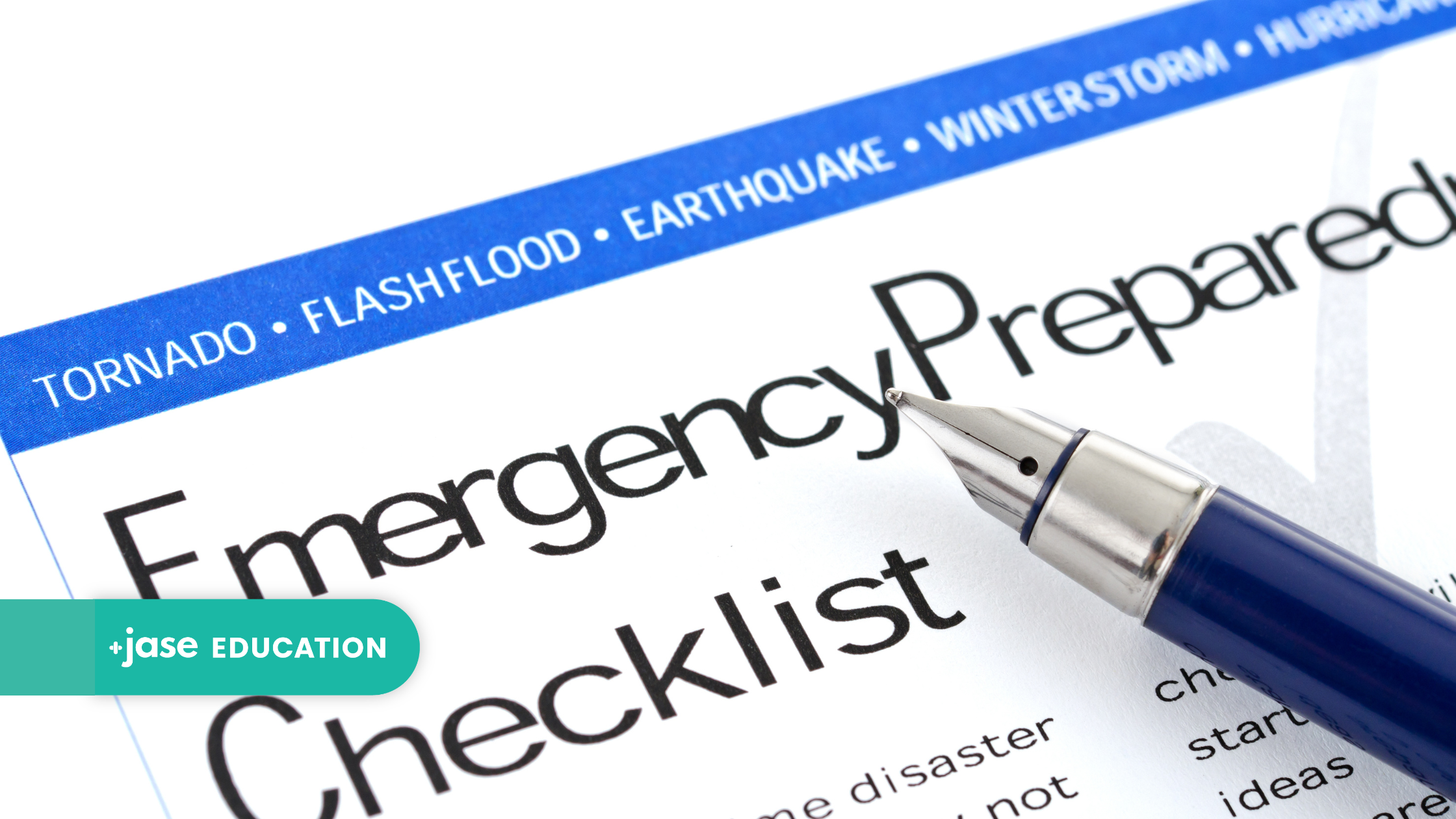
What Gets Missed in Disaster Preparedness
The Family Medical Plan Most Emergency Kits Miss
By Aaron Asay, PA-C, DMSc — Executive Director, JaseResponse
Over the last 25 years, I’ve had a front-row seat to some of life’s hardest moments.
Through my work in emergency medicine, disaster response, and humanitarian aid, I’ve served communities impacted by hurricanes, floods, wildfires, and other disasters. I’ve met families who lost homes overnight, families forced to evacuate with little warning, and families suddenly cut off from the healthcare systems they relied on every day.
When people think about disasters, they often imagine the dramatic moments—the wildfire racing toward a neighborhood, the hurricane making landfall, or floodwaters swallowing a road. Those moments matter. But what has always stood out to me are the ordinary problems that suddenly become emergencies when access to healthcare disappears.
It’s the parent trying to refill a child’s asthma medication after the pharmacy has been closed for days. It’s the grandfather running low on heart medication because roads remain impassable after a storm. It’s the family cleaning up debris when a child suffers a deep cut and urgent care is overwhelmed or inaccessible.
Over the years, I’ve seen these situations play out again and again. What strikes me most is that these families weren’t irresponsible. Most had food, flashlights, batteries, and good intentions. What they lacked was a clear understanding of what medical preparedness actually looks like.
No one had ever handed them a roadmap. That’s why I often tell people that you don’t have to be a prepper to be prepared. You just need a plan.
The Part Most Disaster Checklists Miss
Most preparedness checklists focus on food, water, batteries, flashlights, and generators. Those things matter….but a flashlight isn’t a medical plan, and either is a box of bandages or a bottle of Tylenol.
One of the biggest lessons disaster response has taught me is that emergencies rarely create entirely new medical problems. More often, they magnify existing ones. The child who needs medication still needs medication. The person managing diabetes still needs insulin. A routine infection still needs treatment.
The difference is that your doctor may be closed, your pharmacy may be inaccessible, and the systems that normally make healthcare easy may not be functioning when you need them most.
That’s why I encourage families to think about medical preparedness in two layers.
Layer One: Protect Access to the Medications Your Family Already Needs
The first layer is continuity. If someone in your household relies on medication to stay healthy, that medication should be part of your disaster plan.
Whenever possible, we recommend maintaining up to a 90-day supply of essential medications and keeping a written medication list that includes the medication name, dosage, prescribing provider, and pharmacy information.
This sounds simple, but during an evacuation it becomes incredibly valuable. A pharmacist hundreds of miles away can help much faster when they have accurate information in front of them.
In my experience, this is one of the most important—and most overlooked—steps families can take.
Layer Two: Prepare for the Medical Problems Disasters Predictably Create
The second layer focuses on what we repeatedly see after disasters.
Floodwaters and damaged infrastructure often lead to gastrointestinal illness. Cleanup efforts create cuts, scrapes, and wound infections. Power outages and poor sanitation can increase the risk of respiratory and skin infections. Dehydration becomes more common when clean water access is limited.
These aren’t rare events: they’re predictable ones.
That’s why appropriate medical preparation means having a plan for common conditions before access to care becomes difficult.
For many families, this includes having access to contingency medications for common infections, anti-nausea medications, anti-diarrheal medications, oral rehydration solutions, and other supplies that become significantly harder to obtain once a disaster disrupts normal systems.
This isn’t a replacement for primary care; it’s preparation for the moments when primary care isn’t immediately reachable.
Don’t Forget the Basics
One thing disaster response has reinforced over and over is that most families under-pack the medical basics.
- A reliable water filter that can address both viruses and bacteria matters.
- Proper wound care supplies matter.
- Pain relievers, fever reducers, allergy medications, and oral rehydration solutions matter.
- Knowing how to clean and care for a wound matters just as much as having a bandage.
Medical preparedness isn’t just about what you own. It’s about knowing how to use it.
Start Small
The good news is that you don’t have to tackle everything at once.
That’s why we’ve created three free resources to help families get started:
- How to Build an Inexpensive 72-Hour Kit
- Family Communication Plan Template
- Wound Care Guide
Think of these as building blocks, not a homework assignment.
Pick one. Start there. Small steps compound over time.
When You’re Ready for the Next Layer
For families looking to build additional resilience, we’ve created tools designed to address the gaps we see most often.
The JaseCase helps families prepare for the prescription contingency layer.
FirstAid helps cover wounds, injuries, and emergency medical supplies. Bunker in a Box provides a more comprehensive solution for longer-term disruptions and emergency readiness.
Together, they help create peace of mind for the moments when your doctor, pharmacy, or urgent care clinic isn’t reachable.
Why This Matters
One of the most encouraging things I’ve witnessed after disasters is how often prepared families become a source of strength for others.
When your own immediate needs are covered, you’re able to check on a neighbor. Help an elderly relative. Share resources. Support someone else who is struggling.
Preparation creates capacity for compassion.
That’s one of the reasons the missions of Jase Response and Jase are so closely connected. At Jase Response, we respond when disasters strike. At Jase, we’re helping families prepare before they happen.
Every deployment reinforces the same lesson: Preparedness isn’t about fear. It’s about creating enough stability that when life becomes difficult, you’re ready—not just to care for your own family, but to help others too.
That’s why we do this work.
Lifesaving Solutions
Recent Posts
Keeping you informed and safe.
Why Patients Run Out of Meds
Why Patients Run Out of Meds: Ordinary Disruptions By the Jase Medical Team Most people who unexpectedly lose access to a prescription didn't lose it in a hurricane. A bottle gets left in a hotel room. A suitcase doesn't make the flight. Medication disappears during a...
For Clinicians | Why Patients Run Out of Medication
For Clinicians | Why Patients Run Out of Medication: The Ordinary Disruptions, Not the Disaster By Dr. Jamie Wilkey, PharmD, Director of Clinical EducationMedically reviewed and edited by Kristen Carpenter, PA-C As a pharmacist, I've helped patients keep access to...

The Drug Interactions You Create in an Emergency
The Drug Interactions You Create in an Emergency By the Jase Medical Team Most of the time, you don't have to think very hard about drug interactions. Your doctor has your medication list. Your pharmacy has it too. When a new prescription comes through, software...

For Clinicians | Drug Interactions in a Disaster
For Clinicians | Drug Interactions in a Disaster: The Combinations a Bad Week Creates By Dr. Jamie Wilkey, PharmD, Director of Clinical EducationMedically reviewed and edited by Kristen Carpenter, PA-C When we think about prescription medicine in a disaster, we most...