Why Patients Run Out of Meds: Ordinary Disruptions By the Jase Medical Team Most people who unexpectedly lose access to a prescription didn't lose it in a hurricane. A bottle gets left in a hotel room. A suitcase doesn't make the flight. Medication disappears during a...
Your Medications Don’t Tolerate Heat the Way You Do: A Summer Storage Guide
Your Medications Don’t Tolerate Heat the Way You Do: A Summer Storage Guide
By Cayla McGrath
Summer is hard on a lot of things.
Car batteries die. Chocolate melts in the grocery bag. Ice cream doesn’t survive the drive home. Most of us instinctively adjust for those inconveniences, but medications are different. They often sit quietly in a medicine cabinet, dresser drawer, carry-on bag, or parked car without much thought about what heat, humidity, and sunlight are doing behind the scenes.
The problem is that most medication-storage advice isn’t especially helpful. You’ve probably heard some version of, “Store medications in a cool, dry place,” or “Don’t keep them in the bathroom.” Those recommendations aren’t wrong, but they also don’t tell you what actually matters during a July heat wave, a beach vacation, or a cross-country road trip.
A car parked in direct sunlight on a 100°F day reaches an average interior temperature of 116°F within an hour. Dashboards can exceed 150°F. Even on a mild 72°F day, the inside of a parked car can climb to roughly 117°F within sixty minutes. The question isn’t whether summer affects medications. It’s understanding which exposures matter, which don’t, and how to make a few thoughtful adjustments so your medicine cabinet works just as hard as the hottest day of the year asks it to.
Heat Usually Doesn’t Make Medications Dangerous. It Makes Them Weaker.
Heat speeds up chemical reactions, including the slow breakdown of medications. Over time, prolonged exposure can reduce potency, meaning the medication simply does less of what it’s supposed to do.
For tablets and capsules, sustained heat can affect the active ingredient itself, soften capsule shells, and damage stabilizing ingredients designed to preserve effectiveness. For biologics and protein-based medications such as insulin, heat can cause proteins to unfold and lose activity in ways that aren’t easily reversed.
Fortunately, most summer storage questions can be answered by considering two simple factors:
How hot did it get?
And for how long?
Pharmacists often think about medication exposure as either an excursion or sustained exposure. Brief excursions happen. A bottle sits in a warm car while you run into the grocery store. A mail-order package spends an afternoon on the porch before you bring it inside. For many solid oral medications stored in their original packaging, those occasional exposures are unlikely to cause meaningful problems.
A glove compartment from June through August is a different story.
Most medications are designed to live at room temperature, typically between 68°F and 77°F, with brief excursions up to 86°F explicitly tolerated. Once temperatures remain above that range for prolonged periods, stability concerns begin to increase. Sustained temperatures above 104°F move into territory where degradation becomes a realistic concern.
Summer medications don’t need perfection. They simply need a better address.
The Best Place in Your House Is Probably Not Where You Think
The two most common places people store medications also happen to be two of the least ideal.
Bathrooms experience significant swings in both temperature and humidity. A hot shower can briefly push humidity close to 100%, creating conditions that encourage tablets to absorb moisture and capsule shells to soften. Kitchens present a different challenge. Cooking, dishwashers, and sinks introduce heat and humidity spikes that may seem insignificant to us but can add up for medications stored there month after month.
Garages and glove compartments are even more problematic during summer. In many parts of the country, they can remain above 100°F for days at a time.
Perhaps unsurprisingly, one of the least exciting locations tends to perform the best.
A bedroom dresser drawer.
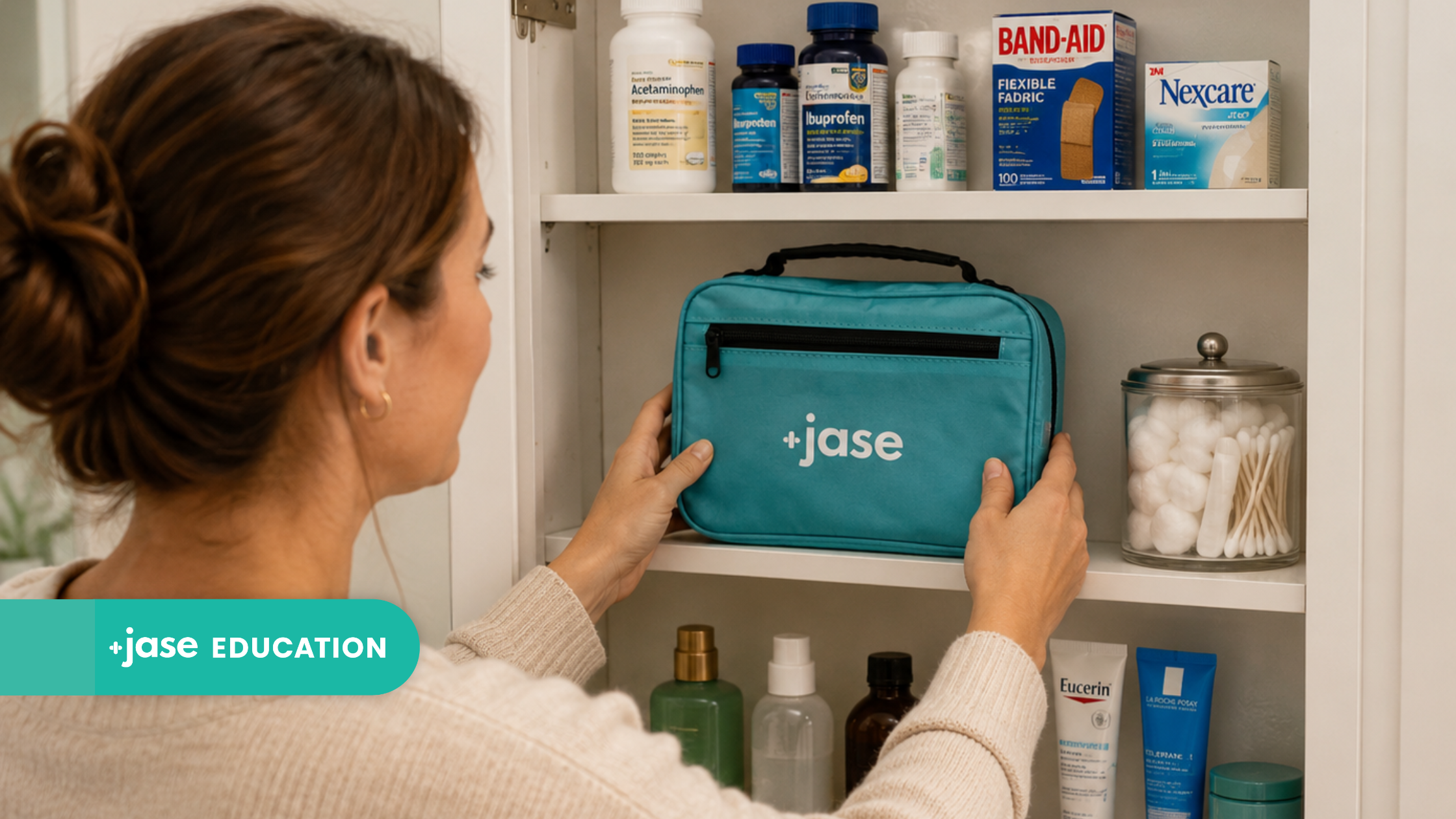
It’s cool, dry, dark, and generally protected from the temperature swings common elsewhere in the house. It also happens to be an excellent home for a JaseCase. The medications inside are designed to remain stable at room temperature, making the same dresser drawer a practical location for both the medications your family already depends on and the contingency medications you hope you’ll never need.
Original Packaging Matters More Than Most People Realize
Prescription bottles aren’t orange because pharmacists have a favorite color.
Many medications, particularly certain antibiotics, are sensitive to ultraviolet light. Ciprofloxacin, metronidazole, and doxycycline all carry recommendations to protect the medication from excessive light exposure. Doxycycline adds another layer of concern because it can increase a person’s sensitivity to sunlight as well.
Keeping antibiotics in their original amber bottles or blister packs provides an extra layer of protection that weekly pill organizers simply don’t offer. For medications taken every morning, organizers can make sense. For antibiotics that may sit unused for months until needed, the manufacturer’s packaging usually remains the better option.
Mail-Order Medications and the Summer Porch Problem
Mail-order pharmacies have become routine for millions of Americans, which means medications now spend more time in delivery trucks and on front porches than ever before.
It’s reasonable to wonder whether medications sitting outside on a 95°F afternoon have been ruined.
For most tablets and capsules shipped in original packaging, a single hot transit is usually better thought of as an excursion than sustained exposure. Bringing packages inside promptly once they arrive is generally enough to address the concern.
Refrigerated medications deserve more attention because they rely on an intact cold chain. But for room-temperature stable medications, including products like JaseCase, the biggest takeaway is fairly simple: once the package arrives, bring it inside and let your dresser drawer take over from there.
Traveling With Refrigerated Medications Doesn’t Have to Be Stressful
This is where summer medication questions become more complicated.
Insulin, biologics, GLP-1 medications, and injectable therapies understandably make people nervous. They’re expensive, often labeled “keep refrigerated,” and many travelers assume they become unusable the moment they leave the fridge.
Fortunately, most manufacturers publish room-temperature stability windows that are more generous than many people realize.
Some commonly prescribed examples include:
- NovoLog (insulin aspart): 28 days at room temperature
- Levemir (insulin detemir): 42 days
- Toujeo (insulin glargine U-300): 56 days
- Humira (adalimumab): 14 days
- Dupixent (dupilumab): 14 days
- Enbrel (etanercept): 30 days when kept in its original carton
These windows generally assume temperatures remain at or below 86°F.
Interestingly, refrigeration itself isn’t always perfect. Research has found that nearly one-quarter of household refrigerators expose insulin to subfreezing temperatures at some point, usually because medications are stored against the back wall or near the freezer compartment. The middle shelf of the refrigerator often provides the most stable environment.
Travel introduces another challenge: keeping medications cool while you’re moving between airports, hotels, and destinations.
Several tools can help:
Frio cooling wallets remain one of the most affordable and widely recommended options. They use evaporative cooling and don’t require electricity, making them particularly attractive for international travel or outdoor activities.
Vivi Cap devices provide a more automated approach by monitoring and maintaining temperatures with minimal effort, which appeals to travelers looking for a “set it and forget it” solution.
MedAngel One isn’t a cooler at all. Instead, it’s a sensor that tracks temperatures and alerts users through a smartphone app if medications drift outside their preferred range. For people who simply want reassurance that their hotel refrigerator didn’t accidentally freeze their medication overnight, it can provide helpful peace of mind.
Another travel tip surprises many people: If you’re flying with insulin or other refrigerated medications, your gel ice pack does not have to be confiscated at airport security simply because it’s partially melted. TSA specifically allows medically necessary cooling packs, including slushy or thawed gel packs, provided they’re declared during screening. Medically necessary liquids are also exempt from the standard 3.4-ounce carry-on restriction.
Many travelers surrender cooling supplies because they don’t realize they can simply say, “These are medically necessary.”
Declaring them is often all that’s required.
Did You Ruin Your EpiPen by Leaving It in the Car?
Probably not.
A 2016 review examining epinephrine stability found that brief temperature excursions generally do not cause meaningful degradation and do not automatically warrant replacing an auto-injector.
An EpiPen that spends a few hours in a hot car during a summer soccer tournament and then returns to a dresser drawer is likely still functioning appropriately.
An EpiPen living in a glove compartment from Memorial Day through Labor Day is a different story.
Once again, the distinction comes back to duration. A brief excursion is rarely the same thing as a season-long exposure.
Appropriate Medical Preparation Includes the Drawer
Preparedness conversations often focus on generators, bottled water, batteries, and flashlights. Those things matter.
But preparedness also includes the less glamorous details.
Knowing your insulin is stored properly. Understanding that your gel ice pack can travel through TSA. Recognizing that your antibiotics are better protected in an amber bottle than a humid bathroom cabinet.
Appropriate medical preparation isn’t only about acquiring medications. It’s about making sure the medications you already depend on are ready to work when you need them.
For most families, that doesn’t require a complete overhaul of their medicine cabinet. More often, it means moving a few bottles into a dresser drawer, bringing deliveries inside a little sooner, and understanding which summer exposures matter—and which ones simply make for good internet myths.
We’re a family team of medical doctors, PAs, and pharmacists who use these medications in the field and at home. Our goal isn’t to make summer feel fragile. It’s to help families make informed decisions so that when the hottest day of the year arrives, their medicine cabinet is prepared for it.
Cayla McGrath is a content strategist with Jase Medical. This post is for informational purposes only and does not constitute medical advice. Always consult a licensed healthcare provider before using any prescription medication.
Lifesaving Solutions
Everyone should be empowered to care for themselves and their loved ones during the unexpected. Check out our recent lifesaving products today.
Recent Posts
Keeping you informed and safe.
Why Patients Run Out of Meds
read more
For Clinicians | Why Patients Run Out of Medication
For Clinicians | Why Patients Run Out of Medication: The Ordinary Disruptions, Not the Disaster By Dr. Jamie Wilkey, PharmD, Director of Clinical EducationMedically reviewed and edited by Kristen Carpenter, PA-C As a pharmacist, I've helped patients keep access to...

The Drug Interactions You Create in an Emergency
The Drug Interactions You Create in an Emergency By the Jase Medical Team Most of the time, you don't have to think very hard about drug interactions. Your doctor has your medication list. Your pharmacy has it too. When a new prescription comes through, software...

For Clinicians | Drug Interactions in a Disaster
For Clinicians | Drug Interactions in a Disaster: The Combinations a Bad Week Creates By Dr. Jamie Wilkey, PharmD, Director of Clinical EducationMedically reviewed and edited by Kristen Carpenter, PA-C When we think about prescription medicine in a disaster, we most...