Medicine That Would Have Changed History

Medicine That Would Have Changed History

What If the Founders Had a Medicine Cabinet?

By Cayla McGrath

America turns 250 this July.

Most anniversary articles this summer will celebrate with fireworks, founding documents, and famous quotes from Washington, Jefferson, and Franklin. We thought we’d celebrate a little differently by asking an unusual question: What if the Founders had a medicine cabinet?

Half of early American history reads like a record of people dying from infections, dehydration, and wounds that modern medicine routinely treats in the outpatient setting. That’s not meant to criticize eighteenth or nineteenth-century physicians for practicing with the tools they had. Quite the opposite. It serves as a reminder of just how dramatically the floor of basic medical preparedness has risen in a relatively short period of time.

Antibiotics, oral rehydration therapy, antiseptic wound care, hemostatic dressings, and evidence-based trauma management are not ancient discoveries. Many became standard practice within our grandparents’ lifetimes. At Jase, we spend much of our time helping families prepare for disruptions that may happen next month, next hurricane season, or on their next international trip. In honor of America’s 250th anniversary, we thought it might be fun to look backward instead.

Here are seven moments in American history where a modern Jase kit sitting on the shelf could have dramatically altered the outcome.


#1 Valley Forge, Winter 1777–1778

Saved by: JaseCase + JaseMedic

Most Americans learn about Valley Forge as a story of bitter cold, inadequate clothing, and soldiers enduring a brutal winter. In reality, disease claimed far more lives than frostbite ever did.

Between 1,700 and 2,500 Continental soldiers died during the encampment, making Valley Forge one of the deadliest chapters of the Revolutionary War. Typhus spread through body lice, while dysentery and typhoid fever circulated because of contaminated water sources and poor sanitation. Influenza and pneumonia also moved quickly through an already weakened population. Historians note that nearly two-thirds of these deaths occurred in the spring, after the worst weather had passed.

Unfortunately, the medicine chest available in 1778 offered little relief. Bloodletting, mercury-based purgatives, and opium represented some of the best medical interventions available at the time. Germ theory was still decades away, and oral rehydration therapy had not yet been imagined.

Today, many of the bacterial infections and dehydration-related illnesses that devastated Valley Forge would likely be managed with antibiotics, oral rehydration salts, and improved sanitation practices. Washington still emerges from Valley Forge as a stronger leader, but perhaps he does so with many more soldiers standing alongside him.

#2 George Washington’s Final Illness, 1799

Saved by: JaseCase

Many people assume George Washington died simply because his doctors removed too much blood. The story is slightly more nuanced.

Modern historians and infectious disease specialists believe Washington likely suffered from acute bacterial epiglottitis, a rapidly progressing infection that causes swelling of the tissues surrounding the airway. As his breathing became more labored, his physicians attempted nearly every treatment available to them, including repeated bloodletting, blistering compounds, mercury preparations, gargles, and enemas.

By the end of the ordeal, Washington had lost approximately 40 percent of his blood volume.While the infection itself likely initiated his decline, historians increasingly believe that the aggressive interventions of the era significantly worsened his condition. Had Washington developed the same illness today and received prompt antibiotic treatment, there is a good chance he would have recovered within days and enjoyed several more years at Mount Vernon.

#3 Lewis and Clark’s Expedition, 1804–1806

Saved by: JaseCase + JaseMedic

Lewis and Clark are often remembered as rugged explorers conquering an untamed frontier, but their journals tell a different story. For much of their two-year expedition, members of the Corps of Discovery battled dysentery, skin infections, abscesses, dehydration, and gastrointestinal illnesses.

President Jefferson sent Meriwether Lewis to train under Dr. Benjamin Rush before the expedition departed. Rush supplied the group with dozens of his patented mercury-based purgative pills, nicknamed “Thunderclappers.” The medication was considered cutting-edge medicine in 1804, despite causing severe diarrhea and leaving such high concentrations of mercury behind that archaeologists still use soil testing to locate expedition campsites today.

Clark frequently documented sickness spreading among the group and correctly suspected contaminated water sources were contributing to their illnesses.

Today, many of these predictable travel-related problems could likely be managed with a contingency antibiotic, oral rehydration salts, and wound care supplies. It may not make for exciting storytelling, but it probably would have made for a significantly more comfortable expedition

#4 Sacagawea’s Serious Illness, 1805

Saved by: JaseCase

During the expedition, Sacagawea developed a severe illness that left her weak, feverish, and in considerable pain. Historical descriptions suggest she experienced symptoms consistent with an infection that today would often be treated successfully with a short course of antibiotics.

Instead, physicians of the era relied on opium, bark preparations, salts, and bloodletting.

Thankfully, Sacagawea recovered. Still, it is remarkable to consider that an illness which nearly altered one of America’s most celebrated expeditions might now be addressed with medications that fit neatly inside a household medicine cabinet.

#5 William Henry Harrison, 1841

Saved by: JaseCase + JaseMedic

William Henry Harrison did not die because he delivered a lengthy inauguration speech in the rain.

That explanation persisted for generations, but modern historians believe a much different culprit was responsible: typhoid fever.

At the time, Washington, D.C., had primitive sewage infrastructure, and the White House water supply was located downhill from areas used for waste disposal. Harrison developed symptoms consistent with typhoid infection, including severe gastrointestinal illness and progressive dehydration, before dying only thirty-one days into his presidency.

His physicians attempted treatment with opium, castor oil, mercury compounds, and leeches.

Today, oral rehydration therapy alone has prevented millions of deaths worldwide. Combined with appropriate antibiotic treatment, Harrison’s illness would likely have been highly survivable, potentially changing the course of American political history.

#6 James Garfield, 1881

Saved by: JaseTrauma + JaseCase

James Garfield’s story may be the most compelling example of how much medicine has evolved.

Charles Guiteau shot Garfield in July 1881, but historians and surgeons largely agree that the gunshot wound itself was survivable. The bullet missed his spinal cord and lodged behind the pancreas.

What followed was seventy-nine days of increasingly aggressive medical intervention.

Twelve physicians repeatedly inserted unwashed fingers and non-sterile instruments into Garfield’s wound while attempting to locate the bullet. One physician punctured his liver during an examination. Surgeons gradually expanded a relatively small wound into an incision nearly twenty inches long.

All of this occurred fourteen years after Joseph Lister introduced antiseptic surgical techniques in Europe.

Garfield ultimately died from overwhelming infection, malnutrition, and sepsis.

His story highlights a lesson that remains foundational to modern trauma medicine: not every wound benefits from aggressive intervention. Sometimes the best course of action is surprisingly simple. Control bleeding, protect the wound from contamination, monitor carefully, and resist the temptation to make a survivable injury worse.

#7 Theodore Roosevelt’s Bullet Speech, 1912

Saved by: JaseCase + JaseMedic

Contrary to popular legend, Theodore Roosevelt’s eyeglass case did not stop a bullet.

It merely slowed it down.

After being shot in the chest while campaigning in Milwaukee, Roosevelt quickly assessed himself, determined he was not coughing blood, and proceeded to deliver a ninety-minute speech before seeking medical attention.

Doctors later decided to leave the bullet in place, believing removal posed greater risks than simply allowing it to remain.

Roosevelt carried that bullet for the rest of his life.

Unlike Garfield’s physicians, Roosevelt’s doctors understood an important principle that still guides trauma care today: not every injury requires aggressive intervention. Sometimes, controlling bleeding, preventing contamination, and allowing the body to heal is the wiser course.

The Medical Floor Has Risen

Looking across these seven moments in American history, the common thread is not necessarily bad luck. More often, these individuals simply lived before the medical floor had risen beneath them.

Antibiotics, antiseptic technique, oral rehydration therapy, hemostatic dressings, and evidence-based wound management were not yet available. Many of the illnesses and injuries that once changed the course of history are now the kinds of challenges families can thoughtfully prepare for at home.

Perhaps that’s one of the most meaningful ways to celebrate America’s 250th anniversary.

Not only by remembering what earlier generations built, but by appreciating how much safer, healthier, and more medically prepared ordinary families can be today.

At Jase, we believe appropriate medical preparation means keeping that modern medical floor stocked. It means having thoughtful, clinician-built tools available before you need them, so that when life becomes unpredictable, your doctor and pharmacy are already on the shelf, ready when access to care isn’t.


Cayla McGrath is a content strategist with Jase Medical. This post is for informational purposes only and does not constitute medical advice. Always consult a licensed healthcare provider before using any prescription medication.


Lifesaving Solutions

Everyone should be empowered to care for themselves and their loved ones during the unexpected. Check out our recent lifesaving products today.

Recent Posts

Keeping you informed and safe.
Your Medication Is on Backorder. Now What?

Your Medication Is on Backorder. Now What?

Your Medication Is on Backorder. Now What? By the Jase Medical Team You’ve taken the same prescription for eleven years. You request the same refill from the same pharmacy, and this time the technician tells you: “It’s on backorder. No ETA.” You ask when it will be...
read more

Join Our Newsletter

Our mission is to help you be more medically prepared. Join our newsletter and follow us on social media for health and safety tips each week!

When You Can’t Get to a Doctor, What’s the Real Alternative?

When You Can’t Get to a Doctor, What’s the Real Alternative?

Antibiotic Stewardship vs Antibiotic Access

By Cayla McGrath

Picture any of these scenarios.

A hurricane makes landfall and the pharmacy two miles from your house is closed for two weeks. Your kid develops a dental abscess at a national park four hours from the nearest urgent care. You’re three days into a cruise when a UTI that started as a minor annoyance becomes something that needs treatment — now. Or it’s a Sunday evening, the symptoms started at 7pm, and the urgent care closed at 6.

These aren’t hypotheticals. They’re the kinds of access failures that happen regularly to regular people — and when they do, the question isn’t “should I see a doctor or take an antibiotic from my shelf?” The real question is a different one entirely.


The Comparison Group Most People Miss

When people hear “antibiotics at home,” the instinct is to compare that to the ideal: walk into a clinic, get examined, get a prescription, pick it up at the pharmacy. That comparison makes the at-home option look unnecessary at best and reckless at worst.

But that’s not the comparison that matters. The comparison that matters is what people actually do when the ideal isn’t available.

They order fish antibiotics online. They take leftover azithromycin from a prescription that was supposed to be finished six months ago. They go to a pharmacy across the border. They dig through their medicine cabinet for an expired Z-Pack and cross their fingers.

This isn’t a fringe behavior. In one multisite survey across six safety-net clinics and two emergency departments in Texas, 43.6% of patients reported using antibiotics without a prescription. Of that group, 26% had already self-medicated with leftover antibiotics from a previous course — and 51% said they intended to do it again. The FDA issued nine warning letters to companies selling fish antibiotics for human consumption in December 2023, then followed with another enforcement action against a major distributor in May 2025. The reason those enforcement actions exist: the market is large enough to warrant them.

So when we talk about what it means to have a prepared antibiotic supply at home — one prescribed by a physician, shipped with clinical guidance, and designed for specific, well-defined conditions — the real comparison isn’t a doctor’s office visit. It’s fish antibiotics and a Google search.

This Isn’t a New Idea

Disaster medicine and travel medicine have been working in this space for decades.

After Hurricane Katrina, researchers followed roughly 18,000 evacuees who had relocated to San Antonio. Federal disaster relief teams supplied just 9% of all chronic care medications dispensed to that population. The remaining 91% came from retail pharmacies doing the work outside the normal clinical encounter — because that encounter wasn’t available. The federal Emergency Prescription Assistance Program exists precisely for this reason.

Travel medicine took the logic a step further. The 2017 International Society of Travel Medicine travelers’ diarrhea guideline explicitly endorses prescriber-initiated self-treatment, where the patient leaves the appointment with the antibiotic in hand and takes it themselves when symptoms meet defined criteria. No clinical visit required at the point of use. The CDC Yellow Book chapter on travelers’ diarrhea aligns with this approach.

In both fields, pharmaceutical access outside the normal clinical encounter is recognized as a necessity — not a stewardship problem.

We’re applying the same principle to the predictable access failures that don’t make the news: the Sunday UTI, the weekend dental abscess, the gap between when symptoms start and when a provider is reachable.

What the JaseCase Actually Is

JaseCase is a prepackaged set of antibiotics prescribed by a physician in advance. It arrives at your home with a written guidebook and one explicit instruction: consult a clinical authority before using anything in it.

That’s not fine print. It’s the design. Every medguide we ship ends with the same line: Consult local health officials for event-specific recommendations. Jase telehealth is the backstop when your regular provider isn’t reachable — it exists so that even in a gap, you’re not making this call alone.

The five antibiotics in the JaseCase are selected from the WHO AWaRe framework, the global standard for antibiotic classification and appropriate use. Three of the five are AWaRe Access tier (the most recommended for common bacterial infections). The other two retain WHO first-line empiric status for the specific scenarios they’re included to cover.

The kit is designed for well-defined, common, self-limiting conditions where the evidence is strong and the treatment path is clear. It’s not for complex diagnoses, chronic conditions, or anything that needs an in-person exam. The clinical work happens on the front end — through the prescribing physician — so you’re not doing diagnostics at home at 11pm.

What the JaseCase Is Not

JaseCase is not a replacement for primary care. It doesn’t belong in every medical decision, and it’s not designed for every situation.

Complex diagnoses, ongoing provider relationships, chronic disease management — those belong in the exam room. The kit covers the gap that exists when that exam room isn’t accessible, not the appointments you can schedule.

We also want to be direct about the stewardship side of this. The strongest argument against home antibiotic supplies is that patients will use them inappropriately — not because the antibiotics are dangerous in the right context, but because self-symptom assessment is imperfect. We take that seriously. The consult-before-use instruction isn’t an afterthought; it’s how we try to keep the diagnostic step in the hands of a clinician whenever that’s possible. And evidence from similar models — patients given structured antibiotic access with clear criteria — shows that appropriate guidance can actually reduce total antibiotic use, not increase it.

The Gap Is Already Being Filled

The market for unguided antibiotic access — fish antibiotics, leftover prescriptions, border pharmacies — is not small, and it’s not shrinking. The FDA’s enforcement actions are evidence that demand is significant enough to warrant federal attention.

JaseCase is a structured alternative in that space. A physician-prescribed, guidebook-supported, consult-before-use supply that gives you something better than fish mox when your regular provider isn’t available. It’s not competing with your doctor’s appointment. It’s competing with what you’d do instead.

If you’ve been curious about preparedness options and want to understand what’s in the kit and how it works, you can learn more at Jase.com


Cayla McGrath is a content strategist with Jase Medical. This post is for informational purposes only and does not constitute medical advice. Always consult a licensed healthcare provider before using any prescription medication.


Lifesaving Solutions

Everyone should be empowered to care for themselves and their loved ones during the unexpected. Check out our recent lifesaving products today.

Recent Posts

Keeping you informed and safe.

Your Medication Is on Backorder. Now What?

Your Medication Is on Backorder. Now What?

Your Medication Is on Backorder. Now What? By the Jase Medical Team You’ve taken the same prescription for eleven years. You request the same refill from the same pharmacy, and this time the technician tells you: “It’s on backorder. No ETA.” You ask when it will be...

read more

Join Our Newsletter

Our mission is to help you be more medically prepared. Join our newsletter and follow us on social media for health and safety tips each week!

Your Medicine Cabinet IS Your Emergency Plan

Your Medicine Cabinet IS Your Emergency Plan

The Family Medical Plan Most Emergency Kits Miss

By Aaron Asay, PA-C, DMSc — Executive Director, JaseResponse

Here is a scenario I’ve watched play out in disaster response more times than I can count.

A family gets an evacuation order. They’re moving fast — two hours to get out before the roads close. They grab what they can: documents, the go-bag, whatever medications are visible on the counter. They end up at a relative’s house four counties away. Three days in, someone realizes they grabbed a four-day supply of a blood pressure medication that can’t be easily refilled, and the only pharmacy still operating in the area ran out of common prescriptions two days ago.

That scenario is not unusual. After Hurricane Katrina, researchers tracked roughly 18,000 evacuees who had relocated to San Antonio. Federal disaster relief teams supplied 9% of all chronic care medications dispensed to that population. Retail pharmacies — stores operating outside the normal clinical system, in the middle of a regional disaster — covered 73%. The federal Emergency Prescription Assistance Program exists precisely because the systems we expect to function during an emergency usually don’t.

The lesson isn’t that retail pharmacies will always be there. It’s the inverse: your own medicine cabinet — what you’ve already got on hand before anything happens — is the primary line of defense. Federal caches and disaster formularies are backstops. They are not plans.


Layer One: The Chronic Supply

The first thing I walk through with every family I work with isn’t antibiotics or emergency medications. It’s their maintenance prescriptions.

A 90-day supply of every medication the household can’t go without, paired with a written list that any pharmacist can act on, is the foundation of everything else. That list should include the drug name, dose, prescriber, and pharmacy — clear enough that an emergency pharmacist at an unfamiliar location can act without tracking down your regular provider. If your family is managing cardiovascular disease, insulin-dependent diabetes, or any condition with daily medication requirements, this is the conversation to have with your care team before something forces it.

There’s also a piece of this that most people have never been told: during a governor’s declared emergency, pharmacists in most states have authority to dispense Schedule III through V medications without a new prescription, typically up to 30 days. That covers benzodiazepines, certain pain medications, and many medications that commonly run short when a region’s normal clinical infrastructure is disrupted. Knowing this exists — and knowing where the authority ends — matters.

Where it ends is Schedule II. Stimulants and most opioids don’t have a clean emergency dispensing pathway. A disaster declaration doesn’t automatically authorize a pharmacist to dispense them; it takes a specific DEA waiver, and those are inconsistent. Knowing where the cliff is matters more than pretending it doesn’t exist.

Layer Two: The Contingency Layer

The chronic supply gets you through what you already take. The contingency layer covers what you don’t have yet — the new problem that develops after the evacuation order has already gone out.

A UTI doesn’t wait for a hurricane to end. A dental abscess that starts Thursday night doesn’t care that urgent care reopens Monday. Skin infections, ear infections, respiratory infections — these happen at a steady baseline rate in normal times, and they don’t slow down when a region’s healthcare infrastructure does.

This is where most families are genuinely underprepared — not for lack of effort, but because the medications they’d need are only accessible through a physician’s prescription, and most people have never had that conversation outside a clinical encounter.

What Jase Response exists to do is have that conversation before the emergency. A physician-prescribed contingency layer — antibiotics for clearly defined conditions, with clinical guidance on when and how to use them — means that when the pharmacy is closed and the urgent care is unavailable and the symptom started two hours ago, you’re not relying on a Google search.

What Preparation Actually Looks Like

I’ve spent 25 years in emergency response. The families who come through disruptions best aren’t the ones with the biggest stockpiles. They’re the ones who took specific, deliberate action before anything happened — and who know exactly what they have, where it is, and what it covers.

The structure is the same regardless of circumstance: know your chronic supply, build your contingency layer, and understand where the edges are. The goal isn’t to replace your care team. It’s to give yourself something to work with in the gap between when a problem starts and when your care team is actually reachable.

If you want to build that second layer with clinical oversight from a team that takes this work seriously, Jase Response is where we do it.

👉 Support Jase Response: givebutter.com/aQ8pUO

—
*Aaron Asay, PA-C, DMSc, is a physician assistant with 25+ years of frontline emergency response experience, former firefighter and paramedic, military disaster rescue officer, and founder of Jase Response.*


Lifesaving Solutions

Everyone should be empowered to care for themselves and their loved ones during the unexpected. Check out our recent lifesaving products today.

Recent Posts

Keeping you informed and safe.

Your Medication Is on Backorder. Now What?

Your Medication Is on Backorder. Now What?

Your Medication Is on Backorder. Now What? By the Jase Medical Team You’ve taken the same prescription for eleven years. You request the same refill from the same pharmacy, and this time the technician tells you: “It’s on backorder. No ETA.” You ask when it will be...

read more

Join Our Newsletter

Our mission is to help you be more medically prepared. Join our newsletter and follow us on social media for health and safety tips each week!

What is a Z-Pack?

What is a Z-Pack?

You’ve heard of a Z-Pack.

Maybe your doctor prescribed one when a respiratory infection dragged on too long. Maybe you’ve watched a family member take it when a sinus infection turned serious. Maybe you can picture the blister pack — six pills, five days, done.

Azithromycin is one of the most recognized antibiotics in the country, and for good reason. With approximately 10.3 million prescriptions written annually in the United States, it ranks among the most commonly prescribed medications in modern medicine. That familiarity is actually part of why it earned its place in the JaseCase.

Here’s the part that’s worth understanding: what happens when you need it and can’t get it?

THE GAP BETWEEN NEEDING AN ANTIBIOTIC AND GETTING ONE

Most of the time, accessing medical care is inconvenient but manageable. You wait for an appointment. You stop by an urgent care. You pick something up at the pharmacy on the way home.

But life doesn’t always cooperate with business hours.

Consider a few situations that are more common than people realize. A child develops an ear infection on the third day of a beach vacation. A sinus infection that seemed mild at the start of a cross-country work trip turns serious by day two. A family member with a penicillin allergy — affecting roughly 10% of the population — spikes a 102-degree fever on a Sunday night when the nearest urgent care has already closed.

In each of these situations, the question isn’t whether an antibiotic is appropriate. The question is whether you have one.

WHAT AZITHROMYCIN ACTUALLY TREATS

Azithromycin covers a broad range of common bacterial infections — respiratory infections like community-acquired pneumonia, bronchitis, and sinusitis, as well as skin and soft tissue infections, traveler’s diarrhea, and more. It’s taken orally, which means no injections or infusion centers. It works quickly, typically within the first 24 to 48 hours. And its dosing schedule — usually a short course of three to five days — is forgiving enough to manage during a chaotic travel week or a demanding few days at home.

For patients who can’t take penicillin, azithromycin has long served as one of the most clinically reliable alternatives. Our clinical team made this choice deliberately — not because it was the path of least resistance, but because the evidence supports it and the real-world use cases are undeniable.

WHY IT’S IN THE JASECASE

At Jase, every medication in the JaseCase earns its place through the same process: clinical evaluation by a team of medical doctors, physician assistants, and pharmacists, weighed against evidence-based guidelines and practical patient scenarios.

Azithromycin cleared that bar on multiple fronts. It offers broad enough coverage to be genuinely useful across a range of situations. It has a well-established safety profile that most clinicians and patients already understand. And it represents the kind of medication that, when access to care is delayed, actually changes outcomes.

The framework we’re building around this is what we call Appropriate Medical Preparation. It’s not about stockpiling medications or avoiding the healthcare system. It’s about creating a legitimate, clinically-supported bridge for the moments when your primary care provider isn’t available — the closed pharmacy, the remote trail, the storm that keeps you home for four days, the country where no one speaks your language.

WHAT THIS ISN’T

We want to be straightforward about something, because it matters.

Having azithromycin available through Jase doesn’t mean using it casually. Every prescription that comes through our platform is issued by a licensed U.S. clinician who has reviewed your health history. Every medication comes with clear clinical guidance on when and how it’s appropriate to use.

This is the same antibiotic your doctor would likely prescribe in these situations. The difference is that you’ve done the responsible work ahead of time — establishing care with a clinician before the emergency, understanding how your health history intersects with these medications, and knowing exactly what you have and when it’s the right call.

That preparation doesn’t replace your primary care relationship. It protects it. Because when the moment comes and you’re far from home or the system simply isn’t available right now, you’re not making decisions under pressure from a place of uncertainty. You already have a plan.

A TRUSTED ANTIBIOTIC, ON YOUR SHELF, BEFORE THE MOMENT YOU NEED IT

The goal of the JaseCase has always been clear: get the right medications to the right people before they’re in crisis, with clinical oversight built in from the start.

Azithromycin is one of the most familiar, most trusted antibiotics in modern medicine. It treats infections that can escalate when left untreated and that respond well when addressed early. In the situations where access to care is delayed — a trip, a natural disaster, a Sunday night — having it available with proper guidance could be the difference between a manageable situation and a serious one.

If you’re curious about what else is in the JaseCase and why each medication was chosen, our patient education library is built exactly for that.

Explore the JaseCase →

Lifesaving Solutions

Everyone should be empowered to care for themselves and their loved ones during the unexpected. Check out our recent lifesaving products today.

Recent Posts

Keeping you informed and safe.

Your Medication Is on Backorder. Now What?

Your Medication Is on Backorder. Now What?

Your Medication Is on Backorder. Now What? By the Jase Medical Team You’ve taken the same prescription for eleven years. You request the same refill from the same pharmacy, and this time the technician tells you: “It’s on backorder. No ETA.” You ask when it will be...

read more

Join Our Newsletter

Our mission is to help you be more medically prepared. Join our newsletter and follow us on social media for health and safety tips each week!

Why You Can’t Count on the Pharmacy in a Crisis

Why You Can’t Count on the Pharmacy in a Crisis

By Aaron Asay, PA-C, DMSc — Executive Director, JaseResponse

Most of the time, the pharmacy works exactly the way we expect it to.

Your child develops strep throat, the pediatrician sends in amoxicillin, and you pick it up on your way home. You’ve taken the same blood pressure medication for years, and each month your refill is waiting for you. A specialist adjusts a medication, and within a day or two it’s available through your local pharmacy.

Until suddenly, it isn’t.

Maybe it’s October and your child needs amoxicillin suspension, but the pharmacist tells you they don’t have any in stock. Maybe the medication you’ve taken successfully for years is suddenly backordered, and the substitute offered feels unfamiliar. Maybe a family member receives a call from their infusion center explaining that their treatment has been placed “on allocation” and that no one can confidently say when a stable supply will return.

These moments feel frustrating because we’ve grown accustomed to assuming medications will always be available when we need them. But increasingly, these aren’t unusual weeks in healthcare. They are becoming part of the environment patients, pharmacists, and prescribers are practicing inside.

I’ve spent years responding to disasters, humanitarian crises, and disruptions where access to healthcare suddenly changed overnight. During these deployments, I’ve witnessed families struggling to obtain medications they depend on simply because roads were impassable, pharmacies were closed, or healthcare systems were overwhelmed.

What’s been striking over the past several years is recognizing that families no longer need a hurricane, wildfire, or flood to experience similar disruptions. Sometimes, all it takes is a manufacturing issue halfway around the world, a shortage of active pharmaceutical ingredients, transportation bottlenecks, or increased demand for a commonly prescribed medication.

The Healthcare System Itself Has Begun Acknowledging This Reality

In a recent survey published in JAMA Network Open, nearly 90% of primary care physicians reported experiencing drug shortages within the previous six months. Almost half reported watching a patient’s disease progress while trying to navigate workarounds, and more than one in ten reported a major adverse event related to medication shortages.

This doesn’t mean families should panic or begin stockpiling medications.

It does mean we may need to rethink what preparedness looks like.

At Jase, our family team of medical doctors, physician assistants, and pharmacists has spent years working in the space between traditional primary care and the moments when traditional access breaks down. We often describe this as appropriate medical preparation.

For many families, appropriate medical preparation has two practical layers:

The first layer is continuity. It’s maintaining a documented supply of the medications your family already depends on whenever possible. It means keeping a written medication list that includes drug names, dosages, prescribing providers, and pharmacies. It means having enough margin that an unexpected backorder, shipping delay, or shortage doesn’t immediately become a crisis.

Second Layer

The second layer involves contingency planning. Certain conditions repeatedly emerge during disruptions, whether they’re caused by disasters, shortages, or healthcare access challenges. Having contingency antibiotics and emergency medications available, accompanied by clinician-reviewed guidance about when to use them and when to seek additional care, can help families navigate those situations more confidently.

Importantly, none of this replaces a relationship with a primary care physician.

Primary Care Foundation

Primary care remains the foundation of good healthcare. Chronic conditions, ongoing management decisions, preventive care, and new diagnoses belong in the exam room. Appropriate medical preparation simply acknowledges that healthcare increasingly operates within a system that isn’t always predictable. It offers patients and clinicians a thoughtfully built second layer so that the phone call from the pharmacy doesn’t become the only plan a family has.

Resilience

After years of disaster response, one lesson has become increasingly clear to me: resilience isn’t built in the middle of a crisis. It’s built beforehand, through small decisions that create stability when systems become strained.

For some families, that may simply mean asking their provider about extending a maintenance medication supply. For others, it may mean building a more comprehensive preparedness plan. The goal isn’t fear. The goal isn’t stockpiling. The goal is having enough margin that when the routine channel temporarily stops working, your family still has options.

Because whether the disruption comes from a hurricane, a wildfire, a global manufacturing issue, or a medication shortage no one saw coming, preparation creates capacity.

Capacity to stay calm. Capacity to adapt. Capacity to have compassion for others in crisis. 

And ultimately, capacity to care for the people around us while the system catches up.At Jase, that’s what we believe appropriate medical preparation looks like

Lifesaving Solutions

Everyone should be empowered to care for themselves and their loved ones during the unexpected. Check out our recent lifesaving products today.

Recent Posts

Keeping you informed and safe.

Your Medication Is on Backorder. Now What?

Your Medication Is on Backorder. Now What?

Your Medication Is on Backorder. Now What? By the Jase Medical Team You’ve taken the same prescription for eleven years. You request the same refill from the same pharmacy, and this time the technician tells you: “It’s on backorder. No ETA.” You ask when it will be...

read more

Join Our Newsletter

Our mission is to help you be more medically prepared. Join our newsletter and follow us on social media for health and safety tips each week!

What Gets Missed in Disaster Preparedness: The Family Medical Plan Most Emergency Kits Miss

What Gets Missed in Disaster Preparedness

The Family Medical Plan Most Emergency Kits Miss

By Aaron Asay, PA-C, DMSc — Executive Director, JaseResponse

Over the last 25 years, I’ve had a front-row seat to some of life’s hardest moments.

Through my work in emergency medicine, disaster response, and humanitarian aid, I’ve served communities impacted by hurricanes, floods, wildfires, and other disasters. I’ve met families who lost homes overnight, families forced to evacuate with little warning, and families suddenly cut off from the healthcare systems they relied on every day.

When people think about disasters, they often imagine the dramatic moments—the wildfire racing toward a neighborhood, the hurricane making landfall, or floodwaters swallowing a road. Those moments matter. But what has always stood out to me are the ordinary problems that suddenly become emergencies when access to healthcare disappears.

It’s the parent trying to refill a child’s asthma medication after the pharmacy has been closed for days. It’s the grandfather running low on heart medication because roads remain impassable after a storm. It’s the family cleaning up debris when a child suffers a deep cut and urgent care is overwhelmed or inaccessible.

Over the years, I’ve seen these situations play out again and again. What strikes me most is that these families weren’t irresponsible. Most had food, flashlights, batteries, and good intentions. What they lacked was a clear understanding of what medical preparedness actually looks like.

No one had ever handed them a roadmap. That’s why I often tell people that you don’t have to be a prepper to be prepared. You just need a plan.


The Part Most Disaster Checklists Miss

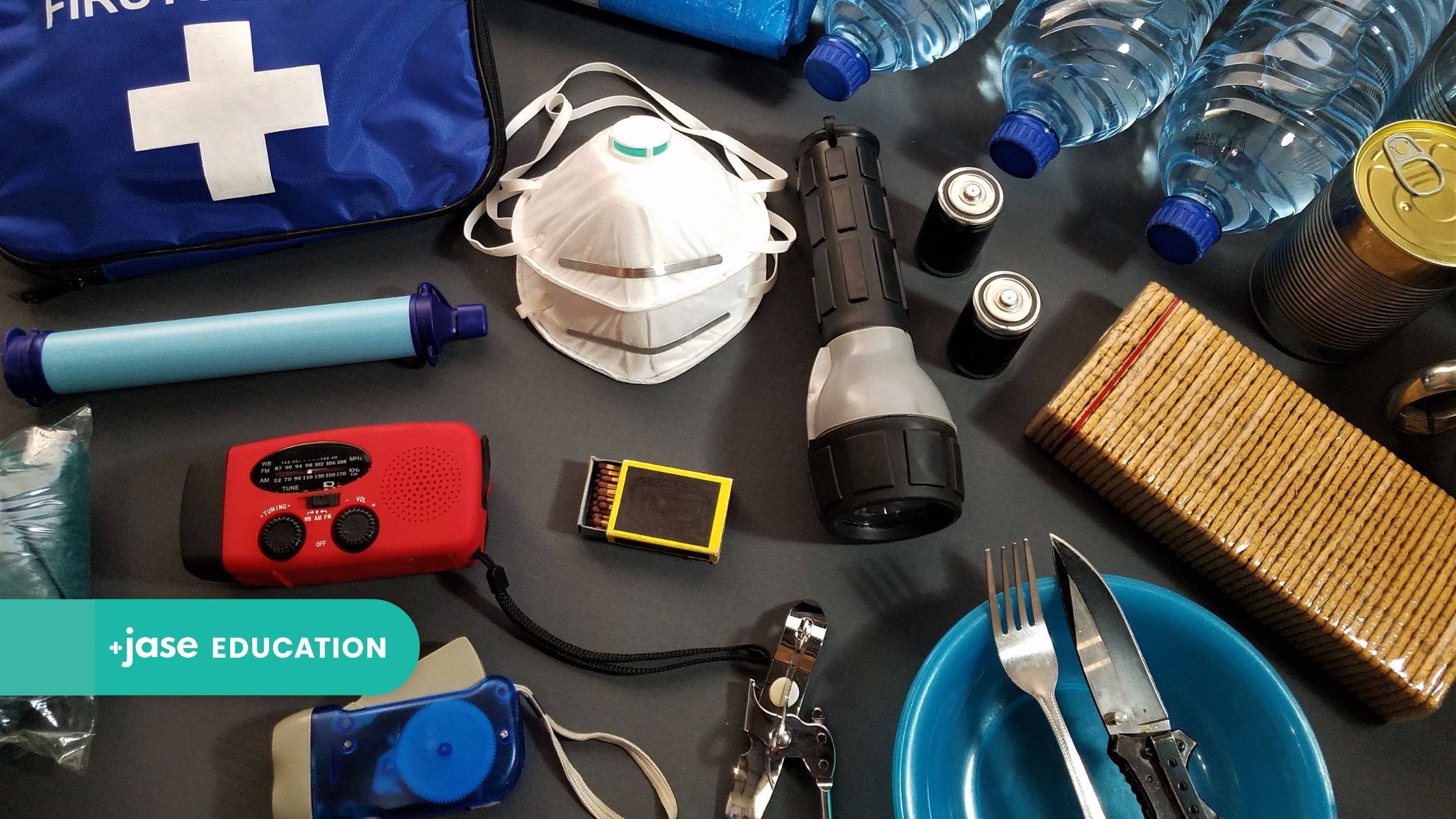
Most preparedness checklists focus on food, water, batteries, flashlights, and generators. Those things matter….but a flashlight isn’t a medical plan, and either is a box of bandages or a bottle of Tylenol.

One of the biggest lessons disaster response has taught me is that emergencies rarely create entirely new medical problems. More often, they magnify existing ones. The child who needs medication still needs medication. The person managing diabetes still needs insulin. A routine infection still needs treatment.

The difference is that your doctor may be closed, your pharmacy may be inaccessible, and the systems that normally make healthcare easy may not be functioning when you need them most.

That’s why I encourage families to think about medical preparedness in two layers.

Layer One: Protect Access to the Medications Your Family Already Needs

The first layer is continuity. If someone in your household relies on medication to stay healthy, that medication should be part of your disaster plan.

Whenever possible, we recommend maintaining up to a 90-day supply of essential medications and keeping a written medication list that includes the medication name, dosage, prescribing provider, and pharmacy information.

This sounds simple, but during an evacuation it becomes incredibly valuable. A pharmacist hundreds of miles away can help much faster when they have accurate information in front of them.

In my experience, this is one of the most important—and most overlooked—steps families can take.

Layer Two: Prepare for the Medical Problems Disasters Predictably Create

The second layer focuses on what we repeatedly see after disasters.

Floodwaters and damaged infrastructure often lead to gastrointestinal illness. Cleanup efforts create cuts, scrapes, and wound infections. Power outages and poor sanitation can increase the risk of respiratory and skin infections. Dehydration becomes more common when clean water access is limited.

These aren’t rare events: they’re predictable ones.

That’s why appropriate medical preparation means having a plan for common conditions before access to care becomes difficult.

For many families, this includes having access to contingency medications for common infections, anti-nausea medications, anti-diarrheal medications, oral rehydration solutions, and other supplies that become significantly harder to obtain once a disaster disrupts normal systems.

This isn’t a replacement for primary care; it’s preparation for the moments when primary care isn’t immediately reachable.


Don’t Forget the Basics

One thing disaster response has reinforced over and over is that most families under-pack the medical basics.

  • A reliable water filter that can address both viruses and bacteria matters.
  • Proper wound care supplies matter.
  • Pain relievers, fever reducers, allergy medications, and oral rehydration solutions matter.
  • Knowing how to clean and care for a wound matters just as much as having a bandage.

Medical preparedness isn’t just about what you own. It’s about knowing how to use it.


Start Small

The good news is that you don’t have to tackle everything at once.

That’s why we’ve created three free resources to help families get started:

  • How to Build an Inexpensive 72-Hour Kit
  • Family Communication Plan Template
  • Wound Care Guide

Think of these as building blocks, not a homework assignment.

Pick one. Start there. Small steps compound over time.


When You’re Ready for the Next Layer

For families looking to build additional resilience, we’ve created tools designed to address the gaps we see most often.

The JaseCase helps families prepare for the prescription contingency layer.

FirstAid helps cover wounds, injuries, and emergency medical supplies. Bunker in a Box provides a more comprehensive solution for longer-term disruptions and emergency readiness.

Together, they help create peace of mind for the moments when your doctor, pharmacy, or urgent care clinic isn’t reachable.


Why This Matters

One of the most encouraging things I’ve witnessed after disasters is how often prepared families become a source of strength for others.

When your own immediate needs are covered, you’re able to check on a neighbor. Help an elderly relative. Share resources. Support someone else who is struggling.

Preparation creates capacity for compassion. 

That’s one of the reasons the missions of Jase Response and Jase are so closely connected. At Jase Response, we respond when disasters strike. At Jase, we’re helping families prepare before they happen.

Every deployment reinforces the same lesson: Preparedness isn’t about fear. It’s about creating enough stability that when life becomes difficult, you’re ready—not just to care for your own family, but to help others too.

That’s why we do this work.

Lifesaving Solutions

Everyone should be empowered to care for themselves and their loved ones during the unexpected. Check out our recent lifesaving products today.

Recent Posts

Keeping you informed and safe.

Your Medication Is on Backorder. Now What?

Your Medication Is on Backorder. Now What?

Your Medication Is on Backorder. Now What? By the Jase Medical Team You’ve taken the same prescription for eleven years. You request the same refill from the same pharmacy, and this time the technician tells you: “It’s on backorder. No ETA.” You ask when it will be...

read more

Join Our Newsletter

Our mission is to help you be more medically prepared. Join our newsletter and follow us on social media for health and safety tips each week!