

You Don’t Have to Be an Expert to Be Prepared
By Cayla McGrath
Medical preparation has a branding problem.
On one end of the conversation, you have disaster medicine — the world of field manuals, off-grid clinical decision trees, and preparation for scenarios where help is genuinely not coming. On the other end, you have FEMA and the Red Cross: the 72-hour kit, the written medication list, the floor every household is told to clear. Both ends of that spectrum have been well-served for years. Both address real situations.
Neither one is where most families actually live.
The real disruptions — the ones that land on ordinary households with frustrating regularity — don’t make the news. They don’t require a doomsday frame, and they don’t fit in a three-day kit. They look like this: a UTI that starts on the third night of a cruise. An 11pm fever in a country where nobody at the hotel front desk speaks English. A refill that didn’t come through before your flight. A weekend storm that knocks out the only pharmacy in town. A rural ER three hours away, and urgent care already closed when you checked.
These aren’t outliers. They’re the predictable, recurring, quiet failures that happen to prepared people who simply didn’t have the right thing on the shelf when they needed it. And for a long time, nobody had a name for the category of preparation that addresses them.
That category has a name now: appropriate medical preparation.
What it is
Appropriate medical preparation is a clinically grounded buffer — built to get you through to your primary care team, not around it.
At Jase, the team building this category is a family of medical doctors, physician assistants, and pharmacists. The pharmacist integration isn’t cosmetic: drug interactions, storage conditions, expiration, and access logistics are pharmacy questions. The clinical standards we hold ourselves to are the same ones that apply in any legitimate medical practice.
What we’re building is not a one-size-fits-all kit and not a subscription to whatever online pharmacy will approve a checkout without reviewing your health history. It’s a physician-prescribed, pharmacist-guided supply — matched to the disruptions families actually face, reviewed by the right credentials, and sized to the gap that exists between when a problem starts and when your regular provider is reachable.
That gap is real. A family with a solid primary care relationship is still vulnerable to the 11pm fever, the backordered medication, the Sunday infection. Appropriate medical preparation is what it looks like to be ready for those moments — not as a workaround for your doctor, but as a buffer that holds until your doctor is available.
What it isn’t
It isn’t a replacement for your primary care relationship. That relationship belongs in the exam room — complex diagnoses, chronic conditions, anything that requires an in-person exam and an ongoing clinical history. We are not competing with that, and we would never frame it that way.
It isn’t fear-based hoarding dressed in clinical language. The disruptions this category is built for are boring and statistical: they happen to people who live normal lives and travel normally and fill their prescriptions normally, until one week they can’t. Preparation for those moments is calm, not alarmist. It doesn’t require believing anything catastrophic is coming.
And it isn’t the fringe. There are legitimate, credentialed, evidence-grounded reasons to have physician-prescribed medications on your shelf. Travel medicine has practiced standby prescribing for decades. Disaster medicine has long recognized that the patient’s own medicine cabinet is the primary line of care. We are extending that logic to the everyday disruptions that don’t make the national news.
The calm middle
You do not have to be paranoid to be prepared. You do not have to choose between an empty medicine cabinet and a doomsday bunker.
There is a sensible, clinical middle — built by doctors and pharmacists, reviewed to the highest standards, sized to the moments most families will actually face. Jase is the home of that middle. Your doctor and pharmacy, already on your shelf, there before life gets weird.
If you’ve been curious about what appropriate medical preparation actually looks like — and whether it’s the right fit for your family — you can start at jase.com/products/jase-case or explore specific scenarios at jase.com/collections/symptoms-and-scenarios.
Cayla McGrath is a content strategist with Jase Medical. This post is for informational purposes only and does not constitute medical advice. Always consult a licensed healthcare provider before using any prescription medication.
Lifesaving Solutions
Recent Posts
Keeping you informed and safe.

For Clinicians | Pediatric Dosing 101: What Parents Need From You Before They’re Dosing Alone
For Clinicians | Pediatric Dosing 101: What Parents Need From You Before They're Dosing Alone By Dr. Jamie Wilkey, PharmD, Director of Clinical EducationMedically reviewed and edited by Aaron Asay, PA-C, DMSc, FIBODM, FAWM Pharmacy school drills one line into you over...

What is Plague?
What Is Plague? By the Jase Medical Team Plague is back in the headlines, and people are suddenly Googling a disease they may not have thought about since history class. A 28-year-old laboratory worker at an anti-plague research institute in Siberia recently died...
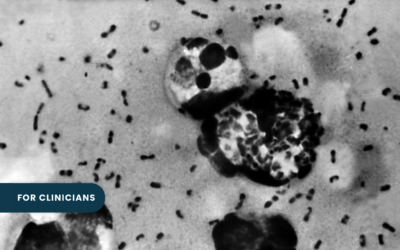
For Clinicians | What Is Plague? One Bacterium, Three Diseases
For Clinicians | What Is Plague? One Bacterium, Three Diseases By Dr. Jamie Wilkey, PharmD, Director of Clinical EducationMedically reviewed and edited by Aaron Asay, PA-C, DMSc, FIBODM, FAWM Well, the plague is back in the news. Reports out of Russia in early October...

Nobody Has Your Medication List, Including Your Doctor and Your Pharmacy
Nobody Has Your Medication List, Including Your Doctor and Your Pharmacy By the Jase Medical Team Most of us assume that somewhere in the healthcare system, there is one correct list of every medication we take. Your primary care doctor has a list. Your pharmacy has a...