*Note: Some of the content below is for general medication best practices while other tips are specific to the medication mentioned.
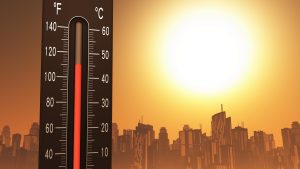
As the summer heat wave in most parts of the country rages on, and rolling blackouts threaten our grid and safety, one area of particular concern is heat sensitive prescription and over the counter medications.
Most medications need to be stored at room temperature (59-86 degrees F) and ideal humidity under 60% to maintain their strength and quality. Some, such as insulin and other hormone related medications require refrigeration after opening. Many medications lose potency when exposed to heat, and are not toxic or dangerous, however this alone can cause life threatening results for those using insulin, heart or respiratory medications.
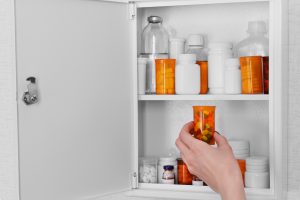
6 Tips to keep medications cool and safe
- Store in original container, out of heat and light. Bathroom or kitchen cabinets are ideal for this. If your bathroom or kitchen areas are too humid or hot, consider a bedroom closet shelf to store your medicines. In addition, ask your pharmacist if there are any special precautions or needed care when storing your medicine.
- If you use a medication that needs to be refrigerated invest in a separate small cooler with ice packs to store your medication in. Do not use this bag for anything else other than refrigerated medicines. Only open the bag when necessary to maintain the cooler temperature. Medications that need be refrigerated should always be kept between 36° and 46°F. A TSA approved insulin pen cooler, which can last up to 74 hours may be a good investment
- Use this same cooler for plane trips. Don’t check in medications, always carry on your medications. Temperatures in holding areas are not temperature controlled. Plus it is best to always have your medications with you when traveling (lost luggage, etc)
- If traveling in a car with your medications, take them with you, don’t leave them in a hot car.
- If you use mail order services for obtaining your medication, ask for heat resistant packaging or overnight delivery. Nitroglycerin is sensitive to environmental changes, and most patients using this are aware and have their pills exchanged on a regular basis. Thyroid hormones are also sensitive to excessive heat. Update: This tip is NOT relevant to the Jase Case or any antibiotics we provide.
A study done on Formoterol capsules (Foradil Aerolizer) , powder filled capsule used in an inhaler, was heated to 115 degrees F, the temperature of an Arizona mailbox, for 4 hours. The capsules were removed from packaging and dispensed into the manufacturers filter tube. Results showed that filter weights of heated medications were less than half of those unexposed to heat, showing that a significantly less amount of the drug had been dispensed after it had been heated. In addition, capsules exposed to heat were grossly distorted in appearance and showed visible clumping. Medication had stuck to the sides of the gelatin capsule. It would not have been available to the patient.
- Treat your over the counter medicines the same way you treat your prescription ones. These medicines can lose their efficacy when exposed to excessive heat and humidity also (Tylenol, Aleve, etc).
As rolling blackouts and heatwaves continue this summer in many parts of our country, staying cool is more important than ever. In addition to keeping our bodies and food cool, remember medications, both prescription and over the counter require attention and preparation also.
(And what to do about it)
Summer is in full swing, and with it many are outside, enjoying outdoor activities and fun in the sun. While the benefits of being outdoors can not be underestimated, sun exposure when using many prescriptions and nonprescription medicines can result in sensitivity and skin damage.
Below is a list taken from the FDA of drugs that can cause skin sensitivity and skin damage when exposed in the sun.
According to the FDA:
- Antibiotics -ciprofloxacin, doxycycline, levofloxacin, ofloxacin, tetracycline, trimethoprim)
- Antifungals -flucytosine (Ancobon) , griseofulvin (Gris Peg) , voricanozole (Vfend)
- Antihistamines -cetirizine (Zyrtec, Zyrtec Allergy, Children’s Zyrtec Allergy, Children’s Zyrtec Hives Relief, PediaCare Children’s 24-Hour Allergy, Aller-Tec, and Wal-Zyr), diphenhydramine (Benadryl, Genahist, Sominex, Unisom), loratadine (Claritin), promethazine (Phenergan), cyproheptadine (Periactin)
- Cholesterol lowering drugs -simvastatin (Zocor), atorvastatin (Lipitor), lovastatin (Altoprev), pravastatin (Pravachol)
- Diuretics- thiazide diuretics: hydrochlorothiazide Microzide, HydroDiuril, and Oretic), chlorthalidone, chlorothiazide.; other diuretics: furosemide and triamterene)
- Non-steroidal anti-inflammatory drugs -ibuprofen (Advil), naproxen(Aleve), celecoxib (Celebrex), piroxicam (Feldene), ketoprofen (Actron)
- Oral contraceptives and estrogens
- Phenothiazines -tranquilizers, anti-emetics: examples, chlorpromazine (Thorazine and Largactil) promethazine, thioridazine (Mellaril Topper), prochloroperazine (Stemetil, Buccastem)
- Retinoids (acitretin, isotretinoin)
- Sulfonamides – sulfadiazine, sulfamethizole (brand name: Thiosulfil Forte), sulfamethoxazole (Gantanol), sulfasalazine (Azulfidine), sulfisoxazole (Gantrisin)
- Sulfonylureas for type 2 diabetes- Glimepiride (Amaryl) Glyburide (DiaBeta; Micronase) Glipizide (Glucotrol)
- Alpha-hydroxy acids in cosmetics
Below are some tips to enjoy the great outdoors while on any of the above medications:
Avoid Sun exposure
When outside, seek shade, especially between 10 a.m. and 2 p.m. – some organizations recommend as late as 4:00 p.m. Keep in mind that the sun’s rays may be stronger when reflected off water, sand and snow.
Wear long-sleeved shirts, pants, sunglasses, and broad-brimmed hats to limit sun exposure.
Use a broad sunscreen regularly and as directed. Broad-spectrum sunscreens provide protection against ultraviolet A (UVA) and ultraviolet B (UVB) radiation. An SPF 15 is the minimum number needed to provide measurable protection; however, a sunscreen with an SPF value of 30 or higher is recommended. Rarely, some sunscreen ingredients can cause photosensitivity themselves.
A Word About Sunscreens
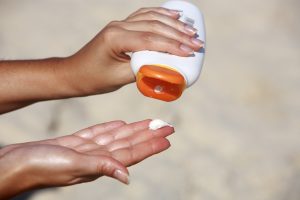
Environmental Working Group (EWG) founded in 1990, is a 501C3 nonprofit that specializes in research and advocacy in the areas of agricultural subsidies, toxic chemicals, drinking water pollutants, and corporate accountability. They publish reports on various consumer products such as detergents, cosmetics, food and water safety, etc. They have published their 2022 sunscreen ingredient and testing list that tests sunscreen effectiveness and ingredient safety.
Their peer reviewed study, completed in Fall of 2021 of 51 sunscreens tested showed that many of these sunscreens did not protect as well as claimed. UVA radiation is found to cause skin cancer. SPF is the standard by which sunscreens make their claim that they provide protection against suns rays, however SPF only measures a small portion of the UV light spectrum. This is different than testing against the entire UV light spectrum.
In other words, SPF does not mean that you are protected against UVA cancer causing rays.
How to select an effective sunscreen
Look for a sunscreen that
- States it is a broad-spectrum sunscreen
- Has a SPF of 30 or greater
- Is water resistant or waterproof
EWG has published an up-to-date sunscreen lists for everyday use, safe for infants and children, sport and water activities and more. Check them out before purchasing new sunscreen.
By the way, you should always throw out and purchase new sunscreen every year. Environmental Working Group approved sunscreens
If you have questions about your medications and the possibility of a photosensitivity, contact your health-care professional or pharmacists. Taking a few precautions can help limit your risk of photosensitivity and keep the sun shining on your fun.
There is much concern, and rightfully so about the use and overuse of antibiotics. Antibiotics can be lifesaving when used in a prudent and appropriate manner. Overuse is still a concern and one that shouldn’t be taken lightly.
Black box warnings on one class of antibiotics

What is a black box warning?
Black box warnings are required by the U.S. Food and Drug Administration for certain medications that carry serious safety risks. Often these warnings communicate potential rare but dangerous side effects, or they may be used to communicate important instructions for safe use of the drug, in 2008 the FDA issued a black box warning for fluoroquinolones (FQ).
Fluoroquinolones carry black box warning
One class of antibiotics, the fluoroquinolones (FQ) (ciprofloxacin, levofloxacin, moxifloxacin, and others) have been associated with increased tendon ruptures. A tendon rupture is a partial or complete tear of a tendon. Tendons are tough bands of tissue that attach muscles to your bones. An example of a tendon is the Achilles tendon, which attach the heel bone to the calf muscles.
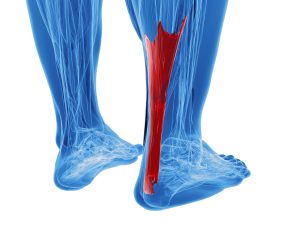
Fluoroquinolones (FQ) are among the most widely prescribed antibiotics in the outpatient setting, due to their broad-spectrum treatment of bacteria found in respiratory, urinary, joint, and skin infections.
A large study reviewing retroactive patient records was conducted between 2007 and 2016 with over a million subjects from the senior population age 65 and older. This study reviewed the use of FQ against other antibiotics and even similar drugs in the FQ class to assess tendon rupture occurrence. Only one of the FQ antibiotics displayed a significant tendency to tendon rupture- between a 16% (rotator cuff) and fourfold risk (Achilles tendon). That antibiotic was levofloxacin. Neither ciprofloxacin-one of the antibiotics found in the Jase case- or moxifloxacin- which were part of the study- was found to increase tendon rupture.
Known risk factors for tendon ruptures
Risk factors associated with FQ-induced tendon disorders include age greater than 60 years, corticosteroid therapy, renal failure, diabetes mellitus, and a history of musculoskeletal disorders.
In addition, taking oral steroids increased the risk by 46-fold, and patients greater than 60 years of age who were recently treated with a FQ for 1 to 30 days were at a 1.5-fold and a 2.7-fold greater risk for development of tendon disorders and tendon rupture as compared to patients less than 60 years of age, respectively. Males are twice as likely to be affected as females as much as 2:1.
A study conducted with adolescents aged 12-18 from 2000-2018 which focused on the use of FQ and tendon rupture incidence concluded: The excess risk of tendon rupture associated with fluoroquinolone treatment was extremely small, and these events were rare.
Conclusion
There is much controversy and lack of reliable information on the black box warning of fluoroquinolones
From reliable studies there are a few conclusions we can draw:
- Not all fluoroquinolones put patients at risk for tendon ruptures
- Levofloxacin is the one FQ that does exhibit greater risk for tendon ruptures
- Ciprofloxacin and moxifloxacin show no sign for increase in tendon ruptures
- Risk factors for tendon ruptures include over age 60, taking corticosteroids, renal failure, diabetes, and history of musculoskeletal disorders. Males are 2x more likely to suffer tendon ruptures than females.
- Adolescents are rarely at risk for tendon rupture when taking fluoroquinolones.
(Or are you still rearranging the deck chairs on the Titanic?)
It is easy- and necessary to shut the world out and enjoy time doing the things you love. Reading a good novel, losing yourself in your favorite craft, spending time with friends and family, going to the lake, etc. Even a good cup of coffee or tea shared at a local favorite hangout with a good friend is healthy and necessary.
However, there are storm clouds forming, and they are almost overhead. Those clouds are promising a deluge of life altering events that we must take heed to if we are to survive the coming storm. We have been warned that the food shortages, diesel, and gas prices skyrocketing (and prices going even high, some predict into the double digits) medication and medical supply shortages are not a short-term problem. We are being promised that these changes are permanent.
Open your umbrella of safety to shield you and your loved one’s storm of changes to our way of life.
We have become complacent. Everything we need or want magically appears on the grocers or department store shelves where all we do is grab a shopping cart and fill. Or in larger cities Instacart and other delivery services bring the merchandise directly to your doorstep.
This way of life is dramatically changing. And this isn’t temporary. Take for instance the neighborhood supermarket. Grocery stores weren’t an everyday convenience until the first Piggly Wiggly opened its doors on September 11, 1916, as the first self-service grocery store. Before that the customer would hand their list to the store clerk and they would fill the order. Many times, home gardens, livestock, barter, and work in exchange for food was the normal way of life. The grocer was used for bulk items such as sugar, flour, fabric, and other items not found locally.
Hopefully by now you have acquired your first aid knowledge, bandages medical supplies and Jase case for the inevitable emergency. Between repeated warnings from our government citing the power grid going down, supply chain shortages medication and medical supply shortages, food shortages, food recalls and more we are warned daily that one or more life threatening crisis is likely., or inevitable.
What if the designated or assumed primary healthcare provider in your family or community person is the one sick or injured? Do you have a plan?
Do you have a plan for limited or nonexistent medical supplies?
Given the press releases and statements from the powers that be these are very real possibilities. We are being told a second pandemic, worse than the Covid 19 pandemic is not just probable, but inevitable.
Are you physically, mentally, emotionally, and spiritually prepared for this? Have you tried to put in place a plan but feel overwhelmed? You are not alone. Fear and feelings of being overwhelmed are perfectly normal. Taking back control of parts of your life that you are able to will put you back in the driver’s seat of your s and your loved one’s destiny.
5 Steps to weather the coming storm of events
The past 2 years and events that have followed- baby formula shortage, medical supplies and pharmaceutical supplies, overall supply chain shortages have taught us one thing- it is necessary to act NOW. According to many sources our supply chain disruption is closing in rapidly and not going away anytime soon.
- Take control of your finances
Take a long, hard look at your monthly expenditures. Which are necessary? Which are wants? Free up some of your finances by taking a hard look at your financial situation. Do you do a daily drive through to your local coffee shop? If so, try setting up and making your favorite drink at home and bring to work. This alone will save hundreds of dollars in some instances. Do you have cable tv? If so, how much does that run a month? Netflix? Sports channels? Do you plan your meals or make trips through the drive through several times a week? How about clubs you no longer attend- the dues, etc. Do you live in an area where you could use your bicycle to run to the grocers?
- Take that extra money and get prepared
With the money you have freed up from streamlining your bills and expenditures look at your food, water, and medical budgets and supplies.
Food and water
Water
There is sufficient water in city water supplies to provide for the promised and already happening rolling blackouts. However, if these blackouts are extended the water will quickly run out and there will be a water shortage crisis. Take time to store water and learn how to safely filter water. I have written about this important topic in the past. One of the most common downfalls of civilizations wasn’t food shortages. It was waterborne illnesses and hygienic practices. There are so many good water filtration devices on the market. Do your research.
Food security
It is important to purchase the highest quality food you are able, however in many instances even with a streamlined budget this isn’t always feasible. Nutrition is the key to a healthy immune system and the ability to bounce back after an illness or injury. Supplementing your diet with fresh greens and sprouts is one of the easiest and healthiest ways to maintain health. The Greenstalk Vertical Planter is a wonderful way to supplement your diet and helps offset the grocery bill. I have a tower garden on our balcony. The number of leafy greens I can produce is astounding. We have been enjoying lettuce, chard, basil, mint and many other herbs and vegies from this garden. It can be grown inside or on a porch, saving space and water. The initial set up was an investment, however it is producing so many greens and other vegies that is quickly paying for itself. There are many types of towers and even tabletop hydroponic systems out there, this is just an example of one.
Microgreens are an amazing and inexpensive way to supplement the diet. These powerhouses Truleaf Market, an online supplier of microgreens and more, carries an amazing array of sprouting seeds. Their quality is unparalleled.
Medical supplies and medications
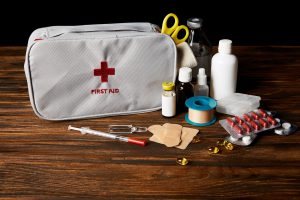
The medication shortage intensifies: Beyond prescription medications survey your medicine cabinet and first aid supplies. Do you have creams for burns, pain, antiseptics? Eye washes? Medicines or herbal preparations for the flu and common cold? Allergy medication? How about an inexpensive dental repair kit?
Make a list of what you and your family use on a regular or emergent basis and stock up now on low inventory.
- Practice, practice, practice
As we enter this new era where life as we know it is changing, our ability to adapt and change will determine our survival.
Practicing scenarios, such as medical emergencies, cooking with stored food, getting a small garden together and using it will help make this transition easier. It will enable you to see where your and your loved one’s weaknesses are now, while we are able to mitigate these challenges. Get the entire family/community involved. Is there a designated leader or natural leader that can coordinate responsibilities? Are there adequate medically trained personnel? Medical supplies? Do people know how and when to use them?
How about age-appropriate jobs and responsibilities for the young and the disabled?
If you don’t know your neighbors, now is a good time to start. Don’t wait for someone to organize a community potluck. Take that first step. Get to know your neighbors and those closest to you geographically. Assess their integrity and skills without being obvious. As you get to know your neighbors engage in topics around preparedness and gage their response. Hopefully you will be able to find like minded people within your neighborhood.
- Assess and form a plan. Then form another one, and another
As you rehearse your scenarios- from supply chain disruptions to medical emergencies to lack of clean water- have more than one action plan in place. Write down steps and post on the refrigerator or somewhere easily accessible in an envelope. Pull out these plans and make it a point to practice an area you and your loved ones and community are weak in. Make this a monthly commitment.
- Keep your mental and spiritual health in shape
Without mental and spiritual health and practices that keep one centered and grounded, all the above 4 other points are useless. Make sure if you or your loved one is taking medication for a mental health condition that they have enough stored for several months.
Check in daily with your own mental health and spiritual practice. This is by far the most important aspect to assure survival. Chek in with your loved ones and make sure they are not struggling. If they are, seek help now. Take time to enjoy life, turn off the news, media and people that promote fear and not action. We can and will come out of this stronger and more resilient if we get prepared for the storm that is already upon us.

On June 22, 2022 the World Health Network (WHN) has declared Monkeypox a pandemic. On June 23, 2022, the World Health Organization (WHO) held a session on the Monkeypox outbreak behind closed doors, They concluded the Monkeypox outbreak doesn’t yet constitute an escalation to pandemic status, rather , “At present, does not determine that the event constitutes a Public Health Emergency of International Concern (PHEIC).”
Who and what is the World Health Network (WHN) and how are they different from the World Health Organization (WHO)?
Let’s look at the different entities, starting with the World Health Network (WHN).
WHN is organized under the aegis of the New England Complex Systems Institute, a US non-profit 501c3 research and educational institute.
Initially used for the Covid 19 pandemic, “The New England Complex systems uses next generation science (AI) to meet societal, organizational, and global challenges.”
The WHN started in 2020 in response to the Covid 19 pandemic. The members are comprised of scientists, physicians, systems scientists, and other disciplines.
Their mission statement: “Our mission is to end the spread of COVID-19 by mobilizing science and compassion into action, advising policymakers and empowering communities with practical strategies to eliminate COVID-19. We are dedicated to protecting health and wellbeing and restoring the economy.
They now have taken on Monkeypox as their new project.
Their statement on Monkeypox:
IN VIEW OF:
- The growth of Monkeypox in 58 countries through local community transmission around the world, with 3,417 confirmed Monkeypox cases reported across 58 countries, and the rate of growth of cases increasing week by week across multiple continents
- The severe pain, scaring, blindness, and death, which has been observed in cases of Monkeypox historically.
- The greater severity of Monkeypox in children, who have thus far been spared during the current outbreak but are likely to be infected increasingly as community transmission expands.
- The danger of transmission to wildlife, including rodents such as mice, rats, squirrels, and domesticated pets, which would become a reservoir that will expand across the world leading to ongoing risk of human infection and the need to modify daily life due to this ongoing risk to avoid exposure in many contexts.
The World Health Network (WHN) declares the monkeypox outbreak a Public Health Emergency of Global Concern, by which it indicates that this outbreak is not limited to a single country or region and should be addressed by immediate actions taken wherever community transmission is taking place in order to ensure that the least effort is needed, and the smallest impact is suffered due to this outbreak.
The World Health Organization (WHO)
Founded in 1948, WHO is the United Nations agency that connects nations, partners and people to promote health, keep the world safe and serve the vulnerable – so everyone, everywhere can attain the highest level of health.
The WHO consists of over 8.000 professionals including doctors, epidemiologists, scientists and managers. They coordinate the world’s response to health emergencies, promote well-being, prevent disease and expand access to health care.
On June 23, 2022, The WHO held a closed door meeting on the Monkeypox outbreak.
A summary of their conclusions:
- “The WHO Director-General concurs with the advice offered by the IHR Emergency Committee regarding the multi-country monkeypox outbreak and, at present, does not determine that the event constitutes a Public Health Emergency of International Concern (PHEIC). “
- “ since the beginning of May 2022, 3040 cases have been reported to WHO from 47 countries.
- Transmission is occurring in many countries that have not previously reported cases of monkeypox, and the highest numbers of cases are currently reported from countries in the WHO European Region.
- Initial cases of monkeypox, detected in several countries in different WHO Regions, had no epidemiological links to areas that have historically reported monkeypox, suggesting that undetected transmission might have been ongoing for some time in those countries.
- The majority of confirmed cases of monkeypox are male and most of these cases occur among gay, bisexual and other men who have sex with men in urban areas and are clustered social and sexual networks.”
- Some Members of the Committee expressed the views that laws, policies and practices that criminalize or stigmatize consensual same-sex behavior by state or non-state actors create barriers to accessing health services and may also hamper response interventions.
- Member acknowledge that Monkeypox outbreaks in endemic countries has long been overlooked and the need for further surveillance in these countries is needed.
- A reassessment of the outbreak in 21 days from date of meeting will be done to evaluate if further response is warranted given the current unknowns, such as
“evidence of significant spread to and within additional countries, or significant increases in number of cases and spread in endemic countries; increase in number of cases in vulnerable groups, such as immunosuppressed individuals, including with poorly controlled HIV infection, pregnant women, and children; evidence of increased severity in reported cases (i.e. increased morbidity or mortality and rates of hospitalization; evidence of reverse spillover to the animal population; evidence of significant change in viral genome associated with phenotypic changes, leading to enhanced transmissibility, virulence or properties of immune escape, or resistance to antivirals, and reduced impact of countermeasures; evidence of cluster of cases associated with clades of greater virulence detected in new countries outside West and Central African countries.”
On June 28, 2022, the WHO published a downloadable pdf on “Public Health Advice for Gatherings During the Current Monkeypox outbreak”.
Transmission of Monkeypox :
“Key transmission routes include skin-to-skin, mouth-to
mouth and mouth-to-skin contact during sexual activity.
Transmission can also occur through skin-to-skin contact
not related to sexual practices, face-to-face contact via
respiratory droplets and from contaminated surfaces
or material; it is still unclear if infected people with no
symptoms can transmit the monkeypox virus, making it
important for anyone attending gatherings to exert
additional care.”
Vaccination

Many of these outbreaks are in the younger population. These individuals have not received a smallpox vaccination (which was declared eradicated in 1980) has been shown to be effective against monkeypox, given its similarities. (There are newer vaccines that are specifically for the Monkeypox now available)
The fact is that countries are mostly guided by World Health Organization recommendations. World Health Network may issue declarations, however given they are relatively new in the healthcare field and are mostly an artificial intelligence business, (with participants in healthcare, epidemiology and other disciplines) their influence on current policy is very limited at the moment.
We will be monitoring the Monkeypox outbreak over the coming weeks and months, and provide updates as they come in.
Stay tuned.
Its tick season, Are you ready?
Its that time of year again. Along with lovely, warm, sunny days, gardens in full production, Long walks along winding paths through the woods comes the emergence of the dreaded tick. Honestly, I haven’t found ticks to be of much good use other than food for birds, frigs, spiders and other animals. They carry many disease and can be difficult to find on the body.
Although ticks are commonly thought of as insects, they are arachnids like scorpions, spiders and mites. Ticks are among the most efficient carriers of disease because they attach firmly when sucking blood, feed slowly and may go unnoticed for a considerable time while feeding.
There are two types of ticks that infect humans. The first is the Ixodidae, known as the hard tick. This tick is the most common tick that bites and infects humans. The other is the Argasidae, known as the soft tick.
Where are ticks found
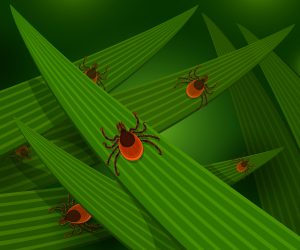
Ticks are usually found outdoors in wooded and grassy areas but are also found in cabins, woodpiles, and caves. They can even be found on your dog after a romp through the grass!
They way ticks find their next meal/host is by detecting the animal’s breath and body odors, by sensing bod heat, moisture, and vibrations. They wait for a host by resting on the tips of grasses and shrubs along well traveled paths. Since they can’t fly or jump, they rest on the tips of grasses or shrubs in a position known as “questing/ From there the ticks latch on to its host.
How ticks spread disease
Some ticks will attach quickly, and others will wander, looking for places like the ear, or other areas where the skin is thinner.
- Depending on the tick species and its stage of life, preparing to feed can take from 10 minutes to 2 hours. When the tick finds a feeding spot, it grasps the skin and cuts into the surface.
- The tick then inserts its feeding tube. Many species also secrete a cement-like substance that keeps them attached during the meal. The feeding tube can have barbs which help keep the tick in place.
- Ticks also can secrete small amounts of saliva with anesthetic properties so that the animal or person can’t feel that the tick has attached itself. If the tick is in a sheltered spot, it can go unnoticed.
- A tick will suck the blood slowly for several days. If the host animal has a bloodborne infection, the tick will ingest the pathogens with the blood.
Many ticks go through life cycles that can span 3 years and go between different hosts. In this way they can widely spread disease between hosts.
Common tickborne diseases
Ticks can be infected with bacteria, viruses or parasites. Some of the most common tick-borne diseases in the United States include: Lyme disease, babesiosis, ehrlichiosis, Rocky Mountain Spotted Fever, anaplasmosis, Southern Tick-Associated Rash Illness, Tick-Borne Relapsing Fever, and tularemia. Other tick-borne diseases in the United States include: Colorado tick fever, Powassan encephalitis, and Q fever.
Lyme disease is probably the most well known tickborne disease, however there are several other diseases that ticks carry. For instance, the Lone Star tick can carry Heartland virus which can cause severe illness and even death. The Lone Star tick also can cause an allergic reaction called alpha gal syndrome which causes the host to become allergic to red meat.
A new CDC study discovered the blacklegged tick, which is found in the eastern half of the US can spread seven diseases. They are listed below:
| Pathogen |
Disease |
States |
Counties |
| Borrelia burgdorferi |
Lyme disease |
30* |
476 |
| Borrelia miyamotoi |
Hard tick relapsing fever |
25* |
271 |
| Anaplasma phagocytophilum |
Anaplasmosis |
24* |
291 |
| Babesia microti |
Babesiosis |
17 |
154 |
| Powassan virus |
Powassan virus disease |
6 |
55 |
| Borrelia mayonii |
Lyme disease |
4 |
12 |
| Ehrlichia muris eauclairensis |
Ehrlichiosis |
2 |
11 |
Lyme Disease
The most widely known and reported tickborne disease that is most likey very underreported is Lyme disease:- approximately 30,000 cases are reported every year, however insurance statistics put the yearly total at more than 476,000 cases that are diagnosed and treated every year.
Lyme disease can be treated effectively with a single dose of doxycycline if diagnosed soon after bitten. (Note that the Jase case is equipped with doxycycline as one of the five antibiotics) If treatment is delayed, Lyme disease can manifest in many debilitating diseases, such as arthritis, facial paralysis, rashes, fevers.
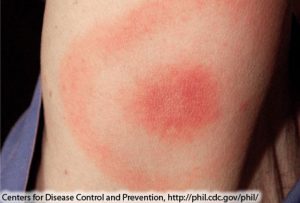
Initial rash of Lyme disease (Erythema Migrans rash) is caused by the bacterium Borrelia burgdorferi and rarely, Borrelia mayonii.
Below is an image of early stages of the rash. More information can be found on the CDC website under Lyme disease.
Prevention of Tick-Borne diseases
There are so many different diseases that are caried by ticks, that many health practitioners aren’t aware of all the diseases and symptoms. It would be almost impossible for your health practitioner to know each tick exposure and associated diseases. It is the responsibility of the individual to know the common ticks and diseases they may carry when venturing outdoors. The CDC has an extensive website on disease causing ticks.
Prevention- avoid exposure: taken directly from the CDC website:
Tick exposure can occur year-round, but ticks are most active during warmer months (April-September). Know which ticks are most common in your area.
Before You Go Outdoors
Know where to expect ticks. Ticks live in grassy, brushy, or wooded areas, or even on animals. Spending time outside walking your dog, camping, gardening, or hunting could bring you in close contact with ticks. Many people get ticks in their own yard or neighborhood.
Treat clothing and gear with products containing 0.5% permethrin. Permethrin can be used to treat boots, clothing and camping gear and remain protective through several washings. Alternatively, you can buy permethrin-treated clothing and gear.
Use Environmental Protection Agency (EPA)-registered insect repellents containing DEET, picaridin, IR3535, Oil of Lemon Eucalyptus (OLE), para-menthane-diol (PMD), or 2-undecanone. EPA’s helpful search tool can help you find the product that best suits your needs. Always follow product instructions. Do not use products containing OLE or PMD on children under 3 years old.
Avoid Contact with Ticks
Avoid hiking through wooded and brushy areas with high grass and leaf litter. Walk in the center of trails. Keep lawns mowed, weeds to a minimum in the yard.
After You Come Indoors
Check your clothing for ticks. Ticks may be carried into the house on clothing. Any ticks that are found should be removed. Tumble dry clothes in a dryer on high heat for 10 minutes to kill ticks on dry clothing after you come indoors. If the clothes are damp, additional time may be needed. If the clothes require washing first, hot water is recommended. Cold and medium temperature water will not kill ticks.
Examine gear and pets. Ticks can ride into the home on clothing and pets, then attach to a person later, so carefully examine pets, coats, and daypacks. Consider tick preventative medication or collars for your pets.
Shower soon after being outdoors. Showering within two hours of coming indoors has been shown to reduce your risk of getting Lyme disease and may be effective in reducing the risk of other tickborne diseases. Showering may help wash off unattached ticks and it is a good opportunity to do a tick check.
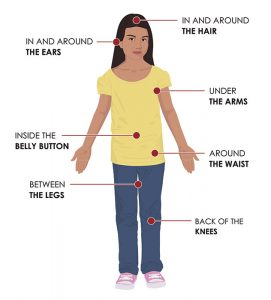
Check your body for ticks after being outdoors. Conduct a full body check upon return from potentially tick-infested areas, including your own backyard. Use a hand-held or full-length mirror to view all parts of your body. Check these parts of your body and your child’s body for ticks:
- Under the arms
- In and around the ears
- Inside belly button
- Back of the knees
- In and around the hair
- Between the legs
- Around the waist
Create a tick safe zone to reduce or eliminate ticks in your backyard.
From the CDC website:
The Connecticut Agricultural Experiment Station has developed a comprehensive Tick Management Handbook for preventing tick bites. Here are some simple landscaping techniques that can help reduce blacklegged tick populations:
- Remove leaf litter.
- Clear tall grasses and brush around homes and at the edge of lawns.
- Place a 3-ft wide barrier of wood chips or gravel between lawns and wooded areas to restrict tick migration into recreational areas.
- Mow the lawn frequently.
- Stack wood neatly and in a dry area (discourages rodents).
- Keep playground equipment, decks, and patios away from yard edges and trees.
- Discourage unwelcome animals (such as deer, raccoons, and stray dogs) from entering your yard by constructing fences.
- Remove old furniture, mattresses, or trash from the yard that may give ticks a place to hide.
Essential oils as tick repellant
A word about essential oils and their efficacy in acting as a tick repellent:
There are many claims about essential oils used as an effective tick repellant on the internet. Some point to studies done on selected ticks and make claims that these oils are just as effective as DEET. Cedarwood, cinnamon, lemon eucalyptus, oregano oil(this oil was the most effective) and other oils have demonstrated a level of repellant qualities, however they must be applied ever few hours and are not as effective as DEET. . Most of these claims are somewhat correct, however they are not as effective as DEET.
The product BioUD with the active ingredient 2-undecanone found in the wild tomato was found is as effective as DEET in repelling ticks. This product is no longer available.
How to remove a tick
The following is directly from the CDC website on tick removal, they have a “tick bot” that can guide you through the process of safely removing the tick if you should happen to find one embedded in your skin.
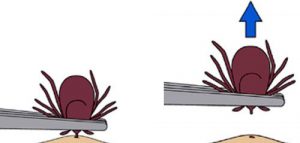
Use clean, fine-tipped tweezers to grasp the tick as close to the skin’s surface as possible.
Pull upward with steady, even pressure. Don’t twist or jerk the tick; this can cause the mouthparts to break off and remain in the skin. If this happens, remove the mouthparts with tweezers. If you cannot remove the mouth easily with tweezers, leave it alone and let the skin heal.
After removing the tick, thoroughly clean the bite area and your hands with rubbing alcohol or soap and water.
Never crush a tick with your fingers. Dispose of a live tick by
- Putting it in alcohol,
- Placing it in a sealed bag/container,
- Wrapping it tightly in tape, or
- Flushing it down the toilet.
Follow-up
If you develop a rash or fever within several weeks of removing a tick, see your doctor:
- Tell the doctor about your recent tick bite,
- When the bite occurred, and
- Where you most likely acquired the tick.
- Avoid folklore remedies such as “painting” the tick with nail polish or petroleum jelly, or using heat to make the tick detach from the skin. Your goal is to remove the tick as quickly as possible–not waiting for it to detach.
