
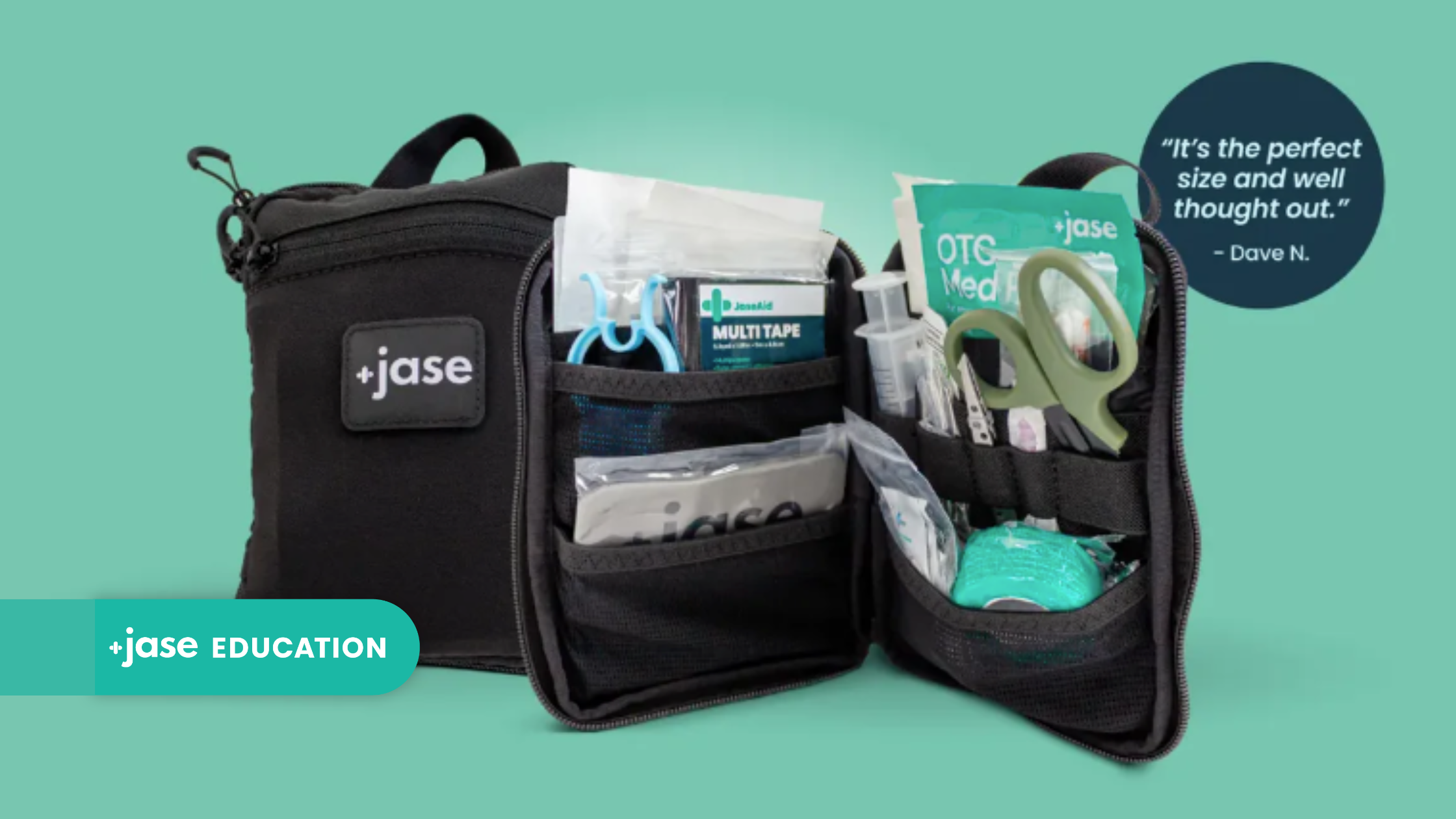
First Aid Kit Essentials: What Every Home and Family Needs
The First Aid Guidelines Changed in 2024. Your Kit Probably Didn’t.
By Aaron Asay, PA-C, DMSc
This is not a shopping trip. It’s a fifteen-minute audit of what’s already in the box under your sink — and for most of it, the action is taking things out.
In 2024, the American Heart Association and the American Red Cross released the first full revision of the first aid guidelines since 2010. Fourteen years. Most of the checklists people find online still reflect the 2010 standard. Most of the kits sold in retail stores still ship with products the updated guidelines no longer recommend. And most households have no idea any of this changed.
There are four things worth knowing.
One: The aspirin dose is not what you think
Here’s the scenario I want you to sit with: someone’s chest hurts at the kitchen table. You’ve heard your whole life that you give them aspirin. So you go to the cabinet and grab the baby aspirin bottle, because that’s the heart one.
The dose in the 2024 guidelines is 162 to 325 milligrams, chewed, not swallowed whole.
That is two to four of those 81mg tablets. For a suspected heart attack, the instruction is: call 911 first. Then give aspirin — 162 to 325mg, chewed. The chewing matters because it speeds absorption. Swallowing a single 81mg tablet whole is not the right action, and plenty of first aid kits don’t contain enough tablets even if you know the correct dose.
Check what’s in your kit. Know the dose before you’re in the scenario.
Two: Hydrogen peroxide and rubbing alcohol don’t belong on open wounds
Both are still packaged in retail first aid kits. Both have been in medicine cabinets for generations because that’s what our parents used. The evidence has moved past them.
Hydrogen peroxide and isopropyl alcohol are cytotoxic to the cells involved in wound healing. Applied to an open wound, they damage the tissue trying to repair itself. The 2024 guidelines are explicit: clean an open wound with soap and clean running water. That’s it. If you have peroxide in your kit, take it out. It doesn’t belong on a cut.
Three: A commercial tourniquet is now on the Red Cross minimum kit list
For decades, tourniquets occupied an awkward space in first aid training — associated with military and trauma medicine, not household preparedness. That positioning has shifted. The 2024 guidelines add a manufactured tourniquet to the minimum contents for a standard first aid kit.
The key word is manufactured. Improvised tourniquets — belts, rope, shoelaces — are inconsistently effective and can cause additional injury. A commercial tourniquet (CAT, SOFT-T Wide, or similar) is designed specifically for the purpose and applies the right pressure reliably.
For life-threatening extremity bleeding, the protocol is: call 911, then apply the tourniquet two to three inches above the wound, tighten until bleeding stops, note the time. Don’t remove it. The emergency services take it from there.
Four: Naloxone — it’s over the counter now, and it’s not on the kit list
In 2023, naloxone (Narcan) became available over the counter in the United States. The 2024 first aid guidelines don’t add it to the minimum kit contents — but they acknowledge it exists, and the decision of whether to include it is a household-level judgment call.
Here’s the calculus: if your household includes someone who takes opioid medications — a post-surgical prescription, a chronic pain medication, a substance use disorder treatment — the presence of naloxone is worth thinking about. It reverses opioid overdose. It has no effect if opioids are not involved. The risk of having it in an unnecessary situation is essentially zero.
For opioid overdose: call 911 first. Then administer naloxone — nasal spray, one dose, wait two to three minutes. If no response, a second dose. The emergency services take it from there.
If you’re looking at this as a household decision: the argument for including naloxone is not that your family member will overdose. It’s that neighbors, guests, or strangers in a public setting might, and you’re equipped to respond in the minutes before EMS arrives.
The prescription layer
A first aid kit handles what happens to your body from the outside: cuts, burns, bleeding, sudden cardiac events. It holds nothing for the conditions your family takes medication for, and it can’t cover the acute bacterial infections that happen during the same stretch of time when your urgent care is closed and your doctor isn’t answering.
That layer is the JaseCase — common acute bacterial infections, prescribed by a licensed provider who reviews every request before writing a prescription. Not a first aid kit. Not a replacement for your doctor. The part of medical preparedness that first aid training was never designed to address.
To learn more about what the JaseCase covers, visit Jase.com
The audit
Open the box. Check the expiration dates — most sealed items have a two to five year shelf life, and a kit that was put together in 2018 and never opened has several items that need replacing.
Remove the peroxide. Check the aspirin count (you want enough for two to four tablets of 162-325mg). Confirm there’s a manufactured tourniquet if you want to meet the current Red Cross minimum. Decide about naloxone.
Fifteen minutes. Most of it taking things out and replacing what’s expired. That’s the audit
Aaron Asay, PA-C, DMSc, is a disaster medicine practitioner working with the Jase Medical Response team. This post is for informational purposes only and does not constitute medical advice. In a suspected cardiac or overdose emergency, call 911 immediately.*
Lifesaving Solutions
Recent Posts
Keeping you informed and safe.
For Clinicians | Burn First Aid Without Running Water
For Clinicians | Burn First Aid Without Running Water By Dr. Jamie Wilkey, PharmD, Director of Clinical EducationMedically reviewed and edited by Aaron Asay, PA-C, DMSc, FIBODM, FAWM Every burn first-aid guide starts the same way: cool it under running water. That's...

What to Do If You’re Bitten by a Snake?
What to Do If You're Bitten by a Snake: Forget What the Movies Taught You By the Jase Medical Team If you're bitten by a venomous snake, forget almost everything the movies taught you about snakebite first aid. Don't cut an X over the fang marks. Don't suck out the...

For Clinicians | Should You Suck Out Snake Venom?
For Clinicians | Should You Suck Out Snake Venom? The Snakebite Myths Your Patients Still Believe By Dr. Jamie Wilkey, PharmD, Director of Clinical EducationMedically reviewed and edited by Aaron Asay, PA-C, DMSc, FIBODM, FAWM I really love gathering my little boys...

How to Rehydrate Someone Properly When There Is No IV
How to Rehydrate Someone Properly When There Is No IV By the Jase Medical Team When someone is losing fluid from vomiting or diarrhea, rehydration isn't simply a matter of getting them to drink something. The type of fluid matters. The amount matters. And especially...