
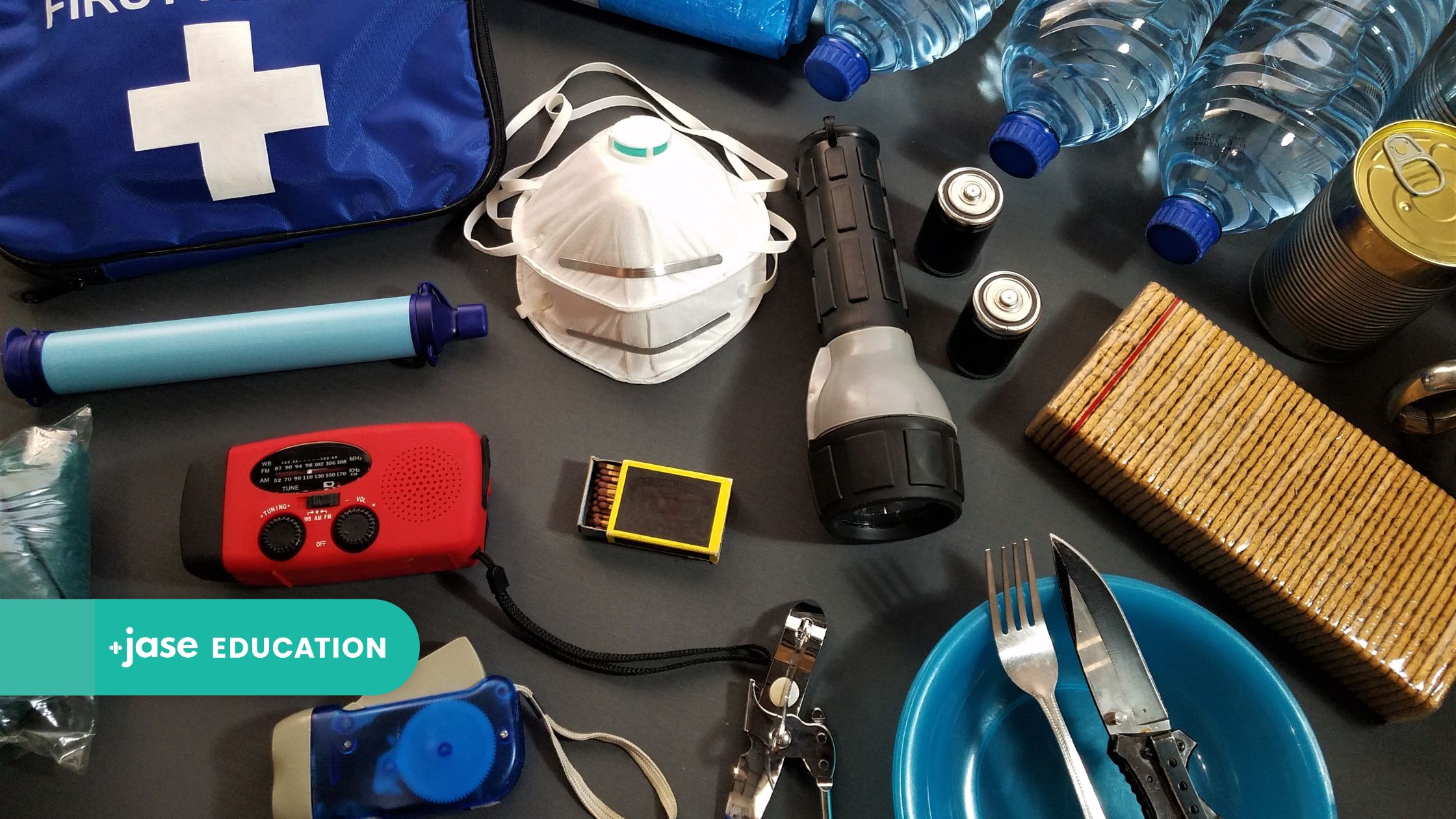
Your Medicine Cabinet IS Your Emergency Plan
The Family Medical Plan Most Emergency Kits Miss
By Aaron Asay, PA-C, DMSc — Executive Director, JaseResponse
Here is a scenario I’ve watched play out in disaster response more times than I can count.
A family gets an evacuation order. They’re moving fast — two hours to get out before the roads close. They grab what they can: documents, the go-bag, whatever medications are visible on the counter. They end up at a relative’s house four counties away. Three days in, someone realizes they grabbed a four-day supply of a blood pressure medication that can’t be easily refilled, and the only pharmacy still operating in the area ran out of common prescriptions two days ago.
That scenario is not unusual. After Hurricane Katrina, researchers tracked roughly 18,000 evacuees who had relocated to San Antonio. Federal disaster relief teams supplied 9% of all chronic care medications dispensed to that population. Retail pharmacies — stores operating outside the normal clinical system, in the middle of a regional disaster — covered 73%. The federal Emergency Prescription Assistance Program exists precisely because the systems we expect to function during an emergency usually don’t.
The lesson isn’t that retail pharmacies will always be there. It’s the inverse: your own medicine cabinet — what you’ve already got on hand before anything happens — is the primary line of defense. Federal caches and disaster formularies are backstops. They are not plans.
Layer One: The Chronic Supply
The first thing I walk through with every family I work with isn’t antibiotics or emergency medications. It’s their maintenance prescriptions.
A 90-day supply of every medication the household can’t go without, paired with a written list that any pharmacist can act on, is the foundation of everything else. That list should include the drug name, dose, prescriber, and pharmacy — clear enough that an emergency pharmacist at an unfamiliar location can act without tracking down your regular provider. If your family is managing cardiovascular disease, insulin-dependent diabetes, or any condition with daily medication requirements, this is the conversation to have with your care team before something forces it.
There’s also a piece of this that most people have never been told: during a governor’s declared emergency, pharmacists in most states have authority to dispense Schedule III through V medications without a new prescription, typically up to 30 days. That covers benzodiazepines, certain pain medications, and many medications that commonly run short when a region’s normal clinical infrastructure is disrupted. Knowing this exists — and knowing where the authority ends — matters.
Where it ends is Schedule II. Stimulants and most opioids don’t have a clean emergency dispensing pathway. A disaster declaration doesn’t automatically authorize a pharmacist to dispense them; it takes a specific DEA waiver, and those are inconsistent. Knowing where the cliff is matters more than pretending it doesn’t exist.
Layer Two: The Contingency Layer
The chronic supply gets you through what you already take. The contingency layer covers what you don’t have yet — the new problem that develops after the evacuation order has already gone out.
A UTI doesn’t wait for a hurricane to end. A dental abscess that starts Thursday night doesn’t care that urgent care reopens Monday. Skin infections, ear infections, respiratory infections — these happen at a steady baseline rate in normal times, and they don’t slow down when a region’s healthcare infrastructure does.
This is where most families are genuinely underprepared — not for lack of effort, but because the medications they’d need are only accessible through a physician’s prescription, and most people have never had that conversation outside a clinical encounter.
What Jase Response exists to do is have that conversation before the emergency. A physician-prescribed contingency layer — antibiotics for clearly defined conditions, with clinical guidance on when and how to use them — means that when the pharmacy is closed and the urgent care is unavailable and the symptom started two hours ago, you’re not relying on a Google search.
What Preparation Actually Looks Like
I’ve spent 25 years in emergency response. The families who come through disruptions best aren’t the ones with the biggest stockpiles. They’re the ones who took specific, deliberate action before anything happened — and who know exactly what they have, where it is, and what it covers.
The structure is the same regardless of circumstance: know your chronic supply, build your contingency layer, and understand where the edges are. The goal isn’t to replace your care team. It’s to give yourself something to work with in the gap between when a problem starts and when your care team is actually reachable.
If you want to build that second layer with clinical oversight from a team that takes this work seriously, Jase Response is where we do it.
👉 Support Jase Response: givebutter.com/aQ8pUO
—
*Aaron Asay, PA-C, DMSc, is a physician assistant with 25+ years of frontline emergency response experience, former firefighter and paramedic, military disaster rescue officer, and founder of Jase Response.*
Lifesaving Solutions
Recent Posts
Keeping you informed and safe.
For Clinicians | Diabetes Sick-Day Rules in a Disaster
For Clinicians | Diabetes Sick-Day Rules in a Disaster By Dr. Jamie Wilkey, PharmD, Director of Clinical EducationMedically reviewed and edited by Kristen Carpenter, PA-C Diabetes is already hard to manage. Sick days just make everything worse. And a sick day in a...
Burns in a Blackout
Burns in a Blackout: First Aid When the Tap Doesn't Run By the Jase Medical Team Almost every burn first aid guide starts with the same instruction: cool the burn under clean, cool running water. But what happens when the tap doesn't run? For households that rely on a...
For Clinicians | Burn First Aid Without Running Water
For Clinicians | Burn First Aid Without Running Water By Dr. Jamie Wilkey, PharmD, Director of Clinical EducationMedically reviewed and edited by Aaron Asay, PA-C, DMSc, FIBODM, FAWM Every burn first-aid guide starts the same way: cool it under running water. That's...

What to Do If You’re Bitten by a Snake?
What to Do If You're Bitten by a Snake: Forget What the Movies Taught You By the Jase Medical Team If you're bitten by a venomous snake, forget almost everything the movies taught you about snakebite first aid. Don't cut an X over the fang marks. Don't suck out the...