
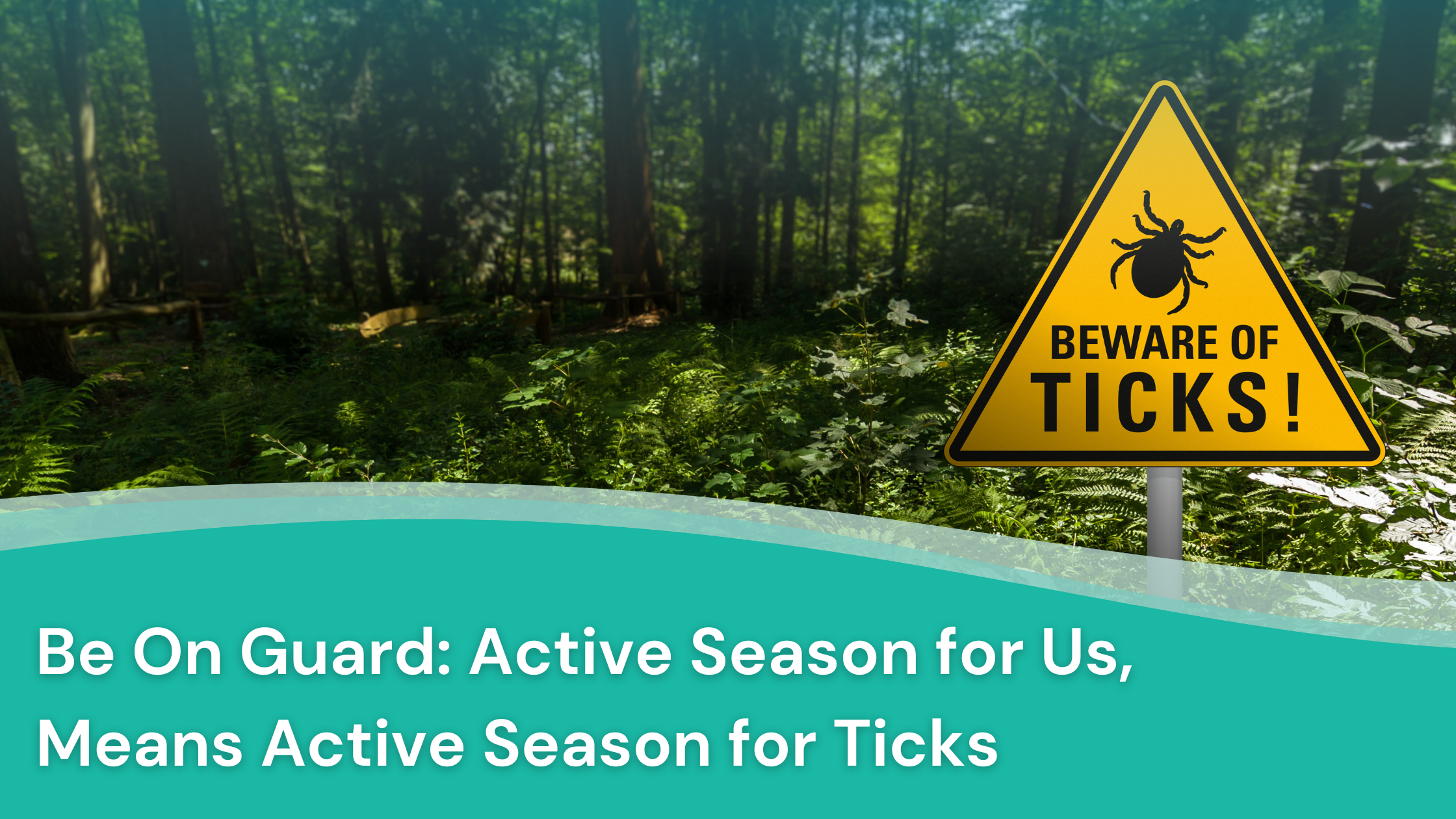
Don’t get ticked off: Tips for how to conquer those tiny terrors.
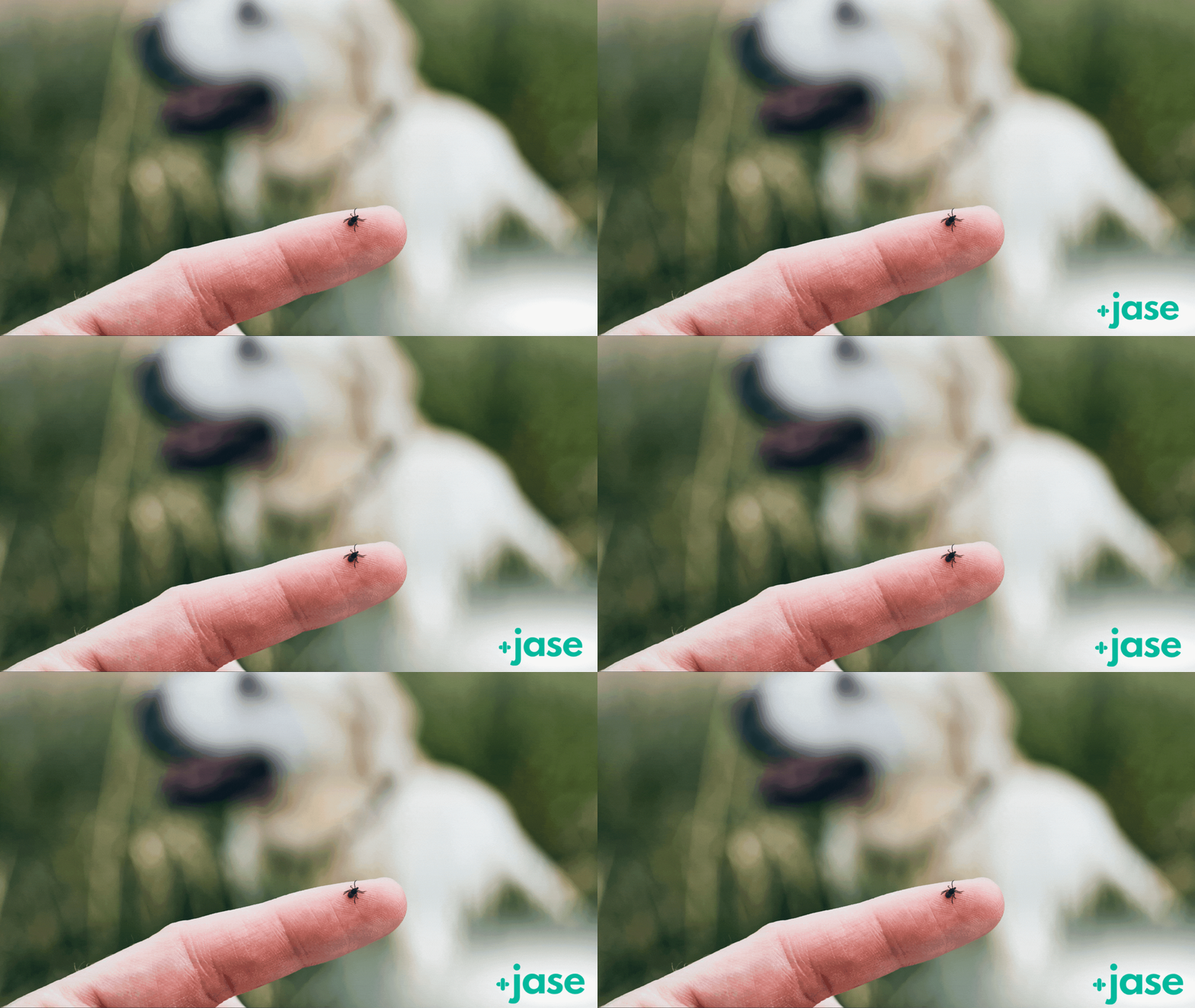
Unfortunately we humans aren’t the only ones who enjoy the nice weather this time of year.
Ticks usually go dormant for the winter (unless they have found a warm, hospitable host), so we tend to let our guard down when it’s cooler, knowing that they aren’t as much of a concern. But that changes as soon as the weather does. They are most active from April to September, just when we’ll be outside enjoying the warmer weather. It’s feeding time for the ticks, and we’re on the menu.
Ixodida. That’s the scientific name for ticks. But you don’t need to know that to know how much you hate the little buggers. They are almost everywhere we go outdoors, but we often don’t know they are there until we find one on us – after we’ve been bitten.
| In the last dataset gathered (2017-2019) nearly 50,000 tick bites per year result in emergency room visits |
Let’s explore some ways to mitigate bites, and treat them if they do happen:
Start with prevention:
- Dress Smart: Wear long pants and sleeves, tucking pants into socks. Light-colored clothing makes spotting ticks easier.
- Tick Habitats: Avoid tall grass, brush, and leaf litter where ticks lurk. Stick to cleared paths when hiking.
- Repellent Power: Use an EPA-registered insect repellent containing at least 20% DEET on exposed skin (follow label instructions carefully). Consider permethrin for clothing (not directly on skin).
- Post-Adventure Check: After coming indoors, do a thorough full-body tick check, including in and around the hair, armpits, groin, and behind the knees.
Tick Removal 101:
If you find a tick attached:
- Don’t Panic: Use fine-tipped tweezers to grasp the tick firmly near its head (avoid squeezing the body). Pull straight up with steady, gentle pressure.
- Clean Up: Disinfect the bite area and your tweezers with rubbing alcohol or soap and water.
- Save the Evidence: Place the tick in a sealed container (alive or dead) for potential identification if needed.
Important Note: Resist the urge to burn, suffocate, or folk remedies for tick removal. These can irritate the bite and increase infection risk.
Seek medical attention if:
- The tick was attached for more than 24 hours (increases disease transmission risk).
- Part of the tick remains embedded in the skin.
- You experience a rash around the bite or flu-like symptoms within a few weeks.
It’s important to know your risks: Check to see if you live in a region where the Lyme disease carrying ticks are more abundant.
Treatment with Doxycycline:
- Effectiveness: Doxycycline is a first-line antibiotic treatment for Lyme disease, particularly in its early stages.
- Treatment Duration: The typical course of doxycycline for Lyme disease is 10-14 days, although it can be extended for more complex cases.
- Prescription Only: Doxycycline is a prescription medication and should only be taken under a doctor’s supervision.
- Not for Prevention: Doxycycline is for treating established Lyme disease infections, not preventing them after a tick bite.
Lyme disease is the most common vector-borne disease in the U.S. with between 20,000 and 30,000 confirmed cases each year.
Remember, ticks live where we play!
Since ticks are likely to be wherever we’re spending time outdoors, it’s important to be mindful of their presence. But since our adventures often take us to remote places, it’s also important to have the medications you may need with you.
Doxycycline is just one of the 5 included life-save medications that come in every Jase Case – and it’s not only for Lyme disease. Doxy is also used to treat respiratory tract infections, dental infections, skin infections, certain STI’s, malaria, and even certain types of food poisoning.
Give yourself some peace of mind knowing you’re covered for all of the most common infections with a Jase Case.
Lifesaving Medications
Recent Posts
Keeping you informed and safe.

For Clinicians | Pediatric Dosing 101: What Parents Need From You Before They’re Dosing Alone
For Clinicians | Pediatric Dosing 101: What Parents Need From You Before They're Dosing Alone By Dr. Jamie Wilkey, PharmD, Director of Clinical EducationMedically reviewed and edited by Aaron Asay, PA-C, DMSc, FIBODM, FAWM Pharmacy school drills one line into you over...
What is Plague?
What Is Plague? By the Jase Medical Team Plague is back in the headlines, and people are suddenly Googling a disease they may not have thought about since history class. A 28-year-old laboratory worker at an anti-plague research institute in Siberia recently died...
For Clinicians | What Is Plague? One Bacterium, Three Diseases
For Clinicians | What Is Plague? One Bacterium, Three Diseases By Dr. Jamie Wilkey, PharmD, Director of Clinical EducationMedically reviewed and edited by Aaron Asay, PA-C, DMSc, FIBODM, FAWM Well, the plague is back in the news. Reports out of Russia in early October...

Nobody Has Your Medication List, Including Your Doctor and Your Pharmacy
Nobody Has Your Medication List, Including Your Doctor and Your Pharmacy By the Jase Medical Team Most of us assume that somewhere in the healthcare system, there is one correct list of every medication we take. Your primary care doctor has a list. Your pharmacy has a...