
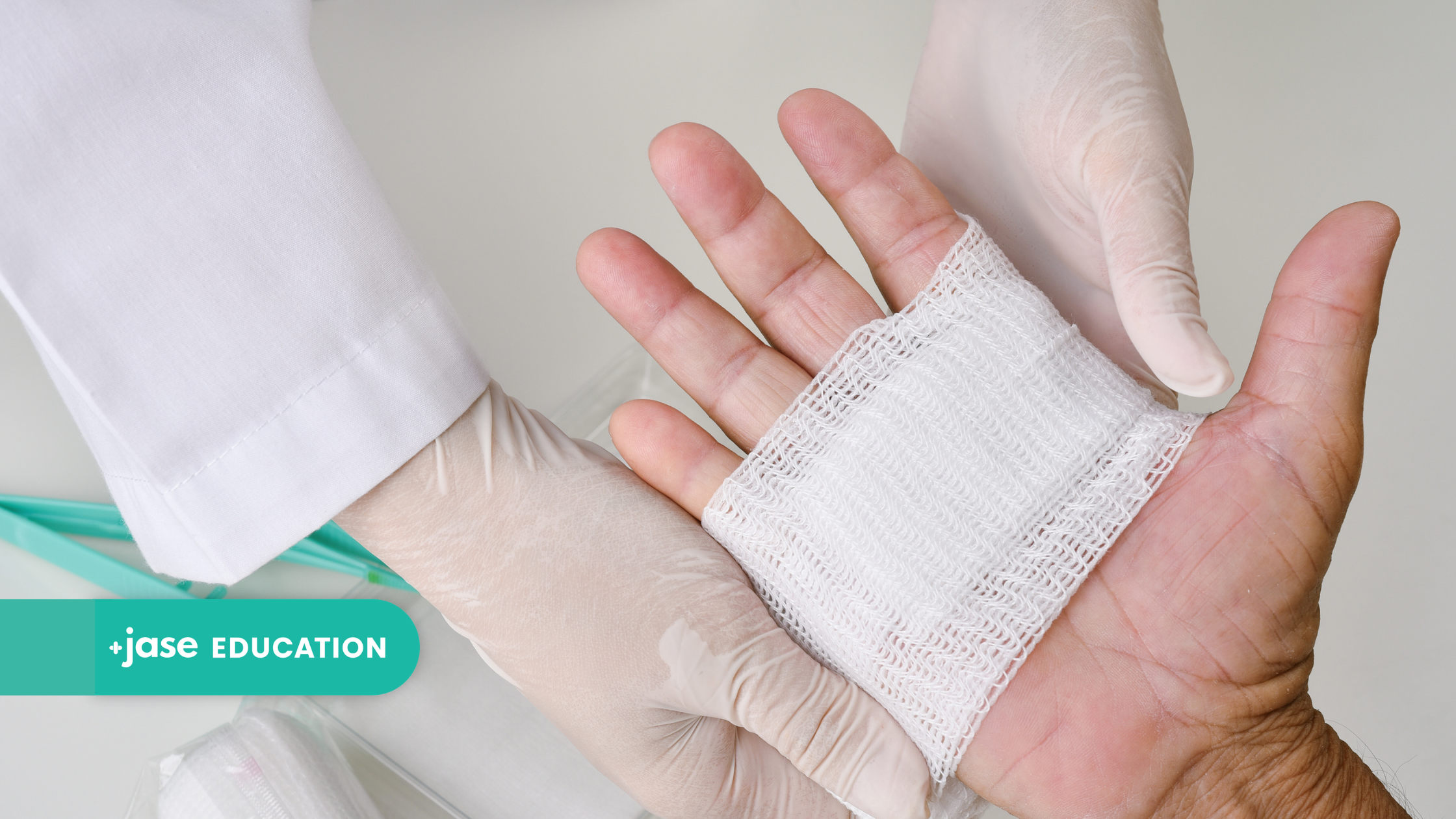
Wound Infection Signs: When to Use Antibiotics and When to See a Doctor
By the Jase Medical Team
It’s day three after you cut your forearm.
Yesterday, the area around the cut was a little pink. Today, it looks angrier. Maybe it feels warmer, too.
So you start wondering: Is my cut infected? Do I need an antibiotic? Or is this just what healing looks like?
The reassuring answer is that some redness, warmth, tenderness, and mild swelling during the first day or two can be part of normal wound healing.
What matters more is what happens next.
If the redness is spreading instead of settling down, the pain or swelling is getting worse, drainage or pus appears, or you begin feeling sick, the picture changes.
But even then, an antibiotic isn’t automatically the solution. Most of what can go wrong with a wound starts with another question:
What kind of problem is this?
Normal Healing vs. Wound Infection: Watch the Direction
A fresh cut triggers inflammation as your body begins repairing damaged tissue. That can make the area immediately surrounding the wound look red, warm, mildly swollen, or tender.
Redness alone doesn’t mean infection.
Instead, watch the trajectory.
A wound that is gradually becoming less painful and irritated is moving in the direction we’d expect from healing. A wound that becomes increasingly red, swollen, warm, or painful after the first couple of days—or develops pus or spreading redness—deserves more attention.
Signs that should prompt you to contact a healthcare professional include:
- Redness that is expanding around the wound
- Increasing warmth, swelling, or pain
- Pus or cloudy drainage
- Fever or feeling increasingly unwell
- Red streaking extending away from the wound
- A wound that is worsening rather than healing
And if symptoms are severe or progressing quickly, don’t wait for a routine appointment.
If There’s an Abscess, an Antibiotic Can’t Drain It
Suppose the problem isn’t simply redness around a cut. Instead, a painful, swollen pocket of pus has formed underneath the skin.
That’s an abscess.
And this is one of the most important limitations of an antibiotic: a pill can’t open and drain a pocket of pus.
Incision and drainage is the primary treatment for many skin abscesses. Depending on the situation, a clinician may prescribe antibiotics in addition to drainage—but antibiotics don’t necessarily replace the procedure.
It’s similar to an infected tooth. Medication may sometimes help control infection or buy time, but it doesn’t perform the procedure that fixes the underlying problem.
No oral antibiotic in any emergency medication kit—including ours—can drain an abscess.
If you have a painful, enlarging lump, significant pus collection, or a wound that appears to need drainage, get it evaluated rather than trying to solve the problem with an antibiotic alone.
Don’t Forget the Tetanus Question
There’s another wound-care question that has nothing to do with antibiotics:
When was your last tetanus shot?
Most people remember “every 10 years,” and that’s correct for routine tetanus vaccination.
But wounds can change the timeline.
For certain dirty or major wounds—including puncture wounds and wounds contaminated with dirt or soil—a booster may be recommended if it has been five or more years since your last tetanus-containing vaccine and you’ve completed the initial vaccine series.
So imagine you’re working in the garden, step on a nail, and realize your last tetanus booster was eight years ago.
You may still think you’re covered because you haven’t reached the familiar 10-year mark.
For that type of wound, however, it’s worth contacting a healthcare professional about whether a booster is due.
Your wound plan isn’t just about infection. Sometimes the most important medication decision is a vaccine, not an antibiotic.
Sometimes an “Infected” Red Leg Isn’t Infected
Here’s another reason not to diagnose a wound infection based on redness alone.
Research suggests that roughly one in three people initially thought to have cellulitis actually have another condition instead.
One common mimic is stasis dermatitis, an inflammatory skin condition associated with circulation problems in the legs. It can cause redness, swelling, warmth, and skin changes that resemble an infection.
Contact dermatitis can cause similar confusion.
That’s particularly relevant if you’ve been applying an over-the-counter antibiotic ointment containing neomycin. Neomycin is a well-known cause of allergic contact dermatitis. The resulting redness, itching, or rash can then look like the original wound is getting worse.
The instinct may be to add more antibiotic ointment to what looks like an infection—when the product itself may be contributing to the irritated skin.
If the picture isn’t clear or the redness continues to worsen, that’s another reason to have a clinician look at it rather than repeatedly treating it yourself.
Diabetes and Circulation Problems Change the Wound Plan
If you have diabetes or peripheral vascular disease, wounds deserve additional attention.
Peripheral vascular disease can reduce blood flow to the affected tissue. That can slow healing and make it harder for the body—and sometimes medications delivered through the bloodstream—to reach the area effectively.
Diabetes can also be associated with neuropathy, which may reduce sensation. A blister, cut, or pressure injury can therefore become more significant before pain alerts you that something is wrong.
If you have one of these conditions, don’t rely solely on pain to tell you how serious a wound is. Check wounds carefully and involve your healthcare team sooner if healing isn’t progressing normally.
When Does a Wound Need Urgent Medical Care?
Some wound problems shouldn’t be managed by waiting to see whether an oral antibiotic works.
Seek prompt medical evaluation for rapidly spreading redness or swelling, significant red streaking, severe or rapidly worsening pain, fever or systemic illness, substantial pus or a suspected abscess, or a wound that is becoming significantly worse.
Deep wounds, significant punctures, animal or human bites, wounds involving important structures, and wounds heavily contaminated with soil or floodwater may also need professional evaluation.
And if the skin is rapidly changing color, pain seems dramatically out of proportion to what the wound looks like, or you become severely ill, seek emergency care.
Rare but aggressive soft-tissue infections can require IV medications and immediate surgery. An oral antibiotic at home is not a substitute for that level of treatment.
So When Do Antibiotics Actually Fit?
Antibiotics can have an important role when a clinician determines that a bacterial wound or skin infection is present and that antibiotic treatment is appropriate.
One example is spreading cellulitis associated with a wound.
But even there, the medication is only one part of the clinical picture. The wound may need cleaning, drainage, evaluation for a foreign object, a tetanus booster, or another intervention depending on what happened and what the clinician sees.
At Jase Medical, that distinction matters.
JaseCase includes physician-prescribed contingency medications for certain common bacterial infections when normal healthcare access is disrupted. Every request is reviewed by a licensed medical provider, who determines whether the medications are appropriate and writes the prescriptions for the individual.
If you develop signs of a wound infection, try to reach an appropriate healthcare provider first. Contingency medication is for situations where normal access is genuinely unavailable—not a reason to delay care for a wound that needs a procedure or urgent evaluation.
Know What the Pill Can’t Do
When a wound starts looking worse on day three, it’s tempting to reduce the decision to:
Antibiotic or no antibiotic?
A better question is:
What does this wound actually need?
Sometimes it’s routine wound care and more time. Sometimes it’s an antibiotic. Sometimes it’s drainage. Sometimes it’s a tetanus booster. Sometimes the redness isn’t an infection at all.
And occasionally, the right answer is to stop looking in the medicine cabinet and get to medical care.
At Jase Medical, we’re a family team of medical doctors, PAs, and pharmacists focused on appropriate medical preparation. We’d rather tell you what a medication can’t do than let you discover its limits when an infection is getting worse.
Because being medically prepared isn’t simply having the right prescription.
It’s knowing when the prescription is—and isn’t—the right tool.
The Jase Medical Team is a family team of medical doctors, PAs, and pharmacists focused on appropriate medical preparation: clinically grounded readiness that complements, rather than replaces, primary care and the healthcare professionals you already trust.
This article was prepared by the Jase Medical content team for informational purposes only and does not constitute medical advice. Prescription requirements, emergency dispensing rules, insurance coverage, and controlled-substance regulations vary by medication, jurisdiction, and individual circumstances. Consult a licensed healthcare provider or pharmacist regarding your specific medications.
Lifesaving Solutions
Recent Posts
Keeping you informed and safe.
Why Patients Run Out of Meds
Why Patients Run Out of Meds: Ordinary Disruptions By the Jase Medical Team Most people who unexpectedly lose access to a prescription didn't lose it in a hurricane. A bottle gets left in a hotel room. A suitcase doesn't make the flight. Medication disappears during a...
For Clinicians | Why Patients Run Out of Medication
For Clinicians | Why Patients Run Out of Medication: The Ordinary Disruptions, Not the Disaster By Dr. Jamie Wilkey, PharmD, Director of Clinical EducationMedically reviewed and edited by Kristen Carpenter, PA-C As a pharmacist, I've helped patients keep access to...

The Drug Interactions You Create in an Emergency
The Drug Interactions You Create in an Emergency By the Jase Medical Team Most of the time, you don't have to think very hard about drug interactions. Your doctor has your medication list. Your pharmacy has it too. When a new prescription comes through, software...

For Clinicians | Drug Interactions in a Disaster
For Clinicians | Drug Interactions in a Disaster: The Combinations a Bad Week Creates By Dr. Jamie Wilkey, PharmD, Director of Clinical EducationMedically reviewed and edited by Kristen Carpenter, PA-C When we think about prescription medicine in a disaster, we most...