
Vitamin E is a popular over the counter vitamin supplement that has many uses. But just like any medication and supplement, there are a few things you should be aware of before supplementing.
Vitamin E was discovered in 1922 by Bishop and Evans. However, it wasn’t until the 1940s when the use of vitamin E in the role of nutrition in premature infants was investigated. This led to examining intestinal absorption of vitamin E in premature infants to prevent intracranial hemorrhage, pulmonary oxygen toxicity, hemolysis and more. Since that time, the use of vitamin E in premature infants has helped save many lives.
There are eight different natural forms of vitamin E which can be subdivided into two separate groups: the tocopherols and the tocotrienols. Both are plant based and fat soluble and each of these have four separate analogues. Each analogue has a different potency and effect on health.
Tocopherols are the saturated form of vitamin E and contain the analogues alpha, beta, delta, and gamma. This form of vitamin E is the major source in the U.S. diet.
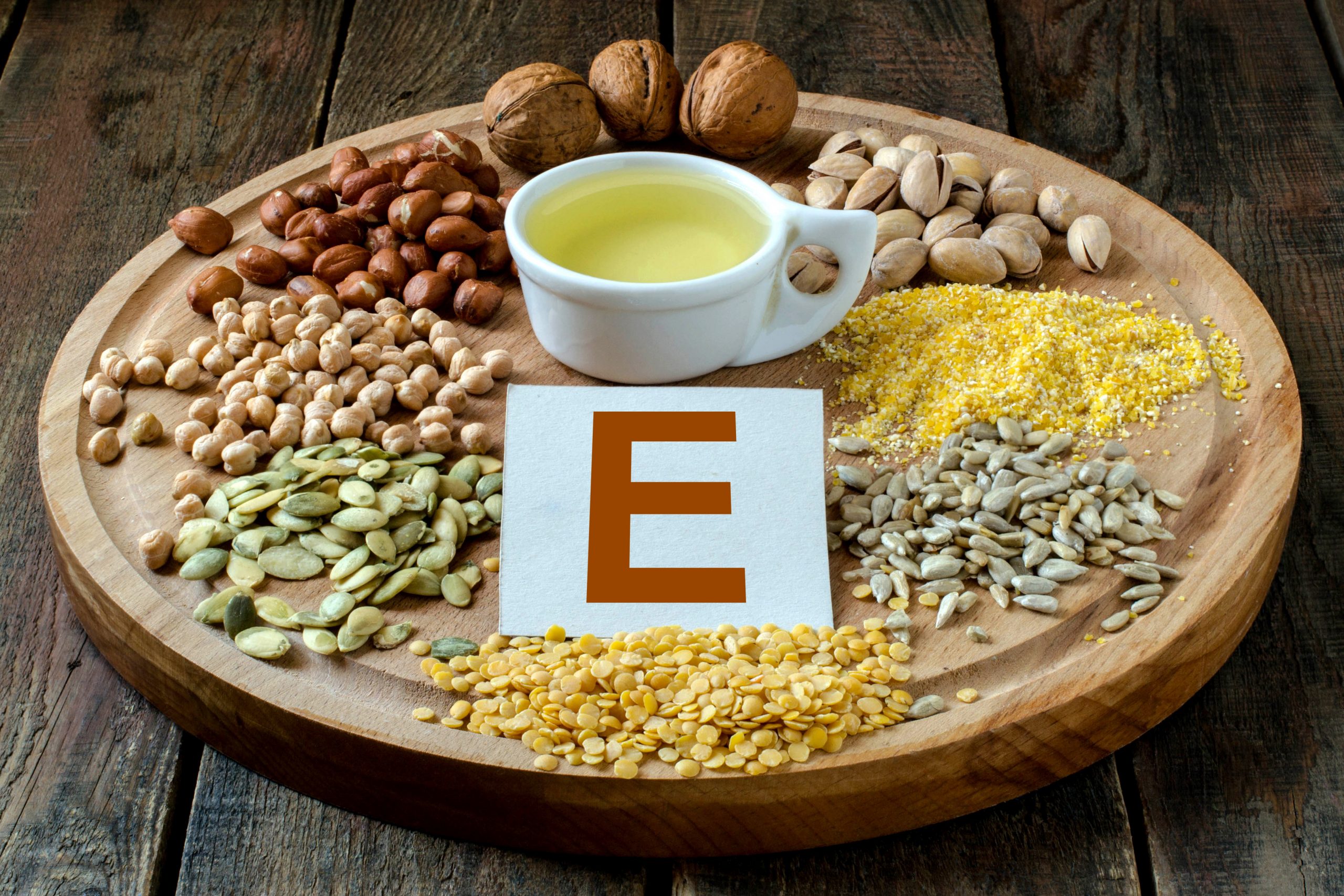
Food sources of tocopherols include oils derived from walnuts, hazelnuts, peanuts, sunflower oil.
Tocotrienols are the unsaturated form of vitamin E and contain same name but different types of analogues- alpha beta, delta and gamma.
Food sources of tocotrienols are palm and rice bran oil, wheat germ, barley, oats, grapefruit seed oil, and annatto oil.
Vitamin E
- Provides immune boost to fight off invading bacteria and viruse.s
- Protects cell damage from oxidative stress from cigarette smoke, air pollution, UV light, and foods that we eat.
- Prevents blood from clotting.
- Helps maintain cell elasticity and widens blood vessels when needed
- Emerging evidence points to the cancer preventing effects of the tocotrienol form of vitamin E.
- In addition, tocotrienol form of vitamin E has more effective anti-inflammatory and downregulation of chronic diseases than tocopherols.
- Stabilized form of vitamin E is used in dermatology for mitigating the effects of UV exposure and inhibiting skin cancer development, atopic dermatitis along with treating yellow nail syndrome.
- Mixed reviews on topical use to help heal scars and post-surgery incisions, and contact dermatitis has been reported with vitamin E used topically.
Synthetic vitamin E
Synthetic forms of vitamin E contain both tocopherol and tocotrienols and include the four analogs of each. However there is evidence to suggest that synthetic E isn’t absorbed by the body as efficiently as natural forms.
How to tell if your vitamin E supplement is synthetic or natural
Most vitamin E supplements are derived from natural sources. The natural (D-α-tocopherol) contains the prefix “D”, the synthetic form (DL-α-tocopherol acetate) contains the prefix “DL”.
Vitamin E deficiency
Vitamin E deficiency is rare; however some causes are:
- Some genetic disorders that can cause malabsorption of dietary fats
- Cystic fibrosis patients have trouble absorbing the fat-soluble vitamins- ADEK
- Malnutrition
- Short-bowel syndrome patients
- Surgical resection
- Mesenteric vascular thrombosis
- Crohn’s disease
- exocrine pancreatic insufficiency
- liver disease
- Cigarette smoking depletes vitamin E
- Impaired balance and coordination
- Muscle weakness
- Retinopathy
Consult with your care provider before supplementing with vitamin E
Vitamin E toxicity occurs by supplementation, not diet alone. Symptoms include excessive bleeding, nausea, vomiting and muscle weakness. If toxicity is suspected, discontinuation of vitamin E and administration of vitamin K may be initiated by your care provider.
Drug interactions and cautions when supplementing with Vitamin E
- Vitamin E inhibits platelet aggregation and can disrupt vitamin K1 clotting. Use with caution when on anticoagulation and antiplatelet medications as there is the potential risk of bleeding when taken together.
- Niacin: vitamin E supplementation can reduce effects of niacin
Medical conditions that may be contraindicated with vitamin E supplementation
- History heart attack or stroke
- Bleeding disorders
- Diabetes
- Vitamin K deficiency
- Retinitis pigmentosa
- Kidney disease
- Anemia
- Liver disease
- Brooke Lounsbury, RN
Medical Content Writer
Lifesaving Medications
Recent Posts
Keeping you informed and safe.
Diabetes Sick-Day Rules in a Disaster
Diabetes Sick-Day Rules in a Disaster By the Jase Medical Team Diabetes sick-day rules are usually written for an ordinary week. You get the flu. Your stomach is upset. You check your blood sugar more often, keep drinking fluids, follow your medication plan, and call...
For Clinicians | Diabetes Sick-Day Rules in a Disaster
For Clinicians | Diabetes Sick-Day Rules in a Disaster By Dr. Jamie Wilkey, PharmD, Director of Clinical EducationMedically reviewed and edited by Kristen Carpenter, PA-C Diabetes is already hard to manage. Sick days just make everything worse. And a sick day in a...

Burns in a Blackout
Burns in a Blackout: First Aid When the Tap Doesn't Run By the Jase Medical Team Almost every burn first aid guide starts with the same instruction: cool the burn under clean, cool running water. But what happens when the tap doesn't run? For households that rely on a...