Why You Can’t Count on the Pharmacy in a Crisis

Why You Can’t Count on the Pharmacy in a Crisis

By Aaron Asay, PA-C, DMSc — Executive Director, JaseResponse

Most of the time, the pharmacy works exactly the way we expect it to.

Your child develops strep throat, the pediatrician sends in amoxicillin, and you pick it up on your way home. You’ve taken the same blood pressure medication for years, and each month your refill is waiting for you. A specialist adjusts a medication, and within a day or two it’s available through your local pharmacy.

Until suddenly, it isn’t.

Maybe it’s October and your child needs amoxicillin suspension, but the pharmacist tells you they don’t have any in stock. Maybe the medication you’ve taken successfully for years is suddenly backordered, and the substitute offered feels unfamiliar. Maybe a family member receives a call from their infusion center explaining that their treatment has been placed “on allocation” and that no one can confidently say when a stable supply will return.

These moments feel frustrating because we’ve grown accustomed to assuming medications will always be available when we need them. But increasingly, these aren’t unusual weeks in healthcare. They are becoming part of the environment patients, pharmacists, and prescribers are practicing inside.

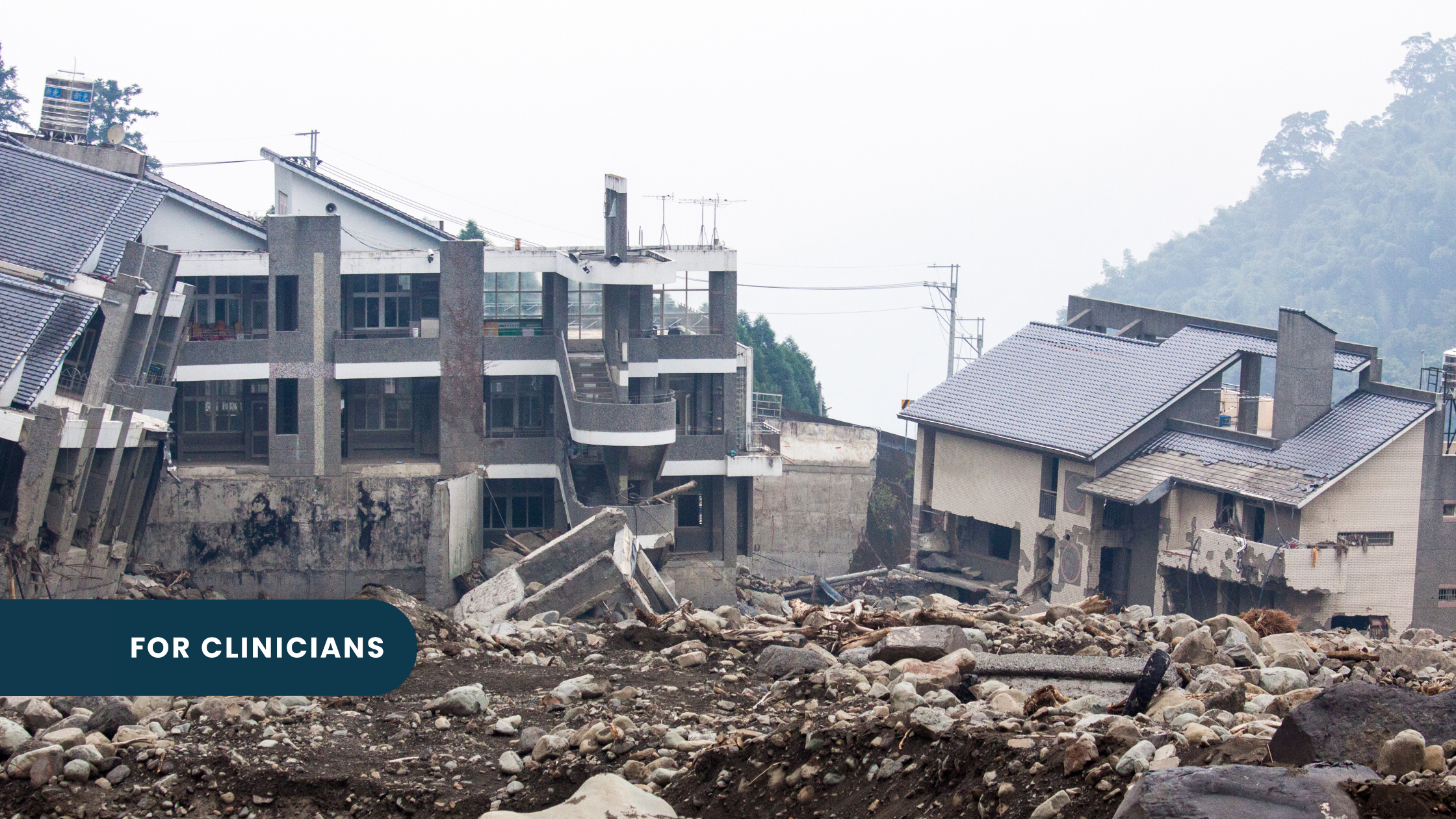
I’ve spent years responding to disasters, humanitarian crises, and disruptions where access to healthcare suddenly changed overnight. During these deployments, I’ve witnessed families struggling to obtain medications they depend on simply because roads were impassable, pharmacies were closed, or healthcare systems were overwhelmed.

What’s been striking over the past several years is recognizing that families no longer need a hurricane, wildfire, or flood to experience similar disruptions. Sometimes, all it takes is a manufacturing issue halfway around the world, a shortage of active pharmaceutical ingredients, transportation bottlenecks, or increased demand for a commonly prescribed medication.

The Healthcare System Itself Has Begun Acknowledging This Reality

In a recent survey published in JAMA Network Open, nearly 90% of primary care physicians reported experiencing drug shortages within the previous six months. Almost half reported watching a patient’s disease progress while trying to navigate workarounds, and more than one in ten reported a major adverse event related to medication shortages.

This doesn’t mean families should panic or begin stockpiling medications.

It does mean we may need to rethink what preparedness looks like.

At Jase, our family team of medical doctors, physician assistants, and pharmacists has spent years working in the space between traditional primary care and the moments when traditional access breaks down. We often describe this as appropriate medical preparation.

For many families, appropriate medical preparation has two practical layers:

The first layer is continuity. It’s maintaining a documented supply of the medications your family already depends on whenever possible. It means keeping a written medication list that includes drug names, dosages, prescribing providers, and pharmacies. It means having enough margin that an unexpected backorder, shipping delay, or shortage doesn’t immediately become a crisis.

Second Layer

The second layer involves contingency planning. Certain conditions repeatedly emerge during disruptions, whether they’re caused by disasters, shortages, or healthcare access challenges. Having contingency antibiotics and emergency medications available, accompanied by clinician-reviewed guidance about when to use them and when to seek additional care, can help families navigate those situations more confidently.

Importantly, none of this replaces a relationship with a primary care physician.

Primary Care Foundation

Primary care remains the foundation of good healthcare. Chronic conditions, ongoing management decisions, preventive care, and new diagnoses belong in the exam room. Appropriate medical preparation simply acknowledges that healthcare increasingly operates within a system that isn’t always predictable. It offers patients and clinicians a thoughtfully built second layer so that the phone call from the pharmacy doesn’t become the only plan a family has.

Resilience

After years of disaster response, one lesson has become increasingly clear to me: resilience isn’t built in the middle of a crisis. It’s built beforehand, through small decisions that create stability when systems become strained.

For some families, that may simply mean asking their provider about extending a maintenance medication supply. For others, it may mean building a more comprehensive preparedness plan. The goal isn’t fear. The goal isn’t stockpiling. The goal is having enough margin that when the routine channel temporarily stops working, your family still has options.

Because whether the disruption comes from a hurricane, a wildfire, a global manufacturing issue, or a medication shortage no one saw coming, preparation creates capacity.

Capacity to stay calm. Capacity to adapt. Capacity to have compassion for others in crisis. 

And ultimately, capacity to care for the people around us while the system catches up.At Jase, that’s what we believe appropriate medical preparation looks like

Lifesaving Solutions

Everyone should be empowered to care for themselves and their loved ones during the unexpected. Check out our recent lifesaving products today.

Recent Posts

Keeping you informed and safe.

Medicine That Would Have Changed History

Medicine That Would Have Changed History

Medicine That Would Have Changed History What If the Founders Had a Medicine Cabinet? By Cayla McGrath America turns 250 this July. Most anniversary articles this summer will celebrate with fireworks, founding documents, and famous quotes from Washington, Jefferson,...

read more
Your Medicine Cabinet IS Your Emergency  Plan

Your Medicine Cabinet IS Your Emergency Plan

Your Medicine Cabinet IS Your Emergency Plan The Family Medical Plan Most Emergency Kits Miss By Aaron Asay, PA-C, DMSc — Executive Director, JaseResponse Here is a scenario I've watched play out in disaster response more times than I can count. A family gets an...

read more

Join Our Newsletter

Our mission is to help you be more medically prepared. Join our newsletter and follow us on social media for health and safety tips each week!

For Clinicians | Drug Shortages 2026

For Clinicians | Drug Shortages 2026

Prescribing Inside a Supply Chain the System Has Admitted Isn’t Built for Disruption

By Dr. Jamie Wilkey, PharmD — Director of Clinical Strategy, Jase
Medically reviewed by Kristen Carpenter, PA-C — Clinical Advisory Board Member

A Dad comes to the counter an hour before the pharmacy closes for the night and asks why his daughter’s strep Rx isn’t ready yet. 

Sorry, sir, that antibiotic for your child isn’t something we have in stock right now so I can’t fill the prescription for you tonight since I don’t have anything on hand I can easily switch it to.”

      “Ah. That’s so frustrating!!!! You’ll get it in tomorrow, right?!”

That’s the question I’ve answered more times than I can count, standing behind a pharmacy counter on a holiday weekend, looking at a parent trying to fill a script for liquid amoxicillin or azithromycin for a kid who is miserable. The shelves behind me look full. They are. They just don’t have what this family needs. The wholesaler order will show up on Monday or Tuesday…. but I won’t know what’s actually in it until I open the tote and see what ABC or Cardinal sent me. Until then, all I can tell her is, “I don’t have it now, and I hope to get it on Monday.” She can’t bank on that either. She knows it.

The next options aren’t great. The pharmacy across town might have it, but her insurance isn’t accepted there, or it’s already closed for the weekend, or it has shorter holiday hours and will be closed before she can get there, or it means setting up a new profile and re-entering all her billing info just for this one prescription. That’s a big old pain. And the kid feels worse by the hour. 

This isn’t a one-off year. It feels monthly. And when there’s no substitute formulation on the shelf, the call goes back to the prescriber for a new drug at a different dose. On a Saturday night, both of us trying to track each other down in time to actually get the kid treated.

Today we’re talking about drug shortages in 2026: what ASPE/HHS now says on the record about a supply chain that isn’t built for disruption, and what a stable practice posture looks like when you’re prescribing inside it.


How bad are drug shortages in 2026, really?

Worse than we realize, and lasting longer than the system has trained us to expect.

Three-quarters of the drug shortages currently active in the US began in 2022 or later¹. The median active shortage now runs 2.55 years across all drugs, and 4.60 years for sterile injectables². This isn’t a temporary interruption you and your patient ride out. It’s a sustained structural condition we’re prescribing inside.

The supply side explains the durability. As of August 2024, only 24% of the API manufacturing facilities producing drugs for the US market sat inside the United States, down from 28% in August 2019³. Most of what we hand a patient is made upstream of a global chain we don’t control, and the chain isn’t getting more local.

In its September 2025 report on supply chain resilience, ASPE/HHS reviewed the methods that exist for measuring whether the medical supply chain is actually prepared, and concluded that “few have been widely adopted or proven scalable across product types or supply chain segments”⁴. HHS doesn’t yet have widely-adopted tools for measuring its own resilience. We’re prescribing inside it anyway.


What’s actively short in summer 2026

In Q1 2026, ASHP counted 223 active national drug shortages, the second consecutive quarter the count has risen⁵. The mix isn’t the headlines you might remember.

ADHD stimulants: amphetamine mixed salts (IR and XR), lisdexamfetamine, and methylphenidate ER are in their fourth year of active shortage. Specific strengths of amphetamine XR had release dates as recently as mid-May and early-June 2026.

Sterile injectable chemotherapy: vinblastine, methotrexate, and cisplatin are all currently short. Vinblastine is the most-shorted oncology drug, reported in shortage at 57% of surveyed centers⁶.

Injectable opioids: morphine sulfate (on the FDA shortage list since 2017) and fentanyl citrate (since 2012) remain chronically short. Acute pain, surgical anesthesia, palliative care.

Estradiol and progesterone: added to the shortage list in January and February 2026. Demand is up; manufacturing capacity hasn’t caught up.


88% of PCPs hit a shortage in the past six months

Pharmacy school, medical school, PA school: all of us trained inside a system where medication stock was reasonably predictable. That system isn’t real life these days. What replaced it is a fragmented, partly-imported, partly-allocated, partly-rationed pipeline that none of us were taught to prescribe inside. The training assumed reliability. The job no longer offers it.

And the data has caught up to what we already knew. In a JAMA Network Open survey published January 7, 2026, 88% of primary care physicians (795 of 902 surveyed) reported experiencing a drug shortage in the prior six months. Eighty-seven percent of those PCPs reported quality-of-care changes tied directly to the shortage. Forty-nine percent watched a patient’s disease progress while they were trying to find a workaround. Thirteen percent had a patient hit a major adverse event7. That isn’t a hypothetical risk profile. That’s the clinical environment we’re working in right now.

The 2022-2023 amoxicillin shortage is the clean case. After the FDA shortage declaration, the odds of a pediatric acute otitis media patient being prescribed amoxicillin dropped by 91%. Amoxicillin-clavulanate and cefdinir prescriptions rose 7-fold and 9-fold8. The shortage didn’t just delay care; it shifted the entire prescribing pattern for the most common pediatric bacterial infection toward broader-spectrum, second-line antibiotics. The stewardship cost of that shift is real, and nobody planned for it.

This is what practicing inside a structurally unreliable supply chain looks like, right now.


What stable practice posture looks like in 2026

Stable practice posture inside this environment has three concrete components. Together they hold when the routine channel doesn’t.

  1. Chronic supply, patient-held: the patient holds an extended physical supply of their actual maintenance medications, with a written list they and any covering provider can read. Ninety days, where insurance allows. Longer where it doesn’t, by self-pay or workaround. The point is the patient has the medication in hand before the routine channel breaks, not after.
  1. Contingency layer: for shortage-prone categories like antibiotics and emergency medications, the patient holds a prescribed supply with clear guidance on when to use it. The clinical work happens on the front end. The patient isn’t winging it on their own at 11pm.
  1. Documentation and decision criteria: what the patient has, what triggers its use, when to defer back to primary care. The framework is written down. Any provider can read it in thirty seconds.

This is what Jase has been building carefully for more than 5 years: appropriate medical preparation. It complements primary care; it does not replace it. The second layer is there for the gap, not the relationship.


Charting the grey area in public

Appropriate medical preparation is a new clinical category, and we’re building it carefully. Documented criteria, not vibes. If a patient is asking you what to have at home just in case and the conversation is going to take longer than you have, you can refer them to us at Jase.com. We’ll do the clinical work in front, document it, and route them back to you for everything else.

Going forward, we’ll share how we make those calls: what we prescribe and why, where the evidence is solid, and where it’s still being written. Public knowledge gets better when clinicians chart the grey area in public, not when we leave the internet to do it.

The team is family medicine physicians, physician assistants, and pharmacists with field experience in disaster medicine and humanitarian response. The clinical work happens on the front end, so the patient isn’t winging it on their own at 11pm.


Sources

  1. ASHP National Drug Shortages Report, Q4 2025. Released January 2026. https://www.ashp.org/drug-shortages/shortage-resources/drug-shortages-statistics
  2. ASPE/HHS Office of Science and Data Policy. Analysis of Drug Shortages, 2018-2023 (Data Brief). January 10, 2025. https://aspe.hhs.gov/reports/drug-shortages-data-brief
  3. ASPE/HHS Office of Science and Data Policy. Analysis of Drug Shortages, 2018-2023 (Data Brief). January 10, 2025. The 28% (August 2019) baseline references Janet Woodcock, FDA testimony, “Safeguarding Pharmaceutical Supply Chains in a Global Economy,” October 30, 2019. https://aspe.hhs.gov/reports/drug-shortages-data-brief
  4. ASPE/HHS (Mathematica). Defining and Measuring the Resilience, Criticality, and Vulnerability of Medical Product Supply Chains. September 2025. https://aspe.hhs.gov/reports/measuring-supply-chain-resilience
  5. ASHP Drug Shortage Statistics. Current National Shortages list, Q1 2026. Cross-referenced with the FDA Drug Shortages Database. https://www.ashp.org/drug-shortages/current-shortages and https://www.fda.gov/drugs/drug-safety-and-availability/drug-shortages
  6. JCO Oncology Practice. National survey on the impact of cancer drug shortages on US oncology practices, 2025. doi:10.1200/OP-25-00381. https://ascopubs.org/doi/10.1200/OP-25-00381
  7. Jarrett JB, Dillane KE, Hollett G, et al. Treatment Modifications After Drug Shortages Among Primary Care Physicians. JAMA Network Open. January 7, 2026. doi:10.1001/jamanetworkopen.2025.52802. https://jamanetwork.com/journals/jamanetworkopen/fullarticle/2843516
  8. Brewster RC, Khazanchi R, Butler A, O’Meara D, Bagchi D, Michelson KA. The 2022 to 2023 Amoxicillin Shortage and Acute Otitis Media Treatment. Pediatrics. September 2023;152(3):e2023062482. doi:10.1542/peds.2023-062482. https://pmc.ncbi.nlm.nih.gov/articles/PMC10895544/


Lifesaving Solutions

Everyone should be empowered to care for themselves and their loved ones during the unexpected. Check out our recent lifesaving products today.

Recent Posts

Keeping you informed and safe.

Medicine That Would Have Changed History

Medicine That Would Have Changed History

Medicine That Would Have Changed History What If the Founders Had a Medicine Cabinet? By Cayla McGrath America turns 250 this July. Most anniversary articles this summer will celebrate with fireworks, founding documents, and famous quotes from Washington, Jefferson,...

read more
Your Medicine Cabinet IS Your Emergency  Plan

Your Medicine Cabinet IS Your Emergency Plan

Your Medicine Cabinet IS Your Emergency Plan The Family Medical Plan Most Emergency Kits Miss By Aaron Asay, PA-C, DMSc — Executive Director, JaseResponse Here is a scenario I've watched play out in disaster response more times than I can count. A family gets an...

read more

Join Our Newsletter

Our mission is to help you be more medically prepared. Join our newsletter and follow us on social media for health and safety tips each week!

For Clinicians | Appropriate Medical Preparation

For Clinicians | Appropriate Medical Preparation 

The Clinical Category We’ve Been Practicing Without a Name

By Dr. Jamie Wilkey, PharmD — Director of Clinical Strategy, Jase
Medically reviewed by Kristen Carpenter, PA-C — Clinical Advisory Board Member

Patients have been asking us a version of the same question for years. “What’s reasonable to have on hand,…… just in case?” Most of us don’t have a clean answer.

  • The toddler spiking a fever past 11pm after the only instacare in town just closed. 
  • The UTI that announces itself Friday at 6pm with a weekend ahead.
  • Pink eye Sunday morning with school Monday. 
  • Strep in a rural county where the nearest ER is three hours away and urgent care closed at 6. 
  • The pharmacy that’s open but out of stock on the antibiotic the prescriber just called in
  • The cruise-ship UTI on night three. 
  • A traveler’s fever in a hotel in a country where nobody at the front desk speaks English. 
  • A national pharmacy chain offline for two days after a ransomware attack. 
  • A maintenance refill backordered the week of a long-planned trip. 

Different sizes of disruption, same shape underneath: a moment when primary care isn’t reachable, and the patient doesn’t have what they need on the shelf.

Our patients have been living in this middle for years without a word for it. We are giving it one: appropriate medical preparation. A clinically grounded buffer to primary care, not around it.  Common, predictable medical disruption that ends with an avoidable ER bill, a missed dose, a ruined vacation, or just a really bad week.


Between full healthcare and full prepper

Right now, patients are choosing between two answers. Full healthcare, available when you’re close to the doctor and the pharmacy and the schedule is cooperating. Or full prepper, where the assumption is help isn’t coming. Neither was built for the life they actually live. The institutional advice in between (FEMA’s 72-hour kit, the written medication list every family is told to clear) is what everyone’s told to have, but in practice almost no family does.¹

Patients are hungry for something better. Access. Travel. Geography. Timing that doesn’t fit a normal clinic schedule. The things that go wrong on a Friday night don’t wait for Monday morning. When healthcare doesn’t fill the gap, patients fill it themselves, often from dubious sources online, because they need a real answer and someone has to give them one.

The disruption doesn’t even need to be exotic to be miserable. My brother-in-law spent an hour and a half in a seemingly neverending line at 9pm on a Friday at the only 24-hour pharmacy in his county (and at 750K+ people, it’s not a small, rural podunk county). Just Friday at 9pm, not even a holiday weekend. The whole evening was gone for something he should’ve been able to have on his own shelf ahead of time.

Survival medicine has its place for the long-term disruptions where help really isn’t coming. But for the disruptions that fill most families’ calendars, the question isn’t whether help is coming. It’s whether the family already has what they need on the shelf, before the wait causes major inconvenience and perhaps deterioration in their condition. That’s what we’re building into: a clinical bridge that meets patients where they are, instead of asking them to work around healthcare hours that aren’t always in their best interest.


What’s actively short in summer 2026

In Q1 2026, ASHP counted 223 active national drug shortages, the second consecutive quarter the count has risen⁵. The mix isn’t the headlines you might remember.

ADHD stimulants: amphetamine mixed salts (IR and XR), lisdexamfetamine, and methylphenidate ER are in their fourth year of active shortage. Specific strengths of amphetamine XR had release dates as recently as mid-May and early-June 2026.

Sterile injectable chemotherapy: vinblastine, methotrexate, and cisplatin are all currently short. Vinblastine is the most-shorted oncology drug, reported in shortage at 57% of surveyed centers⁶.

Injectable opioids: morphine sulfate (on the FDA shortage list since 2017) and fentanyl citrate (since 2012) remain chronically short. Acute pain, surgical anesthesia, palliative care.

Estradiol and progesterone: added to the shortage list in January and February 2026. Demand is up; manufacturing capacity hasn’t caught up.


The guidelines that haven’t been written

Naming the category is half the work. The other half is writing the clinical guidelines that define it: what patients can safely have on hand before a clinical event arrives, and how to use it well when it does. Clinicians love guidelines and frameworks, and the ones for this category have not been written yet. We are building them.

Appropriate medical preparation is, in no way, a replacement for primary care. Chronic conditions and the long-term continuity that primary care exists to provide belong in the exam room. We are here for the moments primary care isn’t, not for the moments primary care is. The line is sharp and we hold it.

What it actually is: a clinically grounded model of preparation, built by a team of board-certified physicians, physician assistants, and pharmacists. Protocols are reviewed. Decisions are cross-checked. Medications are matched to common and predictable conditions where the clinical decision is well-understood. When something changes after the patient has the medication on the shelf, the team is reachable by call or email, no runaround. The work is structured around preparation, before symptoms arrive.

And it is not fear-based stockpiling dressed up in clinical language. The doomsday posture sold as health care is a different category. Ours stays in the lane of common, predictable conditions where the clinical evidence is settled.


The work the literature already supports

Any clinician in practice more than a few months has seen this conversation in a dozen different costumes. The patient calling Friday at 4:55pm…….the colleague who watched a UTI hijack a family’s vacation……the pharmacist taking the 9pm phone call asking about an antibiotic shortage with no known arrival date for the backordered amoxicillin² and the parents are really upset because the other pharmacy that can get it in is closed for the weekend……the provider who got the late-night text from a friend traveling abroad asking how he can get an antibiotic for strep overseas. We have been navigating this informally for years, one patient at a time, with no shared language and no defined framework.

The reason is partly that we were trained for a different system. Pharmacy school, medical school, PA school all assumed a closed loop: one patient, one prescriber, one chart, one local pharmacy that knew about all three. That loop is gone. Patients now have access to direct-to-consumer telehealth, mail-order chains, foreign pharmacies, cross-border purchasing, online communities, and TikTok dosing advice³. The job is harder than the one we trained for: guiding patients toward appropriate access in a landscape where access is everywhere and quality is uneven.

The frame for this kind of work already exists in the literature. The Patient Activation Measure has documented for two decades that clinical outcomes improve when patients are activated and prepared to participate in their own care. Appropriate medical preparation is clinician-supported patient activation, not patient autonomy alone. The category needs both halves; neither one works on its own.


Charting the gray area in public

Public knowledge gets better when clinicians chart the gray area in public, instead of leaving the internet to do it. Patients today can get almost anything they want from an online pharmacy. Without a clinical voice in that conversation, they will keep filling the gap themselves, more often and with less guidance. We’re choosing to do that work in the open.

What we are doing right now is defining what is safe to have on hand and what is not, and edging out the boundaries of the category as we go. We are confident doing this work. We are also finding it is more complex than it sounds. A UTI workup is straightforward. Building a complete framework for the range of conditions a reasonable family could face is a different scale of clinical work. Not impossible. Just hard to do well in the cracks of an office visit. If you are doing this work for your own patients, we champion that. If you would rather refer or follow along, both options are here. You can refer at Jase.com, or follow our work as we share how we are thinking about it.

What we are sharing going forward: how we make clinical decisions, where we draw the lines, what the evidence supports, what we’re still working through. The category is new. The protocols are being written at the highest clinical standard we know. We want medical professionals at the table while we build, not after.


Building this in the open

This article is one of many we are writing. The category needs a clinical framework, written and revised in public, and we are starting that work here. Each week we will be sharing a piece of it: a condition we are working through, a protocol, a decision we made and why, a question we are still chewing on, and current news stories and how they relate to appropriate medical preparation.

If this is interesting to you….follow along! We are publishing a few times a week, having a lot of fun building this in the open, and we would love to have you join us. 


Sources

  1. FEMA. 2023 National Household Survey on Disaster Preparedness: Key Findings. Federal Emergency Management Agency, Individual and Community Preparedness Division, 2023. https://community.fema.gov/PreparednessConnect/s/article/Results-from-the-2023-National-Household-Survey-on-Disaster-Preparedness
  2. Brewster RCL, Khazanchi R, Butler A, O’Meara D, Bagchi D, Michelson KA. The 2022-2023 Amoxicillin Shortage and Acute Otitis Media Treatment. Pediatrics. 2023;152(3):e2023062482. https://pmc.ncbi.nlm.nih.gov/articles/PMC10895544/
  3. Trilliant Health. Telehealth Demand: An Update Four Years After the Onset of the COVID-19 Pandemic. Trilliant Health Market Research, 2024. https://www.trillianthealth.com/market-research/studies/telehealth-demand-an-update-four-years-after-the-onset-of-the-covid-19-pandemic
  4. Hibbard JH, Stockard J, Mahoney ER, Tusler M. Development of the Patient Activation Measure (PAM): Conceptualizing and Measuring Activation in Patients and Consumers. Health Services Research. 2004;39(4 Pt 1):1005-1026. https://onlinelibrary.wiley.com/doi/10.1111/j.1475-6773.2004.00269.x


Lifesaving Solutions

Everyone should be empowered to care for themselves and their loved ones during the unexpected. Check out our recent lifesaving products today.

Recent Posts

Keeping you informed and safe.

Medicine That Would Have Changed History

Medicine That Would Have Changed History

Medicine That Would Have Changed History What If the Founders Had a Medicine Cabinet? By Cayla McGrath America turns 250 this July. Most anniversary articles this summer will celebrate with fireworks, founding documents, and famous quotes from Washington, Jefferson,...

read more
Your Medicine Cabinet IS Your Emergency  Plan

Your Medicine Cabinet IS Your Emergency Plan

Your Medicine Cabinet IS Your Emergency Plan The Family Medical Plan Most Emergency Kits Miss By Aaron Asay, PA-C, DMSc — Executive Director, JaseResponse Here is a scenario I've watched play out in disaster response more times than I can count. A family gets an...

read more

Join Our Newsletter

Our mission is to help you be more medically prepared. Join our newsletter and follow us on social media for health and safety tips each week!

For Clinicians | How to Talk to Patients About Ebola (and the Next Scary Headline)

For Clinicians | How to Talk to Patients About Ebola

(and the Next Scary Headline)

By Dr. Jamie Wilkey, PharmD — Director of Clinical Strategy, Jase
Edited and approved by Kristen Carpenter, PA-C — Clinical Advisory Board Member

The question we’re getting this week (or asking ourselves inside every time we hear about Ebola on the news) is, “Is this going to be like COVID?”

WHO declared a public health emergency in May. JFK is screening flights from affected countries. The strain driving the 2026 outbreak in the DRC, Bundibugyo virus, has no licensed vaccine and no specific treatment for it. CDC currently assesses the risk to Americans as low.

That is the news. The harder part of the job, the part that lands on us is the exam-room conversation that comes after it. Today we’re covering what the 2026 outbreak actually is, what CDC is and isn’t saying about US risk, and moves that actually work when a patient brings a big headline like this into the room.


How is the 2026 outbreak different from past Ebola outbreaks?

The vaccine. Ervebo, licensed in the US in 2019, is the vaccine our patients are picturing when they hear the word.¹ It works against Zaire ebolavirus. It does not work against Bundibugyo, the species driving the 2026 DRC outbreak.² Bundibugyo has been responsible for two earlier outbreaks (Uganda 2007, DRC 2012), neither of which got much US media coverage. There is no licensed vaccine for it, no licensed monoclonal antibody product, no specific antiviral.³

CDC’s US risk assessment is low, and the wording matters: travel from an affected country is not by itself an epidemiologic risk factor.⁴ The exposure pathway is direct contact with the body fluids of a symptomatic person, or with surfaces and objects contaminated by them.


The hype and virality we weren’t trained for

That’s the part our professional education didn’t cover. We were trained how to communicate diagnosis, treatment, and informed consent. We were not really trained in bedside risk communication. And the patient sitting across from us is being inundated every day with scary headlines and scary messages across every news platform and social feed they touch.

I don’t think patients are flooding doctors’ offices this week asking about Ebola. The reason this matters is that the question will come up everywhere else. Formally in the exam room, sometimes. Informally with your staff. And at the neighborhood barbecue this weekend, when somebody figures out you work in healthcare and wants to know what you think.

Peter Sandman has been working in risk communication for public health for forty years. He calls this Risk = Hazard + Outrage.⁵ Hazard is the actual probability of harm. Outrage is how upsetting it feels. High-hazard, low-outrage is the smoker who isn’t worried about lung cancer. Low-hazard, high-outrage is Ebola in the news cycle, which is exactly the conversation we’re walking into this week.

Sandman is explicit on what doesn’t work: telling an outraged person to calm down. It reads as dismissive. It tells the worried person their feeling is wrong and their trusted source isn’t taking them seriously. The next time something actually matters, that patient calls someone else.

Most of us default to “you’re fine, there’s almost no risk here, where you are, so don’t worry about it.” Patients notice. And when we don’t give them an answer they can actually carry home, they go to the internet for one. Most of us know in our hearts that they are fine. Of all the things to worry about in life right now, this isn’t one of them. We just don’t have the language ready to walk them all the way there.


Three moves that actually work

These come out of the canonical risk communication literature: the EPA’s Seven Cardinal Rules,⁶ Sandman’s outrage management work, and forty years of public health practice.

  • Acknowledge the emotion before the fact.

The instinct is to lead with the data. “The actual risk to you is very low.” It’s correct. It lands flat. The patient came in scared and you skipped the part where you noticed. A sentence you could say in the room: “That headline is hard to look at. A lot of people I’m talking to this week have the same question. Let me tell you what I’m watching.” Same move at the barbecue: “Yeah, the news on this one is pretty unsettling. Here’s what I’m actually paying attention to.”

  • Admit uncertainty plainly.

The “confident” sentence accidentally sounds dismissive. The plainer sentence is shorter and lands better. “I don’t know yet how the international response will play out, and the strain in this outbreak doesn’t have a licensed vaccine. What I do know is that the exposure pathway is narrow, and we can talk through it.” Naming what we don’t know doesn’t undermine credibility. It builds it.

  • Redirect from “travel equals risk” to the actual exposure pathway.

CDC is explicit: travel from an affected country is not by itself an epidemiologic risk factor.⁷ Exposure is direct contact with the body fluids of a symptomatic person, or with surfaces and objects contaminated by them. Healthcare workers, burial team members, lab workers, and household caregivers carry the real risk. A casual co-worker, a fellow plane passenger, a kid in your kid’s class, a parent who traveled: none of them fit the actual pathway. Walking someone through it moves them from generalized worry to a specific mental model they can act on.


Appropriate medical preparation

Headline anxiety isn’t separate from the rest of medical preparedness. It’s the entry point to it. The patient asking about Ebola is often the same patient who has already noticed that pharmacies run out, that supply chains break, that the last news cycle changed how their household thinks about being ready for the next one. Dismissing the worry sends them looking for answers somewhere less responsible. Engaging it opens the next conversation: what does being prepared for their unique circumstances actually look like for them?

Appropriate medical preparation is the category we are building. The calibrated clinical voice is one layer of it. The structural layer is the chronic med supply they have on the shelf, the documented list they can hand to anyone, and the contingency meds for common conditions that don’t wait for normal pharmacy hours. None of this replaces primary care. It complements it. The households already paying attention to where the system is thin get there first; the rest follow when they have to.

Charting the grey area in public

If you’d rather hand patients a clinical reference than improvise an answer between rooms, send them our way at jase.com. We are publishing the framework we use, where we draw the lines, and what we are still working through. Public knowledge gets better when clinicians chart the grey area in public instead of letting the internet do it.


The bottom line

There will be another headline soon. The skill we are naming today is the one that travels: acknowledge the emotion, admit what we don’t know, redirect to the actual pathway. The structural preparation travels too: your patients’ med supply and their contingency kit. Both are appropriate medical preparation. Reply with the headline you want explained next without the panic. We’re building that library on purpose.


Sources

  1. U.S. Food and Drug Administration. ERVEBO. https://www.fda.gov/vaccines-blood-biologics/ervebo
  2. Centers for Disease Control and Prevention. About the Current Ebola Outbreak. https://www.cdc.gov/ebola/situation-summary/about-current-outbreak.html
  3. World Health Organization. Epidemic of Ebola Disease caused by Bundibugyo virus in the Democratic Republic of the Congo and Uganda determined a public health emergency of international concern. 17 May 2026. https://www.who.int/news/item/17-05-2026-epidemic-of-ebola-disease-in-the-democratic-republic-of-the-congo-and-uganda-determined-a-public-health-emergency-of-international-concern
  4. Centers for Disease Control and Prevention. Interim Guidance for Public Health Assessment and Management of Travelers from Countries Affected by the 2026 Ebola Outbreak. https://www.cdc.gov/ebola/php/emergency-guidance/index.html
  5. Peter M. Sandman. Outrage Management Index. https://www.psandman.com/index-OM.htm
  6. U.S. Environmental Protection Agency. Covello VT, Allen FW. Seven Cardinal Rules of Risk Communication. Office of Policy Analysis, 1988. https://archive.epa.gov/care/web/pdf/7_cardinal_rules.pdf
  7. Centers for Disease Control and Prevention. Interim Guidance for Public Health Assessment and Management of Travelers from Countries Affected by the 2026 Ebola Outbreak. https://www.cdc.gov/ebola/php/emergency-guidance/index.html


Lifesaving Solutions

Everyone should be empowered to care for themselves and their loved ones during the unexpected. Check out our recent lifesaving products today.

Recent Posts

Keeping you informed and safe.

Medicine That Would Have Changed History

Medicine That Would Have Changed History

Medicine That Would Have Changed History What If the Founders Had a Medicine Cabinet? By Cayla McGrath America turns 250 this July. Most anniversary articles this summer will celebrate with fireworks, founding documents, and famous quotes from Washington, Jefferson,...

read more
Your Medicine Cabinet IS Your Emergency  Plan

Your Medicine Cabinet IS Your Emergency Plan

Your Medicine Cabinet IS Your Emergency Plan The Family Medical Plan Most Emergency Kits Miss By Aaron Asay, PA-C, DMSc — Executive Director, JaseResponse Here is a scenario I've watched play out in disaster response more times than I can count. A family gets an...

read more

Join Our Newsletter

Our mission is to help you be more medically prepared. Join our newsletter and follow us on social media for health and safety tips each week!

What Gets Missed in Disaster Preparedness: The Family Medical Plan Most Emergency Kits Miss

What Gets Missed in Disaster Preparedness

The Family Medical Plan Most Emergency Kits Miss

By Aaron Asay, PA-C, DMSc — Executive Director, JaseResponse

Over the last 25 years, I’ve had a front-row seat to some of life’s hardest moments.

Through my work in emergency medicine, disaster response, and humanitarian aid, I’ve served communities impacted by hurricanes, floods, wildfires, and other disasters. I’ve met families who lost homes overnight, families forced to evacuate with little warning, and families suddenly cut off from the healthcare systems they relied on every day.

When people think about disasters, they often imagine the dramatic moments—the wildfire racing toward a neighborhood, the hurricane making landfall, or floodwaters swallowing a road. Those moments matter. But what has always stood out to me are the ordinary problems that suddenly become emergencies when access to healthcare disappears.

It’s the parent trying to refill a child’s asthma medication after the pharmacy has been closed for days. It’s the grandfather running low on heart medication because roads remain impassable after a storm. It’s the family cleaning up debris when a child suffers a deep cut and urgent care is overwhelmed or inaccessible.

Over the years, I’ve seen these situations play out again and again. What strikes me most is that these families weren’t irresponsible. Most had food, flashlights, batteries, and good intentions. What they lacked was a clear understanding of what medical preparedness actually looks like.

No one had ever handed them a roadmap. That’s why I often tell people that you don’t have to be a prepper to be prepared. You just need a plan.


The Part Most Disaster Checklists Miss

Most preparedness checklists focus on food, water, batteries, flashlights, and generators. Those things matter….but a flashlight isn’t a medical plan, and either is a box of bandages or a bottle of Tylenol.

One of the biggest lessons disaster response has taught me is that emergencies rarely create entirely new medical problems. More often, they magnify existing ones. The child who needs medication still needs medication. The person managing diabetes still needs insulin. A routine infection still needs treatment.

The difference is that your doctor may be closed, your pharmacy may be inaccessible, and the systems that normally make healthcare easy may not be functioning when you need them most.

That’s why I encourage families to think about medical preparedness in two layers.

Layer One: Protect Access to the Medications Your Family Already Needs

The first layer is continuity. If someone in your household relies on medication to stay healthy, that medication should be part of your disaster plan.

Whenever possible, we recommend maintaining up to a 90-day supply of essential medications and keeping a written medication list that includes the medication name, dosage, prescribing provider, and pharmacy information.

This sounds simple, but during an evacuation it becomes incredibly valuable. A pharmacist hundreds of miles away can help much faster when they have accurate information in front of them.

In my experience, this is one of the most important—and most overlooked—steps families can take.

Layer Two: Prepare for the Medical Problems Disasters Predictably Create

The second layer focuses on what we repeatedly see after disasters.

Floodwaters and damaged infrastructure often lead to gastrointestinal illness. Cleanup efforts create cuts, scrapes, and wound infections. Power outages and poor sanitation can increase the risk of respiratory and skin infections. Dehydration becomes more common when clean water access is limited.

These aren’t rare events: they’re predictable ones.

That’s why appropriate medical preparation means having a plan for common conditions before access to care becomes difficult.

For many families, this includes having access to contingency medications for common infections, anti-nausea medications, anti-diarrheal medications, oral rehydration solutions, and other supplies that become significantly harder to obtain once a disaster disrupts normal systems.

This isn’t a replacement for primary care; it’s preparation for the moments when primary care isn’t immediately reachable.


Don’t Forget the Basics

One thing disaster response has reinforced over and over is that most families under-pack the medical basics.

  • A reliable water filter that can address both viruses and bacteria matters.
  • Proper wound care supplies matter.
  • Pain relievers, fever reducers, allergy medications, and oral rehydration solutions matter.
  • Knowing how to clean and care for a wound matters just as much as having a bandage.

Medical preparedness isn’t just about what you own. It’s about knowing how to use it.


Start Small

The good news is that you don’t have to tackle everything at once.

That’s why we’ve created three free resources to help families get started:

  • How to Build an Inexpensive 72-Hour Kit
  • Family Communication Plan Template
  • Wound Care Guide

Think of these as building blocks, not a homework assignment.

Pick one. Start there. Small steps compound over time.


When You’re Ready for the Next Layer

For families looking to build additional resilience, we’ve created tools designed to address the gaps we see most often.

The JaseCase helps families prepare for the prescription contingency layer.

FirstAid helps cover wounds, injuries, and emergency medical supplies. Bunker in a Box provides a more comprehensive solution for longer-term disruptions and emergency readiness.

Together, they help create peace of mind for the moments when your doctor, pharmacy, or urgent care clinic isn’t reachable.


Why This Matters

One of the most encouraging things I’ve witnessed after disasters is how often prepared families become a source of strength for others.

When your own immediate needs are covered, you’re able to check on a neighbor. Help an elderly relative. Share resources. Support someone else who is struggling.

Preparation creates capacity for compassion. 

That’s one of the reasons the missions of Jase Response and Jase are so closely connected. At Jase Response, we respond when disasters strike. At Jase, we’re helping families prepare before they happen.

Every deployment reinforces the same lesson: Preparedness isn’t about fear. It’s about creating enough stability that when life becomes difficult, you’re ready—not just to care for your own family, but to help others too.

That’s why we do this work.

Lifesaving Solutions

Everyone should be empowered to care for themselves and their loved ones during the unexpected. Check out our recent lifesaving products today.

Recent Posts

Keeping you informed and safe.

Medicine That Would Have Changed History

Medicine That Would Have Changed History

Medicine That Would Have Changed History What If the Founders Had a Medicine Cabinet? By Cayla McGrath America turns 250 this July. Most anniversary articles this summer will celebrate with fireworks, founding documents, and famous quotes from Washington, Jefferson,...

read more
Your Medicine Cabinet IS Your Emergency  Plan

Your Medicine Cabinet IS Your Emergency Plan

Your Medicine Cabinet IS Your Emergency Plan The Family Medical Plan Most Emergency Kits Miss By Aaron Asay, PA-C, DMSc — Executive Director, JaseResponse Here is a scenario I've watched play out in disaster response more times than I can count. A family gets an...

read more

Join Our Newsletter

Our mission is to help you be more medically prepared. Join our newsletter and follow us on social media for health and safety tips each week!