
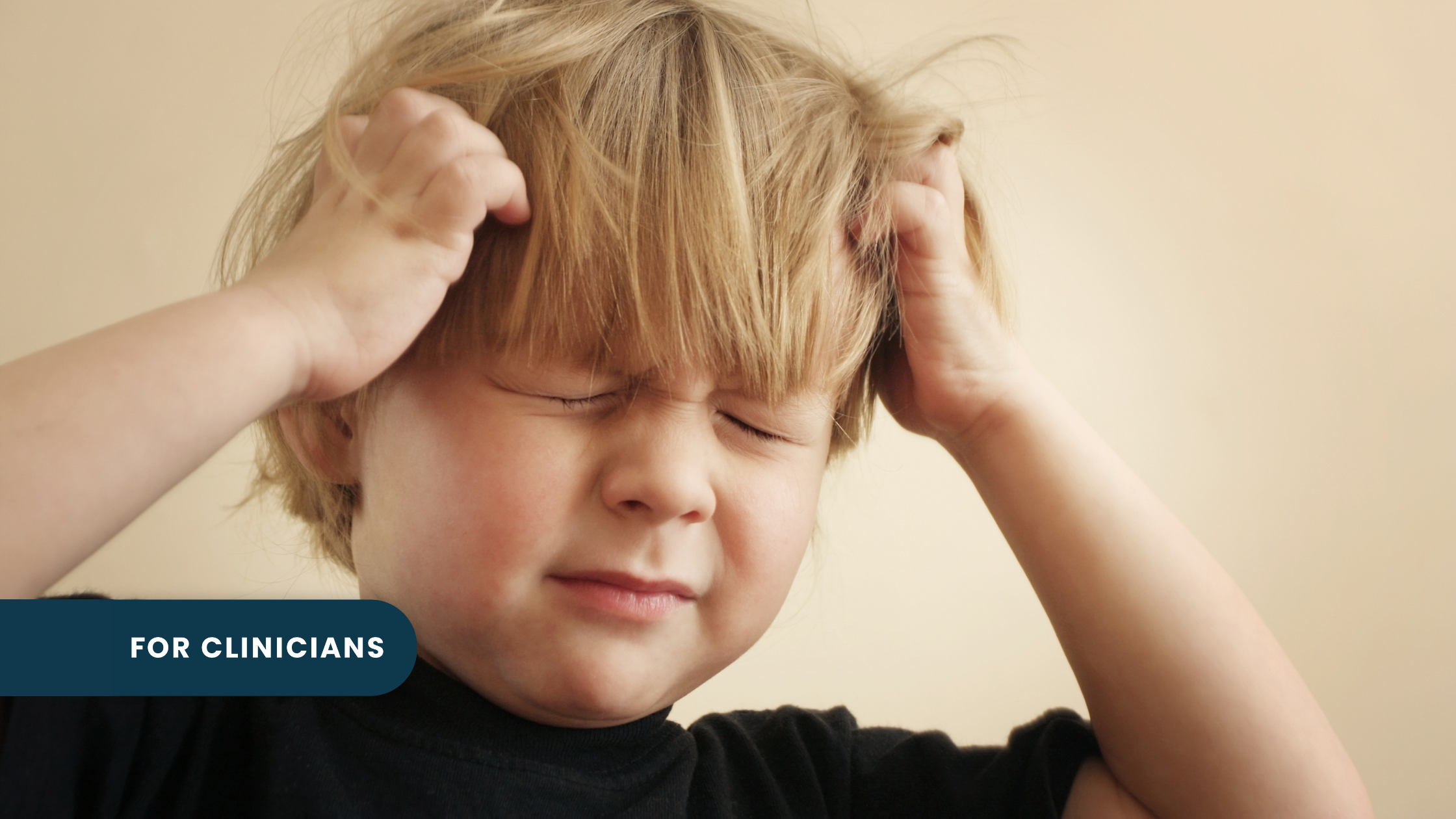
For Clinicians | Head Lice Myths
Permethrin Resistance, and What Actually Works Now
By Dr. Jamie Wilkey, PharmD — Director of Clinical Strategy, Jase
Medically reviewed and edited by Kristen Carpenter, PA-C
A few years ago when I was working as a pharmacist a patient handed me a small plastic baggie. I thought it was empty as I was holding it and she asked, “Is this lice?” I turned it over, looking for whatever she wanted me to see. She asked again: “Is this lice??” She’d pulled it from her daughter’s head and needed someone behind a counter to tell her what she was looking at.
I’ve had patients hand me a lot of things over a pharmacy counter. I’d never had someone hand me a baggie of lice and ask me to identify it. Every time lice comes up, I think of that baggie and patient. Patients are asking about this and as we are headed back to school this month it is the perfect time for a lice refresher course for all of us.
Is head lice a sign of a dirty house?
Nope. Lice don’t care how clean the house is, how often the kid showers, or how expensive the shampoo is. If anything, lice attach more easily to clean hair than dirty hair, so the kid who washes every night isn’t safer than the one who skips a day (or three).
They also don’t come from the family dog or cat. Human head lice are species-specific: they feed on human blood and can’t survive on fur. The lice that show up on pets are a different species entirely, and they stay on pets.
The couch, the car seats, the stuffed animals are also fine. Lice survive 24 to 48 hours off a human scalp, so that outdated bagging-everything-in-the-house instinct is solving a problem that doesn’t really exist. Head-to-head contact is how lice spread, almost always. Not shared hats, not the family dog, not the couch cushions.
The house is fine. The nit still in her hair might get her sent home anyway.
What the AAP says about nits and school
Quick refresher, since this is where most of the confusion starts: a nit is the egg, not the bug. It’s glued to a hair shaft close to the scalp and takes roughly a week to hatch. A live louse is the actual insect, crawling and feeding on the scalp. Finding a nit doesn’t mean there’s an active infestation, especially once hair growth has carried it away from the scalp. Most of the panic, and most of the school policy, is built on the wrong half of that distinction.
Plenty of schools still send a kid home for a single nit, or won’t let them back until every last one is combed out. That policy has been out of step with the actual guidance for going on two decades now, and the AAP tightened its language further in 2022.
The AAP’s clinical report states that children shouldn’t be restricted from school attendance over head lice, given how low classroom contagion actually is.¹ It goes further than earlier guidance, too: screening for nits alone isn’t an accurate way to predict which kids are or will become infested, and school nit-checks haven’t been shown to reduce how much lice actually circulates in a school over time.
The distance rule is specific: nits found more than roughly a quarter inch from the scalp are usually already hatched or dead. Diagnosis is supposed to rest on finding a live louse, not counting nits.
Empower a parent who’s arguing with a front office over a nit check with that information, and they have something to bring back to the school.
Why doesn’t permethrin work like it used to?
A parent buys the same box of Nix everyone’s grandmother used, follows the instructions exactly, and the lice are still crawling around seemingly unfazed. In most of the country that’s not user error anymore. Resistance is here!
A 2016 study sampled lice from 138 sites across 48 states and tested them for the genetic marker tied to pyrethroid resistance. The average resistance-allele frequency came back at 98.3 percent, and 42 of the 48 states sampled had populations at 100 percent.² Permethrin resistance isn’t a pocket problem. In most US communities, it’s the baseline.
That marker measures the gene, not the treatment outcome in any one kid’s head, so it’s not a guarantee that a specific box of Nix will fail. But at that frequency, reaching for permethrin as a first-line fix is closer to hoping than treating.
So what actually works?
When first-line permethrin or over-the-counter pyrethrins fail, the next rungs aren’t exotic. They’re underused mostly because parents, and a fair number of clinicians, still think of Nix as the only option.
- Benzyl alcohol 5% lotion (Rx): works by asphyxiating lice rather than poisoning them, so permethrin resistance doesn’t carry over. Two applications, a week apart.
- Malathion 0.5% lotion (Rx): an organophosphate, still effective against most resistant populations. Flammable formulation, so no hair dryers or open flame during application.
- Spinosad 0.9% topical suspension (Rx): kills both lice and eggs, often effective in a single application.
- Ivermectin 0.5% lotion (Rx): a single 10-minute application cleared lice in 74 percent of patients at day 15 in trial, against 18 percent for the vehicle control.³
- Oral ivermectin (Rx): 400 mcg/kg on days 1 and 8 beat malathion lotion for treatment-resistant lice in trial.⁴ No ovicidal action, so the second dose is what catches nymphs that hatch in between. Off-label for lice specifically, and generally avoided under 15 kg over a theoretical CNS risk.
The practical marker for when to move up the ladder instead of reaching for another box of the same product: check 8 to 12 hours after treatment5. A few lice still moving slowly is normal, the medicine just needs time to finish the job. It’s a different story if you don’t find any dead lice at all, or the live ones look just as active as before treatment. That’s the point to switch classes, not double the dose.
A pharmacist can walk a parent through this ladder at the counter faster than most primary care visits allow.
The bottom line
The myths about lice haven’t caught up to the evidence, and neither has the drugstore treatment that used to work. The no-nit exclusion was never real AAP policy. A second failed box of permethrin isn’t bad luck anymore, it’s the baseline. Next time a parent hands you a baggie and asks if it’s lice, you’ve got a straight answer for the house, the school, and the drugstore shelf.
Sources
- Nolt D, Moore S, Yan AC, Melnick L; American Academy of Pediatrics. Head Lice. Pediatrics. 2022;150(4):e2022059282.
- Gellatly KJ, et al. Expansion of the Knockdown Resistance Frequency Map for Human Head Lice in the United States Using Quantitative Sequencing. Journal of Medical Entomology. 2016;53(3):653-659.
- Pariser DM, Meinking TL, Bell M, Ryan WG. Topical 0.5% Ivermectin Lotion for Treatment of Head Lice. New England Journal of Medicine. 2012;367(18):1687-1693.
- Chosidow O, et al. Oral Ivermectin versus Malathion Lotion for Difficult-to-Treat Head Lice. New England Journal of Medicine. 2010;362(10):896-905.
- Centers for Disease Control and Prevention. Treatment of Head Lice. cdc.gov/lice/treatment.
Lifesaving Solutions
Recent Posts
Keeping you informed and safe.
For Clinicians | Pediatric Dosing 101: What Parents Need From You Before They’re Dosing Alone
For Clinicians | Pediatric Dosing 101: What Parents Need From You Before They're Dosing Alone By Dr. Jamie Wilkey, PharmD, Director of Clinical EducationMedically reviewed and edited by Aaron Asay, PA-C, DMSc, FIBODM, FAWM Pharmacy school drills one line into you over...
What is Plague?
What Is Plague? By the Jase Medical Team Plague is back in the headlines, and people are suddenly Googling a disease they may not have thought about since history class. A 28-year-old laboratory worker at an anti-plague research institute in Siberia recently died...
For Clinicians | What Is Plague? One Bacterium, Three Diseases
For Clinicians | What Is Plague? One Bacterium, Three Diseases By Dr. Jamie Wilkey, PharmD, Director of Clinical EducationMedically reviewed and edited by Aaron Asay, PA-C, DMSc, FIBODM, FAWM Well, the plague is back in the news. Reports out of Russia in early October...

Nobody Has Your Medication List, Including Your Doctor and Your Pharmacy
Nobody Has Your Medication List, Including Your Doctor and Your Pharmacy By the Jase Medical Team Most of us assume that somewhere in the healthcare system, there is one correct list of every medication we take. Your primary care doctor has a list. Your pharmacy has a...