For Clinicians | Can You Get Prescription Medication Abroad?

For Clinicians | Can You Get Prescription Medication Abroad?

What Your Patients Assume, What’s Actually True, and What to Do Before They Leave

By Dr. Jamie Wilkey, PharmD — Director of Clinical Strategy, Jase
Edited and approved by Kristen Carpenter, PA-C — Clinical Advisory Board Member

I can just buy antibiotics in Mexico if I get sick. I’ll be fine.
My friend just borrowed fluconazole from a friend she met on her cruise ship. If I get a yeast infection on my cruise next week I’m sure I can do the same.”

Your patients are telling you this. The travel forums tell the other version: the traveler who spent an afternoon in Florence hunting for a pharmacy willing to fill anything, the person who went to three pharmacies in two French cities before finding the right drug under a name they didn’t recognize, the patient who discovered mid-trip that the medication they take daily doesn’t exist under the brand name they know in the country they’re in.

This article isn’t a pre-travel checklist. You probably don’t have those visits……and when you do, the patient is asking for one specific thing (a vaccine, malaria prophylaxis, a scopolamine patch) and isn’t going to sit through a twenty-minute review of generic drug names across seven countries. 

What this actually is: what your patients are walking into once they leave, what you can’t fix from your desk when they call you from there, and where genuinely-prepared looks different from theoretically-prepared.


The foreign pharmacy experience is harder than patients expect

Before we get to prescriptions, there’s a more basic problem: patients often can’t identify what they’re looking for once they arrive.

Drug names change by country. Acetaminophen (Tylenol) is sold as paracetamol in the UK and across much of the world. A patient who walks into a British pharmacy asking for Tylenol may be told it doesn’t exist there, while paracetamol is stacked behind the counter. Imodium for travelers’ diarrhea is kept behind the counter in Switzerland and requires asking. Aspirin is sold only in pharmacies in many European countries, not in grocery stores or convenience shops. NyQuil doesn’t exist in most of the world. The ingredient combinations are different and the brand isn’t sold.


This is before your patient gets to anything prescription-strength.

This is simple: US prescriptions do not transfer abroad. A pharmacist in Italy, Japan, France, or Canada cannot legally fill what your US-licensed colleague wrote. Prescribing authority is local. There is no international equivalency. Beyond that, the picture breaks down by medication type.

Controlled substances carry the highest stakes. Stimulants used to treat ADHD (including Adderall) are illegal in Japan and restricted in a long list of other countries. Benzodiazepines, opioids, and some sedatives including zolpidem require advance documentation in many destinations: certificates from health authorities obtained before departure, sometimes weeks in advance. Consequences range from confiscation to denial of entry. A 2024 survey found 27% of Americans have had medications confiscated during international travel.² The INCB website (incb.org/travellers) is the right resource by destination. This is not something patients can sort out at the airport last-minute.

Chronic and maintenance medications (antihypertensives, thyroid medications, psychiatric medications, diabetes management) generally cannot be refilled abroad without a local physician visit and a new local prescription. For a two-week trip this is usually manageable with planning. For a six-week trip, a month-long cruise, or an open-ended stay, it requires explicit attention before departure: your patient needs more than they think they need, and they need it before they leave.

Acute medications (antibiotics, antivirals, UTI treatment, GI medications) are the tier where appropriate medical preparation does the most work, because these conditions are predictable. A patient who has had three UTIs is going to have a fourth. A patient going to Mexico has roughly one-in-three odds of needing GI treatment. The question isn’t whether these conditions will come up. It’s whether your patient has what they need, or is wasting an entire day in agony trying to find a doctor who speaks English.

The drug naming problem compounds all three tiers. Even when a pharmacist is willing to help, your patient has to know the generic name of what they’re asking for, in the local formulation. Most don’t.


Top countries Americans visit, quick reference

For when a patient mentions their destination.

Mexico: Most visited by Americans, most misunderstood. Antibiotics are technically prescription-only; enforcement is inconsistent. Large chains (Farmacia Guadalajara, Farmacia del Ahorro) are more compliant. Many pharmacies have attached consultorios where a physician sees patients for a small fee and writes a local prescription. Quality is generally safe at major chains; counterfeit risk at unverified sources. Controlled substances: hard stop. Travelers’ diarrhea risk is high. This is the condition to address specifically when Mexico comes up.

Canada: US prescriptions do not transfer. A Canadian physician must re-authorize before any pharmacy can fill. Walk-in clinics are accessible but not free, not automatic, and not fast on a Saturday night when your patient is sick.

European Union: EU prescriptions transfer within the EU; US prescriptions do not. Pharmacists have broader advisory roles than in the US but cannot prescribe. Drug names and formulations differ enough that patients need generic names, not just brands.

United Kingdom: US prescriptions not valid. Emergency supply at pharmacist discretion exists but is not plannable. Paracetamol, not Tylenol. Generic names matter here more than patients expect.

Japan: US prescriptions not honored. Standard antibiotics permissible up to one month. Over two months requires a Yunyu Kakunin-sho, an importation certificate that takes at least two weeks to obtain. Japan bans several medications that are routine in the US: stimulants for ADHD (Adderall, Ritalin), pseudoephedrine (standard Sudafed), and most common decongestant combinations. Japan requires a destination-specific conversation, not a general one.

Caribbean (Dominican Republic, Jamaica): Prescription requirements mirror Latin American standards. Antibiotic access varies by location. Controlled substances require documentation. Quality control at informal pharmacies is inconsistent.

Southeast Asia: Significant variation by country and by pharmacy. Some OTC antibiotic access exists in parts of the region, quality control is uneven, and your patient cannot know in advance what the rules are where they’re going.


A note on cruise ships

Cruises deserve specific mention. Millions of Americans take them annually, they touch multiple countries and pharmacies in a single trip, and the onboard setup creates a particular kind of false security: patients assume the ship has them covered. It doesn’t. Not for anything short of a genuine medical emergency.

The gift shop medicine shelf. Every ship has one. Basic OTC only: Tylenol, ibuprofen, seasickness pills, anti-diarrhea tablets, cold and flu products. One brand per category. Priced at three times or more what the same product costs on land. It is a gift shop with an OTC aisle.

The onboard medical center. Every ship has one of these, staffed by licensed physicians and nurses and equipped for genuine emergencies. It carries some prescription medications, including antibiotics and epinephrine. For a life-threatening situation, it is there. For the UTI on day four, the sinus infection that’s been building since embarkation, or the travelers’ diarrhea that started in Cozumel, it may technically be able to help, but a physician visit runs $100-200 before any medication is added, everything is charged to the room key and paid upfront with insurance reimbursement to follow, and the medical center is not stocked to refill an existing prescription or treat conditions that are merely miserable. Your patient with a UTI history going on a 14-day Caribbean cruise is not covered by the medical center existing.

In port. Pharmacies are accessible in most cruise ports and a reasonable option for OTC needs. The specific guidance to pass along: avoid pharmacies positioned to catch foot traffic off the gangway. Counterfeit and substandard medications are a documented risk in tourist-facing shops near cruise terminals. Direct patients to pharmacies used by locals, ideally ones co-located with a grocery store or supermarket rather than advertising to cruise passengers. The same drug will often be cheaper there too.

The bottom line for your cruise patients: the ship handles major emergencies. It is not a substitute for appropriate medical preparation.


When the call comes from abroad

Your patient is on day four of a Caribbean cruise with a UTI that started in Cozumel. Or she’s in Florence with a sinus infection she’s been ignoring since Rome. Or he’s on a two-month sabbatical and the antifungal he meant to refill before he left got missed. The portal message comes in. The voicemail comes in. The text from the family member who has your cell. The expectation is that you’ll fix it from your desk.

You can’t.

As Kristen put it to me when we were drafting this together: “I can’t send a script to Europe.”

That’s the first wall. There is no mechanism for routing US prescriptions to foreign pharmacies. And even within the US, looking up an out-of-state pharmacy in eScript takes a while. It’s doable; just a pain that takes up precious time between patients.

The second wall is bigger: anticipating everything that could come up across a two-week trip. The sinus infection that builds on the flight. The GI bug that hits day three. The skin issue from the cruise pool. The allergic reaction to something at a night market. Half a dozen potential prescriptions across as many therapeutic categories, for conditions that may or may not actually present. That work is complex, isn’t part of your fast clinical workflow, and takes hours, not minutes, per patient. Unless you’ve got a really standardized protocol covering all the categories, it’s just easier to refer. It can be done. It probably just doesn’t feel worth your time.

The known versus the unknown is the real divide here. Writing one or two prophylactic scripts for a patient with a recurring issue you already know about (the UTI history, the predictable cold sore) is something most providers can do confidently. The indication is clear, the duration is short, the patient self-identifies. Anticipating everything that might come up on a trip is hard. It should be hard, because it’s very complex.


What you actually do before they leave

For the visits that do happen:

  • Vaccines. The thing providers do at a travel-flavored visit. Hepatitis A and B for Mexico, Latin America, Southeast Asia. Typhoid for those plus South Asia. Updated Tdap and seasonal flu. Yellow fever where required. Standard childhood vaccines current.
  • Destination-specific controlled substance check, if they ask. The patient flying to Japan with a stimulant prescription needs to know about the Yunyu Kakunin-sho before they leave. The patient traveling with a benzodiazepine needs to know certain destinations require documentation. If they ask, INCB is your reference. If they don’t ask, this falls to them.
  • Standard chronic medication supply for the length of the trip plus a buffer. Most patients know to request this. The 90-day mail-order route handles most of it.

The other items that show up in pre-travel articles (clinical letters for customs, written prescription copies, country-by-country generic name briefings) are realistically on the patient, not on you. Patients who want these can request them. They are not standard practice, and there is no expectation that you build them into a fifteen-minute slot.


Where a kit does what a prescription pad can’t

The gap here isn’t one of provider effort. It’s one of category.

A prescription handles one condition. Even if you wrote three prophylactic scripts before the trip, you’d still be one acute presentation away from the call you can’t take. And the patient would still be the one finding pharmacies willing to fill US scripts overseas, in a language they probably don’t read.

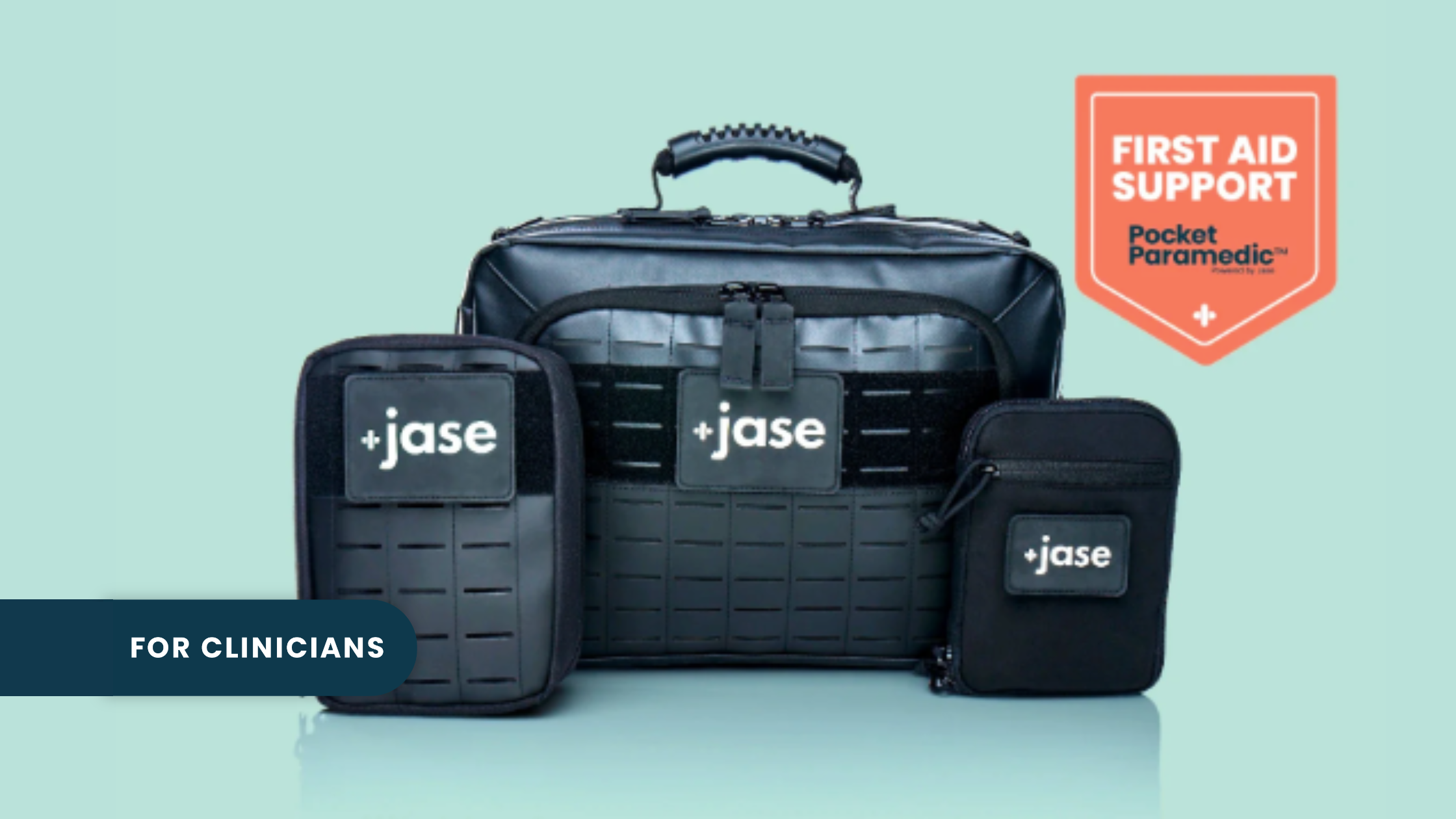
A kit is structurally different. It’s a defined formulary built for the conditions that show up most often when patients are away from home: GI infection, UTI, sinus infection, skin issues, common allergic reactions. The clinical work happens on the front end. The patient leaves with the medications, the dosing guidance, and the criteria for use, in English, in one box on their nightstand or in their suitcase.

There’s a quieter benefit that surfaces in patient feedback: the OTC layer is bundled in. Patients don’t have to figure out that paracetamol is what they’re looking for, or that NyQuil isn’t sold in most of the world, or that the dosing instructions on the box they found are in a language they have to Google-translate carefully to use safely. They have what they need, labeled in English, with usage guidance from the team that prescribed it.

This is in no way a replacement for the primary care relationship your patient has with you at home. Complex diagnoses, chronic conditions, ongoing management belong in your exam room. Jase works in a narrow, defined category: predictable, self-limiting conditions where the evidence is strong and the treatment path is clear. The category has a name now, and it’s worth using: appropriate medical preparation.

You can refer patients to Jase.com. We’ll keep sharing our clinical frameworks and decision criteria here as we go. Public knowledge in this space gets better when clinicians chart the grey area together, instead of leaving patients to figure it out on the internet.


The bottom line

A 2024 survey found that 27% of Americans have had medications confiscated during international travel. Most of your patients haven’t thought about this once. They’ll think about it when they’re standing at a foreign counter, sick, several time zones from anyone who knows their chart, asking for a drug by the wrong name.

You’re not going to add a twenty-minute international medication review to every visit. Nobody is. But the next time a patient mentions an upcoming trip, one question is worth asking: do you have anything on hand for the conditions that might show up while you’re there?

For most patients, the answer is no. Most people don’t think about medical preparation until they’ve been sick in a foreign city and spent a miserable day learning the hard way. Then they swear they’ll never leave home unprepared again. You can get them there before it comes to that.


Sources

    1. CDC Yellow Book: Travelers’ Diarrhea. https://www.cdc.gov/yellow-book/hcp/preparing-international-travelers/travelers-diarrhea.html
    2. Kiplinger / SingleCare: International Travel with Medications — Know Before You Go. https://www.kiplinger.com/personal-finance/travel/international-travel-with-medications-know-before-you-go
    3. CDC Yellow Book: Traveling with Prohibited or Restricted Medications. https://www.cdc.gov/yellow-book/hcp/travelers-with-additional-considerations/traveling-with-prohibited-or-restricted-medications.html
    4. CDC: Traveling Abroad with Medicine. https://wwwnc.cdc.gov/travel/page/travel-abroad-with-medicine

Lifesaving Solutions

Everyone should be empowered to care for themselves and their loved ones during the unexpected. Check out our recent lifesaving products today.

Recent Posts

Keeping you informed and safe.

For Clinicians | World Cup 2026 Pre-Travel Counseling

For Clinicians | World Cup 2026 Pre-Travel Counseling

For Clinicians | World Cup 2026 Pre-Travel Counseling Three Host Countries, Three Measles Outbreaks By Dr. Jamie Wilkey, PharmD — Director of Clinical Strategy, JaseEdited and approved by Kristen Carpenter, PA-C — Clinical Advisory Board Member By the time a patient...

read more
For Clinicians | Can You Get Prescription Medication Abroad?

For Clinicians | Can You Get Prescription Medication Abroad?

For Clinicians | Can You Get Prescription Medication Abroad? What Your Patients Assume, What's Actually True, and What to Do Before They Leave By Dr. Jamie Wilkey, PharmD — Director of Clinical Strategy, JaseEdited and approved by Kristen Carpenter, PA-C — Clinical...

read more

Join Our Newsletter

Our mission is to help you be more medically prepared. Join our newsletter and follow us on social media for health and safety tips each week!

For Clinicians | When Patients Hear “No”: OTC Antibiotics, the Law, and the Grey Market We Weren’t Trained to Navigate.

Over-the-Counter Antibiotics: What the Law Actually Says and Where Patients Go When We Say No

A peer-to-peer look at the grey market your “no” is competing with, and the prescribing landscape we weren’t trained for

By Dr. Jamie Wilkey, PharmD — Director of Clinical Strategy, Jase
Edited and approved by Kristen Carpenter, PA-C — Clinical Advisory Board Member

Most prescribers can give a clean “no” to the contingency antibiotics question in their sleep. The patient asks about keeping a course on hand. You walk through the resistance picture and the documented harms of self-treating viral illness with leftover prescriptions. The clinical answer is sound. 

However, your firm “no” doesn’t end the patient’s access to antibiotics from other sources. It moves the conversation somewhere you can’t see. Your patient opens their phone and types “buy antibiotics over the counter” into Google. Or “fish amoxicillin.” Or “antibiotics without prescription USA.” Now they’re really entering a murky, unsafe place in their search. 

I’ve stood at the pharmacy counter and had patients ask almost every day what aisle the OTC antibiotics are on. And those traveling from outside the US are always always shocked that we have nothing (aside from creams and ointments) available OTC for them to purchase without a prescription.


Are Antibiotics Available Over the Counter in the US?

No.

Every systemic antibiotic in the US is federally prescription-only under Section 503(b) of the Food, Drug, and Cosmetic Act¹. Every oral. Every injectable. Every IV. There is no OTC pathway, and there hasn’t been one in decades.

The only meaningful exceptions are topical: bacitracin, neomycin, and polymyxin (the triple-antibiotic ointment trio), available without a script for surface use. None of them treat the conditions patients are searching for when they type “buy antibiotics online.” We all know nobody is stockpiling Neosporin for a UTI at sea.

So the legal answer is clear: no antibiotics over the counter. The harder question is whether the clean legal answer is actually the answer your patient is satisfied by.


We Weren’t Trained For The System We’re Practicing In

This is the part most CE courses haven’t caught up to.

Pharmacy school, medical school, and PA school all taught us to prescribe inside a closed system. One patient. One prescriber. One chart. One local pharmacy that had a relationship to all of the above and a pharmacist who would call when something looked off.

That system isn’t the system anymore. Your patient today has access to:

  • Direct-to-consumer telehealth platforms (Hims, Hers, Sesame Care, Push Health, GoodRx, Cost Plus, and a long list of others) that prescribe after a laughably thin intake with no synchronous visit and no real clinical review behind the script
  • Mail-order chains and Amazon Pharmacy shipping from warehouses outside your local network and outside your visibility
  • Foreign mail-order pharmacies advertising “no prescription needed” and shipping product from manufacturing chains the FDA has never inspected
  • Cross-border purchasing in Mexico and elsewhere, where many antibiotics are functionally OTC
  • Pet stores stocking aquarium amoxicillin, doxycycline, and cephalexin on the same shelf as goldfish food
  • Friends, family, and online communities passing along leftover prescriptions, often paired with TikTok dosing advice from creators whose credentials don’t exist

None of these channels talk to each other. None of them talk to you. Your patient is the only person holding the full picture, and most patients are not pharmacists.

Antibiotics are over-prescribed and we all know it. Sometimes the script is clinically indicated. Sometimes it’s the fastest way to end a visit with a patient convinced they have a sinus infection. Patients have noticed. When the same clinic that gave a friend a Z-Pak for a cold turns around and tells them no for a real concern, the “no” lands as arbitrary.

We were trained to be the gatekeepers of a system that no longer has gates. Patients have noticed before we have. The job now is harder than the one we trained for: guiding patients to appropriate access, especially for antibiotics, in a landscape where access is everywhere and quality is uneven.


Where Patients Actually Go When We Say No

Fish antibiotics are the version of the story we’ve all heard. The newer version is worse. Here’s the shape of the grey market today:

  • Online “telehealth” prescribers running rubber-stamp intakes and writing whatever the patient asked for, with no real clinical relationship behind the script. Some are licensed in one state and prescribing into fifty. Some are pharmacy-owned and incentivized to write.
  • Foreign mail-order pharmacies shipping product the FDA has flagged as counterfeit or mislabeled at non-trivial rates. The FDA runs BeSafeRx² as a standing consumer warning because the volume of unlicensed online pharmacies grew large enough to require one.
  • Cross-border purchases, primarily in Mexico, where many antibiotics are sold without a prescription. The product is often legitimate. The clinical guidance attached to it is essentially nonexistent.
  • Aquarium and livestock antibiotics, which are not manufactured to USP standards, not tested for human dissolution profiles, and may contain dyes or fillers cleared only for fish.
  • Leftover-prescription swapping between friends, family, and online communities, often guided by content from creators whose credentials don’t exist.

(You’re saying, ok, but my patients can spot the obvious scams. Some can. The packaging and designs on the dangerous channels are convincing enough that some can’t.)

What unites all of these is what they lack: a real clinical relationship, written guidance, a recall pathway, recourse if the batch is bad. Speed is what the patient sees first. The cost shows up later, if at all.


What Appropriate Medical Preparation Actually Looks Like

There is a legal, clinically sound version of what these patients are looking for. We call it appropriate medical preparation, and it has four pieces:

  • A US-licensed clinician running a real clinical evaluation behind every script
  • Pharmaceutical-grade medications, manufactured to USP standards
  • A US-licensed pharmacy as the dispensing point of record
  • Written clinical guidance, in the patient’s hands, for when and how to use what was prescribed

Same medications your patients were already searching for. Held to the standards of care you practice.

In no way a replacement for primary care. Complex diagnoses, chronic conditions, and ongoing provider relationships belong in the exam room with you. Appropriate medical preparation works in a narrow space: well-defined, common, low-acuity conditions where the evidence is strong and the patient’s actual problem is access, not diagnosis.


Who’s Doing This Work

Jase.com is a family team of medical doctors, physician assistants, and pharmacists who have been working in appropriate preparation space for over five years. The clinical team includes board-certified family medicine providers, an extreme-medicine and disaster medicine specialist, and a Director of Pharmacy licensed across twenty states. The clinical work happens on the front end, so the patient isn’t doing it alone at 11pm.


Charting the Grey Area in Public

This is the contingency category we’re building, and we’re building it carefully. There are plenty of online resources in this space that aren’t reputable or safe, and most weren’t built by clinicians at all.

If you have patients asking about contingency access and you don’t feel confident prescribing in this space yourself, you can refer them to us at Jase.com. Going forward, we’ll be sharing how we make these clinical decisions, the criteria we use, the frameworks we’re building, and where we’re still figuring things out, so providers have something concrete to point to and more confidence in what to do when a patient asks.

Public knowledge gets better when clinicians chart the grey area in public instead of letting the internet do it. Real resources for providers, real guidance for patients, less grey area going forward. That’s what we’re here to help build.


The Bottom Line

Patients are already making decisions about contingency antibiotics. They are doing it with or without us. The only real question is whether those decisions get made with a real prescriber attached and a US pharmacy on the other end, or alone in a search bar at 11pm.

Public health framing has historically started at “don’t.” Patients have been hearing “don’t” without an alternative long enough that the grey market filled the silence. Clinicians shouldn’t have to choose between giving a defensible “no” and watching their patient land somewhere worse.


Sources

  1. 21 U.S.C. § 353(b), Federal Food, Drug, and Cosmetic Act, Section 503(b) — Prescription drug requirements for federally regulated drugs.
  2. U.S. Food and Drug Administration, BeSafeRx: Your Source for Online Pharmacy Information. FDA consumer protection program for identifying licensed online pharmacies.

Lifesaving Solutions

Everyone should be empowered to care for themselves and their loved ones during the unexpected. Check out our recent lifesaving products today.

Recent Posts

Keeping you informed and safe.

For Clinicians | World Cup 2026 Pre-Travel Counseling

For Clinicians | World Cup 2026 Pre-Travel Counseling

For Clinicians | World Cup 2026 Pre-Travel Counseling Three Host Countries, Three Measles Outbreaks By Dr. Jamie Wilkey, PharmD — Director of Clinical Strategy, JaseEdited and approved by Kristen Carpenter, PA-C — Clinical Advisory Board Member By the time a patient...

read more
For Clinicians | Can You Get Prescription Medication Abroad?

For Clinicians | Can You Get Prescription Medication Abroad?

For Clinicians | Can You Get Prescription Medication Abroad? What Your Patients Assume, What's Actually True, and What to Do Before They Leave By Dr. Jamie Wilkey, PharmD — Director of Clinical Strategy, JaseEdited and approved by Kristen Carpenter, PA-C — Clinical...

read more

Join Our Newsletter

Our mission is to help you be more medically prepared. Join our newsletter and follow us on social media for health and safety tips each week!

For Clinicians | Hurricane Medication Preparedness: What Your Patients Need in a 7-Day Supply

Here’s What a 7-Day Medication Go-Bag Actually Holds.

By Dr. Jamie Wilkey, PharmD — Director of Clinical Strategy, Jase
Edited and approved by Kristen Carpenter, PA-C — Clinical Advisory Board Member

The Atlantic hurricane season opened earlier this week and runs through November 30¹. Across every preparedness site in the country, the same advice has been republished: build a 7-day medication kit. Have a plan and the resources you need. The advice is fine. The execution rate is dismal.

I mean, how many of your patients living in a hurricane zone actually have a full 7+ day supply of every medication they need on hand right now?

Most families don’t get that far.

Not because they don’t want to.

The actual lift is just so much bigger than “grab a Ziploc bag, throw your meds in and label it.” The version that actually protects a family is two layers, not one. And providers sit upstream of both of them.

I’ve watched the failure end of this from a pharmacy counter. Patients showing up after a power outage with insulin that warmed in a dead fridge. A mom three states from home looking for an inhaler refill her insurance won’t authorize until next Tuesday. A dad asking what to do about a nail puncture his kid took stepping out of floodwater 2 days earlier.

And when patients don’t know the exact names of their medications and the pharmacy that fills them, well then trying to get a refill in another location is just made so much harder (and it happens all the time). The pharmacies that did stay open had lines pouring into the parking lot, staff working through the night to get patients medications they couldn’t get on their own.

You’ve watched the receiving end of this from the exam room or the shelter clinic. The patient who ran out two weeks ago, who can’t tell you the dose, who has no idea which pharmacy filled the original prescription. By the time the patient is in front of you, the front-end work the family didn’t do is now urgent clinical work for you.


Storms Don’t Just Close Pharmacies

They strip out every workaround a family relies on in the back of their mind. And this isn’t an anecdotal, one-off problem. It is a documented one.

After Hurricane Katrina, more than a third of evacuated children with pre-existing chronic conditions ran out of medication². After Sandy, 74% of community pharmacies in the worst-hit NYC neighborhoods sustained structural damage³. After Maria, the median Puerto Rican household waited 181 days for power restoration⁴, which is not a window any refrigerated medication survives. Refill timelines, pharmacy availability, and cold-chain integrity fail at the same time, on the same patient.

The fragility goes upstream too. Hurricane Helene’s flooding of Baxter International’s Marion, NC facility, which manufactures roughly 60% of the IV solutions used by US hospitals, triggered a national IV fluid shortage that lasted nearly a year and forced hospitals across the country to delay surgeries and ration supplies⁵. Local pharmacy disruption and national supply chain disruption can land on the same patient in the same week.

That falls hardest on the patients with the thinnest margins: chronic-disease patients, families who are displaced, and anyone whose refill ran out on a Friday. These are the patients sitting in front of you between now and peak season.


How This Actually Runs in Your Clinic

Before the checklists below, the part most preparedness articles skip.

If you just glanced ahead at “Provider checklist” and felt the lurch….when, exactly, am I supposed to do any of this….fair. You’re already running late. You barely have room for the reason the patient came in, let alone a preparedness conversation with an 82-year-old on nine medications. We know.

So the version of this that actually works in a real primary care schedule isn’t a provider conversation. It’s an MA workflow with handouts, built into rooming and post-visit tasking, that you sign off on but don’t carry. The article you’re reading is the handout. Screenshot the relevant sections, send them to whoever runs your rooming protocol, and the work happens around your visit instead of inside it.

Two Layers, Two Different Owners

  • Layer One (patient-owned chronic medication readiness): MA work, almost entirely. Your only in-visit contribution is signing the 90-day Rx.
  • Layer Two (clinician-prescribed contingency layer): your clinical judgment, or refer the patient to us and we’ll carry it for you.

Below, what each layer looks like in practice.


Layer One: Patient-Owned Chronic Medication Readiness

A 30-day minimum, ideally 90+ days, of every chronic medication a family member can’t go without. Plus a written list of every prescription: drug, dose, prescriber, pharmacy. A pharmacist three states over can act on that list to help. Without it, they don’t have enough information to do anything, and your patient is now on a long, arduous road of trying to figure out exactly what they take and which pharmacy to call. That means delays. The last thing your patients need in a disaster.

MA Workflow for Layer One

Screenshot this and hand it to whoever rooms your patients.

At rooming, for every patient in a coastal or flood-risk zone, the MA asks two questions:

  1. Do you have a written list of every prescription you take?
  2. Do you have 90 days of every chronic medication on hand right now?

If either answer is no, before you walk into the room:

  • MA hands the patient a printed medication-list template. A patient-portal export works; a printed sheet works better. The sheet is the kit half the time. On that sheet, the patient writes which pharmacy currently fills each medication, especially if they use multiple pharmacies or the same chain at different locations.
  • MA flags the chart for a 90-day Rx where the medication and patient qualify.

The only piece that requires your time in the room is the signature on the 90-day Rx. If insurance pushback is likely, the MA can message the pharmacy directly and flag the request as preparedness-related so the pharmacy team can advocate.

After the visit, still MA-driven:

  • For patients on refrigerated medications (insulin, GLP-1s, biologics, refrigerated antibiotics), the MA hands a cold-chain handout: cooler storage, ice packs, temperature-out-of-range window per manufacturer guidance.
  • Confirm tetanus booster status. Schedule if due. Inexpensive, durable, and exactly the kind of thing that gets missed when the storm is already on the radar.

Build this loop into your hurricane-season rooming workflow once and it carries itself the rest of the season.

Discount Cards Are Your Patient’s BFF

(Put this on the handout.)

Most insurance companies won’t cover a 90-day refill ahead of schedule. So when patients try to be proactive while the sun is still shining and they get an insurance rejection, this is the wall where most patients quit. The workaround is simple if it isn’t a controlled substance and the patient has refills on file: ask for a 90-count and pay cash or use a discount card. The out-of-pocket price with discount cards (think GoodRx) for generic medications often lands inside their copay.

Put this on the MA’s handout, second item after the medication-list template. The patient doesn’t need to hear it from you in the room. They need it to be the line they read on the way to the parking lot.

A Note on State Emergency Refill Rules

Under a declared state of disaster, pharmacies have more wiggle room to give additional quantities of already-prescribed medications. Statutory ceilings vary brutally state to state: 90 days in North Carolina (the only one), 30 days in a handful of southern and western states (AZ, FL, KY, LA, OK, OR, TX), 7 to 15 days in some, a 72-hour baseline in others, and 16 states with no emergency refill authority at all⁸. Schedule II controlled substances are excluded almost everywhere. The patient who waits for the governor’s declaration is already inside whatever ceiling their state happens to set. And those timelines are short, viewed through the lens of how long disaster response actually takes.

The takeaway for your patients: don’t plan around the emergency refill. Plan around having the 90 days before the emergency.


Layer Two: The Contingency Layer for Predictable Post-Landfall Problems

Short-course antibiotics for floodwater wounds, where CDC guidance is explicit that early empirical antibiotic therapy improves survival and clinicians should not wait for laboratory confirmation⁶. Antibiotics for waterborne GI illness. An antifungal for the mold that begins growing in saturated drywall within 24 to 48 hours per CDC guidance⁷. Allergy and respiratory rescue when air quality drops. Rehydration, anti-diarrheals, basic wound care.

This is where it really starts feeling overwhelming, both for patients and for the providers they ask. Most prescribers were trained to write antibiotics for active infection, not for a bag on a shelf. I know, I know. You’re saying, “No way! No way! I’m not writing antibiotics for a bag on a shelf before I’ve seen the patient.” That impulse comes from years of stewardship training, and stewardship was right to push us there. Writing for a bag on a shelf feels like using a different muscle entirely. It is….and the patient asking us isn’t asking for the wrong thing. The healthcare system simply hasn’t caught up to why the question is being asked.

You have two execution paths for Layer Two. Pick the one that fits your practice.

Path A: Prescribe Layer Two Yourself

The indication-level checklist below is what we’d cover in a JaseCase. Use it as a starting formulary for your own patient population, or adapt as needed. Unlike Layer One, this is your clinical judgment, not your MA’s. But it is still front-loaded preparation work, not in-visit work, and a single template note can carry most of the dosing instructions.

Path B: Refer the Patient to Us

If proactive prescribing for the contingency layer is outside your scope, comfort zone, or available time, hand the patient our information at the same visit the MA hands them the medication-list template. Jase’s clinical team (pharmacists, physicians, and physician assistants) runs Layer Two at the highest clinical standards, with evidence-based regimens screened against each patient’s history. We carry the prescribing, the patient education, and the written use-only-if instructions. You keep the primary care relationship. The patient doesn’t leave your visit without an answer.

Indication-Level Checklist for Path A

Screenshot for your reference.

  • Floodwater wound coverage: empirical regimen with Vibrio and Aeromonas coverage (typically doxycycline plus a fluoroquinolone for outpatient use in non-pregnant, non-pediatric adults) per CDC HAN-00497⁶ and current IDSA skin and soft tissue infection guidance. Use only if there is a wound exposed to floodwater and developing erythema, warmth, or pain.
  • Waterborne GI illness: short-course azithromycin or ciprofloxacin per current outpatient guidelines, with loperamide for symptom control where not contraindicated.
  • Uncomplicated UTI: nitrofurantoin or trimethoprim-sulfamethoxazole per current IDSA guidance, dosing-appropriate.
  • Mucosal candidiasis or post-flood tinea: oral fluconazole or topical antifungal as indicated.
  • Allergy and respiratory rescue: albuterol MDI plus oral antihistamine for patients with documented asthma or allergic rhinitis; consider short oral corticosteroid course for patients with a prior documented asthma exacerbation pattern.
  • Rehydration: oral rehydration salts. Volume goals weight-based for pediatric patients.

For all of these: dosing-appropriate short course only, screened against the patient’s chart for contraindications and allergies, with written “use only if [specific indication]” instructions. This is condition-matched preparation, not standing antibiotic supply for whatever feels like an infection.


Appropriate Medical Preparation

The category is narrow on purpose: well-defined conditions, predictable presentations, evidence-based regimens, dosing-appropriate for short-course treatment in adults with no contraindicating comorbidities. Standing supplies for the same conditions a telehealth provider would prescribe for in real time, with the clinical work simply done earlier. This is in no way a replacement for primary care. Complex diagnoses, chronic disease management, and ongoing provider relationships belong in the exam room. In the past, appropriate medical preparation has not been available.

Jase was built for the providers we just described: the burned-out PCP running 20 minutes behind on a Tuesday afternoon, who knows their patient needs a Layer Two conversation and doesn’t have a way to give it inside a 15-minute visit. Refer them, or point them at us. We are not asking you to write prescriptions you don’t feel confident writing. We are not asking you to add a single line item to your visit. We are asking you not to leave the patient without an answer in an emergency.

The patients best positioned to weather a storm have the boring stuff handled: chronic meds in hand with a documented list any pharmacist can act on, and an appropriately scoped contingency kit on the shelf. The work is unglamorous, almost entirely front-loaded, and mostly delegable. It is also the difference between a family who weathers landfall as an inconvenience and a family who weathers it as a medical emergency.

That difference gets built weeks before landfall, in exam rooms exactly like yours. Mostly by your MA. By peak season, your patients will already know which family they are.


Sources

  1. NOAA National Hurricane Center. Atlantic hurricane season runs June 1 through November 30; historical peak activity mid-August through October.
  2. Bayard et al., “Disaster-Driven Evacuation and Medication Loss: A Systematic Literature Review,” PLOS Currents Disasters, 2014. Pediatric medication disruption and shelter refill-need data drawn from Hurricane Katrina cohorts referenced in the review.
  3. Arangua et al., post-Hurricane Sandy community pharmacy survey of severely affected New York City neighborhoods (74% sustained structural damage).
  4. The Washington Post, “After Hurricane Maria, Puerto Rico was in the dark for 181 days, 6 hours and 45 minutes” (analysis of median household power restoration time, 2017–2018).
  5. American Hospital Association reporting and NPR coverage of Baxter International’s Marion, NC facility, which produces approximately 60% (≈1.5 million bags) of IV solutions used by US hospitals. FDA declared the resulting saline shortage resolved in August 2025.
  6. CDC Health Alert Network, HAN-00497, “Severe Vibrio vulnificus Infections in the United States Associated with Warming Coastal Waters.” Recommends initiating empirical antibiotic therapy without waiting for laboratory confirmation. Outpatient empirical regimen guidance per current IDSA skin and soft tissue infection guidelines.
  7. CDC MMWR Recommendations and Reports, rr5508, “Mold Prevention Strategies and Possible Health Effects in the Aftermath of Hurricanes and Major Floods.” 24 to 48 hour mold growth window after flooding.
  8. Healthcare Ready, “A Review of State Emergency Prescription Refill Protocols.” Statutory ceilings under declared disaster range from 90 days (NC) to 30 days (AZ, FL, KY, LA, OK, OR, TX) to 7–15 days to a 72-hour baseline; 16 states have no emergency refill authority. Schedule II controlled substances excluded almost everywhere.

Lifesaving Solutions

Everyone should be empowered to care for themselves and their loved ones during the unexpected. Check out our recent lifesaving products today.

Recent Posts

Keeping you informed and safe.

For Clinicians | World Cup 2026 Pre-Travel Counseling

For Clinicians | World Cup 2026 Pre-Travel Counseling

For Clinicians | World Cup 2026 Pre-Travel Counseling Three Host Countries, Three Measles Outbreaks By Dr. Jamie Wilkey, PharmD — Director of Clinical Strategy, JaseEdited and approved by Kristen Carpenter, PA-C — Clinical Advisory Board Member By the time a patient...

read more
For Clinicians | Can You Get Prescription Medication Abroad?

For Clinicians | Can You Get Prescription Medication Abroad?

For Clinicians | Can You Get Prescription Medication Abroad? What Your Patients Assume, What's Actually True, and What to Do Before They Leave By Dr. Jamie Wilkey, PharmD — Director of Clinical Strategy, JaseEdited and approved by Kristen Carpenter, PA-C — Clinical...

read more

Join Our Newsletter

Our mission is to help you be more medically prepared. Join our newsletter and follow us on social media for health and safety tips each week!

What Is Appropriate Medical Preparation? Meet the Medical Team Defining It

By Dr. Jamie Wilkey, PharmD — Director of Clinical Strategy, Jase

American healthcare runs on a schedule. Monday through Friday, 8 to 5, in a well-populated area with decent coverage, it……mostly works. Expensive, slow, full of friction. But you can generally reach a provider, fill a prescription, and get home the same day.

And then there’s everything else.

The UTI that announces itself Friday evening. The kid who spikes a fever at 11pm on a Saturday. The prescription you need before flying out on your international trip that your regular pharmacy can’t fill because they are out os stock. The urgent care that closed at 6pm, so now you’re looking at the one 24-hour pharmacy in the county with a line out the door. Or the cruise you get sick on halfway through and can’t find an English speaking pharmacy so your expensive trip now feels wasted.

I’ve seen it from both sides. Both of my boys’ medical emergencies happened outside business hours: once literal minutes after the instacare closed, once in the middle of the night. I live in a city of 100,000 people with more resources than most. I’m a pharmacist. I still couldn’t get ahead of it. I’ve also stood on the other side of that pharmacy counter as the only 24/7 pharmacist in Utah on a weekend night, watching exhausted families jump through every hoop just to treat something that should have been simple. Waiting in lines that felt miles long while they were miserable and wishing they could just be home getting better in bed.

This isn’t a failure of the system. It’s a gap in the system, and it falls hardest on people who already have less margin: rural families, international travelers, anyone whose illness showed up on a holiday weekend. Waiting or going without is no longer acceptable, at least not for the conditions we can predict and prepare for ahead of time.

The simplest description of what we do: a doctor in your house and a pharmacy on your shelf. For a short list of well-understood, common conditions, you already have what you need before you need it.


Who We Are

We’re Jase, a family company built by medical doctors, physician assistants, and pharmacists. We’ve been serving patients for over five years. We’re not tech people looking to disrupt healthcare from the outside. We came from emergency rooms, disaster zones, clinics, and pharmacy counters. We’ve watched people get caught without what they needed at the exact moment they needed it most.

Our disaster medicine specialist, Aaron Asay, is a physician assistant with 25 years of frontline experience in emergency rescue, austere medicine, and humanitarian response. He still leads medical teams through natural disasters and some of the most resource-scarce environments in the world. He holds a doctorate in Global Health and still works ERs and clinics on weekends. Aaron is also the executive director of Jase’s not-for-profit: JaseResponse.

Aaron doesn’t talk about emergency medicine from a distance. He practices it. On our team company call just this week, he walked us through the quality of our first aid kits: he knew because he’d just used one to suture his own face after an accident in the field that weekend

That’s who built this. Clinicians who have shown up on their patient’s worst days and kept asking: what would have made this better if we’d started earlier?


The Clinical Question Nobody Has Answered Cleanly

Patients want to be medically prepared. Healthcare providers want to help them get there. But the guidelines for what that actually looks like don’t really exist yet.

What’s appropriate for a patient to have on hand ahead of time? Where’s the line between smart preparedness and unnecessary prescribing? How do you think about antibiotic stewardship when someone in a rural county loses pharmacy access for three days after a storm?

These aren’t fringe questions. Your patients are already asking them. And when we don’t have a clean answer, they find one on their own.

A patient emailed us this week after her JaseCase arrived:

“Just got my Jase case today! They shipped it extremely fast. This could be life saving in an emergency situation one day when hospitals and doctors offices are filled to capacity and pharmacies are out of stock. Honestly it’s worth its weight in gold. I tried getting scripts filled through my family doctor for emergency situations a few years back, but they refused and treated me like I had three heads. You may have just saved my life and don’t even know it yet. Thank you!”

Her previous doctor wasn’t wrong to be cautious. But “no” without a framework left her hunting for answers online. The internet is happy to fill that void with content that ranges from reasonable to reckless.

Jase is owning this grey space and making it clearer with clinical standards, clear criteria, and a framework we’re building in public. This isn’t as new as it sounds.


Telehealth Has Already Answered Part Of This For Us

When a patient contacts a telehealth provider for a UTI, flu symptoms, or a yeast infection, they get a prescription. The prescribing patterns for these conditions don’t vary much. The clinical evidence is clear. The decision tree is short. A provider runs through the same criteria and lands on the same treatment, nearly every time.

The only difference between that and appropriate, proactive medical preparation is timing. With telehealth, you wait until you’re sick to start the process. With Jase, the clinical work happens ahead of time. When symptoms arrive, you have what you need on your shelf, you know what to look for, and you’ve already received guidance on how and when to use it. Same medications. Same clinical standards. Without the Friday night wait queue, the prescription routed to a pharmacy that won’t open until Monday, or the 45-minute drive to the only location still running while hoping they’re not out of stock on the one thing you need.


This is in no way a replacement for primary care. Complex diagnoses, chronic conditions, ongoing provider relationships belong in the exam room. We work in a narrow, specific category: well-defined, common, self-limiting conditions where the evidence is strong and the treatment path is clear.


That category now has a name: appropriate medical preparation.

Where do we draw the line? We prescribe for conditions that are self-limiting, resolve predictably with a standard course of treatment, and are unlikely to progress into something more complicated. Take a yeast infection. If it isn’t chronically recurring or escalating, prescribing fluconazole before symptoms arrive is clinically identical to prescribing it at the time of symptoms. The patient treats it the moment it starts, not after waiting for a telehealth slot, not after the weekend, not after the mail delay.


Why We’re Publishing Our Work Here

Jase has been doing this work for over five years. We’re making our clinical methodology public now because healthcare providers should be part of this conversation, not just patients.

Every week, we’ll share how we make clinical decisions, where we draw the lines, what the evidence says, and what we’re still working through. If you’ve ever been asked what a patient should have at home just in case and didn’t have a clean answer, we’re building that answer. Aaaaand… we want your input as we do it.

You should have clear resources to point to. Your patients should know what responsible preparation looks like, and what actually requires an in-person visit. The internet is already empowering them to figure it out on their own. We’re here to make sure what they find is clinically sound, built by people who have practiced medicine at the edges.

Appropriate medical preparation is a new clinical category. The guidelines are being written carefully, at the highest standard we know how to apply, in a space that existing frameworks haven’t covered.

We’re glad you’re here. A new article will be shared by me or someone from our team every week, and soon, direct delivery to your inbox so you don’t have to hunt for updates. Bring a colleague who’s been asking the same questions. We are here to help!

Lifesaving Solutions

Everyone should be empowered to care for themselves and their loved ones during the unexpected. Check out our recent lifesaving products today.

Recent Posts

Keeping you informed and safe.

For Clinicians | World Cup 2026 Pre-Travel Counseling

For Clinicians | World Cup 2026 Pre-Travel Counseling

For Clinicians | World Cup 2026 Pre-Travel Counseling Three Host Countries, Three Measles Outbreaks By Dr. Jamie Wilkey, PharmD — Director of Clinical Strategy, JaseEdited and approved by Kristen Carpenter, PA-C — Clinical Advisory Board Member By the time a patient...

read more
For Clinicians | Can You Get Prescription Medication Abroad?

For Clinicians | Can You Get Prescription Medication Abroad?

For Clinicians | Can You Get Prescription Medication Abroad? What Your Patients Assume, What's Actually True, and What to Do Before They Leave By Dr. Jamie Wilkey, PharmD — Director of Clinical Strategy, JaseEdited and approved by Kristen Carpenter, PA-C — Clinical...

read more

Join Our Newsletter

Our mission is to help you be more medically prepared. Join our newsletter and follow us on social media for health and safety tips each week!