
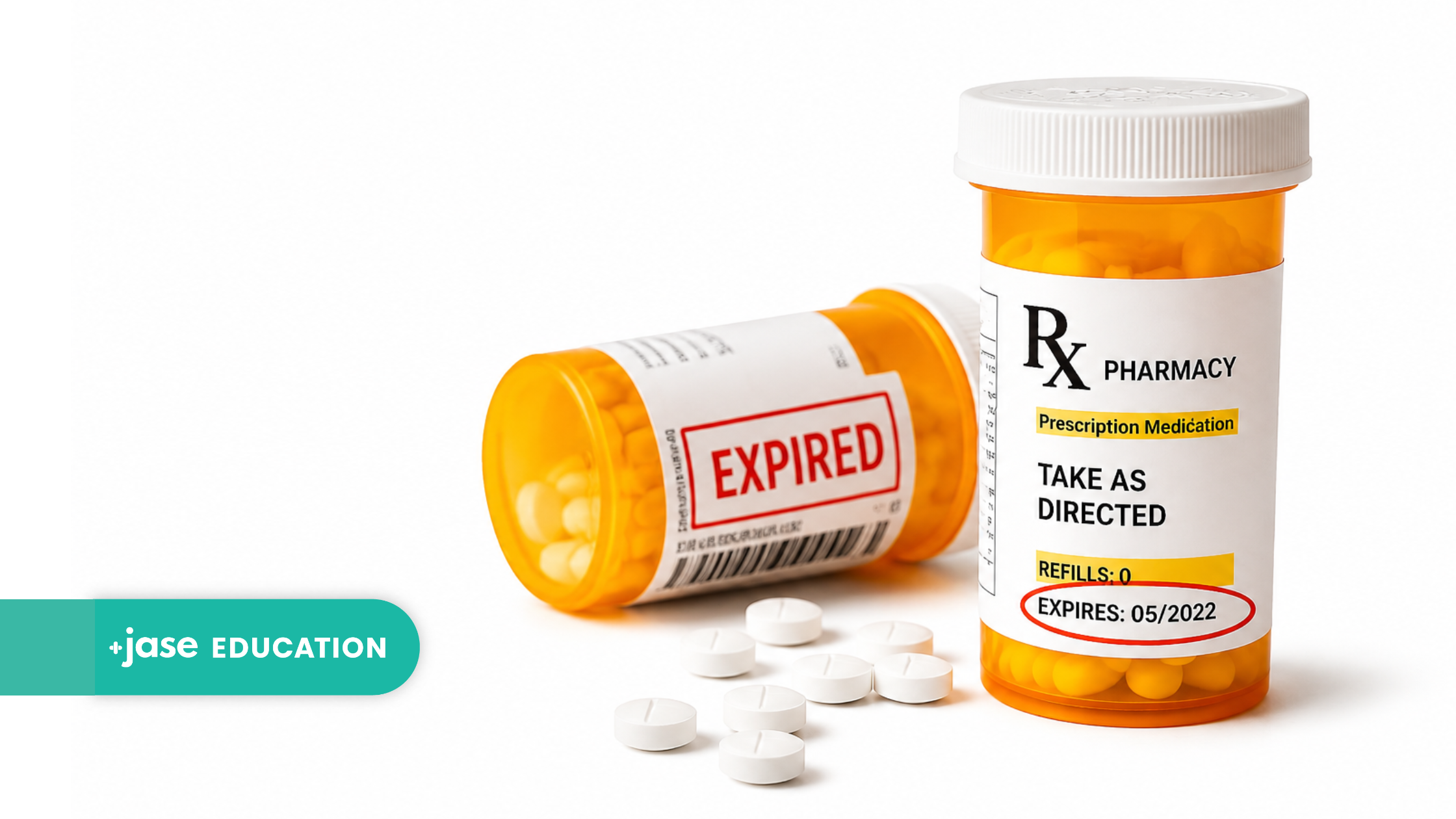
Why Expiration Dates Matter for Your Medication Supply
By Cayla McGrath
Consumer notice: A note on expiration dates. This article discusses published research on drug stability, including the FDA and Department of Defense Shelf Life Extension Program (SLEP). SLEP applies to federal stockpiles held under controlled, monitored storage and tested lot by lot. It does not apply to medications stored at home, and its findings do not extend the expiration date of any medication you own. FDA’s guidance to consumers is that expired medications should not be used. Jase Medical follows the manufacturer’s printed expiration date on every medication we dispense. Replace medications when they expire, and dispose of the expired supply following FDA’s disposal guidance.
If you’ve ever stood in front of your medicine cabinet holding a bottle a year past the printed date, you’ve heard two kinds of advice: “it’s probably fine” and “throw it out, it might be toxic.” The useful answer is simpler than either: replace it. Here is why the date matters, and how storage protects your medication until then.
What the expiration date means
The date on a medication bottle is the manufacturer’s commitment: the drug holds at least 90% of its labeled potency under the specified storage conditions up to that date. After that date, the manufacturer makes no guarantee, and there is no way to check a bottle at home.
What the stockpile research shows, and what it doesn’t
The most cited stability research comes from the FDA and Department of Defense Shelf Life Extension Program (SLEP), which tests medications held in federal stockpiles. Those stockpiles sit in climate-controlled warehouses under continuous monitoring, and each lot is tested before its dating is extended. FDA scientists who analyzed the program found wide variation between drugs and between lots of the same drug.
That is why SLEP results apply only to the specific lots tested. A bottle at home has none of those controls, and nobody can tell from looking at it whether it would have passed. FDA’s guidance to consumers is direct: don’t use expired medication.
How medications differ
Medications differ in how sensitive they are to heat, light, and moisture. Knowing which category a medication falls into tells you how to store it and which to replace first as expiration dates come due.
Tablets and capsules, such as ibuprofen, acetaminophen, and most antibiotics in pill form, are the most stable form when kept cool and dry, away from the bathroom.
Liquids, suspensions, and mixed medications are less stable. An amoxicillin suspension, once mixed, is labeled for 14 days. Liquid antibiotics, eye drops, and oral suspensions are not long-term supply items.
Narrow-window and refrigerated medications need the most care. Small potency changes matter clinically, and insulin stored improperly becomes unreliable. Follow their storage instructions exactly.
Storage is what you control
The bathroom medicine cabinet is one of the worst places in your home, with humidity and temperature swings from every shower. A cool, dry closet shelf is better, and an airtight container is better still.
Replace these right away, even before their printed date: mixed liquid suspensions, anything stored in heat or humidity, refrigerated items that may have warmed, and anything with visible changes such as discoloration, odor, or clumping. Replace everything else by its labeled expiration date.
Every Jase kit ships with storage guidance. A JaseCase stored properly and replaced at its labeled expiration dates gives you what you need when you need it. Jase offers refills for expired kit medications.
Learn more at jase.com/
Closing note: When a medication reaches its expiration date, replace it. Dispose of the expired supply following FDA’s guidance on expired medicines.
Cayla McGrath is a content strategist with Jase Medical. This post is for informational purposes only and does not constitute medical advice. Always consult a licensed healthcare provider before using any prescription medication.
Lifesaving Solutions
Recent Posts
Keeping you informed and safe.
For Clinicians | Burn First Aid Without Running Water
For Clinicians | Burn First Aid Without Running Water By Dr. Jamie Wilkey, PharmD, Director of Clinical EducationMedically reviewed and edited by Aaron Asay, PA-C, DMSc, FIBODM, FAWM Every burn first-aid guide starts the same way: cool it under running water. That's...

What to Do If You’re Bitten by a Snake?
What to Do If You're Bitten by a Snake: Forget What the Movies Taught You By the Jase Medical Team If you're bitten by a venomous snake, forget almost everything the movies taught you about snakebite first aid. Don't cut an X over the fang marks. Don't suck out the...

For Clinicians | Should You Suck Out Snake Venom?
For Clinicians | Should You Suck Out Snake Venom? The Snakebite Myths Your Patients Still Believe By Dr. Jamie Wilkey, PharmD, Director of Clinical EducationMedically reviewed and edited by Aaron Asay, PA-C, DMSc, FIBODM, FAWM I really love gathering my little boys...

How to Rehydrate Someone Properly When There Is No IV
How to Rehydrate Someone Properly When There Is No IV By the Jase Medical Team When someone is losing fluid from vomiting or diarrhea, rehydration isn't simply a matter of getting them to drink something. The type of fluid matters. The amount matters. And especially...