Your Medicine May Be Running Out — And the War in Iran Is Why
Most Americans assume the pharmacy shelf will always be stocked. They assume their blood pressure medication will be there on Tuesday. That ibuprofen will be waiting when they need it. That the cancer drug their spouse depends on won’t suddenly be unavailable.

That assumption is being tested right now.

As the US-Israel military campaign against Iran enters its fourth week, what started as a geopolitical event is quietly becoming a public health emergency. The Strait of Hormuz — the narrow waterway through which roughly 17 million barrels of oil pass every day — remains effectively closed. Shipping routes are disrupted. Air freight costs have surged. And the global pharmaceutical supply chain, already fragile from COVID-era stress fractures, is beginning to crack.

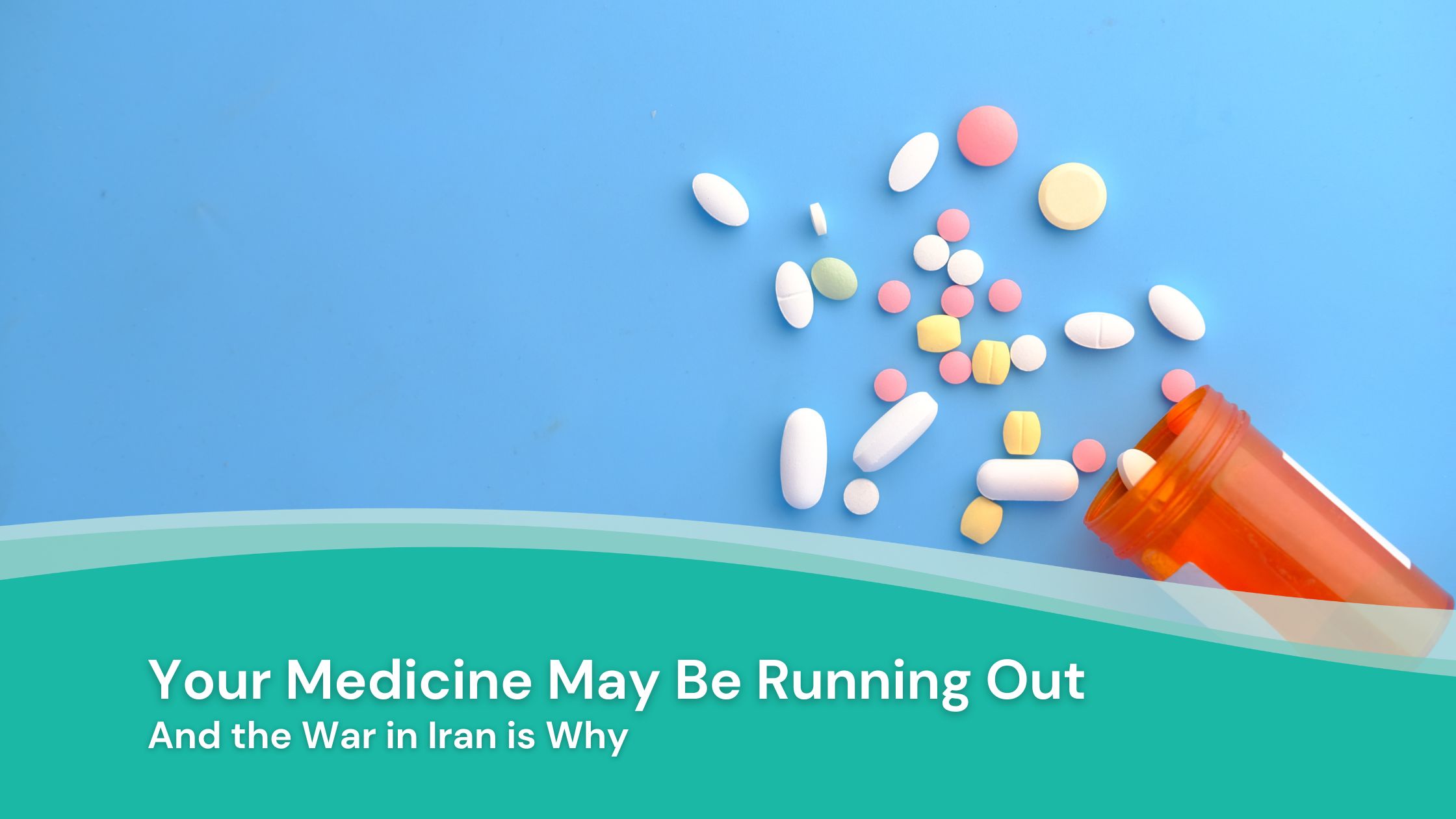
Here’s what most people don’t realize: **your medicine is made from oil.** Acetaminophen, ibuprofen, aspirin, and thousands of other common drugs rely on petrochemical precursors — chemical building blocks derived from crude oil and natural gas. The UK’s pharmaceutical experts are already warning that Britain is “a few weeks away” from shortages of everything from painkillers to cancer drugs *(The Guardian, March 28, 2026)*. CNBC reported that the Strait of Hormuz closure puts America’s generic drug supply directly at risk. Healthbeat confirmed that even MRI machines — which require helium transported via the same disrupted shipping lanes — are affected.

This isn’t a theoretical risk. This is happening now.

What Gets Disrupted First — and What That Means for You

Generic drugs are the most vulnerable. They account for roughly 90% of prescriptions filled in the US and are predominantly manufactured in India and China using chemical precursors that flow through disrupted supply chains. When logistics costs rise and routes get rerouted or shut down, generic manufacturers — already operating on thin margins — delay shipments, allocate inventory to larger buyers, and in some cases halt production entirely.


The categories most at risk:

– Common pain relievers and fever reducers (acetaminophen, ibuprofen)
– Antibiotics — already in chronic short supply in many regions
– Cancer chemotherapy agents that depend on petrochemical synthesis
– Cardiovascular medications
– Diabetes drugs, including some insulin formulations

The lesson of COVID was stark: by the time the shortage hits the news, the shelf is already empty. The families who were prepared — who had stocked essential medications through legitimate channels — were the ones who made it through without a crisis.


The Case for Personal Medical Preparedness

Emergency preparedness has always meant food, water, and shelter. But medical preparedness is increasingly the missing piece — and the hardest one to address after the fact.

You cannot stockpile medications the same way you stockpile rice. Most prescriptions are dispensed 30 days at a time. Insurance often won’t cover early refills. And in a shortage, your physician may have limited ability to help even if they want to.

This is exactly why Jase Medical exists. Jase’s model — providing physician-prescribed emergency medication supplies directly to families — was built for precisely this scenario. The ability to have a 12-month supply of your critical antibiotics, or a travel emergency kit stocked with medications you actually need, isn’t a luxury. Right now, it’s foresight.


What You Can Do Today

The window to act is narrowing. Shortages follow a predictable pattern: disruption happens, supply tightens, distribution systems prioritize hospitals and large buyers, and retail pharmacy shelves thin out over a period of weeks to months.

Here’s a practical checklist:
1. Audit your medicine cabinet. What medications does your family depend on regularly? What would happen if you couldn’t refill for 60 or 90 days? 

2. Talk to your doctor now — not when the shortage hits. Ask about early refills, therapeutic alternatives, or emergency supply options.

3. Build a travel/emergency kit with the basics: antibiotics covering common infections, antiparasitics, anti-inflammatories, and any condition-specific medications your family requires. The JaseCase is purpose-built exactly for this scenario.

4. Don’t wait for the news to tell you there’s a problem. By then, it’s too late.

The families who come through crises intact aren’t the ones who responded fastest — they’re the ones who prepared earliest.

If you’ve been thinking about building a medical emergency kit for your family, there is no better time than right now.


Learn more about Jase Medical’s emergency preparedness kits at jase.com

Lifesaving Solutions

Everyone should be empowered to care for themselves and their loved ones during the unexpected. Check out our recent lifesaving products today.

Recent Posts

Keeping you informed and safe.

Psychiatric Medications Need a Different Emergency Plan

Psychiatric Medications Need a Different Emergency Plan

Psychiatric Medications Need a Different Emergency Plan Part 2 of a two-part series on medication readiness during a disruption By the Jase Medical Team In Part 1 of this series, we asked a question most people have never considered: If you suddenly couldn't access...

read more
Which of Your Medications Actually Cannot Wait?

Which of Your Medications Actually Cannot Wait?

Which of Your Medications Actually Cannot Wait? Part 1 of a two-part series on medication readiness during a disruption By the Jase Medical Team There are five prescription bottles sitting on your counter. You take all five regularly, you have some medication left in...

read more

Join Our Newsletter

Our mission is to help you be more medically prepared. Join our newsletter and follow us on social media for health and safety tips each week!

Avian Influenza (Bird Flu): It’s Resurgence, Risks, and Treatment

The Importance of Timely Antibiotic Intervention

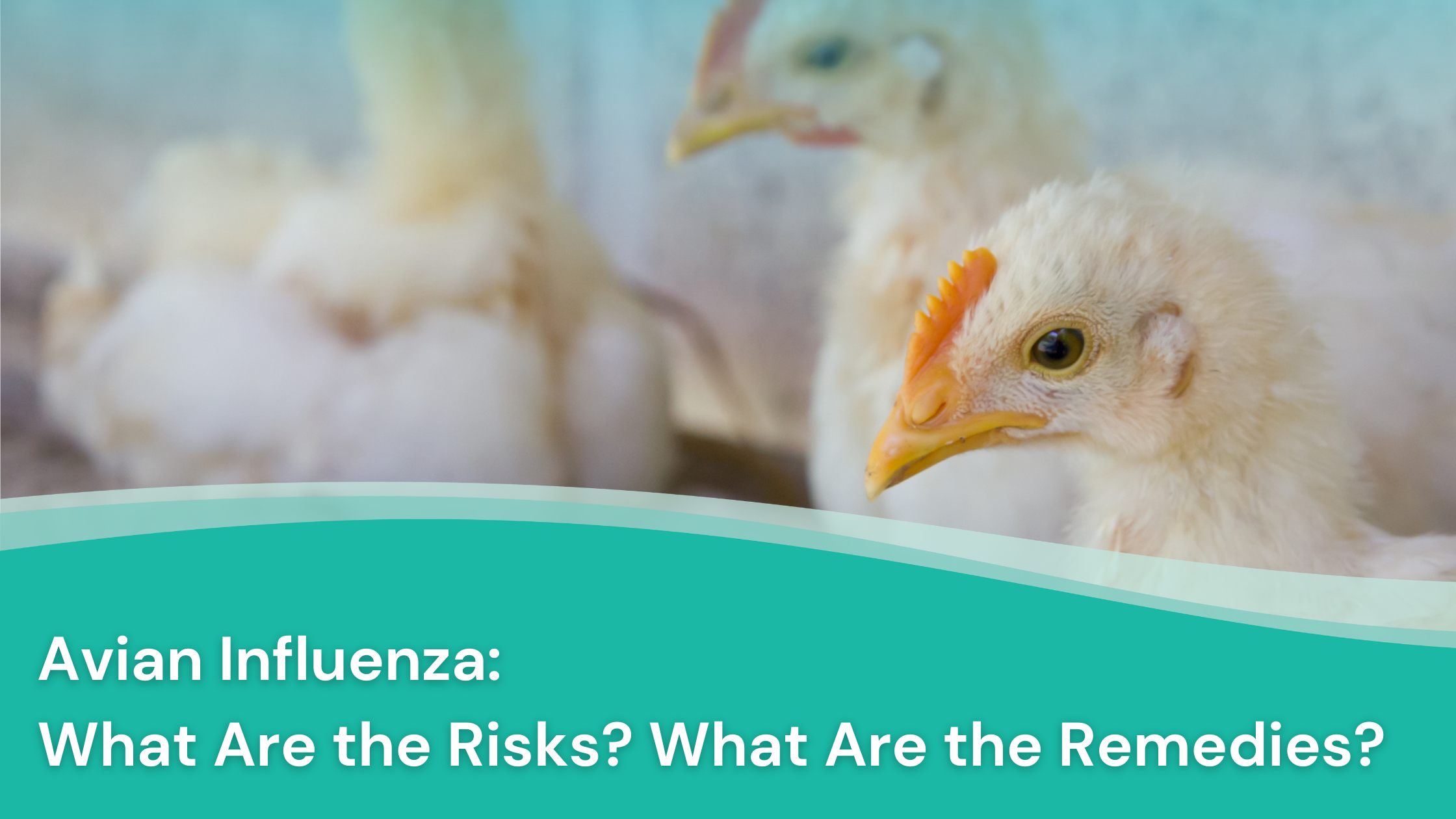
They call it the bird flu, but it also affects other animals, and people.

.

Antibiotic Intervention Secondary Image

Making an Unwelcome Comeback

Back in the mid to late 2000’s the bird flu was on a devastating path around the world – killing 53% of humans who contracted it. States of emergency were declared, experimental vaccines developed, and antiviral drugs (such as Oseltamivir) were back-stocked. Since then it was pretty much relegated to wild bird populations, until recently. 

The bird flu has been around for decades and is a constant health risk to wild bird populations, but it normally stays there, amongst wild birds. In more recent years however, it has infiltrated other birds, including commercial poultry animals, and beyond. 

The Current Situation:

In recent months, the world has been grappling with a concerning resurgence of the avian influenza, commonly known as bird flu. This highly pathogenic influenza results in a viral infection, primarily affecting birds, but has raised alarms due to its potential to spread to other birds and mammals, including humans.

The H5N1 strain has been affecting wild birds in the United States since about 1996, but lately has also spread to poultry farms, leading to the culling of millions of birds to prevent further spread. But this has only been partially successful. 

In late March 2024, the virus was detected in dairy cattle in Texas and Kansas, marking the first time it was found in mammals in the U.S. this year.

And there have been two confirmed human cases in the U.S. so far this year. 

The current outbreak of bird flu has been primarily attributed to the H5N1 and the more recent H5N8 strains of the virus. These strains are highly pathogenic, meaning they can cause severe illness and death in birds. The virus is primarily spread through contact with infected birds or their droppings, though it can also be transmitted through contaminated surfaces or objects. It was exposure due to close proximity to infected animals that caused the two human cases. One case involved a worker at a farm with infected cows, and the other case involved a worker at a poultry facility.


Risks to Humans:

While H5N1 can infect humans through close contact with infected birds or mammals, the current risk to the general public is considered relatively low. The CDC’s avian influenza risk information changes, and gets updated regularly though.  However it is a non-zero risk. The two human cases in the U.S. this year involved direct contact with infected animals, but there is currently no evidence of sustained human-to-human transmission. 

When contracted, the H5N1 strain in particular, has been known to cause severe respiratory illness in humans, with a potential for prolonged health complications if not treated effectively.

Another strain of concern, H5N8, has also shown the ability to infect humans. While human cases of H5N8 have been limited so far, the potential for the virus to mutate and become more transmissible among humans is a significant concern. 

Genetic changes in the virus have enabled the bird flu to spread from wild birds to poultry animals and other mammals, including livestock and humans. And while it doesn’t pose an immediate risk to the general public, the time to prepare yourself for it is before it gets worse – not after.


What can we do?

Antibiotic Intervention Secondary Image

While we can’t avoid wild birds or poultry altogether, here are some steps we can take to reduce the risks of infection:


  1. Avoid Contact with Sick or Dead Birds: Do not handle sick or dead birds, including poultry. If you must handle them, use gloves and other protective gear, and wash your hands thoroughly afterward.
  2. Practice Good Hygiene: Wash your hands frequently with soap and water, especially after handling birds or visiting places where birds are present. Avoid touching your face, especially your eyes, nose, and mouth, with unwashed hands.
  3. Cook Poultry Thoroughly: Ensure that poultry, including eggs, is cooked thoroughly before consumption. Cooking at temperatures of 165°F (74°C) kills the bird flu virus.
  4. Avoid Contaminated Surfaces: Avoid contact with surfaces or objects that may be contaminated with bird droppings or secretions.
  5. Limit Exposure to Live Birds: Minimize visits to live bird markets or farms where poultry are raised, especially in areas experiencing bird flu outbreaks.
  6. Stay Informed: Stay updated on the latest developments regarding bird flu outbreaks in your area and follow the advice of health authorities.
  7. Be equipped to treat an infection if it occurs. Keep an antiviral medication on hand. 


Antivirals treat Avian Influenza

Antiviral medications, such as Oseltamivir, remain the preferred intervention method for most influenzas including the bird flu. Stopping a viral infection as soon as possible yields the best outcome for patients, and having a medication kit that includes an antiviral is key to being able to intervene quickly in an infection. Early treatment means you’ll feel better faster, and have less disruption to your daily life. It also means you’ll reduce the likelihood of developing further complications.

Our Jase Case  – already full of life saving medications – is also completely customizable, and can be configured to include the antiviral Oseltamivir 75 mg (10 pack) so you have a weapon to wield against the bird flu (and other influenzas).

Customize your Jase Case today, for some certainty in an uncertain world. 

Lifesaving Medications

Everyone should be empowered to care for themselves and their loved ones during the unexpected.

Recent Posts

Keeping you informed and safe.

Psychiatric Medications Need a Different Emergency Plan

Psychiatric Medications Need a Different Emergency Plan

Psychiatric Medications Need a Different Emergency Plan Part 2 of a two-part series on medication readiness during a disruption By the Jase Medical Team In Part 1 of this series, we asked a question most people have never considered: If you suddenly couldn't access...

read more
Which of Your Medications Actually Cannot Wait?

Which of Your Medications Actually Cannot Wait?

Which of Your Medications Actually Cannot Wait? Part 1 of a two-part series on medication readiness during a disruption By the Jase Medical Team There are five prescription bottles sitting on your counter. You take all five regularly, you have some medication left in...

read more

Join Our Newsletter

Our mission is to help you be more medically prepared. Join our newsletter and follow us on social media for health and safety tips each week!

National Doctor’s Day: A Celebration Of Care

On this day we recognize the contributions of doctors to our health, our lives, and our communities. 

.


National Doctor’s Day: A Day We Acknowledge The Vital Roles Doctors Play In Our Lives

National Doctor’s Day is a day dedicated to recognizing the contributions of physicians to individual lives and communities. It’s a day to express gratitude for their dedication, expertise, and compassion in caring for the sick and promoting good health.

It was first celebrated in Georgia in 1933 by the wife of Dr. Charles B. Almond, a family medical doctor. Mrs. Almond wanted to show appreciation for the work doctors do, and sought to have a day dedicated to honoring them. The chosen date of March 30th commemorates the anniversary of the first use of general anesthesia in surgery by Dr. Crawford Long in 1842.

National Doctor’s Day is an important opportunity to acknowledge the vital role doctors play in our lives. They undertake years of training and sacrifice to acquire the knowledge and skills necessary to diagnose and treat illnesses, alleviate suffering, and improve the quality of life for their patients.

It’s a day to remember the countless hours they spend caring for the sick – often at the expense of their own personal time and well-being. And a day to celebrate their triumphs and recognize the challenges they face in a constantly evolving healthcare landscape.


Celebrations

  • Hospitals, clinics, and medical organizations often hold events or offer special gifts and tokens of appreciation to doctors on this day.
  • Patients and families can express their gratitude through handwritten notes, cards, gifts, or even taking the time to share positive experiences about their doctors online.


About Our Founder: Dr. Shawn Rowland

Back in 2018, Dr. Rowland, working as a family physician, encountered the harsh realities of medication shortages firsthand, and saw how they affected patient care.

This experience ignited a fire in him, driving him to find a sustainable solution.

His research revealed a shocking truth – over 95% of medication ingredients are manufactured in China and India, leaving the global supply chain vulnerable.

Determined to make a difference, Dr. Rowland set out and pioneered a new path for the pharmaceutical industry, Jase Medical, aiming to revolutionize emergency medication access for all.

His mission was clear: to ensure everyone could have access to vital medications safely, despite supply chain disruptions.


A Vision For Better Healthcare

Jase Medical has become a hub of innovation, constantly finding new ways to help everyone be better prepared medically for the unexpected.

Dr. Rowland’s visionary spirit has inspired us all at Jase Medical to push the boundaries of what’s possible in healthcare.

“The fragile supply chain, coupled with escalating geopolitical tensions leading to pharmaceutical shortages and an increasingly limited supply of healthcare providers, is why Jase Medical exists.”

As Jase Medical continues to grow and evolve, it remains a beacon of hope and preparedness in an unpredictable world. The company’s journey thus far is a story of resilience, innovation, and an unwavering commitment to serving the community.

With its eyes set on the future, Jase Medical is not just responding to the challenges of today but is actively shaping the landscape of healthcare preparedness for tomorrow. And we are just getting started!” – Dr. Rowland.

Lifesaving Medications

Everyone should be empowered to care for themselves and their loved ones during the unexpected.

Recent Posts

Keeping you informed and safe.

Psychiatric Medications Need a Different Emergency Plan

Psychiatric Medications Need a Different Emergency Plan

Psychiatric Medications Need a Different Emergency Plan Part 2 of a two-part series on medication readiness during a disruption By the Jase Medical Team In Part 1 of this series, we asked a question most people have never considered: If you suddenly couldn't access...

read more
Which of Your Medications Actually Cannot Wait?

Which of Your Medications Actually Cannot Wait?

Which of Your Medications Actually Cannot Wait? Part 1 of a two-part series on medication readiness during a disruption By the Jase Medical Team There are five prescription bottles sitting on your counter. You take all five regularly, you have some medication left in...

read more

Join Our Newsletter

Our mission is to help you be more medically prepared. Join our newsletter and follow us on social media for health and safety tips each week!