
For Clinicians | The Tooth Infection at Your Counter:
What to Do When the Dentist Is Days Away
By Dr. Jamie Wilkey, PharmD — Director of Clinical Strategy, Jase
Medically reviewed by Kristen Carpenter, PA-C — Clinical Advisory Board Member
Almost none of us trained to manage a tooth. I know I sure didn’t as a pharmacist. Yet the tooth finds us anyway. It’s the patient at the pharmacy counter asking which antibiotic works for a throbbing molar (as if they had access to the antibiotic even if I told them). It’s the primary care visit that turns out to be a three-day toothache. It’s the roughly two million dental visits to US emergency departments every year, most of which end the same way: an antibiotic, something for the pain, and a referral to a dentist the patient still has to go find.
So this is the dental guidance most of us never got in our professional schooling. Not how to do the dentistry, but what to actually say and prescribe in the gap: which toothaches are emergencies and which aren’t, what antibiotics genuinely do for an infected tooth, and what the right move is when the patient in front of you can’t get to a dentist for days. It turns out the clinical answer runs almost opposite to what the search results promise, and it starts with a piece of anatomy. Let’s jump into that, shall we?
Why can’t antibiotics just fix the tooth?
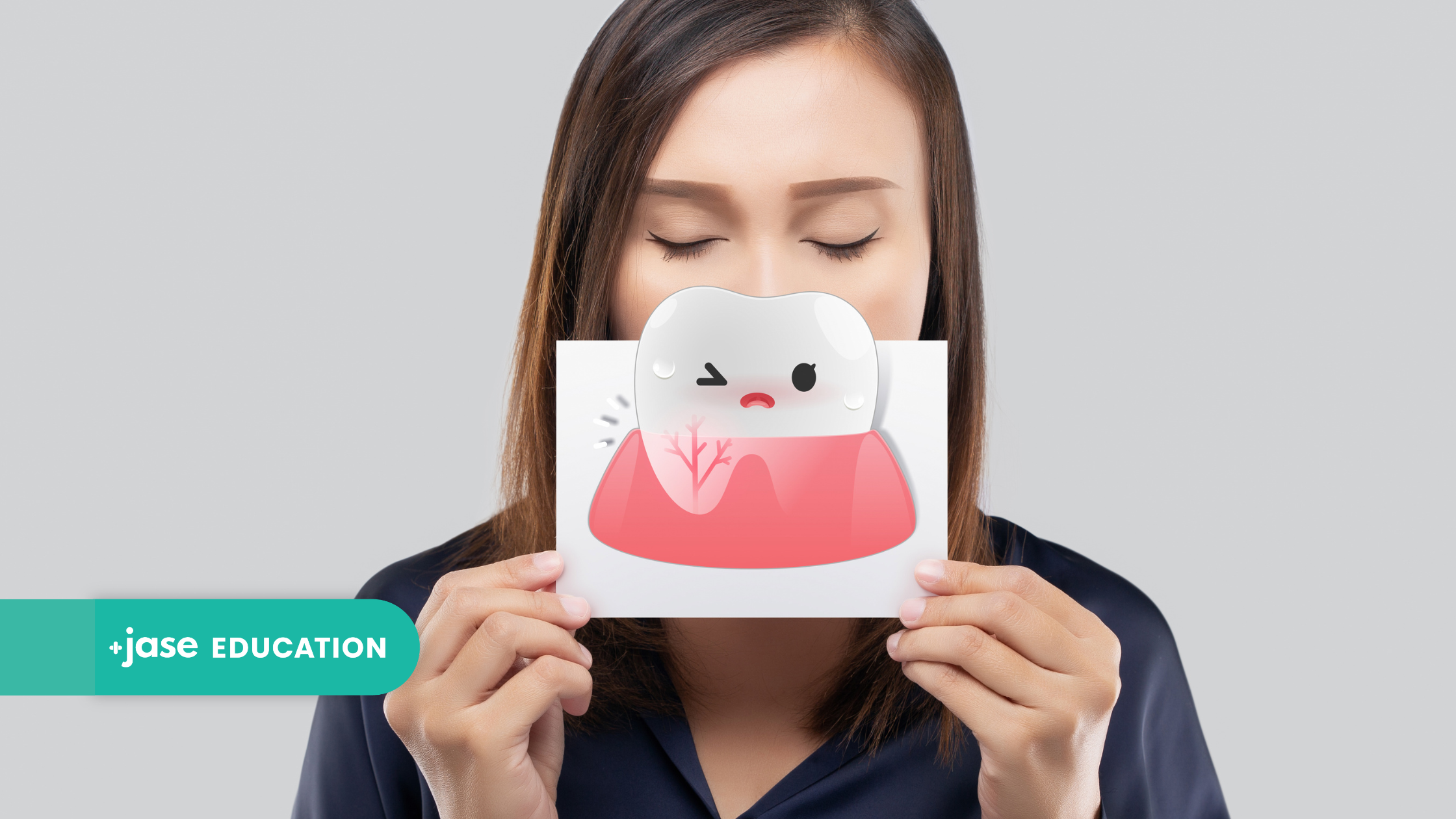
By the time a tooth is infected enough to hurt like that, the pulp inside it is usually dead. Dead tissue has no blood supply. And no blood supply means no delivery route: the antibiotic circulating through the patient’s bloodstream physically cannot reach the bacteria walled up inside that tooth. You can run a full course and the source sits there untouched.
So the thing that actually cures a tooth infection isn’t a drug at all. It’s source control: draining the abscess, opening the tooth, a root canal, or pulling it. Mechanical, not pharmacologic. The dentist isn’t the backup plan when antibiotics fail; the dentist is the treatment. Antibiotics do one useful job in the meantime: they hold back a spreading infection and buy time. They are the bridge, not the destination.
This is exactly why the American Dental Association, in its 2019 guideline, tells dentists not to prescribe antibiotics for most toothaches. Not to conserve them, though that matters too, but because for a garden-variety symptomatic tooth they mostly don’t work as the patient imagines. The search results promising an antibiotic that will “save your life” from a tooth infection have the mechanism backwards. The antibiotic buys the time. The dental chair saves the tooth.
So when ARE antibiotics indicated?
The 2019 ADA guideline draws the line at the patient’s body, not the tooth. For a healthy adult with a symptomatic tooth and no systemic signs, the recommendation is no antibiotic. Refer for dental treatment, and manage the pain in the meantime. And the pain tool that actually works here is not an opioid: 400 to 600 mg of ibuprofen combined with 1000 mg of acetaminophen outperforms both, and outperforms most opioid combinations, for acute dental pain. Worth having at ready a patient in dental agony begs to know from you what to take.
Antibiotics enter when the infection stops being local. Two triggers: systemic involvement (fever, malaise, the look of someone whose infection has left the tooth), or the access situation where definitive dental care simply isn’t reachable in a useful timeframe. Hang on that second one; it’s the whole back half of this article.
The signs that mean escalate now, not tomorrow are: fever, swelling that’s spreading toward the eye or down into the neck, and any trouble swallowing or breathing. That last cluster is how a tooth becomes Ludwig’s angina, a deep neck-space infection that can close off an airway. It’s rare, and it still kills roughly 8% of the people who develop it. Most toothaches are nowhere near this. But the patient can’t tell the difference on their own, and that triage line is the single most useful thing we hand them.
Dentistry has a stewardship problem, and you’re standing in it
Dentists write roughly one in ten of all outpatient antibiotic prescriptions in this country, about 25 million courses a year. And after the 2019 guideline told them to prescribe less, the volume barely moved. Antibiotics still show up in 12 to 28% of visits for the exact acute infections that mostly shouldn’t get them, from irreversible pulpitis to apical abscess, and when they are prescribed the course runs eight days or longer nearly half the time. On the prophylaxis side, the “premedicate before the cleaning” scripts, more than 80% don’t match current guidance at all.
The single best stewardship tool for a tooth is the procedure: drain it, open it, pull it, and the antibiotic becomes unnecessary. Non-dentists can’t do the procedure. No way! Which means when the tooth shows up at the pharmacy counter or the urgent care, the stewardship move isn’t a better antibiotic choice. It’s the triage from the last section: is this local or systemic, and is the patient actually on a path to a dentist, or are we about to write a course that becomes the treatment plan by default?
That default is the trap. An antibiotic handed over without a dental appointment behind it doesn’t buy time toward a fix; it just postpones the same infection, minus a few days of the drug’s usefulness against everything else the patient carries. The bacteria in the tooth recolonize the moment the course ends, because, again, the source was never touched. So the stewardship question at our counter is less “which drug” and more “what is this drug bridging to.” If the answer is nothing, the prescription isn’t stewardship. It’s a delay with side effects.
So what about when there’s no dentist to bridge to?
This is the second trigger from earlier, and it’s the one the guideline names but never develops. The ADA’s own language reserves antibiotics for systemic signs or for when definitive dental treatment is not available. That second clause is doing non-obvious work. It’s the guideline admitting that access, not just biology, decides whether a drug is appropriate.
And access fails in ordinary ways. A molar goes bad on day two of a cruise. A crown cracks on a Friday night heading into a holiday weekend. A patient is three hours from the nearest dentist taking new patients, or on an international trip where the local pharmacy stock is counterfeit or degraded. In every one of these, the bridge has somewhere to go, it’s just days out instead of hours. This is exactly where a course of antibiotics does the job we described: holding a spreading infection in check until the chair is reachable.
Notice this is the same logic as any standby antibiotic. Resistance is driven by how antibiotics are used, not by whether a patient keeps a course on a shelf. A well-chosen drug, matched to a condition the patient can actually recognize, held for the moment access disappears, is not the thing that breeds resistance. Misuse is. Advance provision has been standard wherever access is the binding constraint long before we came along: ships carry antibiotics for crew with no physician aboard, and expedition medicine sends them where evacuation is days away.
The boundary matters as much as the case. This is for the recognizable dental infection when a dentist is genuinely out of reach. It is not for the vague ache the patient could get seen for on Monday, and it is never a reason to skip the dentist once one is reachable. The drug buys the trip to the chair. It does not replace it.
The grey space, and the kit we built for it
Right now the tooth gets all-or-nothing care. Either the patient reaches a dentist while it still matters, or they’re left with a search bar and whatever’s in the cabinet. There’s no sanctioned middle: no clinician-built step that readies someone for the one dental problem they can actually recognize, before access fails. That gap is where we work, and we call the category by name on purpose: appropriate medical preparation. The right drug, a real indication, clear instructions, prescribed ahead of the moment access disappears.
The Jase dental kit is that idea made concrete. A licensed provider prescribes it before the trip or the storm: the antibiotic clinicians reach for in dental infections, a prescription anti-inflammatory for the pain, and a topical numbing gel for adults, with condition cards that spell out dosing and what each medication is for. It’s the office and the pharmacy, packed for the patient before the molar goes bad three time zones from home.
A note on the pain side, because it matters at the counter: the kit’s anti-inflammatory is celecoxib, a prescription NSAID, but the combination that actually tops the evidence for dental pain, ibuprofen plus acetaminophen, is over the counter and already sitting in most medicine cabinets. Point patients there first for the pain itself, no prescription needed. Celecoxib is the option for those who can’t take standard NSAIDs or want once-daily dosing.
We hold this to the same bar we’d hold any standby course. Right drug, chosen deliberately. A documented indication, not “antibiotics, just in case.” Dosing and duration set by the prescriber, never self-terminated when the pain eases. And clear direction back to a clinician. That’s the part we keep sharpening, and it’s the part that separates preparation from a leftover stash. The kit is the bridge. The dentist is still the cure.
The bottom line
Antibiotics don’t cure a tooth infection; a dentist does, because the source is walled off from the bloodstream. Most toothaches aren’t emergencies, and the triage line (fever, spreading swelling, trouble swallowing or breathing) is the most useful thing we hand a patient. At the counter, the real stewardship question isn’t which antibiotic, it’s what the antibiotic is bridging to. And when the answer is a dentist who’s genuinely days away, a well-chosen course prescribed ahead of time is preparation, not excess. For the patients you’d rather not manage in this grey space yourself, send them to us at Jase.com.
Sources
- Lockhart PB, Tampi MP, Abt E, et al. Evidence-based clinical practice guideline on antibiotic use for the urgent management of pulpal- and periapical-related dental pain and intra-oral swelling. J Am Dent Assoc. 2019;150(11):906-921.e12. (Recommends against antibiotics for immunocompetent adults; reserves them for systemic involvement or when timely definitive dental treatment is unavailable; NSAID dosing of 400-600 mg ibuprofen plus 1000 mg acetaminophen.) https://pmc.ncbi.nlm.nih.gov/articles/PMC8270006/
- American Dental Association. Antibiotics for Dental Pain and Swelling (public guideline summary). https://www.ada.org/resources/research/science/evidence-based-dental-research/antibiotics-for-dental-pain-and-swelling
- Cackley AP, et al. Emergency Department Visits for Tooth Disorders: United States, 2020-2022. CDC NCHS Data Brief No. 531, June 2025. (An annual average of 1,944,000 ED visits for tooth disorders.) https://www.cdc.gov/nchs/products/databriefs/db531.htm
- Huynh CVT, Gouin KA, Hicks LA, et al. Outpatient antibiotic prescribing by general dentists in the United States from 2018 through 2022. J Am Dent Assoc. 2025. (Dentists wrote 9.8%-12.1% of outpatient antibiotics; 25.17 million prescriptions in 2022; volume stable after the 2019 guideline.) https://pmc.ncbi.nlm.nih.gov/articles/PMC12058375/
- Carlsen DB, et al. Concordance of Antibiotic Prescribing with the American Dental Association Acute Oral Infection Guidelines within Veterans Affairs Dentistry. Infect Control Hosp Epidemiol. 2021. (Antibiotics given in 12% of irreversible pulpitis, 17% of apical periodontitis, and 28% of acute apical abscess visits; prolonged courses of 8+ days in 42-49%.) https://pmc.ncbi.nlm.nih.gov/articles/PMC8410877/
- Suda KJ, Calip GS, Zhou J, et al. Assessment of the Appropriateness of Antibiotic Prescriptions for Infection Prophylaxis Before Dental Procedures, 2011 to 2015. JAMA Netw Open. 2019. (80.9% of dental antibiotic prophylaxis prescriptions were unnecessary.) https://pmc.ncbi.nlm.nih.gov/articles/PMC6547109/
- Cleveland Clinic. Ludwig’s Angina. (Deep neck-space infection, most often from lower molars; roughly 8% of those who develop it die.) https://my.clevelandclinic.org/health/diseases/23457-ludwigs-angina
Lifesaving Solutions
Recent Posts
Keeping you informed and safe.
For Clinicians | Animal Sting Reactions
For Clinicians | Animal Sting Reactions: Large Local Reaction vs Cellulitis, and When It's Anaphylaxis By Dr. Jamie Wilkey, PharmD, Director of Clinical EducationMedically reviewed and edited by Kristen Carpenter, PA-C This is part two of our Animals + Disaster...

Bites and Scratches in a Disaster: Which Ones Need Antibiotics
Bites and Scratches in a Disaster: Which Ones Need Antibiotics Animals in a Disaster Series: Part 1 of 2By the Jase Medical Team Three days after the storm, the animal injuries start showing up. A cat got loose during the evacuation and bit someone's hand when they...

For Clinicians | Bite and Scratch Wound Antibiotic Prophylaxis Without a 48-Hour Recheck
Bite and Scratch Wound Antibiotic Prophylaxis Without a 48-Hour Recheck By Dr. Jamie Wilkey, PharmD, Director of Clinical Education Medically reviewed and edited by Kristen Carpenter, PA-C September is National Preparedness Month, and at Jase we love this month. I’d...

Psychiatric Medications Need a Different Emergency Plan
Psychiatric Medications Need a Different Emergency Plan Part 2 of a two-part series on medication readiness during a disruption By the Jase Medical Team In Part 1 of this series, we asked a question most people have never considered: If you suddenly couldn't access...