Why Expiration Dates Matter for Your Medication Supply
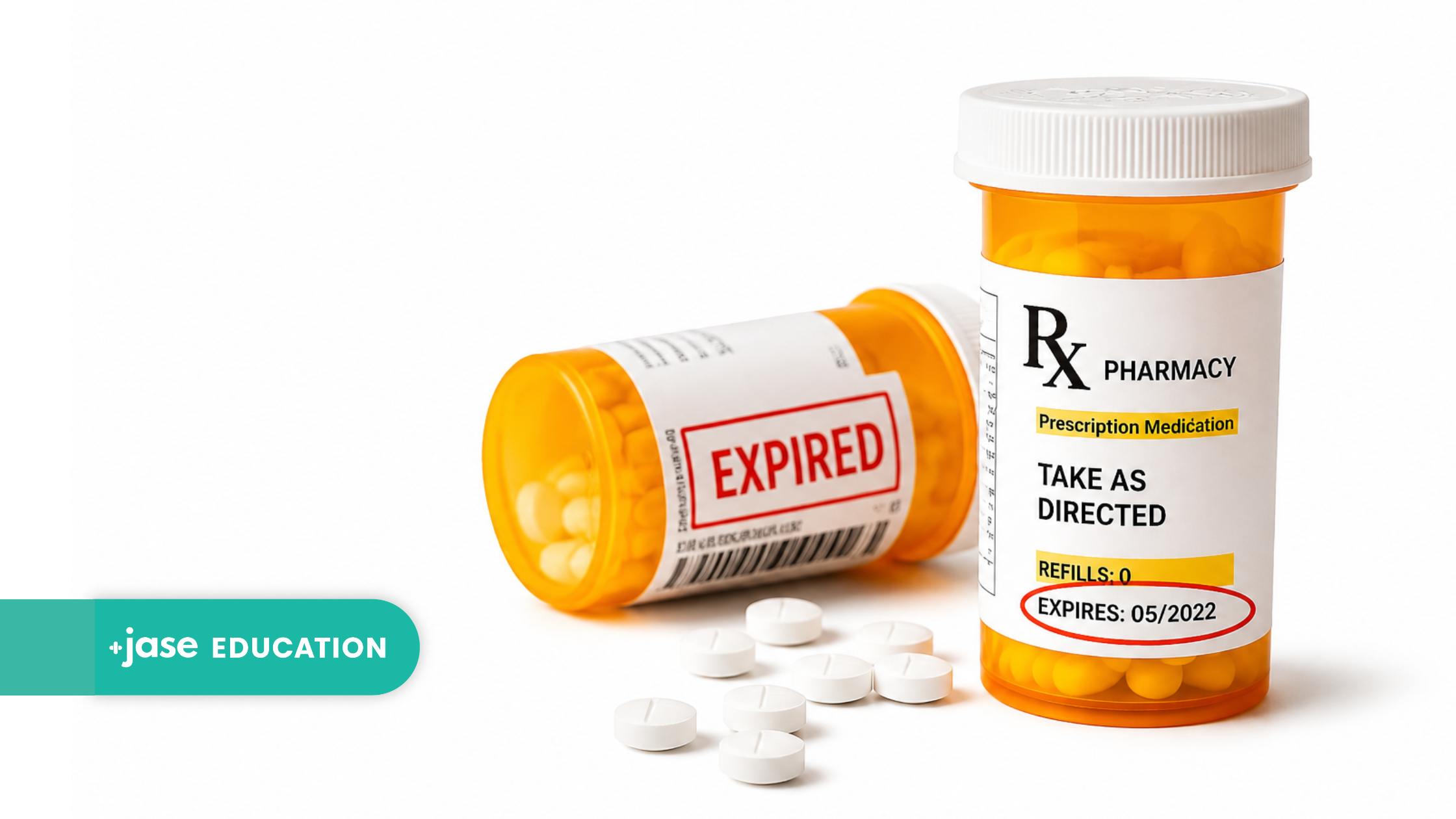
Why Expiration Dates Matter for Your Medication Supply

By Cayla McGrath

Consumer notice: A note on expiration dates. This article discusses published research on drug stability, including the FDA and Department of Defense Shelf Life Extension Program (SLEP). SLEP applies to federal stockpiles held under controlled, monitored storage and tested lot by lot. It does not apply to medications stored at home, and its findings do not extend the expiration date of any medication you own. FDA’s guidance to consumers is that expired medications should not be used. Jase Medical follows the manufacturer’s printed expiration date on every medication we dispense. Replace medications when they expire, and dispose of the expired supply following FDA’s disposal guidance.

If you’ve ever stood in front of your medicine cabinet holding a bottle a year past the printed date, you’ve heard two kinds of advice: “it’s probably fine” and “throw it out, it might be toxic.” The useful answer is simpler than either: replace it. Here is why the date matters, and how storage protects your medication until then.


What the expiration date means

The date on a medication bottle is the manufacturer’s commitment: the drug holds at least 90% of its labeled potency under the specified storage conditions up to that date. After that date, the manufacturer makes no guarantee, and there is no way to check a bottle at home.

What the stockpile research shows, and what it doesn’t

The most cited stability research comes from the FDA and Department of Defense Shelf Life Extension Program (SLEP), which tests medications held in federal stockpiles. Those stockpiles sit in climate-controlled warehouses under continuous monitoring, and each lot is tested before its dating is extended. FDA scientists who analyzed the program found wide variation between drugs and between lots of the same drug.

That is why SLEP results apply only to the specific lots tested. A bottle at home has none of those controls, and nobody can tell from looking at it whether it would have passed. FDA’s guidance to consumers is direct: don’t use expired medication.

How medications differ

Medications differ in how sensitive they are to heat, light, and moisture. Knowing which category a medication falls into tells you how to store it and which to replace first as expiration dates come due.

Tablets and capsules, such as ibuprofen, acetaminophen, and most antibiotics in pill form, are the most stable form when kept cool and dry, away from the bathroom.

Liquids, suspensions, and mixed medications are less stable. An amoxicillin suspension, once mixed, is labeled for 14 days. Liquid antibiotics, eye drops, and oral suspensions are not long-term supply items.

Narrow-window and refrigerated medications need the most care. Small potency changes matter clinically, and insulin stored improperly becomes unreliable. Follow their storage instructions exactly.

Storage is what you control

The bathroom medicine cabinet is one of the worst places in your home, with humidity and temperature swings from every shower. A cool, dry closet shelf is better, and an airtight container is better still.

Replace these right away, even before their printed date: mixed liquid suspensions, anything stored in heat or humidity, refrigerated items that may have warmed, and anything with visible changes such as discoloration, odor, or clumping. Replace everything else by its labeled expiration date.

Every Jase kit ships with storage guidance. A JaseCase stored properly and replaced at its labeled expiration dates gives you what you need when you need it. Jase offers refills for expired kit medications.

Learn more at jase.com/

Closing note: When a medication reaches its expiration date, replace it. Dispose of the expired supply following FDA’s guidance on expired medicines.


Cayla McGrath is a content strategist with Jase Medical. This post is for informational purposes only and does not constitute medical advice. Always consult a licensed healthcare provider before using any prescription medication.


Lifesaving Solutions

Everyone should be empowered to care for themselves and their loved ones during the unexpected. Check out our recent lifesaving products today.

Recent Posts

Keeping you informed and safe.

What Metronidazole Actually Treats — And What It Doesn’t

What Metronidazole Actually Treats — And What It Doesn’t

What Metronidazole Actually Treats — And What It Doesn't By Cayla McGrath If you've ever been prescribed metronidazole, the first thing most people remember is the warning: no alcohol while you're taking it. The pharmacist usually says it with the kind of gravity that...

read more
When a Tooth Infection Can’t Wait

When a Tooth Infection Can’t Wait

Antibiotics Won't Cure Your Tooth Infection. Here's What They Actually Do By Cayla McGrath A molar starts throbbing on day two of a ten-day cruise. A crown cracks Friday night and your dentist can't see you until Wednesday. A tooth flares in a rural area where the...

read more
For Clinicians | The Tooth Infection at Your Counter

For Clinicians | The Tooth Infection at Your Counter

For Clinicians | The Tooth Infection at Your Counter: What to Do When the Dentist Is Days Away By Dr. Jamie Wilkey, PharmD — Director of Clinical Strategy, JaseMedically reviewed by Kristen Carpenter, PA-C — Clinical Advisory Board Member Almost none of us trained to...

read more

Join Our Newsletter

Our mission is to help you be more medically prepared. Join our newsletter and follow us on social media for health and safety tips each week!

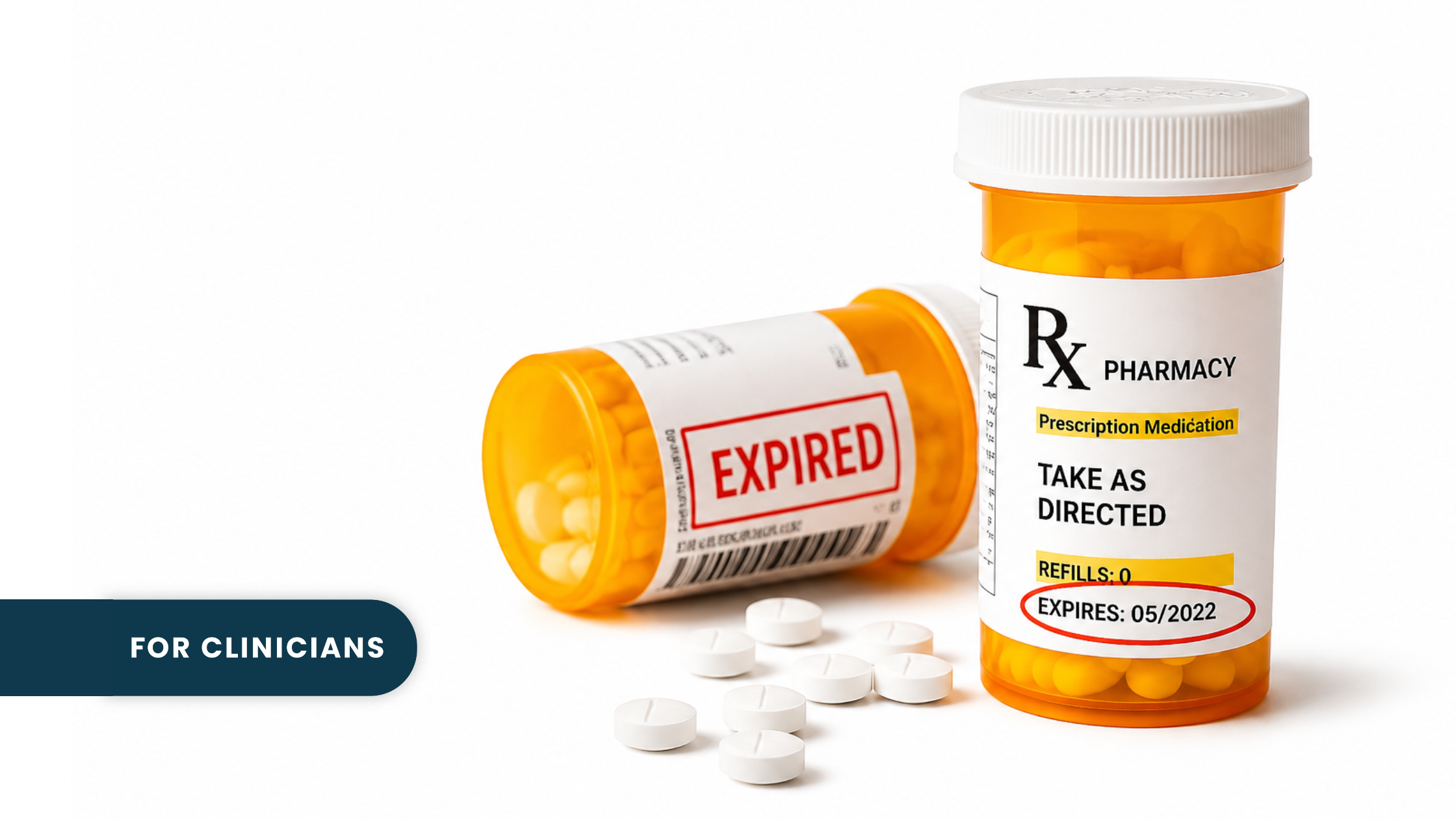
For Clinicians | Counseling Patients on Expired Medications

For Clinicians | Counseling Patients on Expired Medications

By Dr. Jamie Wilkey, PharmD — Director of Clinical Strategy, Jase
Medically reviewed by Kristen Carpenter, PA-C — Clinical Advisory Board Member

Clinician notice: A note on expiration dates. This article discusses published research on drug stability, including the FDA and Department of Defense Shelf Life Extension Program (SLEP). SLEP applies to federal stockpiles held under controlled, monitored storage and tested lot by lot. It does not apply to medications stored at home, and its findings do not extend the expiration date of any medication you own. FDA’s guidance to consumers is that expired medications should not be used. This article is written for licensed healthcare professionals to support patient counseling. Jase Medical follows the manufacturer’s printed expiration date on every medication we dispense, and we recommend counseling patients to replace medications at the labeled date and dispose of expired supply following FDA guidance.

A patient holds up a bottle a year or two past the dispense date and asks, “Is this still good?” The counseling answer is the same for every product: replace it. The labeled date is the replacement date.

This article covers the stability research behind the question so you can explain why. The most cited data comes from the FDA and Department of Defense Shelf Life Extension Program, which tested stockpiled lots under controlled storage. Those results do not transfer to medication kept at home, and that limitation is the core of the counseling message.

Why stability varies, and why that makes the label date the answer

Stability differs by drug, formulation, and storage history. Solid oral forms hold up better than liquids, and a small set of products degrade quickly or carry specific risks once degraded. That variation is exactly why a patient cannot judge an expired product at home, and why counseling always lands on replacement at the labeled date. Use the tiers below to decide which products to replace first and which need the closest storage attention.

Tier 1: Solid oral forms

Tablets and capsules, including most oral antibiotics, analgesics, and antihistamines, are the least sensitive to storage. Counsel patients to keep them capped in the original container in a cool, dry place away from the bathroom, and to replace them at the labeled date.

Tier 2: Liquids, suspensions, and reconstituted products

Oral suspensions, eye and ear drops, and anything reconstituted carry short in-use dating. Reconstituted amoxicillin suspension, for example, is labeled for 14 days after mixing. Counsel patients that these are not long-term supply items, to follow the beyond-use date on the label, and to discard leftovers when the course ends.

Tier 3: Narrow therapeutic index and storage-dependent products

Levothyroxine, warfarin, antiepileptics, insulin, epinephrine auto-injectors, and sublingual nitroglycerin need the closest attention. Small potency changes matter clinically, and several of these products degrade with heat, light, or air exposure. Counsel patients to follow storage instructions exactly, inspect for discoloration or particles where the product allows, and replace at the labeled date or sooner if storage was compromised.

Counseling points

  • The labeled date is the replacement date for every product.
  • Store medications cool, dry, and dark, in the original container. The bathroom cabinet is the worst place in most homes.
  • Replace any product with a visible change, such as discoloration, odor, or clumping, regardless of date.
  • Dispose of expired supply following FDA guidance.

Closing notice: When a medication reaches its expiration date, replace it. Dispose of the expired supply following FDA’s guidance on expired medicines.


Sources

  1. FDA, Expiration Dates Questions and Answers
  2. FDA, Don’t Be Tempted to Use Expired Medicines
  3. Lyon RC et al. “Stability profiles of drug products extended beyond labeled expiration dates.” J Pharm Sci. 2006;95(7):1549-1560.
  4. Frimpter GW et al. “Reversible ‘Fanconi syndrome’ caused by degraded tetracycline.” JAMA. 1963;184:111-113.


Lifesaving Solutions

Everyone should be empowered to care for themselves and their loved ones during the unexpected. Check out our recent lifesaving products today.

Recent Posts

Keeping you informed and safe.

What Metronidazole Actually Treats — And What It Doesn’t

What Metronidazole Actually Treats — And What It Doesn’t

What Metronidazole Actually Treats — And What It Doesn't By Cayla McGrath If you've ever been prescribed metronidazole, the first thing most people remember is the warning: no alcohol while you're taking it. The pharmacist usually says it with the kind of gravity that...

read more
When a Tooth Infection Can’t Wait

When a Tooth Infection Can’t Wait

Antibiotics Won't Cure Your Tooth Infection. Here's What They Actually Do By Cayla McGrath A molar starts throbbing on day two of a ten-day cruise. A crown cracks Friday night and your dentist can't see you until Wednesday. A tooth flares in a rural area where the...

read more
For Clinicians | The Tooth Infection at Your Counter

For Clinicians | The Tooth Infection at Your Counter

For Clinicians | The Tooth Infection at Your Counter: What to Do When the Dentist Is Days Away By Dr. Jamie Wilkey, PharmD — Director of Clinical Strategy, JaseMedically reviewed by Kristen Carpenter, PA-C — Clinical Advisory Board Member Almost none of us trained to...

read more

Join Our Newsletter

Our mission is to help you be more medically prepared. Join our newsletter and follow us on social media for health and safety tips each week!

Power Outages are Getting Longer. Your Medication Plan Hasn’t Caught Up.

Power Outages Are Getting Longer.

Your Medication Plan Hasn’t Caught Up.

By Cayla McGrath

Most households’ mental model for a power outage goes something like this: the lights go out, the fridge holds for a few hours, the power comes back before anything important happens.

That mental model was built for a different era of outages.

Across the West, utilities have been quietly changing how they handle faults on the grid. In wildfire-prone areas, automatic reclosers that used to snap a line back on within seconds have been disabled. The logic is sound: re-energizing a line into dry brush is exactly how a small fault becomes a fire. So when a line goes down, a crew has to physically drive out, inspect the circuit, and clear it before power is restored. What used to be a three-second blip becomes a half-day outage. A real fault becomes days. Xcel’s shutoffs on the Colorado Front Range in December 2025 lasted days, not hours. Storms and grid strain are producing the same result in places that have never heard the term Red Flag.

For most households, a longer outage is an inconvenience. For a household where someone is managing temperature-sensitive medications, home oxygen, or a CPAP machine, the gap between “a few hours” and “a few days” is the gap between fine and a real problem. And that gap is quietly widening.

Here’s what every household should have in place before the next one.


Ask your pharmacist one specific question — and write down the answer

The most common piece of advice about medications and power outages is “keep them refrigerated.” That’s not actually useful guidance when the power is out.

The useful question is: how long is my specific medication safe at room temperature? Ask your pharmacist and write down the answer — it’s product-specific. The FDA guidance for insulin is that open vials and cartridges can be kept at room temperature — defined as 59–86°F — for up to 28 days for most products. But that assumes room temperature, not a house that’s warming up in July. And a pump reservoir, because insulin is exposed to body heat, has a much shorter window — typically around 48 hours. These numbers are product-specific and won’t show up in a general preparedness article. Your pharmacist has them.

The other thing to know: never freeze insulin. Freezing degrades insulin permanently and a vial that’s been frozen looks completely normal — there’s no visible change.

If someone in your household depends on a powered medical device, this conversation cannot wait

Home oxygen concentrators, ventilators, CPAP and BiPAP machines all run on electricity, and “the power is out” is not an acceptable answer if the device is life-sustaining.

If someone in your household depends on any of these devices, contact your equipment supplier before the next outage — not during it. Most home medical equipment suppliers have emergency backup plans that customers can set up in advance: backup battery systems, non-electric alternatives for oxygen, documentation for priority utility restoration. These plans require paperwork and sometimes lead time. A Sunday night outage is not when to find out they exist.

Enroll in your utility’s medical-baseline program

Your utility company almost certainly has a medical-baseline program that qualifies households with electricity-dependent medical needs for lower rates, priority notification during planned outages, and in some cases priority restoration. Enrollment requires a clinician to sign a form certifying the medical need. It takes a few minutes to request, and once it’s done, it’s in place for every outage that follows.

The HHS emPOWER program maintains a public database of electricity-dependent Medicare beneficiaries — over 4.6 million households across the US — and uses it to coordinate emergency response when outages happen at scale. Your local utility program is the household-level equivalent.

Keep a buffer supply and a written medication list

A 7-to-30-day supply of critical medications means that a several-day outage doesn’t immediately become a medication crisis. A written list — drug name, dose, prescriber, pharmacy — means that if you need emergency dispensing, you have the documentation to make it work. During a declared emergency, pharmacists in most states can dispense Schedule III through V medications without a new prescription, typically up to 30 days. That authority exists and pharmacists use it — but it requires documentation. For up to a 12-month supply of your chronic daily medication, check out JaseDaily. 

Where the JaseCase fits

The JaseCase is not a refrigerator substitute. What it covers is the second problem that can develop during a prolonged disruption: the acute infection that starts when healthcare access is interrupted. A UTI on day three of an outage. An ear infection when the pediatrician’s office isn’t taking same-day calls. A skin infection that needs treatment before it spreads.

The JaseCase is the contingency layer for those moments — a physician-prescribed, guidebook-supported supply of antibiotics for defined, common conditions, with Jase telehealth as the backstop when your regular provider isn’t reachable.

Learn more at jase.com/


Cayla McGrath is a content strategist with Jase Medical. This post is for informational purposes only and does not constitute medical advice. Always consult a licensed healthcare provider before using any prescription medication.


Lifesaving Solutions

Everyone should be empowered to care for themselves and their loved ones during the unexpected. Check out our recent lifesaving products today.

Recent Posts

Keeping you informed and safe.

What Metronidazole Actually Treats — And What It Doesn’t

What Metronidazole Actually Treats — And What It Doesn’t

What Metronidazole Actually Treats — And What It Doesn't By Cayla McGrath If you've ever been prescribed metronidazole, the first thing most people remember is the warning: no alcohol while you're taking it. The pharmacist usually says it with the kind of gravity that...

read more
When a Tooth Infection Can’t Wait

When a Tooth Infection Can’t Wait

Antibiotics Won't Cure Your Tooth Infection. Here's What They Actually Do By Cayla McGrath A molar starts throbbing on day two of a ten-day cruise. A crown cracks Friday night and your dentist can't see you until Wednesday. A tooth flares in a rural area where the...

read more
For Clinicians | The Tooth Infection at Your Counter

For Clinicians | The Tooth Infection at Your Counter

For Clinicians | The Tooth Infection at Your Counter: What to Do When the Dentist Is Days Away By Dr. Jamie Wilkey, PharmD — Director of Clinical Strategy, JaseMedically reviewed by Kristen Carpenter, PA-C — Clinical Advisory Board Member Almost none of us trained to...

read more

Join Our Newsletter

Our mission is to help you be more medically prepared. Join our newsletter and follow us on social media for health and safety tips each week!

For Clinicians | Power Outage Medical Readiness

For Clinicians | Power Outage Medical Readiness 


Insulin Storage, Oxygen Backup, and Planning for Days Without Power

By Dr. Jamie Wilkey, PharmD — Director of Clinical Strategy, Jase
Medically reviewed by Kristen Carpenter, PA-C — Clinical Advisory Board Member

Why are power outages lasting so much longer now?

I lost power three times in two weeks this month out here in Utah. Two different accommodations, hours-long each time. And neither was some rural place where electricity could kinda expect to be spotty. Just normal neighborhoods in my wild-fire infested Utah. The kind of thing that used to be a flicker, the microwave clock blinking, back on before you’d even found the flashlight. Not anymore.

Here’s what changed, and it changed on purpose. Across the West, when Red Flag fire conditions hit, utilities now switch off the automatic reclosers that used to snap a line back on within seconds of a fault. The logic is sound: a recloser that re-energizes a downed wire into dry brush is exactly how you start a wildfire. So the line stays dead until a crew physically patrols and inspects the circuit before restoring it. That turns a few-second blip into hours, and a genuine fault into days. Xcel’s December shutoffs on the Colorado Front Range came back over days, not hours. And storms and grid strain are doing the same thing in plenty of places that have never heard the term Red Flag.

For most households, that’s an inconvenience. A spoiled fridge, a tense night, some swearing at the breaker box. For a patient on insulin, home oxygen, or a ventilator, the gap between “a few hours” and “a few days” is the gap between fine and a real crisis. And the mental model most of us still counsel from, the fridge holds a couple hours so you’ll be okay, was built for the short outage that’s on its way out.

That’s the shift I want to talk about today. Outages are getting longer, in some places by design, and the patients who can least afford a long one are the same ones we send home with the most temperature-sensitive medications and the most power-hungry devices.The medical side is missing a space. Our medical side has three parts: the medications, the devices, and the systems most patients have never heard of. We’ll take them by acuity, because that’s how you’d triage it anyway.


How long is insulin safe out of the fridge?

Of course we have to start with the big kahuna: insulin, because it’s the one patients panic over and the one where a wrong answer in either direction does harm. The FDA numbers are more forgiving than most patients expect, and stricter than most realize in one specific spot. Vials and cartridges, opened or unopened, hold up unrefrigerated at 59 to 86F for up to 28 days and keep working.¹ The exception that catches people: insulin already in a pump reservoir or tubing is good for only 48 hours, and insulin that’s been diluted or drawn out of the manufacturer’s vial should go within two weeks.¹ All of it assumes the product is still within its expiration date, and is product-specific. Read the label that’s actually in the patient’s hand, not a general number in your head.

Then widen out, because insulin isn’t the only thing in the door of that fridge. Most refrigerated meds want 36 to 46F. A closed refrigerator holds a safe temperature for only about two to four hours once the power’s out, and a full freezer that remains shut buys you roughly 48 hours. After that, the move is a cooler with ice packs as long as the medication is kept off direct contact with the ice. Which brings us to the one instruction nobody should ever get wrong: do not freeze these medications to be safe. Freezing destroys insulin and a long list of biologics outright. The patient who buries a vial in the freezer to be extra careful has just ruined it. Dang it!

And here’s the caveat that should change how we counsel, straight out of a 2025 review of room-temperature stability across 150 refrigerated drugs: stability is drug- and brand-specific, and the same active ingredient can behave differently from one manufacturer to the next.² Worse, a degraded medication can look and smell completely normal. No cloudiness, no off color, nothing to catch by eye. So the cold chain can’t be judged by appearance, and “it looked fine” is not clearance. The real counseling line is: tell me your exact product, how warm it got, and for how long, and we’ll check it against the manufacturer’s data instead of your eyes.

Plenty else in that fridge is temperature-sensitive too: biologics like adalimumab and etanercept, many vaccines, some liquid antibiotics, certain eye drops. The pattern holds for all of them. Know the specific product’s window, keep it cold without freezing it, and when there’s any doubt, the pharmacist has the manufacturer’s stability data so the patient isn’t guessing.


Oxygen, ventilators, and CPAP: build the backup plan before the lights go

Now to the devices, where the stakes spread across a wide range, so we triage by acuity.

At the top are ventilators and home oxygen. For these patients, a long outage isn’t an inconvenience, it’s an emergency, because the equipment has to keep running. The most useful thing we can do is make sure they have a written backup plan, worked out with their equipment supplier before the power ever goes out. A good plan answers three questions: how long the backup battery lasts, whether there’s a backup oxygen supply that doesn’t need electricity, and where this patient goes if the power stays out. The supplier builds the plan. We’re usually the one who has to tell the patient to ask for it, because most never have.

One thing worth flagging to them: not every generator or battery can safely run a medical device. Some will damage the equipment, some just won’t power it.³ So the plan shouldn’t assume the generator in the garage will do the job. Have the patient confirm the right backup equipment with their supplier, and test it once before they’re counting on it in the dark.

Then there’s CPAP and BiPAP, and here I get to lower the temperature a little. These run 30 to 90 watts, they run at night, and a missed night or two, while nobody’s idea of a good time, is not a life-threatening event for the large majority of users. So the counseling here is mostly reassurance plus one practical option: a CPAP battery pack, the kind that covers a night or two, is cheap insurance and easy to keep charged. The CPAP population is huge, and a lot of them are carrying more worry about an outage than the clinical risk actually warrants. Telling them that, plainly, is its own kind of care.


What is the medical baseline program, and the other systems you can put in motion?

Here’s the part most patients have never heard of, and the part where you, specifically, can do something today. There’s a whole support layer behind all of this that most people never see, and the clinician (hey, you!) is often the one who unlocks it.

The medical baseline program (some utilities call it a life-support registry) is the big one. It’s a utility program the patient enrolls in, and it usually takes a licensed clinician’s signature to certify they depend on electricity for medical equipment: oxygen, a ventilator, CPAP, dialysis, a feeding pump, a powered wheelchair. Once they’re enrolled, depending on the utility, they get an extra energy allowance, advance notice of planned shutoffs, and sometimes priority for restoration.⁴ Benefits vary by utility and state, but the form is short and you’re the one who signs it. It may be the highest-leverage five minutes you can spend for an electricity-dependent patient.

A few more worth keeping in your back pocket:

  • Emergency refills. During a declared emergency, pharmacists in many states can dispense an emergency supply, often up to 30 days, without a fresh prescription. And HHS’s EPAP program provides a free 30-day supply to uninsured people in federally-declared disaster areas.⁵ Patients rarely know either one exists.
  • A buffer supply. Push for at least a 7-day cushion of essential medications, 30 days if their plan allows it. The patient living refill-to-refill is the one a long outage hurts first.
  • A current medication list + the pharmacy where the medications are filled. Written down, on paper, kept with them. When someone gets displaced to a shelter or a relative’s house, that list is what lets the next clinician or pharmacist help fast.

And for scale, so none of this feels like an edge case: the federal emPOWER program counts more than 4.6 million electricity-dependent Medicare beneficiaries living independently.⁶ That’s a large, mapped, known-to-be-at-risk population, and some of them are sitting in your case load right now.


Appropriate medical preparation, applied to the grid

Step back from the parts of power outages here and look at the shape of the thing. Everything above is the same move: get the plan in place before access breaks, not during. The buffer supply and the written med list from a minute ago, the backup plan with the DME supplier, the registry form, all of it is preparation done while the lights are still on, so a long outage is something the patient is ready for instead of something happening to them.

That’s the whole idea behind how we think about the JaseCase, and it works in two layers. Layer one is the patient’s own medications: a real buffer of what they take every day, plus that current, written list. Layer two is contingency medications for the acute things that don’t wait for the power company, the infection or the injury that shows up at hour thirty of a blackout when nothing’s open and nobody’s reachable.

Let’s be clear about what the kit is and isn’t, because the temptation in an article like this is to overclaim. The JaseCase does not refrigerate insulin and is not a fix for the cold chain. If your patient’s question is “how do I keep my insulin cold for three days,” the answer is the cooler, the pharmacist, and the registry, not a kit. What the kit is, is the contingency layer: a prescribed, clinician-built set of medications for the predictable acute problems, ready before access is the thing standing in the way.

That’s appropriate medical preparation applied to the grid. We’re a family team of physicians, PAs, and pharmacists, and the standard is the same one running through this whole article: clinically grounded, calm, planned in advance, and a complement to the patient’s own clinicians, never a replacement for them. A longer-outage world doesn’t change that standard. It just makes the case for it harder to argue with.


Last Points

Outages aren’t what they used to be. In a lot of places they run longer now, sometimes on purpose, and the patients who feel it first are the ones depending on a cold medication or a powered device. The good news: almost none of this takes heroics. It takes a plan made early.

So the next time you’ve got a patient on insulin, oxygen, a ventilator, or CPAP in front of you, take the two minutes. Tell them their specific medication’s storage window and where to confirm it. Make sure the device-dependent ones have a real backup plan with their supplier. Sign the medical-baseline form. Nudge the buffer supply and the written med list. None of it is hard, and all of it has to happen while the power is still on.

That’s the whole point. The work of being ready for a long outage gets finished before the lights go out, or it doesn’t get done at all.


Sources

  1. FDA. Information Regarding Insulin Storage and Switching Between Products in an Emergency. Vials and cartridges (opened or unopened) may be left unrefrigerated at 59-86F for up to 28 days and keep working; insulin in a pump reservoir or tubing should be discarded after 48 hours; insulin diluted or removed from the manufacturer’s vial within 2 weeks. (Pairs with CDC, Managing Insulin in an Emergency.) https://www.fda.gov/drugs/emergency-preparedness-drugs/information-regarding-insulin-storage-and-switching-between-products-emergency
  2. Stability of Refrigerated Medications at Room Temperature: Implications for Transport, Delivery, and Patient Safety. Cureus. 2025;17(9):e93213. Of 150 refrigerated medications with room-temperature stability data, 22.8% remained stable for at least 24 hours; stability varied by brand even among products with the same active ingredient, so brand-specific data must be prioritized; degradation is not visually detectable. https://pmc.ncbi.nlm.nih.gov/articles/PMC12465357/
  3. American Lung Association. Preparing for a Power Outage as a Medical Device User. Ventilator users need a manual resuscitation bag plus external batteries and a plan to relocate; oxygen suppliers should provide non-electric backup tanks; CPAP/BiPAP users need a battery or car adapter; notify the utility of life-sustaining equipment and confirm any generator can safely run the device. https://www.lung.org/blog/power-outage-preparation
  4. PG&E / California Public Utilities Commission. Medical Baseline Program. Clinician-certified enrollment for households dependent on electricity for medical equipment; provides an additional energy allowance at the lowest rate and, depending on the utility, outage notification and restoration priority. Benefits and eligibility vary by utility and state. https://www.cpuc.ca.gov/consumer-support/financial-assistance-savings-and-discounts/medical-baseline
  5. HHS ASPR. Emergency Prescription Assistance Program (EPAP): a free 30-day supply of medications, supplies, and limited DME for uninsured people in a federally-declared disaster area, renewable while the program is active. NABP Model Rules and many state boards also permit pharmacists to dispense an emergency supply (commonly up to 30 days) during declared emergencies. https://aspr.hhs.gov/EPAP/Pages/epap-for-patients.aspx
  6. HHS emPOWER Program (ASPR and CMS). More than 4.6 million Medicare beneficiaries live independently and rely on electricity-dependent durable medical or assistive equipment, or essential health services; the data and maps are used by public-health authorities in all 50 states. https://empowerprogram.hhs.gov/


Lifesaving Solutions

Everyone should be empowered to care for themselves and their loved ones during the unexpected. Check out our recent lifesaving products today.

Recent Posts

Keeping you informed and safe.

What Metronidazole Actually Treats — And What It Doesn’t

What Metronidazole Actually Treats — And What It Doesn’t

What Metronidazole Actually Treats — And What It Doesn't By Cayla McGrath If you've ever been prescribed metronidazole, the first thing most people remember is the warning: no alcohol while you're taking it. The pharmacist usually says it with the kind of gravity that...

read more
When a Tooth Infection Can’t Wait

When a Tooth Infection Can’t Wait

Antibiotics Won't Cure Your Tooth Infection. Here's What They Actually Do By Cayla McGrath A molar starts throbbing on day two of a ten-day cruise. A crown cracks Friday night and your dentist can't see you until Wednesday. A tooth flares in a rural area where the...

read more
For Clinicians | The Tooth Infection at Your Counter

For Clinicians | The Tooth Infection at Your Counter

For Clinicians | The Tooth Infection at Your Counter: What to Do When the Dentist Is Days Away By Dr. Jamie Wilkey, PharmD — Director of Clinical Strategy, JaseMedically reviewed by Kristen Carpenter, PA-C — Clinical Advisory Board Member Almost none of us trained to...

read more

Join Our Newsletter

Our mission is to help you be more medically prepared. Join our newsletter and follow us on social media for health and safety tips each week!

Medicine That Would Have Changed History

Medicine That Would Have Changed History

What If the Founders Had a Medicine Cabinet?

By Cayla McGrath

America turns 250 this July.

Most anniversary articles this summer will celebrate with fireworks, founding documents, and famous quotes from Washington, Jefferson, and Franklin. We thought we’d celebrate a little differently by asking an unusual question: What if the Founders had a medicine cabinet?

Half of early American history reads like a record of people dying from infections, dehydration, and wounds that modern medicine routinely treats in the outpatient setting. That’s not meant to criticize eighteenth or nineteenth-century physicians for practicing with the tools they had. Quite the opposite. It serves as a reminder of just how dramatically the floor of basic medical preparedness has risen in a relatively short period of time.

Antibiotics, oral rehydration therapy, antiseptic wound care, hemostatic dressings, and evidence-based trauma management are not ancient discoveries. Many became standard practice within our grandparents’ lifetimes. At Jase, we spend much of our time helping families prepare for disruptions that may happen next month, next hurricane season, or on their next international trip. In honor of America’s 250th anniversary, we thought it might be fun to look backward instead.

Here are seven moments in American history where a modern Jase kit sitting on the shelf could have dramatically altered the outcome.


#1 Valley Forge, Winter 1777–1778

Saved by: JaseCase + JaseMedic

Most Americans learn about Valley Forge as a story of bitter cold, inadequate clothing, and soldiers enduring a brutal winter. In reality, disease claimed far more lives than frostbite ever did.

Between 1,700 and 2,500 Continental soldiers died during the encampment, making Valley Forge one of the deadliest chapters of the Revolutionary War. Typhus spread through body lice, while dysentery and typhoid fever circulated because of contaminated water sources and poor sanitation. Influenza and pneumonia also moved quickly through an already weakened population. Historians note that nearly two-thirds of these deaths occurred in the spring, after the worst weather had passed.

Unfortunately, the medicine chest available in 1778 offered little relief. Bloodletting, mercury-based purgatives, and opium represented some of the best medical interventions available at the time. Germ theory was still decades away, and oral rehydration therapy had not yet been imagined.

Today, many of the bacterial infections and dehydration-related illnesses that devastated Valley Forge would likely be managed with antibiotics, oral rehydration salts, and improved sanitation practices. Washington still emerges from Valley Forge as a stronger leader, but perhaps he does so with many more soldiers standing alongside him.

#2 George Washington’s Final Illness, 1799

Saved by: JaseCase

Many people assume George Washington died simply because his doctors removed too much blood. The story is slightly more nuanced.

Modern historians and infectious disease specialists believe Washington likely suffered from acute bacterial epiglottitis, a rapidly progressing infection that causes swelling of the tissues surrounding the airway. As his breathing became more labored, his physicians attempted nearly every treatment available to them, including repeated bloodletting, blistering compounds, mercury preparations, gargles, and enemas.

By the end of the ordeal, Washington had lost approximately 40 percent of his blood volume.While the infection itself likely initiated his decline, historians increasingly believe that the aggressive interventions of the era significantly worsened his condition. Had Washington developed the same illness today and received prompt antibiotic treatment, there is a good chance he would have recovered within days and enjoyed several more years at Mount Vernon.

#3 Lewis and Clark’s Expedition, 1804–1806

Saved by: JaseCase + JaseMedic

Lewis and Clark are often remembered as rugged explorers conquering an untamed frontier, but their journals tell a different story. For much of their two-year expedition, members of the Corps of Discovery battled dysentery, skin infections, abscesses, dehydration, and gastrointestinal illnesses.

President Jefferson sent Meriwether Lewis to train under Dr. Benjamin Rush before the expedition departed. Rush supplied the group with dozens of his patented mercury-based purgative pills, nicknamed “Thunderclappers.” The medication was considered cutting-edge medicine in 1804, despite causing severe diarrhea and leaving such high concentrations of mercury behind that archaeologists still use soil testing to locate expedition campsites today.

Clark frequently documented sickness spreading among the group and correctly suspected contaminated water sources were contributing to their illnesses.

Today, many of these predictable travel-related problems could likely be managed with a contingency antibiotic, oral rehydration salts, and wound care supplies. It may not make for exciting storytelling, but it probably would have made for a significantly more comfortable expedition

#4 Sacagawea’s Serious Illness, 1805

Saved by: JaseCase

During the expedition, Sacagawea developed a severe illness that left her weak, feverish, and in considerable pain. Historical descriptions suggest she experienced symptoms consistent with an infection that today would often be treated successfully with a short course of antibiotics.

Instead, physicians of the era relied on opium, bark preparations, salts, and bloodletting.

Thankfully, Sacagawea recovered. Still, it is remarkable to consider that an illness which nearly altered one of America’s most celebrated expeditions might now be addressed with medications that fit neatly inside a household medicine cabinet.

#5 William Henry Harrison, 1841

Saved by: JaseCase + JaseMedic

William Henry Harrison did not die because he delivered a lengthy inauguration speech in the rain.

That explanation persisted for generations, but modern historians believe a much different culprit was responsible: typhoid fever.

At the time, Washington, D.C., had primitive sewage infrastructure, and the White House water supply was located downhill from areas used for waste disposal. Harrison developed symptoms consistent with typhoid infection, including severe gastrointestinal illness and progressive dehydration, before dying only thirty-one days into his presidency.

His physicians attempted treatment with opium, castor oil, mercury compounds, and leeches.

Today, oral rehydration therapy alone has prevented millions of deaths worldwide. Combined with appropriate antibiotic treatment, Harrison’s illness would likely have been highly survivable, potentially changing the course of American political history.

#6 James Garfield, 1881

Saved by: JaseTrauma + JaseCase

James Garfield’s story may be the most compelling example of how much medicine has evolved.

Charles Guiteau shot Garfield in July 1881, but historians and surgeons largely agree that the gunshot wound itself was survivable. The bullet missed his spinal cord and lodged behind the pancreas.

What followed was seventy-nine days of increasingly aggressive medical intervention.

Twelve physicians repeatedly inserted unwashed fingers and non-sterile instruments into Garfield’s wound while attempting to locate the bullet. One physician punctured his liver during an examination. Surgeons gradually expanded a relatively small wound into an incision nearly twenty inches long.

All of this occurred fourteen years after Joseph Lister introduced antiseptic surgical techniques in Europe.

Garfield ultimately died from overwhelming infection, malnutrition, and sepsis.

His story highlights a lesson that remains foundational to modern trauma medicine: not every wound benefits from aggressive intervention. Sometimes the best course of action is surprisingly simple. Control bleeding, protect the wound from contamination, monitor carefully, and resist the temptation to make a survivable injury worse.

#7 Theodore Roosevelt’s Bullet Speech, 1912

Saved by: JaseCase + JaseMedic

Contrary to popular legend, Theodore Roosevelt’s eyeglass case did not stop a bullet.

It merely slowed it down.

After being shot in the chest while campaigning in Milwaukee, Roosevelt quickly assessed himself, determined he was not coughing blood, and proceeded to deliver a ninety-minute speech before seeking medical attention.

Doctors later decided to leave the bullet in place, believing removal posed greater risks than simply allowing it to remain.

Roosevelt carried that bullet for the rest of his life.

Unlike Garfield’s physicians, Roosevelt’s doctors understood an important principle that still guides trauma care today: not every injury requires aggressive intervention. Sometimes, controlling bleeding, preventing contamination, and allowing the body to heal is the wiser course.

The Medical Floor Has Risen

Looking across these seven moments in American history, the common thread is not necessarily bad luck. More often, these individuals simply lived before the medical floor had risen beneath them.

Antibiotics, antiseptic technique, oral rehydration therapy, hemostatic dressings, and evidence-based wound management were not yet available. Many of the illnesses and injuries that once changed the course of history are now the kinds of challenges families can thoughtfully prepare for at home.

Perhaps that’s one of the most meaningful ways to celebrate America’s 250th anniversary.

Not only by remembering what earlier generations built, but by appreciating how much safer, healthier, and more medically prepared ordinary families can be today.

At Jase, we believe appropriate medical preparation means keeping that modern medical floor stocked. It means having thoughtful, clinician-built tools available before you need them, so that when life becomes unpredictable, your doctor and pharmacy are already on the shelf, ready when access to care isn’t.


Cayla McGrath is a content strategist with Jase Medical. This post is for informational purposes only and does not constitute medical advice. Always consult a licensed healthcare provider before using any prescription medication.


Lifesaving Solutions

Everyone should be empowered to care for themselves and their loved ones during the unexpected. Check out our recent lifesaving products today.

Recent Posts

Keeping you informed and safe.

What Metronidazole Actually Treats — And What It Doesn’t

What Metronidazole Actually Treats — And What It Doesn’t

What Metronidazole Actually Treats — And What It Doesn't By Cayla McGrath If you've ever been prescribed metronidazole, the first thing most people remember is the warning: no alcohol while you're taking it. The pharmacist usually says it with the kind of gravity that...

read more
When a Tooth Infection Can’t Wait

When a Tooth Infection Can’t Wait

Antibiotics Won't Cure Your Tooth Infection. Here's What They Actually Do By Cayla McGrath A molar starts throbbing on day two of a ten-day cruise. A crown cracks Friday night and your dentist can't see you until Wednesday. A tooth flares in a rural area where the...

read more
For Clinicians | The Tooth Infection at Your Counter

For Clinicians | The Tooth Infection at Your Counter

For Clinicians | The Tooth Infection at Your Counter: What to Do When the Dentist Is Days Away By Dr. Jamie Wilkey, PharmD — Director of Clinical Strategy, JaseMedically reviewed by Kristen Carpenter, PA-C — Clinical Advisory Board Member Almost none of us trained to...

read more

Join Our Newsletter

Our mission is to help you be more medically prepared. Join our newsletter and follow us on social media for health and safety tips each week!