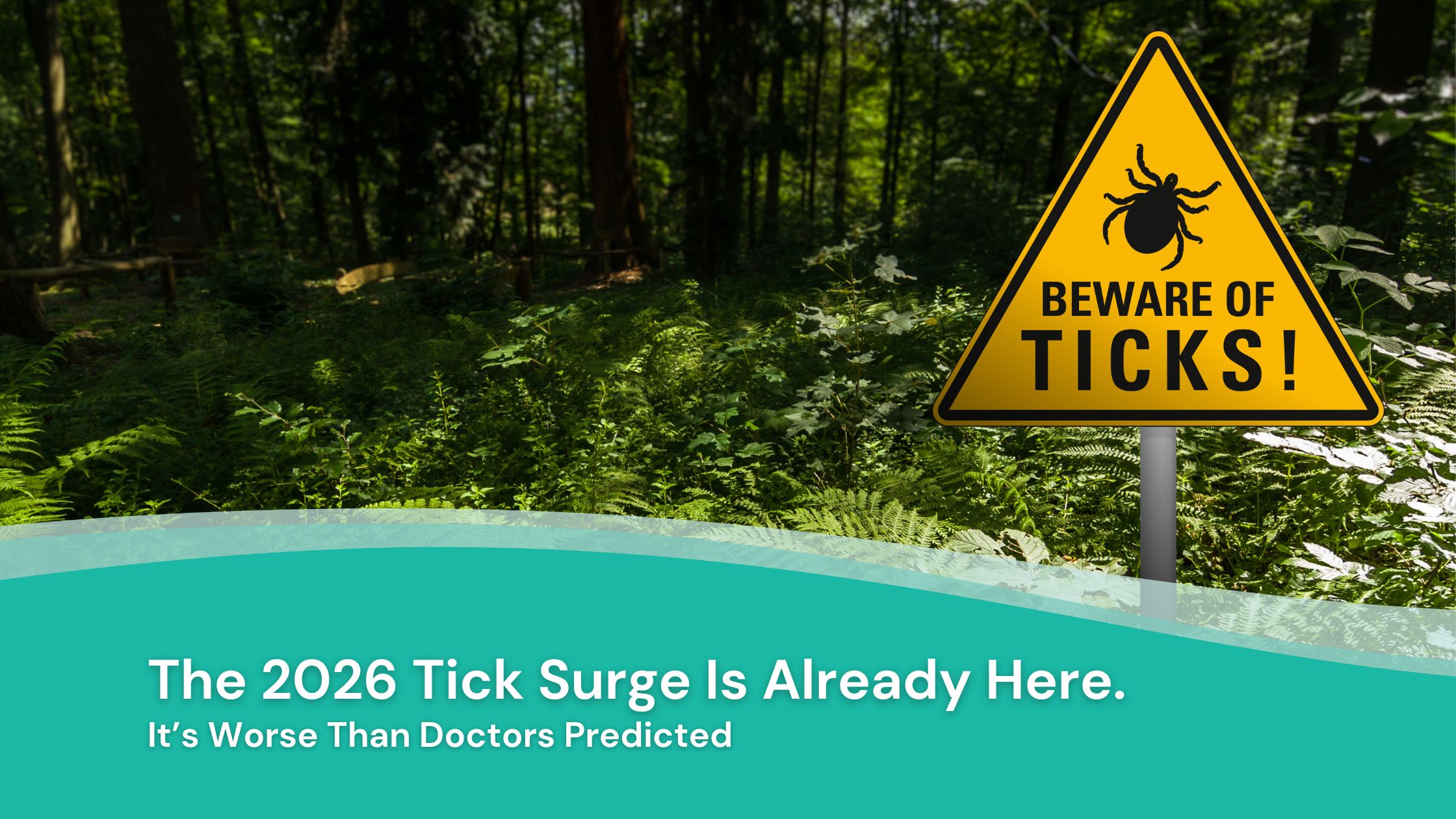
The 2026 Tick Surge Is Already Here. And It’s Worse Than Doctors Predicted.
*By the Jase Medical Clinical team*

I want to tell you something that caught my attention as a physician before it caught my attention as a CEO.

A few weeks ago I was reading through case reports from colleagues in the Northeast. Family docs, internists, infectious disease specialists. The pattern was impossible to ignore. They’re seeing tick-borne illness earlier in the year, in places they’ve never seen it, in patients who had no idea they were at risk. One physician in Vermont told me he treated his first Lyme case of the year in February.

February.

That’s not a talking point. That’s a clinical data point. And it tells you everything you need to know about where we are headed this spring and summer.


What’s Actually Happening

Tick populations have been expanding geographically for over a decade. Milder winters. Shifting wildlife corridors. More human activity in tick-dense areas. None of that is new. What is new — what makes 2026 different — is that the species carrying the most dangerous pathogens have now established permanent populations in regions that were considered safe as recently as five years ago.

The black-legged tick, Ixodes scapularis — the one responsible for Lyme disease — is not a visitor anymore in places like the upper Midwest and northern New England. It lives there now. And it’s active earlier in the spring and later into the fall, which means the old “May through August” tick season guidance is increasingly meaningless.

Physicians in northern states are treating tick-borne illness before the snow is off the ground.


Four Diseases, One Vulnerability

Most people hear “tick bite” and think Lyme disease. That’s understandable. Lyme is the most common tick-borne illness in the US, with over 476,000 cases diagnosed annually. The classic bullseye rash, the flu-like onset, the joint pain and neurological complications that follow when treatment is delayed — it’s serious. But it’s not the whole picture.

A single tick bite can transmit any of four major bacterial infections. Each one carries real consequences.

Lyme Disease (Borrelia burgdorferi). First-stage symptoms can look like a bad flu. Left untreated, it becomes something far worse — joint destruction, neurological damage, cardiac involvement. Early treatment changes the trajectory completely.

Anaplasmosis (Anaplasma phagocytophilum). Spread by the same tick as Lyme. Sudden fever, crushing headache, muscle pain. Gets misdiagnosed as flu constantly. In immunocompromised patients, it can progress to respiratory failure and organ damage.

Ehrlichiosis (Ehrlichia chaffeensis). Spread primarily by the lone star tick, whose range has pushed significantly into the Northeast. Fever, fatigue, dangerously low platelet and white blood cell counts. The mortality rate for untreated ehrlichiosis is meaningfully higher than Lyme.

Rocky Mountain Spotted Fever (Rickettsia rickettsii). The name is misleading — RMSF now occurs across much of the continental US. It is the deadliest tick-borne disease in North America. It can kill within days of symptom onset, and the classic spotted rash often shows up late, after the treatment window has already narrowed.


Here’s the Part That Matters

All four of those infections respond to the same antibiotic: doxycycline.

Doxycycline is a broad-spectrum tetracycline with exceptional activity against the intracellular bacteria behind all four diseases. For Lyme, it’s first-line treatment in adults and children over eight. For anaplasmosis, ehrlichiosis, and RMSF, it’s not just first-line — it’s the only reliably effective option.  We supply it in the base JaseCase for a reason. Everyone should have this on hand, just in case.

The CDC and the Infectious Diseases Society of America both recommend initiating doxycycline empirically — based on clinical suspicion alone, before lab results come back — when tick-borne illness is suspected. That recommendation exists because the organisms causing these diseases don’t wait for a confirmation number from the lab. And in the case of RMSF, delaying treatment while waiting on results is directly associated with higher mortality.

As a physician, that’s the piece I need you to understand. The science here is not ambiguous. Early doxycycline changes outcomes.


The Gap That Keeps Me Up at Night

Think about where most people encounter ticks. Hiking trails. Campgrounds. The backyard of a cabin two hours from the nearest urgent care. Even in suburban settings, the timeline from tick bite to symptom onset to physician visit to filled prescription can stretch across days. In serious tick-borne illness — particularly RMSF — those days are the difference between an outpatient course of antibiotics and a hospital bed.

This is the problem I built Jase Medical to solve. Not the theoretical version. The real one. The version where a family on a camping trip pulls a tick off their kid and has no way to act on what they know until Monday morning.

A supply of physician-prescribed doxycycline in your emergency medical kit means you’re not waiting on the system to catch up with the biology. You’re prepared to act when it matters.


What to Do Right Now

Start with prevention. Use EPA-registered repellents — DEET at 20% or higher, picaridin, or permethrin-treated clothing. Do full-body tick checks after any time spent outdoors. Shower within two hours of coming inside. Check your pets; they carry ticks into the home more often than people realize.

Know the warning signs. Unexplained fever with headache and muscle aches after outdoor activity. Any rash, especially one that’s spreading or has a bullseye pattern. If you see those, mention tick exposure to your physician immediately — don’t wait for someone to ask.

Close the gap. Talk to a Jase Medical physician about whether doxycycline and other emergency antibiotics belong in your family’s kit. Don’t wait for a tick-borne illness to find out you weren’t ready.


The 2026 tick surge is not hypothetical. It’s already underway. The physicians sounding the alarm are watching their patient panels and seeing the numbers climb in real time.

The good news is that the single most important medication for treating all four major tick-borne diseases is well understood, widely available, and something you can have on hand before you ever need it.

Be ready before you need to be.

Build Your Emergency Medical Kit with Jase Medical →


This article is for educational purposes and does not constitute medical advice. Consult a physician for diagnosis and treatment of any illness.


Learn more about Jase Medical’s emergency preparedness kits and other medication solutions at jase.com

Lifesaving Solutions

Everyone should be empowered to care for themselves and their loved ones during the unexpected. Check out our recent lifesaving products today.

Recent Posts

Keeping you informed and safe.
Why You Can’t Count on the Pharmacy in a Crisis

Why You Can’t Count on the Pharmacy in a Crisis

Why You Can't Count on the Pharmacy in a Crisis By Aaron Asay, PA-C, DMSc — Executive Director, JaseResponse Most of the time, the pharmacy works exactly the way we expect it to. Your child develops strep throat, the pediatrician sends in amoxicillin, and you pick it...

read more
For Clinicians | Drug Shortages 2026

For Clinicians | Drug Shortages 2026

For Clinicians | Drug Shortages 2026 Prescribing Inside a Supply Chain the System Has Admitted Isn't Built for Disruption By Dr. Jamie Wilkey, PharmD — Director of Clinical Strategy, JaseMedically reviewed by Kristen Carpenter, PA-C — Clinical Advisory Board Member A...

read more
For Clinicians | Appropriate Medical Preparation

For Clinicians | Appropriate Medical Preparation

For Clinicians | Appropriate Medical Preparation  The Clinical Category We've Been Practicing Without a Name By Dr. Jamie Wilkey, PharmD — Director of Clinical Strategy, JaseMedically reviewed by Kristen Carpenter, PA-C — Clinical Advisory Board Member Patients have...
read more

Join Our Newsletter

Our mission is to help you be more medically prepared. Join our newsletter and follow us on social media for health and safety tips each week!

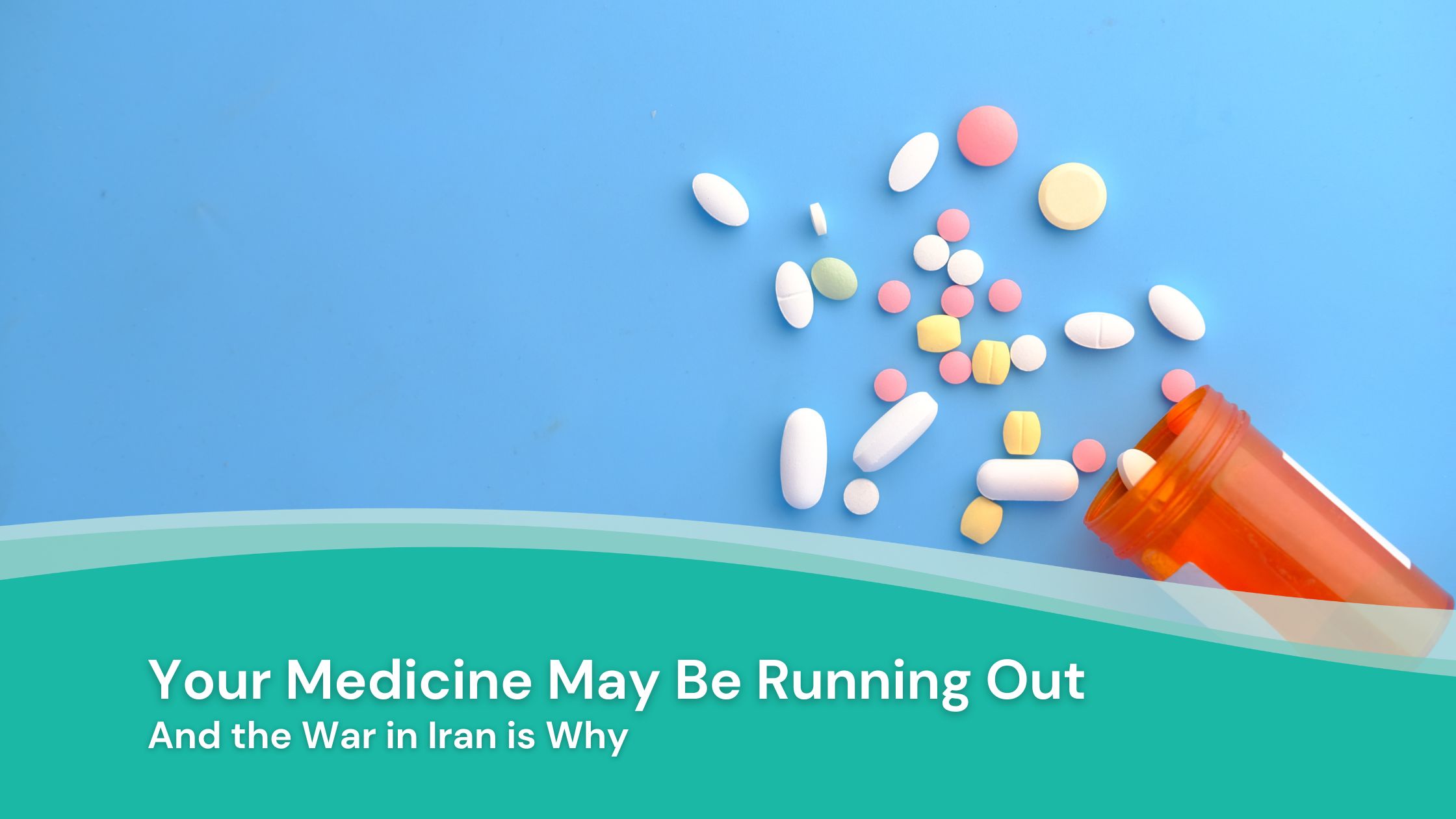
Your Medicine May Be Running Out — And the War in Iran Is Why

Most Americans assume the pharmacy shelf will always be stocked. They assume their blood pressure medication will be there on Tuesday. That ibuprofen will be waiting when they need it. That the cancer drug their spouse depends on won’t suddenly be unavailable.

That assumption is being tested right now.

As the US-Israel military campaign against Iran enters its fourth week, what started as a geopolitical event is quietly becoming a public health emergency. The Strait of Hormuz — the narrow waterway through which roughly 17 million barrels of oil pass every day — remains effectively closed. Shipping routes are disrupted. Air freight costs have surged. And the global pharmaceutical supply chain, already fragile from COVID-era stress fractures, is beginning to crack.

Here’s what most people don’t realize: **your medicine is made from oil.** Acetaminophen, ibuprofen, aspirin, and thousands of other common drugs rely on petrochemical precursors — chemical building blocks derived from crude oil and natural gas. The UK’s pharmaceutical experts are already warning that Britain is “a few weeks away” from shortages of everything from painkillers to cancer drugs *(The Guardian, March 28, 2026)*. CNBC reported that the Strait of Hormuz closure puts America’s generic drug supply directly at risk. Healthbeat confirmed that even MRI machines — which require helium transported via the same disrupted shipping lanes — are affected.

This isn’t a theoretical risk. This is happening now.

What Gets Disrupted First — and What That Means for You

Generic drugs are the most vulnerable. They account for roughly 90% of prescriptions filled in the US and are predominantly manufactured in India and China using chemical precursors that flow through disrupted supply chains. When logistics costs rise and routes get rerouted or shut down, generic manufacturers — already operating on thin margins — delay shipments, allocate inventory to larger buyers, and in some cases halt production entirely.


The categories most at risk:

– Common pain relievers and fever reducers (acetaminophen, ibuprofen)
– Antibiotics — already in chronic short supply in many regions
– Cancer chemotherapy agents that depend on petrochemical synthesis
– Cardiovascular medications
– Diabetes drugs, including some insulin formulations

The lesson of COVID was stark: by the time the shortage hits the news, the shelf is already empty. The families who were prepared — who had stocked essential medications through legitimate channels — were the ones who made it through without a crisis.


The Case for Personal Medical Preparedness

Emergency preparedness has always meant food, water, and shelter. But medical preparedness is increasingly the missing piece — and the hardest one to address after the fact.

You cannot stockpile medications the same way you stockpile rice. Most prescriptions are dispensed 30 days at a time. Insurance often won’t cover early refills. And in a shortage, your physician may have limited ability to help even if they want to.

This is exactly why Jase Medical exists. Jase’s model — providing physician-prescribed emergency medication supplies directly to families — was built for precisely this scenario. The ability to have a 12-month supply of your critical antibiotics, or a travel emergency kit stocked with medications you actually need, isn’t a luxury. Right now, it’s foresight.


What You Can Do Today

The window to act is narrowing. Shortages follow a predictable pattern: disruption happens, supply tightens, distribution systems prioritize hospitals and large buyers, and retail pharmacy shelves thin out over a period of weeks to months.

Here’s a practical checklist:
1. Audit your medicine cabinet. What medications does your family depend on regularly? What would happen if you couldn’t refill for 60 or 90 days? 

2. Talk to your doctor now — not when the shortage hits. Ask about early refills, therapeutic alternatives, or emergency supply options.

3. Build a travel/emergency kit with the basics: antibiotics covering common infections, antiparasitics, anti-inflammatories, and any condition-specific medications your family requires. The JaseCase is purpose-built exactly for this scenario.

4. Don’t wait for the news to tell you there’s a problem. By then, it’s too late.

The families who come through crises intact aren’t the ones who responded fastest — they’re the ones who prepared earliest.

If you’ve been thinking about building a medical emergency kit for your family, there is no better time than right now.


Learn more about Jase Medical’s emergency preparedness kits at jase.com

Lifesaving Solutions

Everyone should be empowered to care for themselves and their loved ones during the unexpected. Check out our recent lifesaving products today.

Recent Posts

Keeping you informed and safe.

Why You Can’t Count on the Pharmacy in a Crisis

Why You Can’t Count on the Pharmacy in a Crisis

Why You Can't Count on the Pharmacy in a Crisis By Aaron Asay, PA-C, DMSc — Executive Director, JaseResponse Most of the time, the pharmacy works exactly the way we expect it to. Your child develops strep throat, the pediatrician sends in amoxicillin, and you pick it...

read more
For Clinicians | Drug Shortages 2026

For Clinicians | Drug Shortages 2026

For Clinicians | Drug Shortages 2026 Prescribing Inside a Supply Chain the System Has Admitted Isn't Built for Disruption By Dr. Jamie Wilkey, PharmD — Director of Clinical Strategy, JaseMedically reviewed by Kristen Carpenter, PA-C — Clinical Advisory Board Member A...

read more
For Clinicians | Appropriate Medical Preparation

For Clinicians | Appropriate Medical Preparation

For Clinicians | Appropriate Medical Preparation  The Clinical Category We've Been Practicing Without a Name By Dr. Jamie Wilkey, PharmD — Director of Clinical Strategy, JaseMedically reviewed by Kristen Carpenter, PA-C — Clinical Advisory Board Member Patients have...

read more

Join Our Newsletter

Our mission is to help you be more medically prepared. Join our newsletter and follow us on social media for health and safety tips each week!

FAQ: Our most commonly asked questions about Jase

Consumer notice: A note on expiration dates. This article discusses published research on drug stability, including the FDA and Department of Defense Shelf Life Extension Program (SLEP). SLEP applies to federal stockpiles held under controlled, monitored storage and tested lot by lot. It does not apply to medications stored at home, and its findings do not extend the expiration date of any medication you own. FDA’s guidance to consumers is that expired medications should not be used. Jase Medical follows the manufacturer’s printed expiration date on every medication we dispense. Replace medications when they expire, and dispose of the expired supply following FDA’s disposal guidance.

Clinician notice: Same text through “should not be used,” then: This article is written for licensed healthcare professionals to support patient counseling. Jase Medical follows the manufacturer’s printed expiration date on every medication we dispense, and we recommend counseling patients to replace medications at the labeled date and dispose of expired supply following FDA guidance.

If you’re considering Jase, chances are you’ve paused and thought, “This makes sense, but I still have a few questions.”You’re not alone. Here are the most common ones we hear, answered plainly.

Is this really doctor-prescribed?

Yes. Every Jase order is reviewed by a licensed physician. When approved, medications are prescribed specifically for you and dispensed by a licensed pharmacy. It’s proper medical care, delivered differently.


When would I actually use these medications?

Jase is designed for moments when care is hard to access. Travel, weekends, holidays, natural disasters, pharmacy closures, insurance issues, or being far from your usual provider. Most people hope they never need them, but are relieved when they do.


How long do the medications last? Are antibiotics safe to keep on hand?

Most medications in the JaseCase carry expiration dates measured in years. When prescribed by a physician and used as directed, antibiotics are safe to keep on hand. Each medication includes clear guidance on when and how to use it, and its expiration date is the date to replace it.

  1. Check expiration dates every six months.
  2. Store in a cool, dry place. Heat and moisture degrade medicines.
  3. Keep backup doses for chronic conditions. Check out JaseDaily to get a backup supply today.
  4. Log your medications: what you have, when to reorder, and who they’re for.

Replace each medication by its expiration date, and dispose of expired supply following FDA guidance.


Do I have to be a “prepper” to need this?

Not at all. Jase is about having a backup. Just like a spare tire or a first aid kit, it is there for peace of mind, not panic. If you keep extra batteries, shelf-stable food items, or toilet paper, then you know how important it is to prepare.


What if I don’t know which medication to use or take the wrong one?

Every JaseCase includes the MedDeck, a simple plain language instruction manual for each medication, explaining what it is for and how to take it. Because everything is prescribed specifically for you, there is no sorting through unsafe or unfamiliar options. We also encourage, whenever possible, to work with your doctor before taking any medications.


Is this worth the money if I already have insurance?

Insurance works well until it is unavailable when you need it. Jase does not replace insurance. It fills the gaps insurance cannot. Many customers see Jase as an investment in peace of mind, not a recurring expense.

Prepared does not mean paranoid. It means ready.

That is what Jase is here for.

Closing notice: When a medication reaches its expiration date, replace it. Dispose of the expired supply following FDA’s guidance on expired medicines.

Lifesaving Solutions

Everyone should be empowered to care for themselves and their loved ones during the unexpected. Check out our recent lifesaving products today.

Recent Posts

Keeping you informed and safe.

Why You Can’t Count on the Pharmacy in a Crisis

Why You Can’t Count on the Pharmacy in a Crisis

Why You Can't Count on the Pharmacy in a Crisis By Aaron Asay, PA-C, DMSc — Executive Director, JaseResponse Most of the time, the pharmacy works exactly the way we expect it to. Your child develops strep throat, the pediatrician sends in amoxicillin, and you pick it...

read more
For Clinicians | Drug Shortages 2026

For Clinicians | Drug Shortages 2026

For Clinicians | Drug Shortages 2026 Prescribing Inside a Supply Chain the System Has Admitted Isn't Built for Disruption By Dr. Jamie Wilkey, PharmD — Director of Clinical Strategy, JaseMedically reviewed by Kristen Carpenter, PA-C — Clinical Advisory Board Member A...

read more
For Clinicians | Appropriate Medical Preparation

For Clinicians | Appropriate Medical Preparation

For Clinicians | Appropriate Medical Preparation  The Clinical Category We've Been Practicing Without a Name By Dr. Jamie Wilkey, PharmD — Director of Clinical Strategy, JaseMedically reviewed by Kristen Carpenter, PA-C — Clinical Advisory Board Member Patients have...

read more

Join Our Newsletter

Our mission is to help you be more medically prepared. Join our newsletter and follow us on social media for health and safety tips each week!

Medical Readiness: What Really Kills First

When Disaster Strikes, It’s Not Hunger or Thirst That Takes the First Lives

In every disaster zone, from hurricanes in the Caribbean to war zones in Ukraine, the pattern is the same. People worry about food and water, but it’s infection that kills first. A small wound turns septic. A fever spirals into pneumonia. Chronic conditions like asthma or diabetes become lethal without access to medication.

Preparedness isn’t only about stockpiling calories and gear. It’s about protecting your body from the most common, and most preventable, causes of death when help can’t reach you.


The Hidden Killer: Infection

You can survive for weeks without food and several days without water. But a simple infection, left untreated, can take your life in less than 72 hours.

Disaster medicine specialists see this again and again. In a recent interview, Director of Jaseresponse.org & disaster & austere medicine expert, Aaron Asay, explained, “Getting an infection is going to kill me faster than anything, but it’s easily treated.”

The good news: antibiotics and wound care supplies can stop nearly all of these fatal infections if you have them on hand.

The bad news: most people don’t.


How Modern Convenience Has Made Us Vulnerable

We live in a system that assumes help will always be available. Pharmacies, supply chains, and hospitals operate seamlessly, until they don’t. When power grids, transportation routes, or communications fail, even short disruptions mean empty shelves and overwhelmed ERs.

In rural hospitals across North America, infections and sepsis are already a daily occurrence even when the system is working. In a crisis, those cases multiply, while access to care evaporates.


What Every Household Should Have

Start with the basics of infection prevention and chronic care support. A well-prepared home should include:

  • Prescription antibiotics (legally obtained and physician-approved) to treat common bacterial infections. Jase was founded with the mission to help people be better prepared medically. Check out the JaseCase.
  • Antiseptic solutions and wound dressings for cuts, punctures, and burns. With the help of Aaron Asay, Jase just launched a full line of First Aid kits to solve these life threatening problems.
  • Anti-inflammatory and pain management medications.
  • Emergency tools: EpiPen (for allergies), inhaler (for asthma), glucose control aids (for diabetics). (EpiPens and inhalers can be added to any JaseCase order)
  • Oral rehydration and electrolyte packets to combat dehydration during illness.

These supplies aren’t luxury items, they’re lifesaving essentials.


Storing and Managing Your Medications

Preparedness is about foresight, not panic. Keep your medications organized, labeled, and rotated for freshness:

  1. Check expiration dates every six months.
  2. Store in a cool, dry place, heat and moisture degrade medicines.
  3. Keep backup doses for chronic conditions. Check out JaseDaily to get a backup supply today.
  4. Log your medications: what you have, when to reorder, and who they’re for.

Remember: expired medications may lose potency but rarely become toxic. Having something is better than nothing when supply chains fail.


The Jase Medical Solution

At Jase.com, we believe medical preparedness should be accessible to everyone, not just professionals or survivalists. That’s why we created the JaseCase, a physician-prescribed emergency antibiotic kit, and our JaseDaily service for long-term medication continuity.

In uncertain times, medical readiness is peace of mind. Because when the system breaks, your body can’t wait.


Prepare today, so you don’t have to panic tomorrow.

Learn more about JaseResponse.org, our non-profit humanitarian disaster response program aiming to bridge the gap between crisis and medical care. Donate today!


© 2025 Jase Medical. For educational use only. Always consult a licensed medical provider before using or changing medications.

Lifesaving Solutions

Everyone should be empowered to care for themselves and their loved ones during the unexpected. Check out our recent lifesaving products today.

Recent Posts

Keeping you informed and safe.

Why You Can’t Count on the Pharmacy in a Crisis

Why You Can’t Count on the Pharmacy in a Crisis

Why You Can't Count on the Pharmacy in a Crisis By Aaron Asay, PA-C, DMSc — Executive Director, JaseResponse Most of the time, the pharmacy works exactly the way we expect it to. Your child develops strep throat, the pediatrician sends in amoxicillin, and you pick it...

read more
For Clinicians | Drug Shortages 2026

For Clinicians | Drug Shortages 2026

For Clinicians | Drug Shortages 2026 Prescribing Inside a Supply Chain the System Has Admitted Isn't Built for Disruption By Dr. Jamie Wilkey, PharmD — Director of Clinical Strategy, JaseMedically reviewed by Kristen Carpenter, PA-C — Clinical Advisory Board Member A...

read more
For Clinicians | Appropriate Medical Preparation

For Clinicians | Appropriate Medical Preparation

For Clinicians | Appropriate Medical Preparation  The Clinical Category We've Been Practicing Without a Name By Dr. Jamie Wilkey, PharmD — Director of Clinical Strategy, JaseMedically reviewed by Kristen Carpenter, PA-C — Clinical Advisory Board Member Patients have...

read more

Join Our Newsletter

Our mission is to help you be more medically prepared. Join our newsletter and follow us on social media for health and safety tips each week!

Be Prepared for Life’s Unexpected Moments

3 Reasons EVERYONE should have emergency medications avaiable.

It’s all about access—access to medications and care when you need it most. And when things happen outside of your control that access can disappear.
Below are 3 examples of how easily this access can be cut off:

1. Natural Disasters and Unexpected Emergencies

When hurricanes, wildfires, or power outages strike, pharmacies, clinics, and even hospitals may be closed, damaged or destroyed, and medical help might not be available for days or even weeks. Having emergency medications on hand ensures you and your loved ones have access to critical treatments, helping to manage infections, pain, or other health concerns when professional medical help is out of reach.

By the Numbers:

  • 76% of people would worry about their health if they could not access their medications during an emergency.

  • Only 37% say they would have a week’s worth of medication if they had to evacuate right now.

  • Over seven in 10 (72%) of Americans do not have a backup supply of critical medications.

Source: DirectRelief.org

2. Travel and Remote Locations

Whether you’re traveling internationally, going on a road trip, or spending time off-grid camping or at the family cabin, access to healthcare is not always guaranteed. A sudden illness in a remote area could turn into a major issue without the right medications on hand. Additionally accessing healthcare when you are far from home and your normal network of doctors and pharmacies can lead to prolonged delays in care. Having your own supply of emergency medications provides peace of mind and allows you to focus on your adventures without worrying about access to healthcare.

3. Protection Against Healthcare Delays and Medication Shortages

Availability of getting a doctor’s appointment, pharmacy stock shortages, and rising healthcare costs can delay access to life-saving medications. Supply chain disruptions and unexpected prescription backlogs can also leave you without essential medications when you need them most. Having emergency antibiotics and other critical medications on hand means you can avoid unnecessary risks and take control of your health.

Be Proactive, Not Reactive

The Jase Case has you covered with life-saving prescription medications for treating 50 of the most common illnesses and infections you may encounter, and can be customized with up to 30 add-on medications for additional coverage.
Having a Jase Case means you’re always one step ahead. Don’t leave your health to chance—get prepared today!

Jase Customer Story:

“Recently, my husband was suffering from an inner ear infection and was so dizzy he could barely walk and couldn’t drive. It was over a long weekend and our closest urgent care is an hour away. I remembered the emergency antibiotic supply we purchased from Jase, and looked in the resources to see what would be the best antibiotic for an ear infection. He is very healthy and hasn’t been on an antibiotic in several years. He started taking the recommended antibiotic and was markedly better in two days and completely better in four. It gives me peace of mind to know that we have an emergency supply of medications on hand for times like this, as well as when traveling internationally or in the case of supply chain issues. We live near a high fire hazard area, so I keep my Jase Case packed and ready to go if we ever have to evacuate. The booklet that comes with the kit is so helpful. I also like that Jase’s pricing is transparent. Thank you, Jase, for meeting this critical need!” – Melanee

When Emergency Medications Matter:

Emergencies can happen anytime, anywhere. Whether it’s a natural disaster, a sudden illness, or an unexpected delay in accessing medical care, having emergency medications readily available can make all the difference. Don’t wait until it’s too late—be prepared, stay protected, and take control of your health.

Lifesaving Medications

Everyone should be empowered to care for themselves and their loved ones during the unexpected.

Recent Posts

Keeping you informed and safe.

Why You Can’t Count on the Pharmacy in a Crisis

Why You Can’t Count on the Pharmacy in a Crisis

Why You Can't Count on the Pharmacy in a Crisis By Aaron Asay, PA-C, DMSc — Executive Director, JaseResponse Most of the time, the pharmacy works exactly the way we expect it to. Your child develops strep throat, the pediatrician sends in amoxicillin, and you pick it...

read more
For Clinicians | Drug Shortages 2026

For Clinicians | Drug Shortages 2026

For Clinicians | Drug Shortages 2026 Prescribing Inside a Supply Chain the System Has Admitted Isn't Built for Disruption By Dr. Jamie Wilkey, PharmD — Director of Clinical Strategy, JaseMedically reviewed by Kristen Carpenter, PA-C — Clinical Advisory Board Member A...

read more
For Clinicians | Appropriate Medical Preparation

For Clinicians | Appropriate Medical Preparation

For Clinicians | Appropriate Medical Preparation  The Clinical Category We've Been Practicing Without a Name By Dr. Jamie Wilkey, PharmD — Director of Clinical Strategy, JaseMedically reviewed by Kristen Carpenter, PA-C — Clinical Advisory Board Member Patients have...

read more

Join Our Newsletter

Our mission is to help you be more medically prepared. Join our newsletter and follow us on social media for health and safety tips each week!